

What Are Business Intelligence Applications
Business Intelligence (BI) applications analyze, visualize, and interpret data to aid decision-making.
BI applications provide actionable insights by transforming raw data into meaningful information, empowering businesses to make strategic and operational decisions.
BI applications encompass various functionalities, including data visualization, reporting, data mining, and predictive analytics. They also help organizations identify trends, monitor performance, and uncover hidden patterns within their datasets, enabling them to respond proactively to changing business dynamics.
Key Features of BI Tools and Their Practical Applications
Modern BI tools have several features that streamline data analysis and reporting. Key features include:
- Interactive Dashboards: Provide real-time insights through customizable visualizations.
- Data Integration: Connect and consolidate data from multiple sources.
- Advanced Analytics: Use predictive modeling, machine learning, and data mining for forecasting.
- Self-service Capabilities: Enable non-technical users to generate reports and insights independently.
- Collaboration Features: Share reports and insights across teams to enhance decision-making.
Practical applications of BI tools include optimizing supply chain operations, tracking customer behavior, forecasting market trends, and enhancing financial planning.
Why Business Intelligence Is Important
Business Intelligence is vital for organizations because it enables:
- Informed Decision-Making: BI tools turn complex data into actionable insights, supporting strategic initiatives.
- Enhanced Productivity: Automated reporting reduces manual tasks, allowing teams to focus on core responsibilities.
- Better Customer Understanding: BI provides insights into customer preferences, helping tailor marketing strategies.
- Operational Efficiency: Identifies inefficiencies and bottlenecks, enabling process optimization.
- Competitive Advantage: Delivers a clearer understanding of market trends and competitor actions.
By leveraging BI applications, businesses can anticipate challenges and seize opportunities faster and more effectively.
Best Tools for Business Intelligence
A variety of tools cater to diverse BI needs. Some of the most popular options include:
- Tableau: Renowned for interactive data visualization and dashboard creation.
- Power BI: Offers robust analytics and seamless integration with Microsoft tools.
- Qlik Sense: Focuses on self-service analytics and AI-driven insights.
- SAP BusinessObjects: Provides enterprise-level reporting and analytics capabilities.
- OWOX BI: Specializes in combining data from different sources and leveraging BigQuery for advanced analytics.
Each tool has unique strengths, making it important to choose the one that aligns with specific business requirements.
Real-world Examples of Business Intelligence
BI applications have transformed numerous industries. Some notable examples include:
- Retail: Companies like Amazon use BI to analyze customer purchase patterns and recommend products.
- Healthcare: Hospitals employ BI to monitor patient outcomes and improve resource allocation.
- Finance: Banks leverage BI to detect fraud and assess credit risk.
- Manufacturing: BI tools optimize production schedules and inventory management.
- Marketing: Agencies utilize BI to measure campaign performance and segment audiences effectively.
These examples illustrate how BI tools drive efficiency and innovation across sectors.
Understanding and implementing BI applications can revolutionize how businesses approach data-driven decision-making. Explore guides, tutorials, and case studies to deepen your knowledge of BI tools and their practical uses. Staying informed about the latest trends in BI ensures your organization remains competitive in a data-first world.
Power Your Business Intelligence Applications with OWOX Data Marts
Business Intelligence (BI) tools are only as good as the data they rely on, and disconnected sources often lead to inconsistent insights.
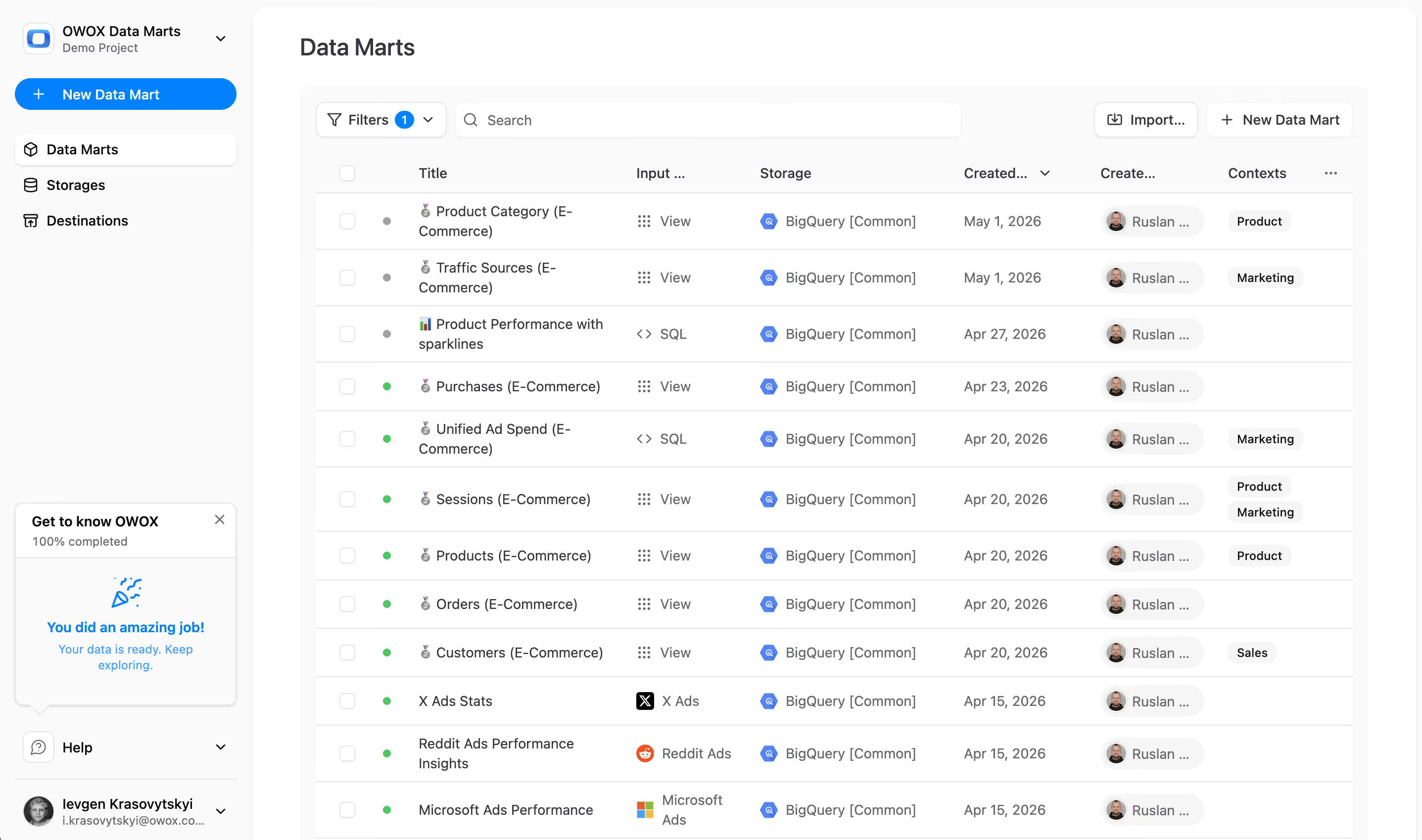
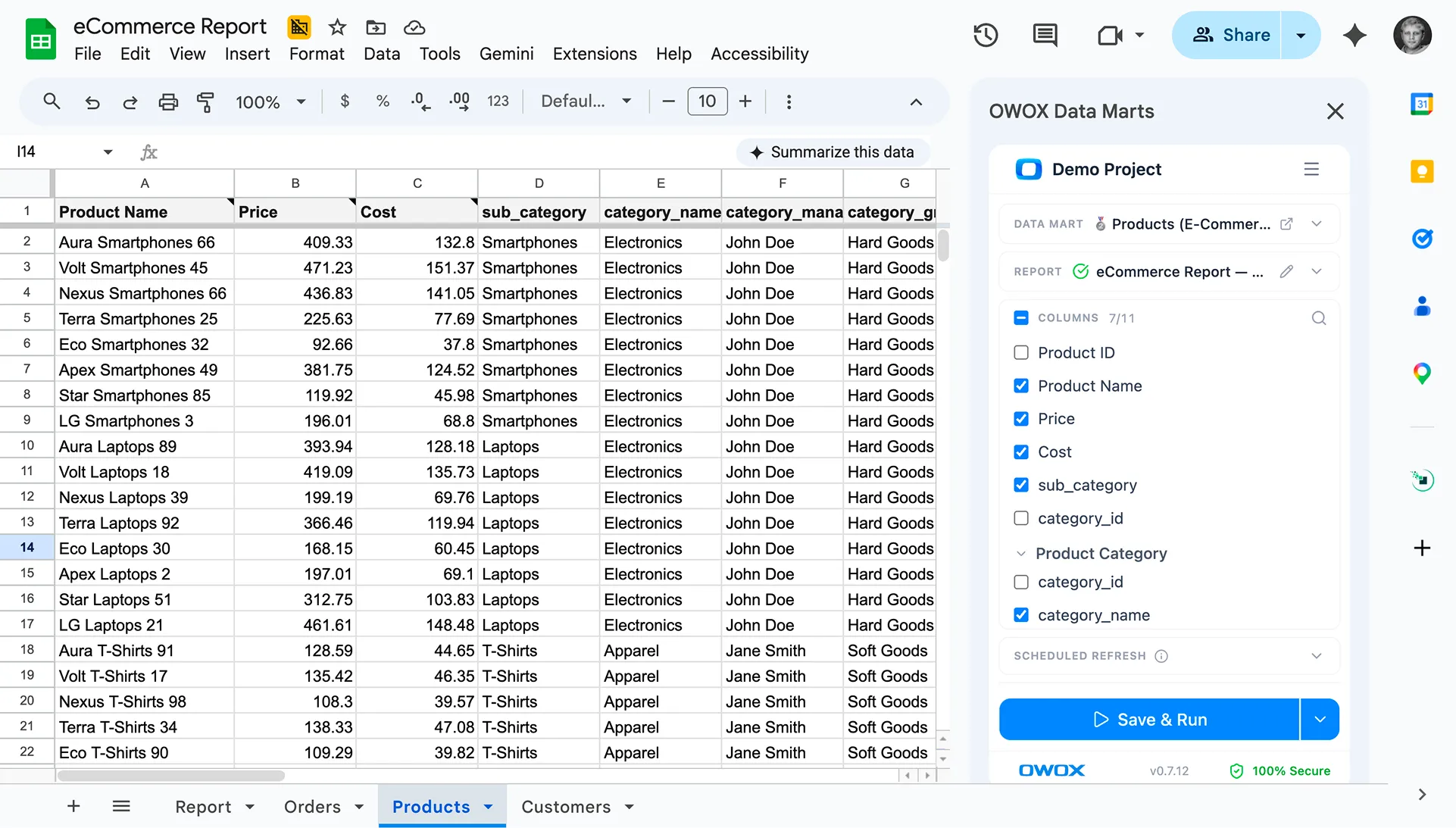
With OWOX Data Marts, you can centralize and prepare trusted data models that feed directly into BI applications like Looker Studio, Power BI, or Tableau. Every metric stays unified, governed, and automatically updated, so your teams can focus on analysis, not maintenance.







"AI by its nature will hallucinate. You need guardrails so you can trust your data."
"We had six or seven different channels and no single source of truth. It was almost impossible"
"We regained time. And time is the one resource that never comes back."