

What Is a Looker Studio Dashboard?
A Looker Studio dashboard is an interactive view of your data that turns numbers from different sources into charts, tables, and filters so teams can track performance, spot trends, and share insights fast.
What Is a Looker Studio Dashboard?
In analytics, a dashboard is where raw data starts feeling useful. Instead of digging through spreadsheets or querying multiple tools one by one, analysts can open a single visual workspace and understand what is happening right now.
Basic idea in one sentence
A Looker Studio dashboard is a customizable, interactive analytics display built in Looker Studio to monitor metrics and explore business performance.
Looker Studio vs Looker Studio dashboard vs report
Looker Studio is the platform. A report is the full file created inside the platform, which can contain one or many pages. A dashboard is usually one page or one focused section of that report designed for monitoring a specific goal, team, or process.
In practice, people often use “report” and “dashboard” interchangeably. But there is a useful distinction. Reports can be broader, more explanatory, and include multiple pages for deep analysis. Dashboards are usually tighter, quicker to scan, and centered on key performance indicators, trends, and filters.
Key Components of a Looker Studio Dashboard
A strong dashboard is more than a few charts dropped onto a canvas. It combines data structure, visual hierarchy, and interactivity so users can move from “What happened?” to “Why did it happen?” without getting lost.
Data sources and connectors
Every dashboard starts with connected data. Looker Studio can pull information from multiple sources through connectors, including databases, spreadsheets, ad platforms, and warehouse tables. That means one dashboard can combine campaign spend, website activity, and revenue metrics in a single place.
The connector matters because it affects performance, available fields, update frequency, and how much transformation happens before the data reaches the chart. If the source data is messy, the dashboard will feel messy too.
Charts, tables, and scorecards
These are the building blocks users actually see. Scorecards highlight top-level KPIs such as revenue, sessions, leads, or return on ad spend. Time series charts show movement over time. Tables add detail and make it easier to compare channels, campaigns, products, or regions.
The best dashboards balance summary and detail. A viewer should be able to scan the big picture in seconds, then use more granular visuals to investigate changes without leaving the report.
Filters, date controls, and drill-downs
Interactivity is what makes a Looker Studio dashboard powerful. Filters let users narrow the view by source, medium, campaign, market, or device. Date controls make it easy to compare periods or focus on a specific range. Drill-downs help viewers move from broad categories into more detailed breakdowns.
This is huge for analysts because one dashboard can serve many questions. Instead of creating separate reports for every stakeholder, you can build one flexible layout that adapts to different views.
Themes, layouts, and branding
Design is not decoration. Good layout helps people understand data faster. Consistent themes, spacing, color rules, and labels reduce confusion and make the dashboard easier to use under pressure.
Branding also matters when dashboards are shared with executives or clients. Clean formatting builds trust, but clarity comes first. If a branded dashboard looks polished and still makes the main takeaway obvious, that is a win.
How Looker Studio Dashboards Work in Analytics Workflows
Dashboards sit near the end of the analytics chain, but their quality depends on everything that comes before. That is why they are tightly connected to what data analytics is and how it’s used in business, from collecting inputs to transforming them into decision-ready outputs.
From raw data to dashboard: high-level flow
The flow usually looks like this: data is generated by websites, apps, ad platforms, CRMs, and internal systems. Then it is captured during the data collection stage of the analytics process, stored in a source system or warehouse, cleaned and modeled, and finally connected to Looker Studio for visualization.
At the dashboard stage, the goal is not heavy transformation. It is presentation, exploration, and fast interpretation. The cleaner the upstream data model, the easier it is to build a dashboard that performs well and answers real business questions.
Common use cases for marketing and BI teams
Marketing analysts use Looker Studio dashboards to track acquisition, campaign efficiency, funnel performance, and attribution-related metrics. BI teams often use them for executive summaries, product trends, regional reporting, budget monitoring, and operational KPIs.
Common dashboard setups include:
- Channel performance dashboards for paid and organic traffic
- Executive KPI overviews with daily or weekly trends
- Sales and revenue dashboards by product, region, or segment
- Funnel dashboards showing sessions, leads, opportunities, and purchases
Typical pitfalls: sampling, limits, and data freshness
Not every dashboard issue is a chart issue. Sometimes the real problem is the data source. If the connector applies limits, if a query is too heavy, or if the source updates slowly, the dashboard may show incomplete or delayed numbers.
Another common trap is mixing fields with different definitions across sources. Sessions in one platform may not match sessions in another. Revenue may be net in one system and gross in another. When that happens, even a beautiful dashboard can create bad decisions.
Analysts should also watch for freshness. A report that looks real-time but refreshes hours later can seriously mislead stakeholders, especially during campaign launches or budget reviews.
Example: Marketing Performance Dashboard in Looker Studio
Let’s make this real. Imagine a marketing team wants one dashboard to review paid search, paid social, email, and website performance every morning.
Core metrics and dimensions to include
A practical dashboard might include scorecards for spend, clicks, sessions, conversions, revenue, cost per acquisition, and return on ad spend. A trend chart can show daily performance. Tables can break results down by source, medium, campaign, landing page, or device category.
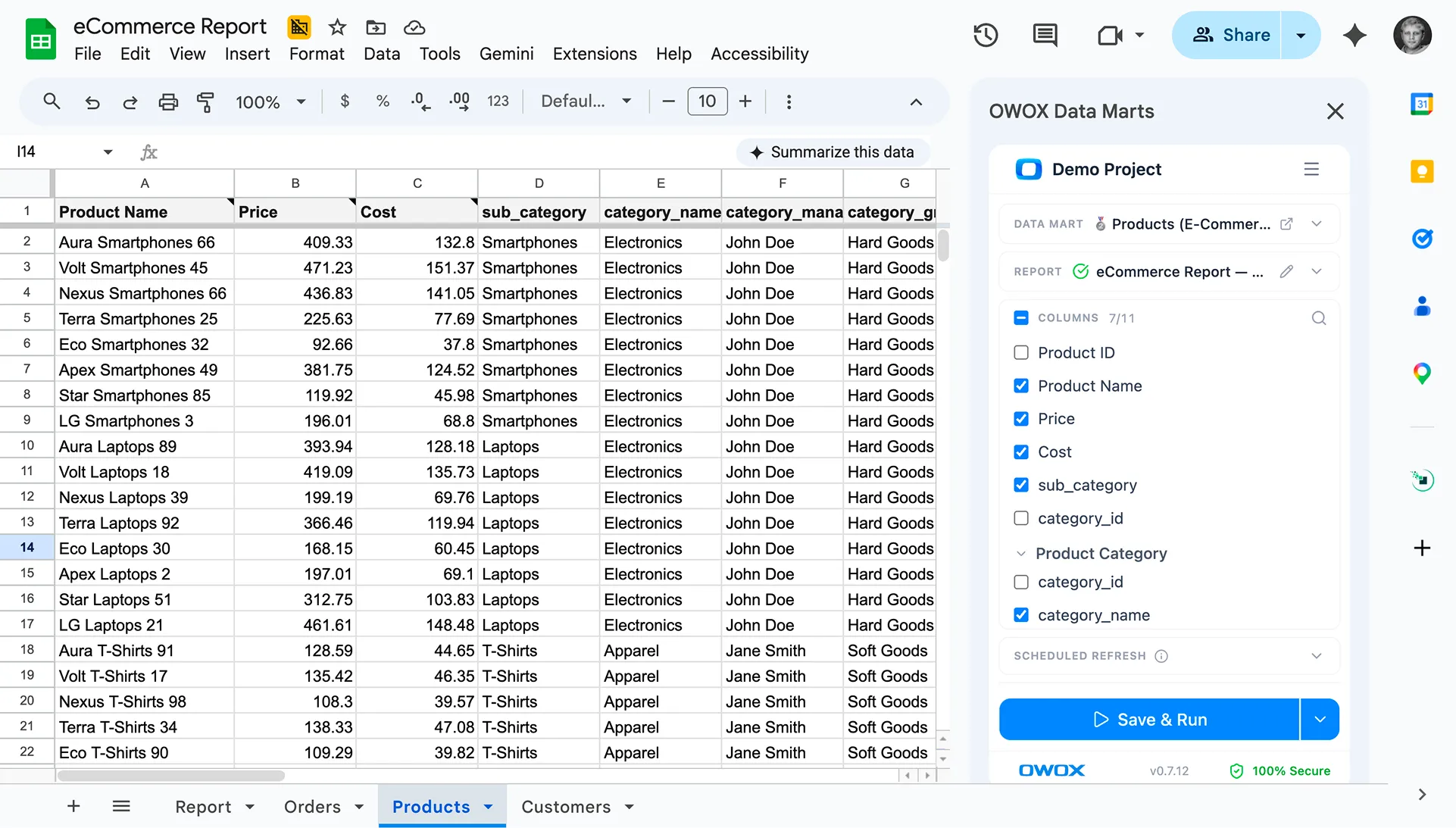
If the team uses warehouse tables, they may prepare one reporting table with daily channel-level metrics before connecting it to Looker Studio. For example:
Dimensions could include date, channel, campaign_name, source_medium, device, and country. Metrics could include impressions, clicks, cost, sessions, conversions, transactions, and revenue.
This setup helps stakeholders answer fast questions like: Which channels are driving revenue? Which campaigns are spending more but converting less? Where did performance drop compared to last week?
Practical tips for readable, fast dashboards
Keep the top row focused on essential KPIs. Put trend charts next, then deeper breakdown tables below. Use clear labels, not tool-specific jargon. If every chart is screaming with color, nothing stands out.
To improve speed and usability:
- Limit unnecessary charts on a single page
- Use pre-aggregated tables when possible
- Keep filters consistent across pages
- Group related metrics together
- Add notes for metric definitions when ambiguity is possible
Fast dashboards get used. Slow dashboards get ignored. That is the brutal truth.
Looker Studio Dashboards and Data Marts
Dashboards are strongest when they sit on top of organized, analysis-ready data instead of raw exports from multiple tools. That is where data marts become a game changer.
Why dashboards work better on top of a data mart
A data mart gives analysts a curated slice of data built for reporting. Instead of forcing Looker Studio to combine inconsistent sources on the fly, teams can do the hard work earlier through data preparation before building dashboards.
This improves metric consistency, dashboard speed, and maintenance. It also fits well within modern data architectures like data lakehouses, where raw and refined layers are separated more clearly.
With a data mart, the dashboard becomes the final presentation layer, not the place where business logic is patched together at the last minute.
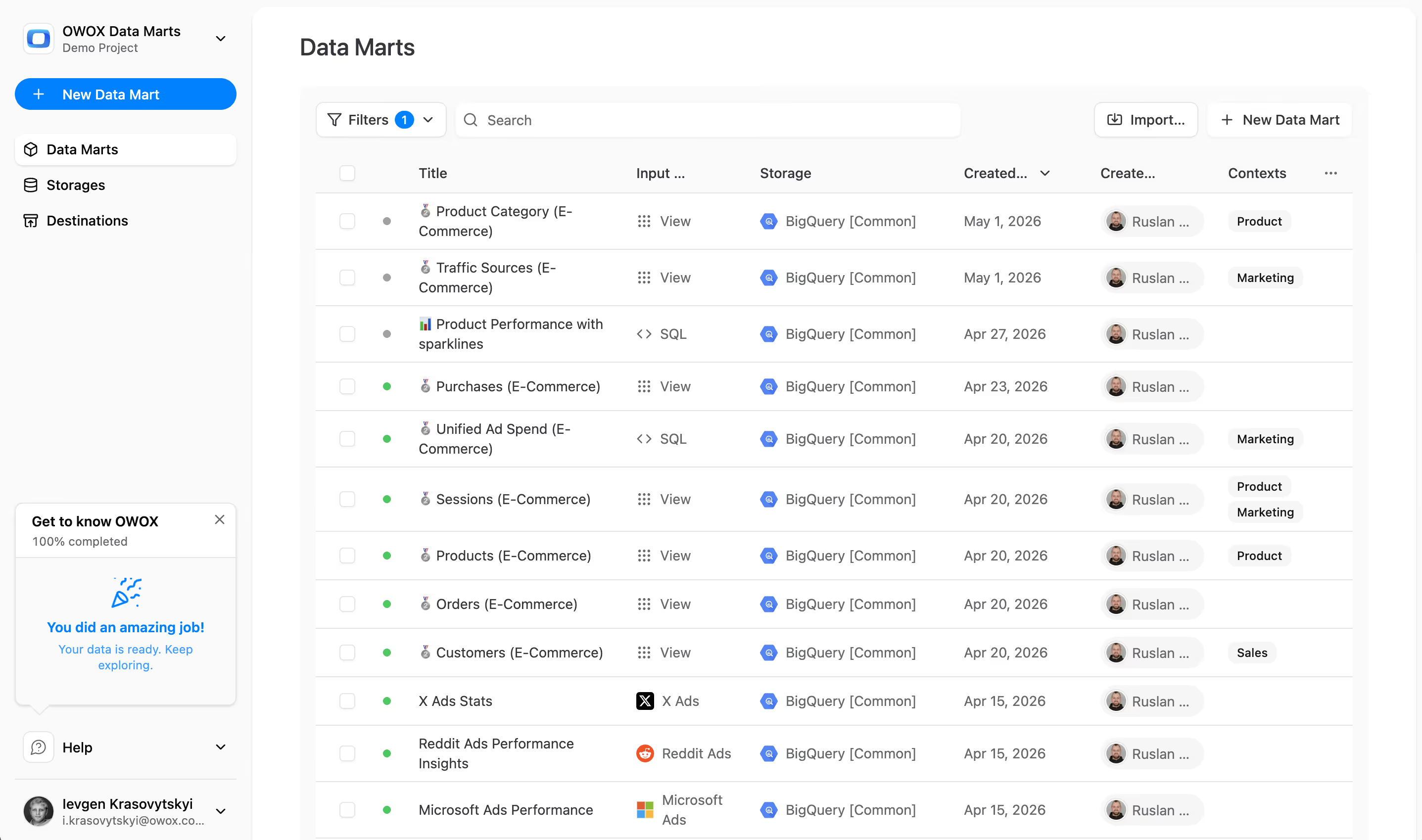
OWOX Data Marts in real reporting setups
In real workflows, teams often need campaign data, web behavior, and conversion outcomes aligned before they ever open Looker Studio. That usually means building reporting-ready tables with agreed dimensions, clean joins, and stable calculations.
OWOX Data Marts can support that reporting setup by helping teams structure analytics data for easier dashboarding. Instead of rebuilding logic in every chart, analysts can connect a more reliable dataset and focus on analysis, not constant dashboard repair.
Best Practices for Maintaining Looker Studio Dashboards
Building the dashboard is only the start. If definitions change, sources break, or no one owns updates, a once-great dashboard can become a confidence killer.
Versioning and documenting changes
Keep track of metric changes, filter updates, source swaps, and layout edits. Even lightweight documentation helps. A shared changelog can save hours of confusion when stakeholders notice a KPI shift and ask, “What changed?”
Versioning is especially useful before major edits. Duplicating reports or preserving prior versions makes it easier to roll back if a change breaks comparisons or introduces confusion.
Checking data quality and freshness
Dashboards need regular validation. Compare headline numbers with source systems, review trend breaks, and watch for null values or sudden drops in row counts. Strong maintenance includes monitoring the importance of data freshness for decision-making and addressing the common data quality issues and how to overcome them.
A simple freshness note on the dashboard can also help users trust what they see. If data updates once a day, say so clearly.
Collaborating with stakeholders
The best dashboards are not built in isolation. Analysts should work with marketers, managers, and decision-makers to confirm which KPIs matter, how metrics are defined, and what actions the dashboard should support.
Ask direct questions: What decision will this page help you make? What threshold signals a problem? Which comparison matters most? Those conversations keep dashboards focused and prevent them from becoming cluttered data museums.
If you want cleaner reporting data behind your Looker Studio dashboards, explore OWOX Data Marts. It’s a practical way to prep analytics-ready datasets so your dashboards stay fast, consistent, and easier to trust.
%202.png)



"AI by its nature will hallucinate. You need guardrails so you can trust your data."
"We had six or seven different channels and no single source of truth. It was almost impossible"
"We regained time. And time is the one resource that never comes back."