

What Is a Many-to-Many Relationship (N-N)?
A many-to-many (N-N) relationship occurs when multiple records in one table are associated with multiple records in another.
In relational databases, many-to-many relationships are managed using a junction table. This intermediary table holds foreign keys referencing the primary keys of the related tables, effectively breaking the many-to-many relationship into two one-to-many relationships. For example, customers can purchase various products, and many customers can purchase products.
How a Many-to-Many Relationship Works
In relational databases, many-to-many relationships are implemented using a junction table. This table holds foreign keys referencing the primary keys of the related tables, effectively breaking the many-to-many relationship into two one-to-many relationships.
For instance, consider a university database where students enroll in courses. Each student can enroll in multiple courses, and each course can have multiple students. To model this, a junction table (e.g., "Enrollments") is created with foreign keys linking to both the "Students" and "Courses" tables. This setup allows for efficient querying and management of the associations between students and courses.
Benefits of a Many-to-Many Relationship
Many-to-many relationships offer several advantages:
- Flexibility: They allow for dynamic associations between entities, accommodating complex real-world scenarios like students enrolling in multiple courses or customers purchasing various products.
- Data Integrity: By using junction tables, data redundancy is minimized, and consistency is maintained across related records.
- Scalability: As the volume of data grows, many-to-many relationships can handle the increasing complexity without significant restructuring.
- Enhanced Querying: They enable more comprehensive queries, such as retrieving all products purchased by a customer or all courses a student is enrolled in, facilitating better data analysis and decision-making.
Challenges in Implementing Many-to-Many Relationships
While many-to-many relationships are powerful, they come with challenges:
- Complex Schema Design: Introducing junction tables adds complexity to the database schema, requiring careful planning to ensure accurate relationships and data integrity.
- Performance Overhead: Queries involving multiple joins can be resource-intensive, potentially impacting performance, especially with large datasets.
- Data Redundancy: Without proper normalization, there's a risk of data duplication, leading to inconsistencies and increased storage requirements.
- Maintenance Complexity: Managing and updating relationships across multiple tables can be cumbersome, necessitating robust processes to handle data changes effectively.
Real-World Examples of Many-to-Many Relationships
Many-to-many relationships are prevalent in various domains:
- Educational Institutions: Students enroll in multiple courses, each with multiple students. This relationship is managed through an "Enrollments" junction table linking students and courses.
- E-commerce Platforms: Customers purchase multiple products, each bought by various customers. A "Purchases" junction table connects customers and products, facilitating order tracking and inventory management.
- Social Networks: Users can follow multiple other users, and each user can have numerous followers. A "Followers" junction table manages these relationships, enabling features like news feeds and notifications.
- Healthcare Systems: Doctors treat multiple patients, and patients consult multiple doctors. A "Consultations" junction table links doctors and patients, aiding in appointment scheduling and medical record management.
Understanding and implementing many-to-many relationships is crucial for designing robust and scalable databases. By effectively using junction tables, you can model complex associations between entities, maintain data integrity, and facilitate efficient data retrieval. This foundational knowledge is essential for data analysts, marketers, and decision-makers aiming to leverage relational databases for insightful analysis and strategic planning.
Model Many-to-Many Relationships Easily with OWOX Data Marts
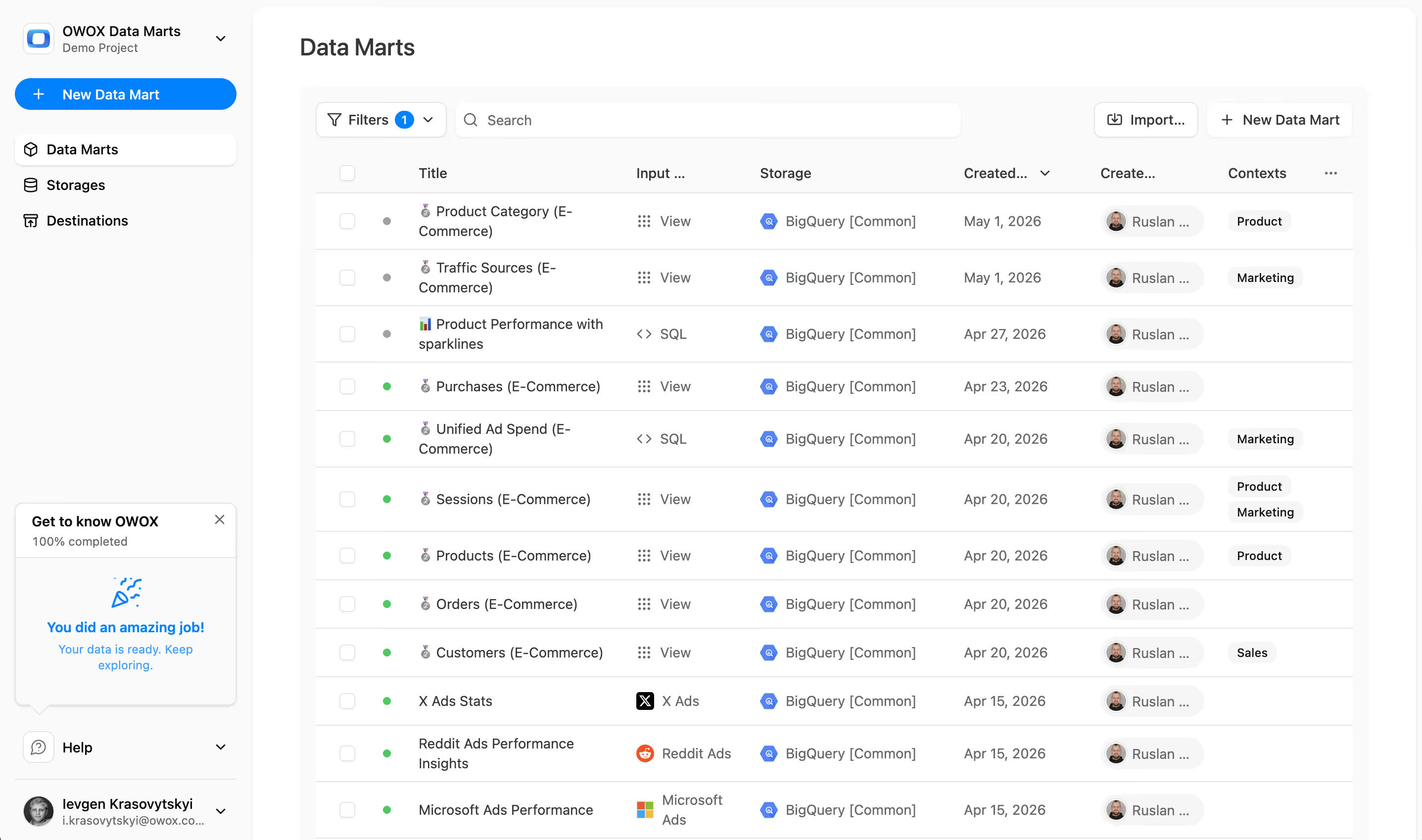
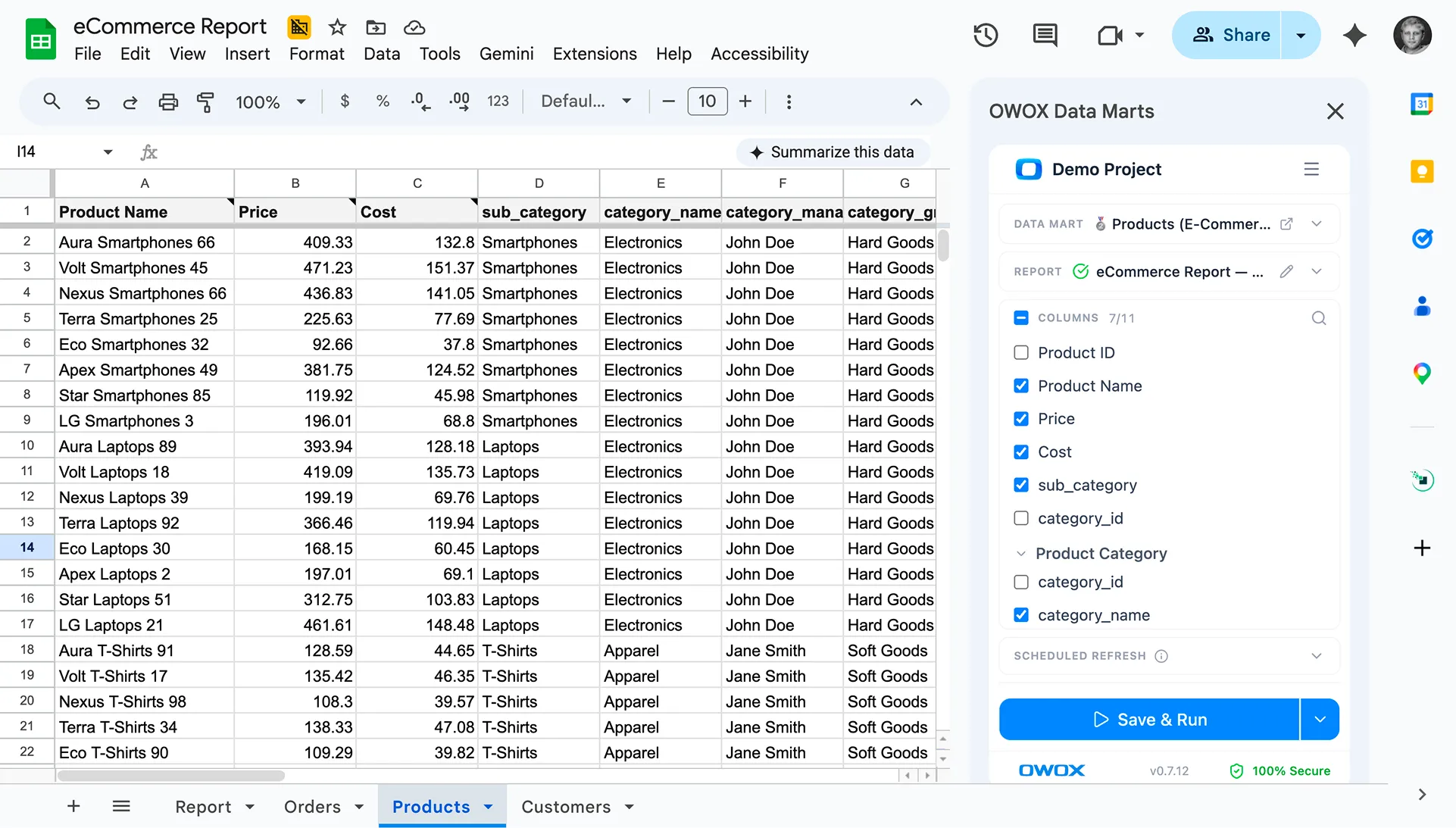
Handling many-to-many relationships can quickly complicate joins and reporting accuracy. With OWOX Data Marts, analysts can design structured bridge tables, manage relationship mappings, and ensure consistent logic across models and dashboards. All relationships are governed and documented, keeping your data models accurate and easy to maintain.





"AI by its nature will hallucinate. You need guardrails so you can trust your data."
"We had six or seven different channels and no single source of truth. It was almost impossible"
"We regained time. And time is the one resource that never comes back."