

What Is CAST AS FLOAT64 in SQL?
CAST AS FLOAT64 means converting a value into a 64-bit floating-point number so SQL can treat it like a decimal-ready numeric value for calculations, averages, ratios, and reporting.
What does CAST AS FLOAT64 mean in SQL?
In SQL, data type controls how a value is stored and how the database handles it in expressions. CAST AS FLOAT64 tells the query engine to take a value and interpret it as a floating-point number with decimal support. That matters when you need math to behave like math, not like text handling or integer-only logic.
Float vs integer vs string: why the type matters
An integer stores whole numbers only. A string stores characters, even if those characters look like a number such as "19.99". A FLOAT64 stores numeric values that can include decimals and supports a wide range of calculations. If your revenue column arrives as text, or your ratio uses integer fields, your results can be wrong, incomplete, or impossible to calculate until you cast the values properly.
For analysts, this shows up everywhere: conversion rates, average order value, CPC, ROAS, refund rates, and any metric that depends on decimal precision. If one side of a calculation is the wrong type, SQL may fail, round unexpectedly, or return a result that looks valid but is misleading.
Where you’ll see FLOAT64 (BigQuery and similar warehouses)
FLOAT64 is especially common in warehouses like BigQuery, where explicit typing is part of everyday query writing. You will see it when preparing modeled datasets, cleaning incoming event data, or combining fields from different systems that store numbers in different formats.
It also appears in transformation layers, reporting views, and ad hoc exploration. Anytime source systems send values as strings, or different tables define the same metric with different numeric types, CAST AS FLOAT64 becomes a simple but powerful cleanup move.
Basic syntax of CAST AS FLOAT64
The syntax is straightforward, but the impact is huge. Once a value is cast, downstream expressions use the converted type instead of the original one.
Standard CAST syntax
The standard SQL form is:
1CAST(expression AS FLOAT64)
This is the most readable version and the one most analysts use in production queries. It makes intent obvious: take this field and turn it into a floating-point number. That clarity is helpful when multiple people maintain the same reporting logic or when a query becomes part of a reusable analytics pipeline.
Alternative syntax with type functions (e.g., FLOAT64())
Some SQL environments support function-style conversions such as FLOAT64(expression). The idea is the same: convert the input to a decimal-capable numeric type. Syntax varies by warehouse, so analysts should always follow the rules of their SQL engine.
When consistency matters across a team, many teams prefer standard CAST because it is explicit and widely recognized. It also makes complex query logic easier to scan, especially inside nested calculations, CASE statements, and transformations.
Practical examples for analysts
This is where CAST AS FLOAT64 gets exciting. It is not just a technical cleanup tool. It directly affects the metrics people trust in dashboards, weekly reports, and performance reviews.
Converting strings to FLOAT64 for calculations
Suppose an ecommerce export stores order value as text. Before you can sum or average it reliably, you need to cast it:
1SELECT AVG(CAST(order_value AS FLOAT64)) AS avg_order_value
2FROM orders;
Without casting, SQL may reject the query or treat the field as text instead of a number. This is common with CSV loads, raw event exports, or merged data from marketing platforms. If you want to move faster, many analysts use ChatGPT to write SQL queries and then refine the type conversions for real warehouse data.
Handling division and avoiding integer truncation
Division is a classic trap. If both values are integers, some SQL engines may return an integer-style result or otherwise reduce decimal detail. Casting one or both values to FLOAT64 helps preserve the fractional result you actually want.
Example: imagine a campaign performance table with 125 conversions and 4000 clicks. To calculate conversion rate with decimal precision:
1SELECT
2  CAST(conversions AS FLOAT64) / CAST(clicks AS FLOAT64) AS conversion_rate
3FROM campaign_stats;
This returns a ratio that can be multiplied by 100 for percentage reporting. That tiny cast can be the difference between a trustworthy KPI and a broken dashboard.
Dealing with NULLs and invalid numeric values
Not every value can be converted cleanly. Blank strings, unexpected symbols, and malformed numbers can trigger errors or produce NULL. Analysts often combine casting with simple checks, cleanup functions, or safe casting patterns to avoid query failures in production reporting.
A practical approach is to inspect source data first, standardize formatting, and then cast only values that pass basic validation. This is especially useful when dealing with imported partner files or marketing data collected from multiple systems with inconsistent conventions.
Common pitfalls and precision issues
FLOAT64 is powerful, but it is not magic. It solves many analytical problems, yet it also comes with behavior that analysts need to understand before using it in sensitive calculations.
Rounding errors and unexpected decimals
Because FLOAT64 is a floating-point type, some decimal values cannot be represented perfectly. That can lead to tiny rounding artifacts such as extra digits far beyond the decimal place you care about. In exploratory analysis this is usually fine, but in finance-heavy reporting it can become a headache.
If a number looks slightly off after repeated calculations, the issue may be representation rather than logic. That is why analysts should round output when needed and choose data types intentionally. Clean relationships in tables also help reduce confusion when tracing metric sources, especially alongside strong modeling practices like key constraints in SQL.
Safe casting patterns and basic validation checks
A smart workflow is to validate before you cast. Check whether the field contains only numeric-looking values, handle blanks, and isolate records that fail conversion. That keeps dashboards from breaking because one source row contained an unexpected character.
Basic checks can include:
- Replacing empty strings with NULL
- Standardizing decimal separators
- Filtering obvious non-numeric values before aggregation
- Separating sensitive fields from transformation logic when applying data masking techniques
Safe casting is not just about avoiding errors. It is about making your metrics reproducible and easier to debug.
How CAST AS FLOAT64 fits into analytics workflows
In real analytics work, CAST AS FLOAT64 rarely appears alone. It sits inside larger transformation steps that prepare raw data for analysis, reporting, and automated decision-making.
Cleaning and normalizing metrics in SQL queries
Analysts often use CAST AS FLOAT64 while building reporting views, intermediate models, or reusable transformations. It helps standardize metrics from ad platforms, CRM systems, payment data, and event streams so calculations behave consistently across the whole query.
This is especially useful inside automated logic such as stored procedures in SQL, where the same cleanup steps run on a schedule. If one source sends spend as text and another sends it as integer cents, casting and normalization bring them into a common analytical format.
Using FLOAT64 in reporting layers and BI tools
Once a metric reaches a BI tool, type problems become much more visible. You may see incorrect sorting, broken aggregations, or weird formatting in charts. Casting values to FLOAT64 before they reach the reporting layer helps prevent those issues and makes dashboards more stable.
It also supports cleaner joins and model logic when paired with well-defined relationships such as primary and foreign keys. Numeric consistency makes semantic models easier to trust, especially when multiple teams use the same metrics across reports.
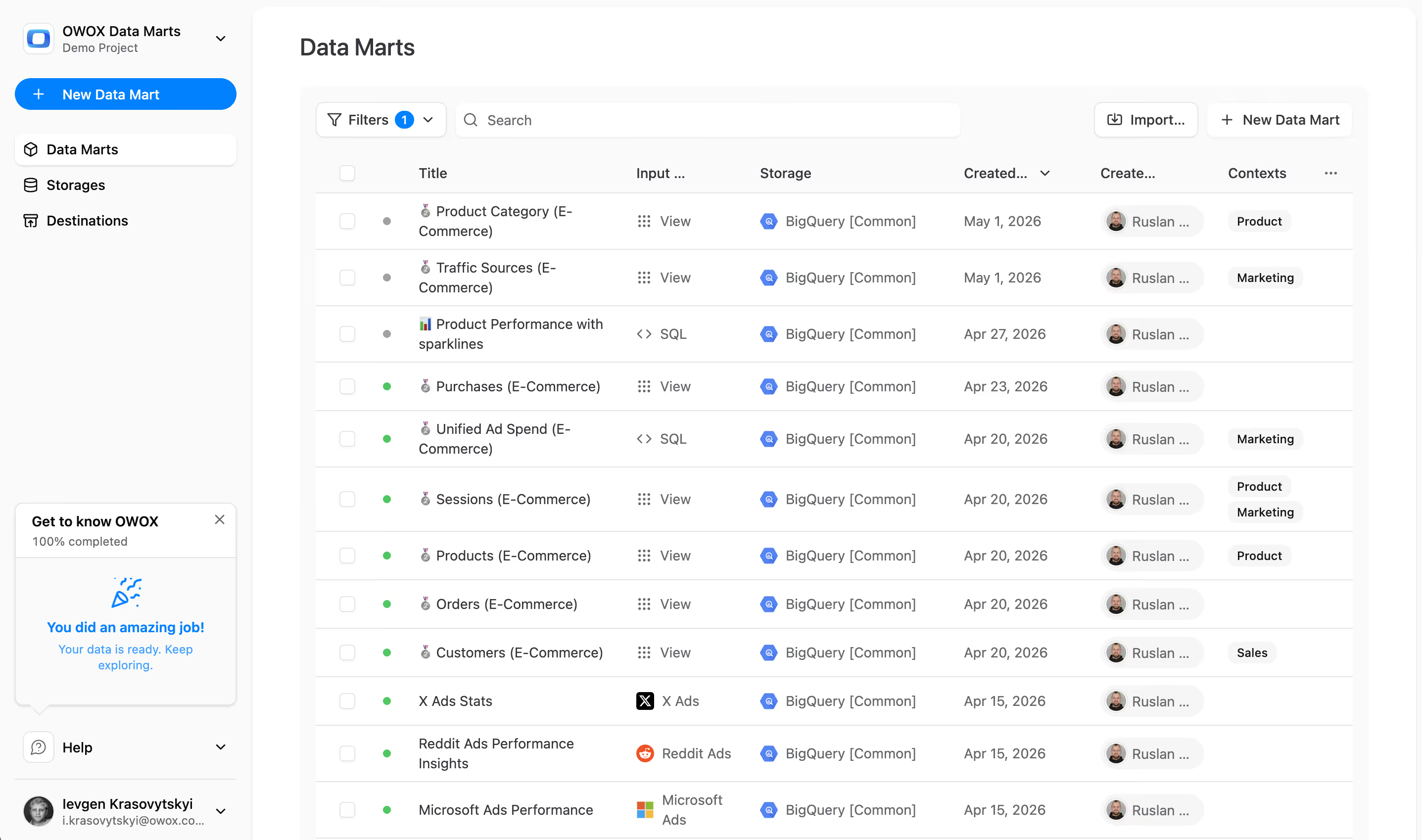
OWOX Data Marts context
In Data Marts, consistency is everything. The same metric may travel through raw ingestion, transformations, business logic, and dashboard consumption. If numeric types shift unexpectedly along the way, comparisons become messy fast.
Why consistent numeric types matter in Data Marts
Using consistent numeric types helps keep KPIs stable across datasets and reporting periods. When values are normalized early, analysts spend less time fixing downstream issues and more time interpreting results. CAST AS FLOAT64 is often part of that normalization step for rates, averages, and source fields that arrive as text.
It also improves collaboration. When everyone knows a metric is stored and calculated as a floating-point value, there is less guesswork in query design, validation, and BI layer setup.
Examples of metrics that are often cast to FLOAT64
Common examples include:
- Conversion rate
- Click-through rate
- Average order value
- Return on ad spend
- Revenue imported from text-based source files
- Discount percentages and tax rates
These metrics often rely on decimal precision and mixed-source inputs, which makes FLOAT64 a frequent choice during transformation and reporting prep.
Need cleaner metrics before they hit your dashboards? Build consistent, analysis-ready data faster with OWOX Data Marts and streamline how your reporting layers and SQL workflows handle numeric types.
%202.png)



"AI by its nature will hallucinate. You need guardrails so you can trust your data."
"We had six or seven different channels and no single source of truth. It was almost impossible"
"We regained time. And time is the one resource that never comes back."