

What Is the CONTAINS_SUBSTR Function in BigQuery?
The CONTAINS_SUBSTR Function in BigQuery checks whether a specific substring exists within a given string. It returns a Boolean value, TRUE if the substring is found, and FALSE otherwise.
The CONTAINS_SUBSTR Function is particularly useful for filtering and analyzing text data, enabling quick pattern detection and keyword identification across datasets. It helps analysts streamline queries when searching for partial matches within strings.
Benefits of the CONTAINS_SUBSTR Function
The CONTAINS_SUBSTR Function offers a straightforward way to identify text patterns without complex regular expressions. It helps analysts clean, search, and analyze text data efficiently. Below are the key benefits:
- Simplicity: Quickly check if a keyword or phrase exists in text fields.
- Efficiency: Reduces the need for longer, more complex string manipulation functions.
- Flexibility: Works across multiple columns and can be combined with conditions like WHERE and CASE.
- Usefulness in Reporting: Supports keyword-based filtering in large datasets.
Using CONTAINS_SUBSTR improves data filtering accuracy while keeping SQL logic clear and concise.
How the CONTAINS_SUBSTR Function Works
The CONTAINS_SUBSTR Function takes two arguments, a text string and a substring to search for, and checks whether the second exists within the first.
Syntax:
CONTAINS_SUBSTR(text_expression, substring)- text_expression: The text field or string to be searched.
- substring: The specific sequence of characters you want to find.
For example:
SELECT CONTAINS_SUBSTR('OWOX Data Marts', 'Data') AS result;This returns TRUE since the substring "Data" exists in the text string.
Use Cases for the CONTAINS_SUBSTR Function in BigQuery
The CONTAINS_SUBSTR Function can be applied across multiple data analysis and marketing scenarios. It simplifies text searches, allowing users to quickly identify patterns or keywords. Examples include:
- Keyword Filtering: Identify entries containing brand or campaign keywords.
- Customer Segmentation: Detect specific terms within customer feedback or reviews.
- Data Quality Checks: Locate strings with incorrect labels or formatting inconsistencies.
- Ad Campaign Analysis: Filter campaign names or URLs based on specific substrings.
- Product Categorization: Match partial product names to categories dynamically.
These use cases show how the function helps analysts gain insight from textual data efficiently.
Challenges of Using the CONTAINS_SUBSTR Function
Despite its simplicity, the CONTAINS_SUBSTR Function has some limitations.
- Case Sensitivity: It is case-sensitive, which can lead to missed matches unless data is standardized.
- Limited Pattern Matching: Doesn’t support wildcards or complex search conditions like regex.
- Performance Concerns: When used excessively on large datasets, it can impact query performance.
- Exact Match Dependency: Requires careful selection of substring values to avoid false negatives.
Understanding these challenges helps ensure accurate results when using CONTAINS_SUBSTR in production queries.
Best Practices for Using the CONTAINS_SUBSTR Function
To use CONTAINS_SUBSTR effectively, follow these key recommendations. These practices improve consistency, speed, and readability in text filtering tasks:
- Normalize Text: Use functions like LOWER() or UPPER() to make searches case-insensitive.
- Combine with Conditions: Pair with AND, OR, or CASE for flexible logic.
- Optimize for Large Datasets: Apply indexing or filtering before substring searches.
- Use for Quick Checks: Ideal for lightweight keyword searches rather than deep text mining.
- Document Usage: Clearly describe substring search logic for transparency in shared queries.
These best practices ensure your searches remain efficient, accurate, and easy to maintain.
Ensure Reliable Text Checks with OWOX Data Marts
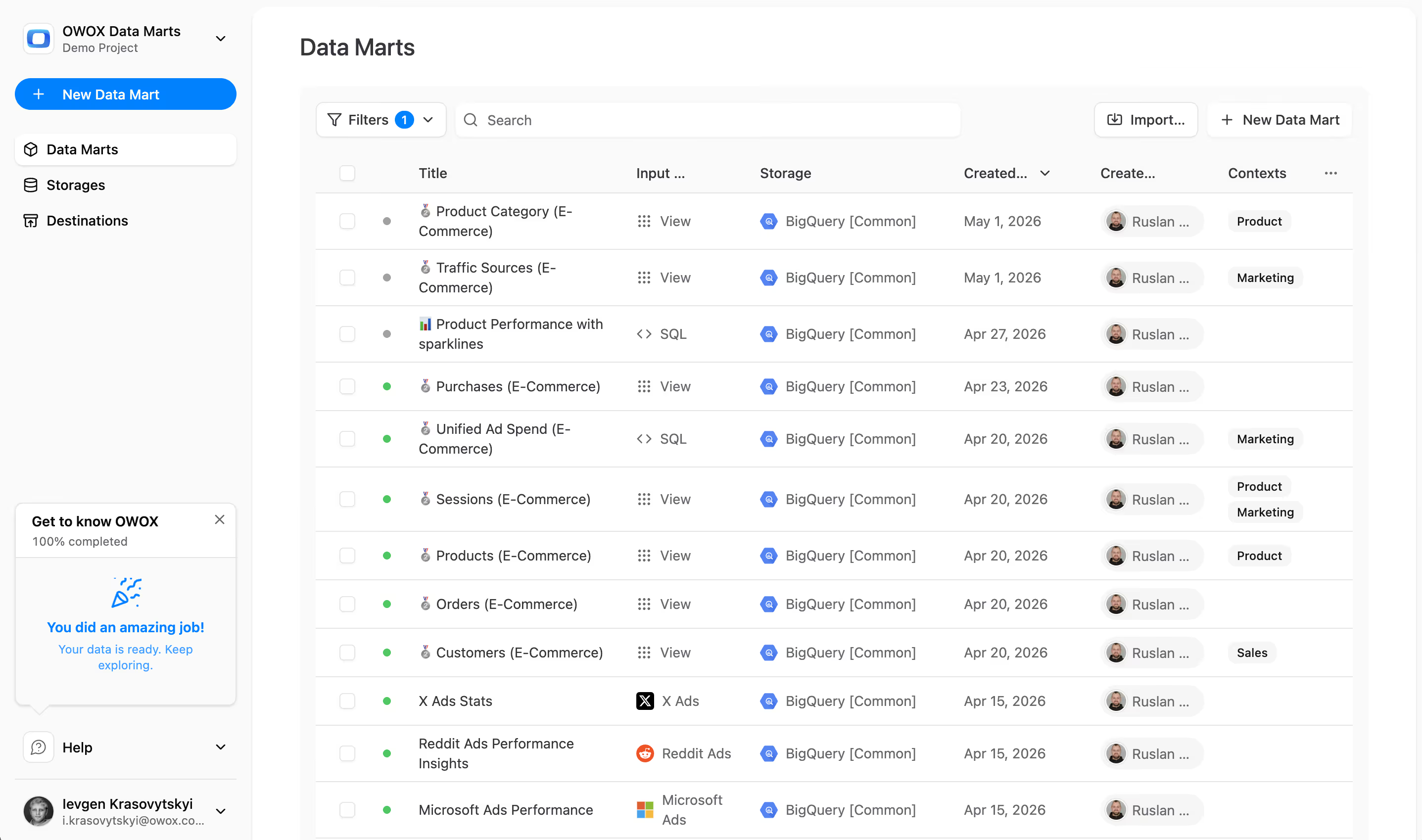
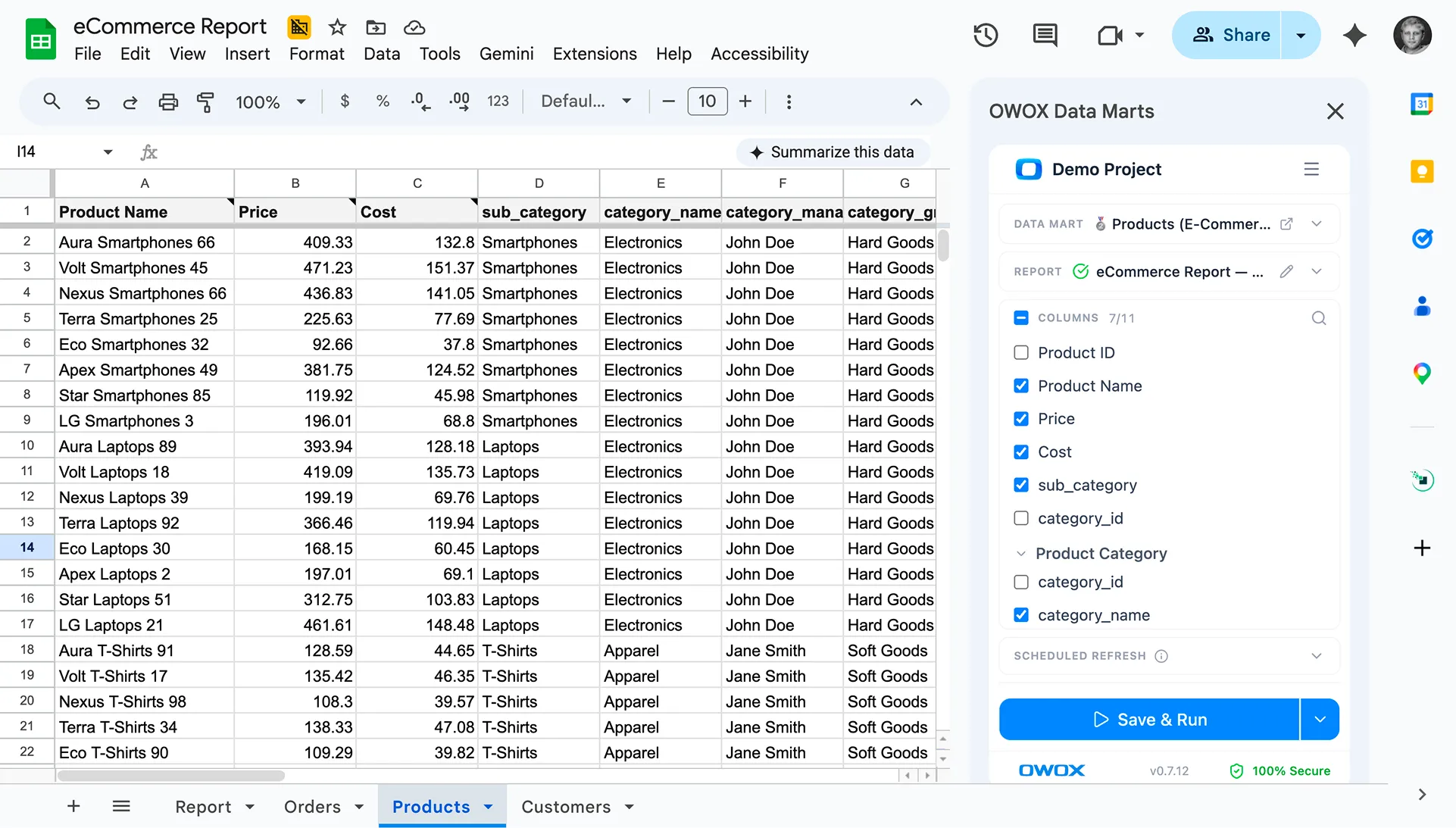
OWOX Data Marts Cloud helps analysts automate and manage SQL transformations involving functions like CONTAINS_SUBSTR. It allows you to standardize text searches, clean datasets, and maintain governed logic across reusable SQL marts. With automatic refreshes, seamless integration with Sheets and BI tools, and centralized metric governance, OWOX ensures that your substring searches and data filters remain consistent, accurate, and scalable.





.png)





"AI by its nature will hallucinate. You need guardrails so you can trust your data."
"We had six or seven different channels and no single source of truth. It was almost impossible"
"We regained time. And time is the one resource that never comes back."