

What Is CRM Marketing?
CRM marketing is a way to use customer data, behavior, and communication history inside a CRM system to run smarter, more personalized marketing focused on keeping customers, increasing revenue per customer, and growing long-term value.
What Is CRM Marketing?
CRM marketing sits at the intersection of customer relationship management and performance analysis. It turns customer records, past interactions, purchases, and engagement signals into action. Instead of sending the same message to everyone, teams use CRM marketing to decide who should get what message, when they should get it, and how success should be measured.
It is especially important for companies with repeat purchases, subscriptions, account-based relationships, or long customer lifecycles. The big idea is simple: better customer context leads to better marketing decisions.
CRM vs CRM Marketing: What’s the Difference?
A CRM is the system or platform that stores customer and prospect information. It usually contains contacts, accounts, deal stages, communication logs, and sometimes campaign history.
CRM marketing is the strategy and analytical practice built on top of that system. It uses CRM data to create audiences, trigger campaigns, score engagement, and evaluate outcomes. In other words, the CRM is the database and workflow layer; CRM marketing is the customer growth engine powered by that data.
Key Goals of CRM Marketing (Retention, Upsell, LTV)
Most CRM marketing programs are designed around a few high-impact goals. The first is retention: keeping existing customers active and reducing churn. The second is upsell or cross-sell: increasing value from current customers by matching them with relevant products or plans. The third is lifetime value growth, which connects customer behavior to long-term revenue.
- Retention campaigns aim to reduce drop-off and re-engage inactive users.
- Upsell programs target customers who show signs of readiness for a higher-tier offer.
- LTV-focused strategies prioritize customers and segments with the strongest long-term potential.
Core Components of CRM Marketing
CRM marketing only works well when the underlying data structure is solid. Analysts and marketers usually rely on a few core building blocks to make campaigns measurable and repeatable.
Customer Profiles and Attributes
A customer profile combines identifiers, demographic fields, purchase history, lifecycle status, consent information, and behavioral traits. This profile can include both structured CRM fields and raw customer and event data from digital touchpoints.
Useful attributes often include first purchase date, last activity date, average order value, subscription status, product usage level, preferred channel, and region. The stronger the profile, the easier it is to personalize messaging and explain performance later.
Segments and Audiences
Segments are groups of customers created from shared conditions. Some are static, such as “enterprise customers in Europe.” Others are dynamic, such as “customers who have not purchased in 60 days but opened an email in the last week.”
Good segmentation balances business logic with data quality. If the rules are too broad, messaging becomes generic. If they are too narrow, audiences become too small to test and scale. Analysts often define the audience logic so marketers can activate it with confidence.
Journeys, Triggers, and Campaigns
Journeys are sequences of messages tied to customer stages or behaviors. Triggers launch those messages when a condition is met, like account creation, cart abandonment, renewal approach, or inactivity. Campaigns are the actual executions across email, push, SMS, paid media, or sales outreach.
This is where CRM marketing gets exciting: every trigger creates a measurable event, and every event can be tied back to customer movement, revenue, or churn risk. That makes it far more analytical than one-off mass campaigns.
How CRM Marketing Works in Data Analytics
From an analytics perspective, CRM marketing is a data integration challenge first and a reporting challenge second. Teams need reliable identifiers, event timestamps, business rules, and attribution logic before dashboards become useful.
Data Sources: CRM, Website, Product, ERP
CRM marketing analysis usually pulls from several systems at once. The CRM provides contacts, accounts, deals, statuses, and communication history. Website analytics adds sessions, page views, form submissions, and conversions. Product data shows feature usage, logins, and in-app behavior. ERP or order systems contribute revenue, refunds, invoices, and fulfillment details.
That is why analysts spend so much time collecting CRM and customer data from multiple systems. Without that step, campaign reporting can look complete while still missing the actual business outcome.
If you are new to this workflow, understanding the data analytics basics helps clarify how source data becomes decisions.
Typical Data Model for CRM Marketing Analytics
A common model includes a customer table, a transactions table, a campaign send table, an engagement events table, and a product or account activity table. These are connected through customer IDs, account IDs, email hashes, or other business keys.
Analysts often build fact tables for purchases, touches, and product events, then join them to dimensions such as customer, channel, date, and lifecycle stage. This structure supports cohort analysis, response tracking, funnel reporting, and time-based comparisons.
The toughest part is identity resolution. One customer may appear as a lead in the CRM, a user in the product database, and a payer in the ERP. CRM marketing analytics gets much stronger when those identities are mapped consistently.
Common Metrics: RFM, Churn, LTV, Engagement
Several metrics show up again and again in CRM marketing reporting. RFM stands for recency, frequency, and monetary value. It helps rank customers based on how recently and how often they purchased and how much they spent. Churn measures customer loss or inactivity. Engagement tracks actions like opens, clicks, visits, and product usage.
LTV, or lifetime value, estimates the long-term revenue contribution of a customer or segment. Many teams use CRM, billing, and order data together to calculate customer lifetime value (LTV) with CRM and ERP data more accurately.
No single metric is enough on its own. A campaign with high open rates but low revenue impact may still be underperforming. CRM marketing works best when engagement, conversion, retention, and revenue are viewed together.
Example: CRM Marketing Analytics Use Cases
Here is a realistic example: a subscription business wants to improve retention and expansion. The team combines CRM contact data, email campaign logs, product usage events, and ERP subscription revenue into one reporting layer.
Win-Back Campaign Performance
The first use case is a win-back campaign for customers who have not logged in for 30 days and have no purchase in the last 45 days. Analysts build an audience, track who received the message, and measure reactivation within 14 days.
The key questions are simple but sharp: Which segment came back? How many renewed? Did the campaign improve behavior compared to a holdout or prior period? This turns win-back from a vague retention effort into something measurable.
Cross-Sell Recommendation Analysis
The second use case looks at customers who bought Product A but never activated Product B. The team sends a targeted recommendation based on account type and recent activity. Analysts then compare click-through, trial starts, and downstream revenue by segment.
This analysis often reveals that the best cross-sell audience is not the biggest audience. It may be users with strong recent engagement, specific feature adoption patterns, or higher support satisfaction.
Lifecycle Stage Reporting for Stakeholders
The third use case is stakeholder reporting. Marketing wants campaign results, customer success wants churn risk, and leadership wants revenue movement by lifecycle stage. Analysts create a shared report showing counts and value across lead, new customer, active customer, at-risk customer, and reactivated customer groups.
This is where CRM marketing becomes powerful across teams: everyone is looking at the same customer story, just through a different lens.
CRM Marketing in Data Marts and Reporting
When CRM marketing grows, spreadsheets and disconnected dashboards start breaking down fast. A dedicated reporting structure becomes necessary.
Why Analysts Build CRM Marketing Data Marts
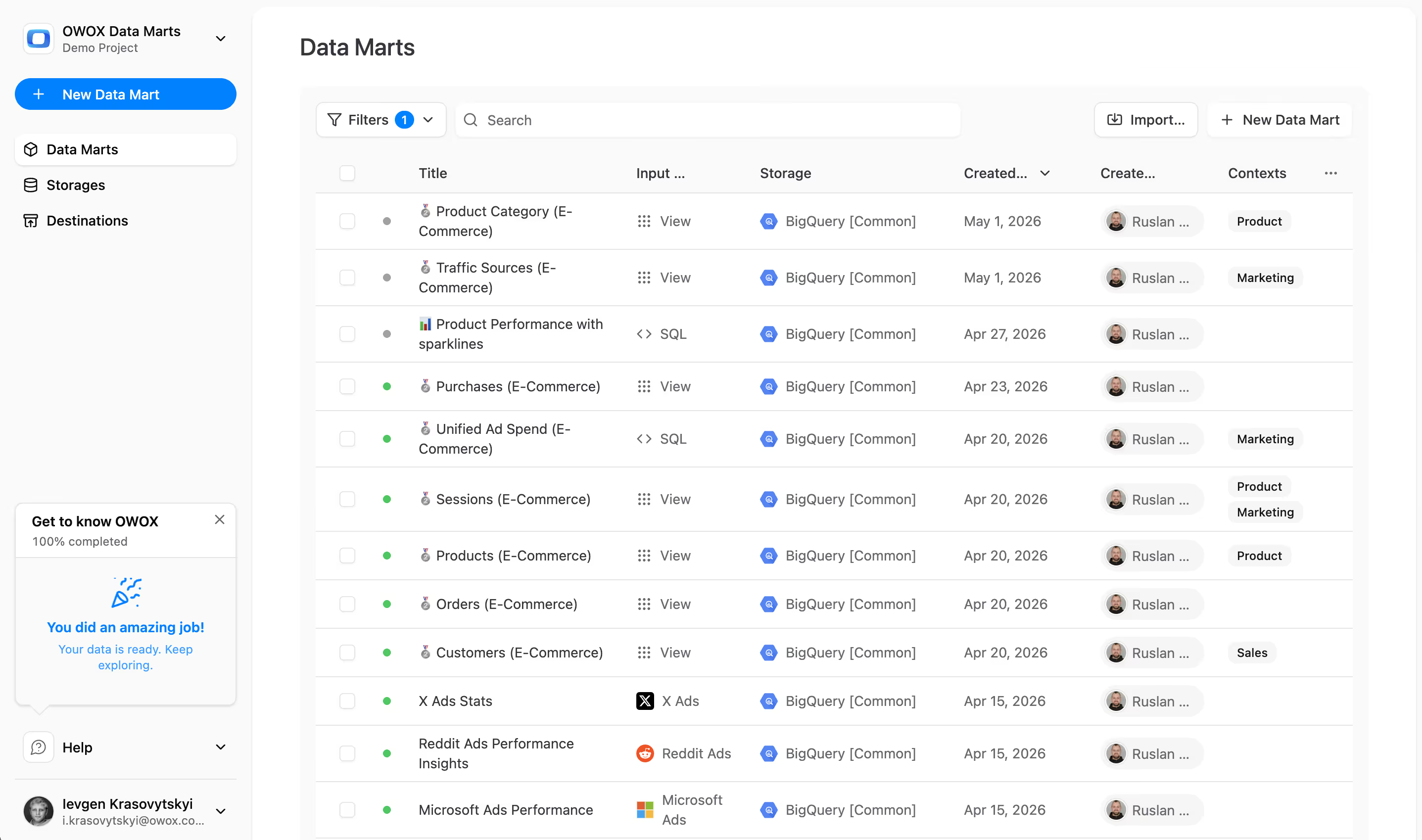
Analysts build CRM marketing data marts to standardize definitions, centralize joins, and reduce reporting chaos. A data mart can contain cleaned customer entities, campaign touchpoints, transaction facts, and business-ready lifecycle logic.
This makes recurring reporting faster and more consistent. It also improves trust because teams can trace where each metric came from and how it was transformed. That is especially valuable when working on data lineage for CRM-based reporting.
Typical Dashboards and Stakeholder Questions
Common dashboards include retention trends, churn risk by segment, win-back performance, upsell funnel conversion, LTV by acquisition source, and engagement by lifecycle stage. Some are built for marketing operations, while others support leadership reviews or account management teams.
Typical stakeholder questions include:
- Which customer segments are most likely to churn next month?
- Which campaigns drive reactivation versus just clicks?
- How does product usage affect upsell probability?
- Which lifecycle stages contribute the most revenue growth?
OWOX Data Marts in the Context of CRM Marketing
CRM marketing depends on a clean analytical foundation. That usually means bringing together customer, campaign, behavior, and revenue data in a way that teams can actually trust.
Unifying CRM and Other Source Data for Analytics
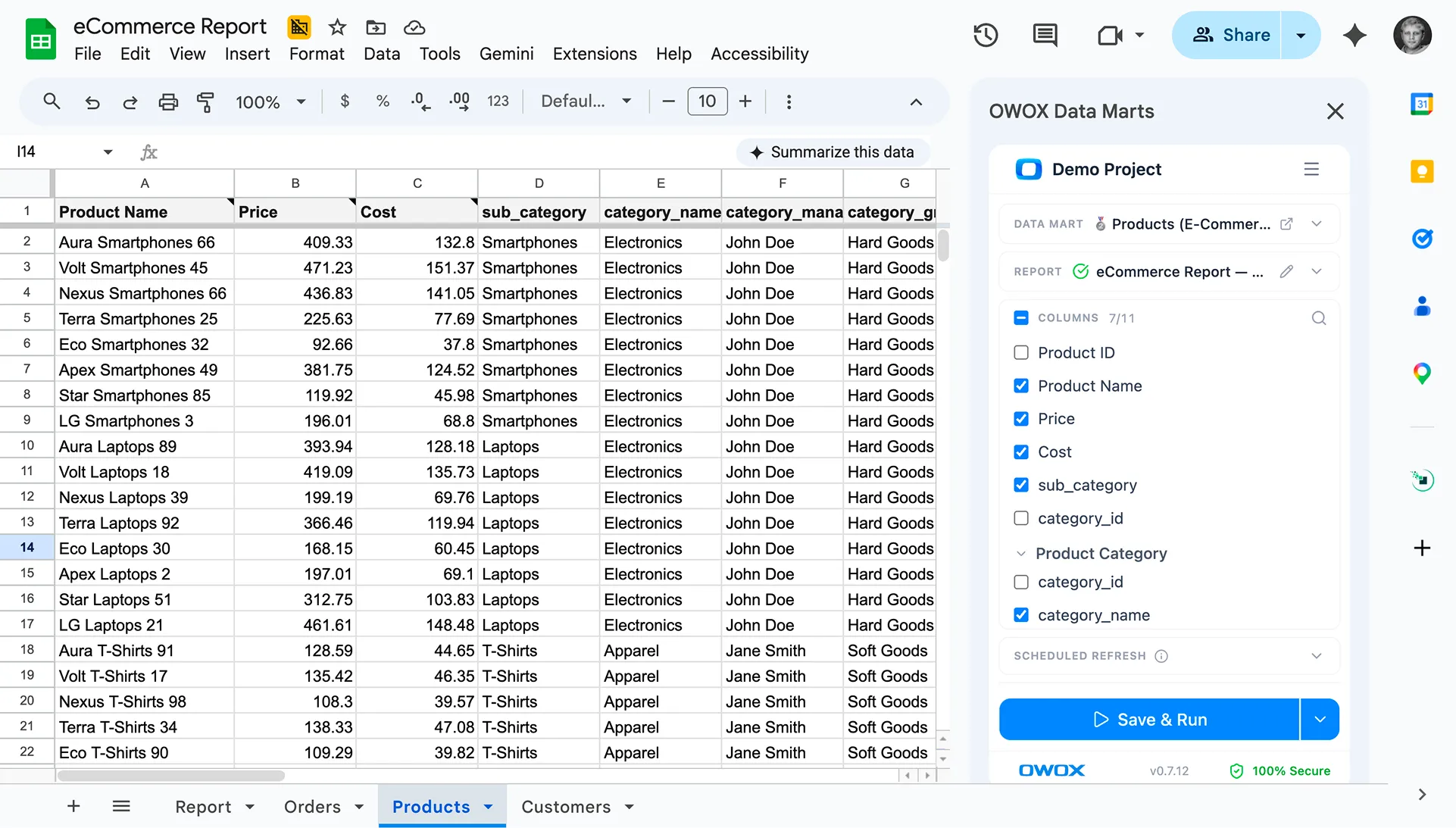
In the context of CRM marketing, data marts help unify CRM records with website behavior, product usage, and transactional data. That creates a fuller customer view than any single system can provide on its own.
For analysts, this means less time rebuilding joins and more time testing segment logic, validating campaign impact, and answering business questions with confidence.
Enabling Consistent CRM Marketing Metrics Across Reports
Consistency is the real unlock. When retention, churn, lifecycle stage, audience membership, and LTV are defined once and reused everywhere, reporting becomes easier to maintain and much easier to trust.
That gives marketing, BI, and leadership teams a shared version of reality instead of five conflicting dashboards and one very nervous analyst.
Want a cleaner way to organize CRM marketing reporting? Explore OWOX Data Marts for customer analytics, CRM reporting, and lifecycle metrics.
%202.png)



"AI by its nature will hallucinate. You need guardrails so you can trust your data."
"We had six or seven different channels and no single source of truth. It was almost impossible"
"We regained time. And time is the one resource that never comes back."