

What Is Data Ambiguity?
Data ambiguity is when the same data point can mean different things to different people, so nobody is fully sure what a metric, event, or field really represents in a report.
What Is Data Ambiguity?
In analytics, clarity is everything. If one number can be interpreted in two or three different ways, that number stops being useful and starts becoming a problem.
Formal definition in analytics
Data ambiguity happens when data lacks a single, shared meaning. A field, metric, event, or report label may look straightforward, but different teams interpret it differently based on their own logic, business rules, or reporting habits.
For example, “conversion” might mean a submitted form to marketing, a qualified opportunity to sales, and a completed purchase to finance. The label is the same, but the meaning is not. In data analytics basics, this is one of the fastest ways to turn reporting into confusion instead of insight.
Common real-world symptoms in reports and dashboards
You usually spot data ambiguity when reports spark arguments instead of action. Two dashboards show different totals for the same KPI. A stakeholder asks, “Why doesn’t this match?” and no one can answer quickly. Analysts spend more time defending numbers than analyzing them.
Common symptoms include:
- Metrics with the same name but different values
- Dashboards that silently apply different filters
- Fields like “user,” “lead,” or “revenue” without clear definitions
- Repeated debates over which source is correct
- Delays in decisions because teams do not trust the data
Typical Causes of Data Ambiguity
Ambiguity rarely appears out of nowhere. It usually grows from small inconsistencies that pile up across tools, teams, and time.
Vague or conflicting metric definitions
This is the classic culprit. A metric sounds simple, but the logic behind it is never fully written down. “Active users” could mean daily logins, users with one event, or users with meaningful product activity. Without a fixed definition, every analyst may calculate it differently.
These mismatches often sit under the broader category of data quality issues and how to overcome them, because unclear meaning is just as damaging as missing or incorrect values.
Different business rules for the same dataset
Even when teams use the same raw data, they may apply different logic on top of it. One report excludes internal traffic. Another includes it. One team defines “new customer” based on first purchase date, while another uses first signup date.
The dataset is shared, but the rules are not. That creates conflicting outputs that look official but are not comparable.
Inconsistent naming and tracking conventions
Ambiguity gets worse when naming is messy. Imagine event names like “signup,” “sign_up,” and “registration_complete” all representing nearly the same action. Or a field called “source” that sometimes means traffic source and sometimes means CRM system.
When tracking conventions drift, analysts are forced to guess. And guessing is the enemy of trustworthy reporting.
Missing context (dimensions, time ranges, filters)
Sometimes the number is technically correct, but the context is hidden. A dashboard may show revenue without clarifying currency, refund treatment, time zone, or date dimension. Is it order date or payment date? Gross or net? Last-click or blended attribution?
Without dimensions, filters, and calculation notes, the same metric can tell very different stories to different viewers.
Examples of Data Ambiguity in Analytics
Let’s make it real. Data ambiguity shows up in almost every function that works with reporting.
Marketing example: "leads" and "conversions"
A demand gen team reports 4,000 leads for the month. Sales reports 2,600. The executive team wants to know which number is right. The answer: maybe both, but they are measuring different things.
Marketing may count every form submission as a lead. Sales may count only records that pass qualification rules. “Conversions” gets even trickier if paid media counts landing page submissions while CRM reporting counts booked demos. Same words, different logic.
Example: if a dashboard query counts all form events, but another report counts only unique contacts with valid email addresses, totals will never align.
Product example: "active users" and "sessions"
Product analytics teams hit this all the time. One analyst defines an active user as anyone who triggered any event in a day. Another requires a core action, like creating a project or viewing a report. Both approaches sound reasonable, but they answer different questions.
Sessions also cause chaos. Is a session ended after 30 minutes of inactivity? Does opening the mobile app and website create one session or two? If these rules are undocumented, engagement trends become shaky fast.
Revenue example: "gross vs. net" mismatch
Revenue is where ambiguity gets expensive. Finance may report net revenue after refunds, taxes, and discounts. Ecommerce reporting may show gross order value. A dashboard titled “Revenue” without clarification invites instant misunderstanding.
Imagine this simplified logic:
- Gross revenue = sum of all order totals
- Net revenue = gross revenue - refunds - discounts
If one monthly report uses gross and another uses net, leaders may think the business grew or shrank for the wrong reason. That is not a dashboard issue. That is a definition issue.
Why Data Ambiguity Is Dangerous for Decision-Making
Ambiguity does not just make reports messy. It weakens the entire decision-making process.
Broken trust between teams
When teams repeatedly see conflicting numbers, trust drops fast. Marketing stops trusting BI. Finance questions product dashboards. Executives start relying on spreadsheets from people they know instead of shared reporting.
This is closely tied to responsibility for data quality in analytics teams. If ownership is unclear, ambiguity keeps spreading because nobody is accountable for definition alignment.
Slower decisions and endless metric debates
Instead of asking “What should we do next?” teams get stuck on “What does this metric even mean?” Meetings become detective work. Analysts spend hours reconciling dashboards. Launches, budget shifts, and channel optimizations slow down.
It is one of the most common and painful common data analytics challenges: not lack of data, but lack of shared understanding.
Compounding impact on forecasting and planning
Ambiguous metrics poison downstream work. Forecasts built on unclear conversion rates will be unreliable. Capacity plans based on inconsistent active user counts will drift. Revenue projections based on mixed gross and net logic can distort hiring and budget decisions.
Small definition mismatches today can become major planning errors next quarter. That is why ambiguity should be treated as a structural analytics risk, not a minor reporting annoyance.
How to Reduce Data Ambiguity in Your Analytics Stack
The good news: ambiguity is fixable. But only if teams stop treating definitions as tribal knowledge.
Create and maintain a business glossary
A business glossary gives important terms one agreed meaning. It should define metrics like leads, active users, conversion rate, churn, and revenue in plain language, with calculation notes where needed.
Good glossaries are living documents, not forgotten wiki pages. They should be reviewed when processes, tracking, or business rules change.
Standardize tracking and naming conventions
Consistent event names, field names, and table structures reduce interpretation risk. If everyone tracks the same action differently, cleanup becomes endless. If naming is standardized from the start, reporting gets dramatically easier.
This also supports better data preparation best practices, because transformation logic is simpler when the source data follows clear conventions.
Document metric logic close to the data
Definitions should not live only in slide decks or team memory. Put them near the source tables, transformation layers, or BI models where analysts actually work. That makes it easier to check assumptions before building reports.
Strong documentation also improves data lineage and data transparency, helping teams see where a metric comes from and how it was shaped along the way.
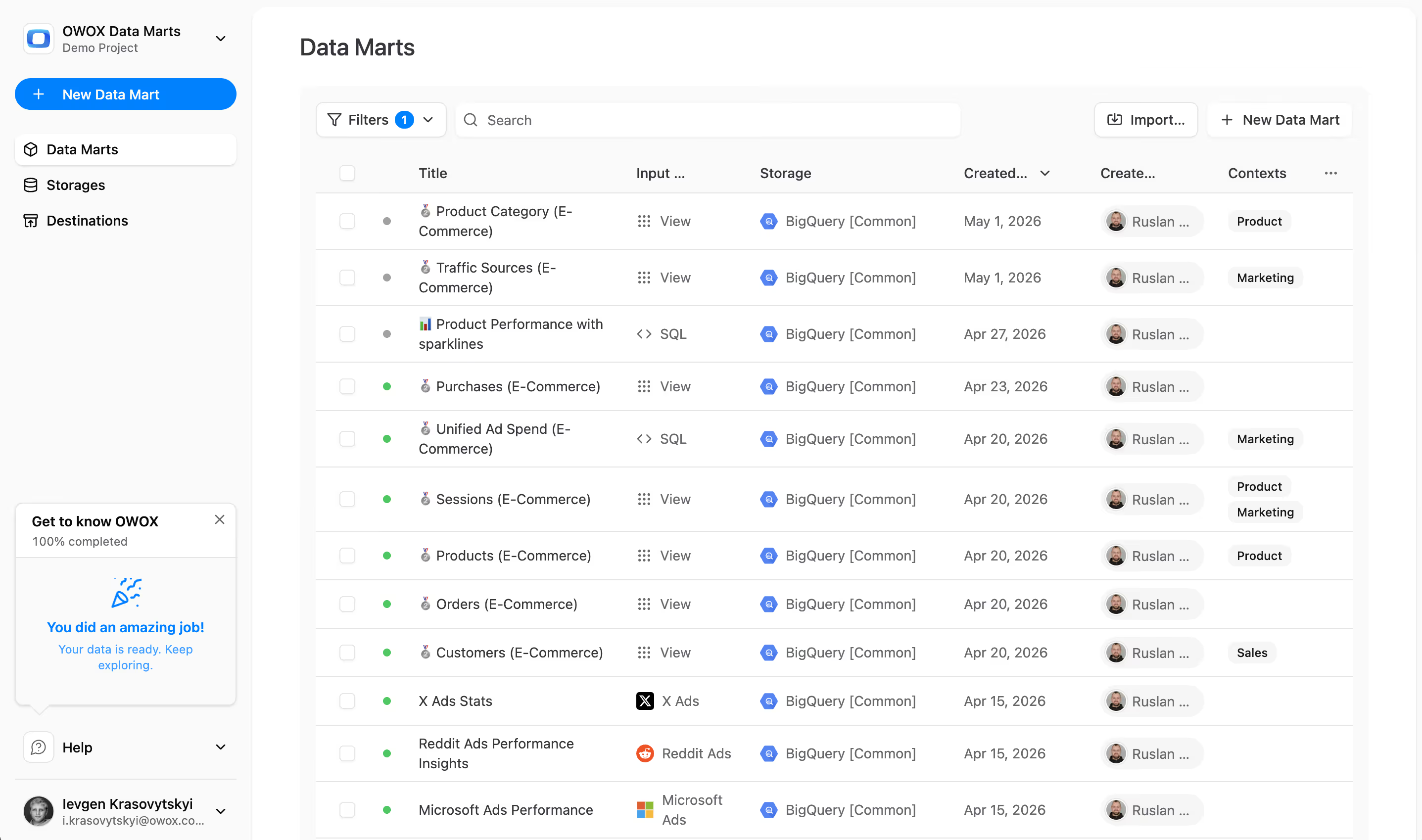
Use governed data marts for shared, agreed metrics
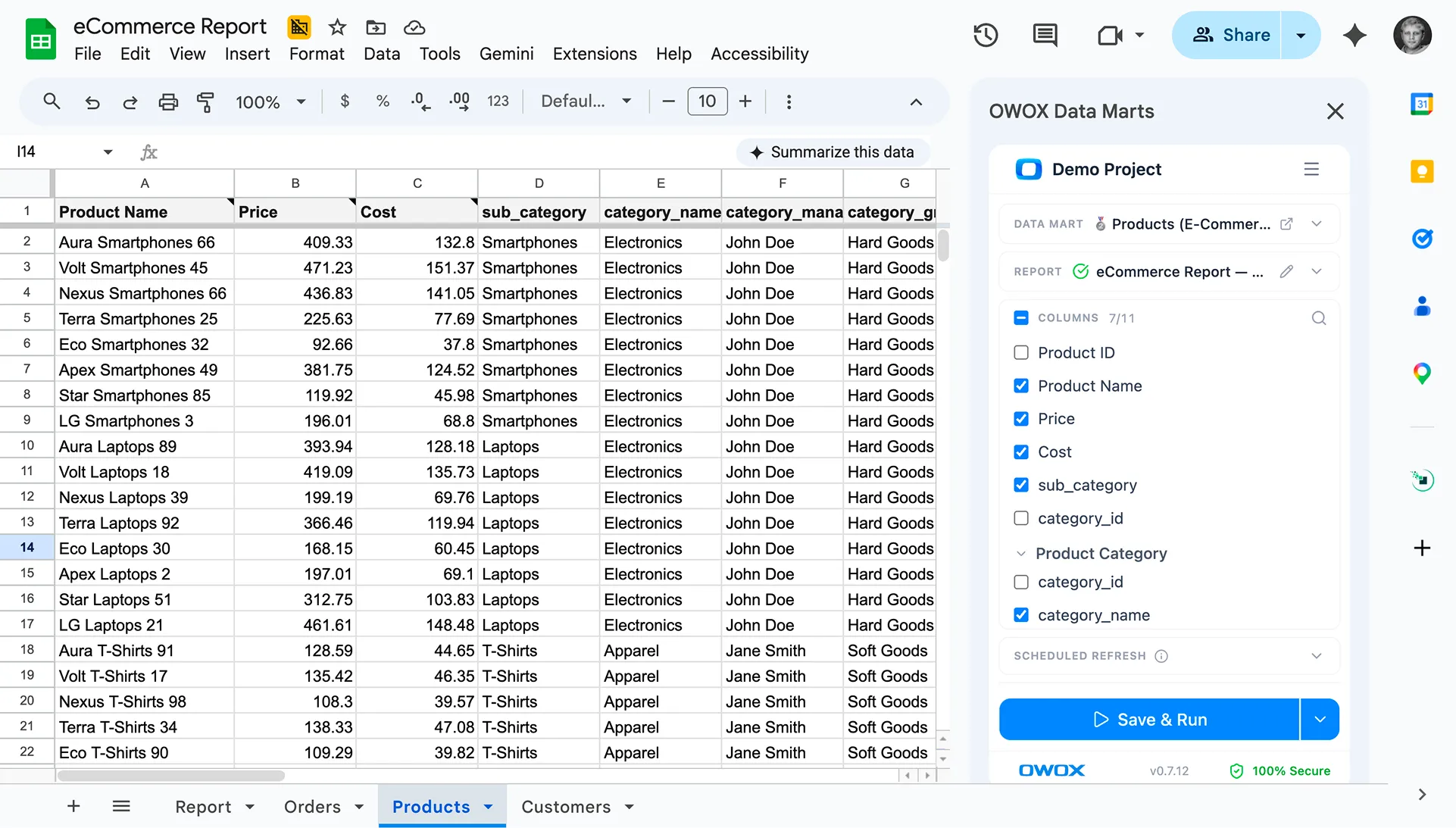
A governed data mart creates a shared reporting layer where business logic is centralized and reused. Instead of every team rebuilding “conversion” or “net revenue” on its own, they query the same approved tables and fields.
This does not eliminate every analytics question, but it dramatically reduces duplicate logic, hidden assumptions, and dashboard drift.
Data Ambiguity in the Context of OWOX Data Marts
Data marts are especially powerful when the goal is alignment, not just storage. They turn messy raw data into structured, reporting-ready datasets with clearer meaning.
How data marts help align definitions across teams
With a data mart approach, teams can agree on core entities and metrics once, then use them repeatedly across dashboards and analyses. That means marketing, product, finance, and leadership are more likely to look at the same logic instead of competing versions of the truth.
When definitions are embedded in shared models, fewer questions depend on memory, custom SQL, or one analyst’s private spreadsheet. That is a huge win for consistency.
Designing reporting-ready tables to minimize ambiguity
Reporting-ready tables should be explicit. Field names should be descriptive. Metric columns should reflect their business meaning. Filters, grain, and date logic should be clear. A table called “daily_net_revenue_by_order_date” leaves far less room for confusion than a generic table called “sales_report.”
Done well, this structure helps analysts move faster because they spend less time decoding data and more time answering real business questions. That is the energy shift every analytics team wants.
If you want cleaner reporting-ready data marts and more consistent shared metrics, OWOX Data Marts can help you organize data for analysis with less ambiguity. Explore OWOX Data Marts to build a more trusted reporting layer.
%202.png)



"AI by its nature will hallucinate. You need guardrails so you can trust your data."
"We had six or seven different channels and no single source of truth. It was almost impossible"
"We regained time. And time is the one resource that never comes back."