

What Is a Data Architecture Diagram?
A data architecture diagram visually represents how data is moved, stored, and accessed within an organization.
Data architecture diagram provides a high-level blueprint of an organization’s data environment, showing data sources, pipelines, storage systems, and users. These diagrams help teams align on data strategy, understand dependencies, and plan future data initiatives. They serve as a shared reference for analysts, engineers, marketers, and decision-makers.
Why Data Architecture Diagrams Matter
Data architecture diagrams bring structure and clarity to complex systems. Here are the key benefits:
- Improving Communication Across Different Teams – Bridge gaps between technical and business users with a shared visual framework.
- Supporting Business Intelligence and Data-Driven Decisions – Make it easier to access and analyze data for faster, informed decision-making.
- Encouraging Collaboration Within and Between Departments – Utilize a common reference point to align goals and break down silos.
- Providing a Clear Vision for Future Growth and Scalability – Plan system upgrades and expansions with a clear view of current data flows.
Core Elements of a Data Architecture Diagram
An effective data architecture diagram relies on clearly defined components that work together to represent your data environment.
Here are the core elements to include:
- Annotations – Add brief descriptions to explain data sources, flows, and processes. These help all stakeholders understand the purpose and logic behind each component.
- Color Coding and Symbols – Use consistent colors and symbols to distinguish between data sources, processing layers, storage, and outputs.
- Data Sources and Destinations – Indicate where data originates (e.g., CRM, web application) and where it is ultimately stored (e.g., dashboards, reports).
- Data Flows – Show how data moves between systems using arrows or directional lines.
- Storage and Processing Layers – Include databases, data lakes, ETL tools, and any processing platforms used to prepare data.
- Access and Users – Represent who accesses the data and how, via SQL, BI tools, or APIs.
Common Types of Data Architecture Diagrams
Data architecture diagrams vary by purpose and audience. Each type offers a different level of detail and is used at specific stages of planning and implementation:
- Conceptual Data Diagrams – Offer a high-level overview of major data entities and their relationships. Useful in early project planning to define scope and align stakeholders.
- Logical Data Diagrams – Focus on data structure and relationships without tying them to specific technologies. Ideal for translating business needs into organized data models.
- Physical Data Diagrams – Show the actual implementation, including databases, tables, servers, and tools. These are used by technical teams to manage system performance and integration.
Choosing the right diagram type depends on the project's stage and the audience reviewing it.
Step-by-Step: Creating a Data Architecture Diagram
A well-structured data architecture diagram helps teams understand how data flows across systems.
Follow these six steps to build one effectively:
- Define the Purpose – Clarify what the diagram should communicate and who it’s for. This determines the level of detail and the overall layout.
- Identify Components – List all key elements like databases, data warehouses, ETL tools, external sources, and output systems.
- Establish Relationships – Map out how data moves between components, including any transformations, joins, or processing logic.
- Choose a Tool – Use a diagramming tool like Creately, Lucidchart, or Visio that supports data modeling features and standardized notations.
- Draft the Diagram – Lay out components, use consistent symbols, and show directional data flows with arrows and labels.
- Review and Iterate – Share the diagram with stakeholders for input, make revisions as needed, and keep it updated to reflect system changes.
Best Practices for Designing Effective Data Architecture Diagrams
Creating effective data architecture diagrams requires a balance of clarity, structure, and adaptability.
Follow these best practices to ensure your diagrams communicate well and remain useful as your systems evolve:
- Understand Your Audience – Adjust the complexity and depth based on whether the viewer is a technical expert or a business stakeholder.
- Clarity and Accuracy – Make sure each component accurately reflects the real-world system. Diagrams should simplify complex flows without losing essential details, reducing the risk of misinterpretation.
- Maintain Consistency – Use the same symbols, labels, and color schemes across all diagrams. Consistency improves readability and makes it easier for teams to follow logic across different systems.
- Regular Updates – As data systems evolve, outdated diagrams can cause confusion. Make it a habit to review and update diagrams regularly to reflect current architecture.
- Balance Detail and Readability – Include enough technical detail to be useful, but avoid overcrowding the diagram. A clean layout helps viewers focus on key insights.
- Scalability and Flexibility – Design diagrams that can grow with your organization. Use modular layouts and leave room for future systems or processes.
- Leverage Software Features – Use tools like Creately for drag-and-drop functionality, collaboration, and reusable templates.
Real-World Examples of Data Architecture Diagrams
Data architecture diagrams are crucial for visualizing how data flows through systems in real-world business environments.
Here are a few examples:
- E-commerce – mapping customer behavior from websites, mobile apps, and payment systems into a central data warehouse for real-time analytics and personalization.
- Healthcare – organizing patient records, diagnostics, and EMR systems while ensuring HIPAA-compliant data storage and secure access across departments.
- SaaS platforms – showing how user data flows from sign-up to product engagement and billing systems, enabling churn analysis and feature usage tracking.
- Marketing teams – connecting data from ad platforms, email tools, CRMs, and analytics dashboards to measure campaign performance and attribution accurately.
- Enterprise IT – visualizing hybrid data stacks that combine on-premise systems, cloud storage (e.g., AWS, Azure), and streaming pipelines for scalable data infrastructure.
Visualize and Implement Data Architecture with OWOX Data Marts
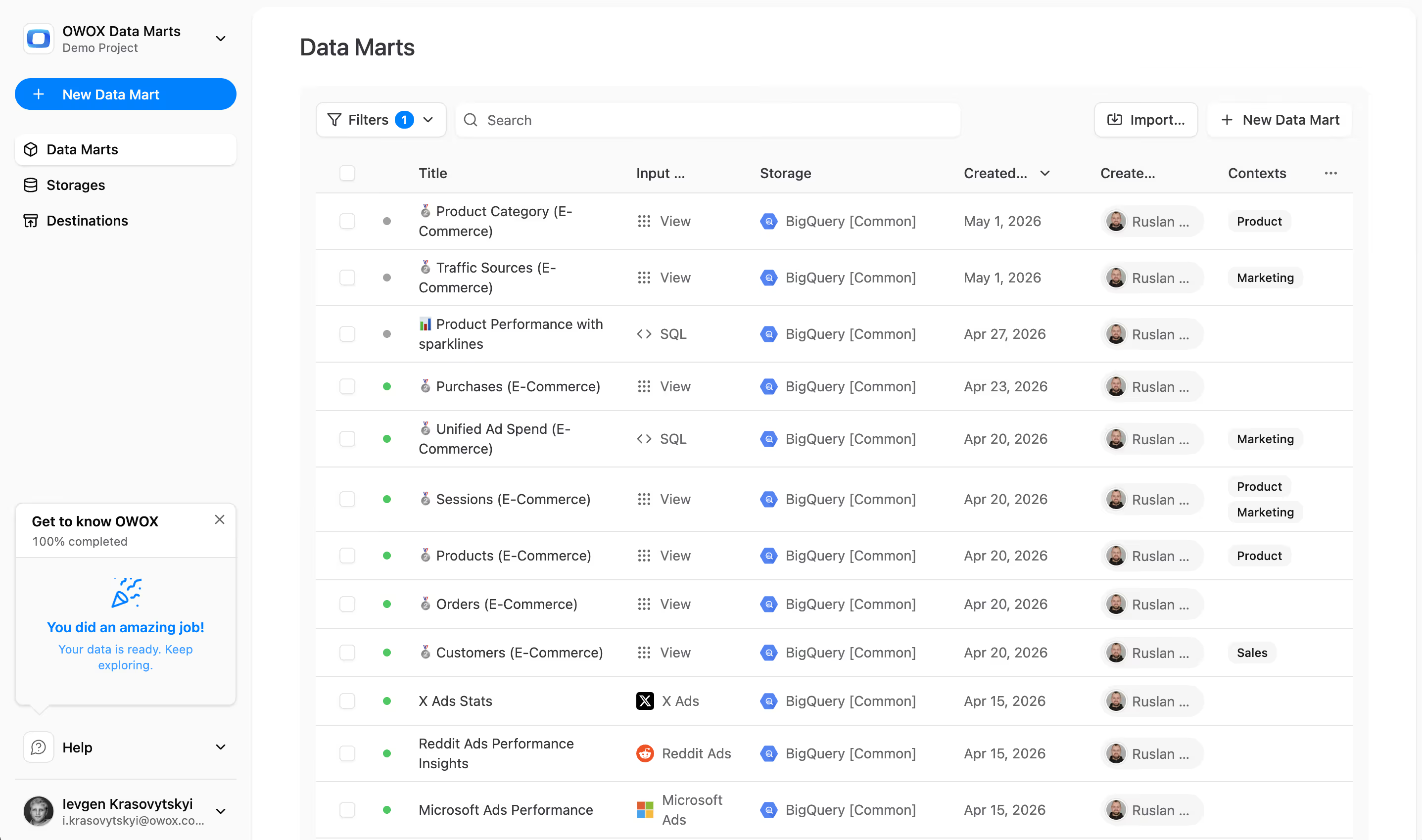
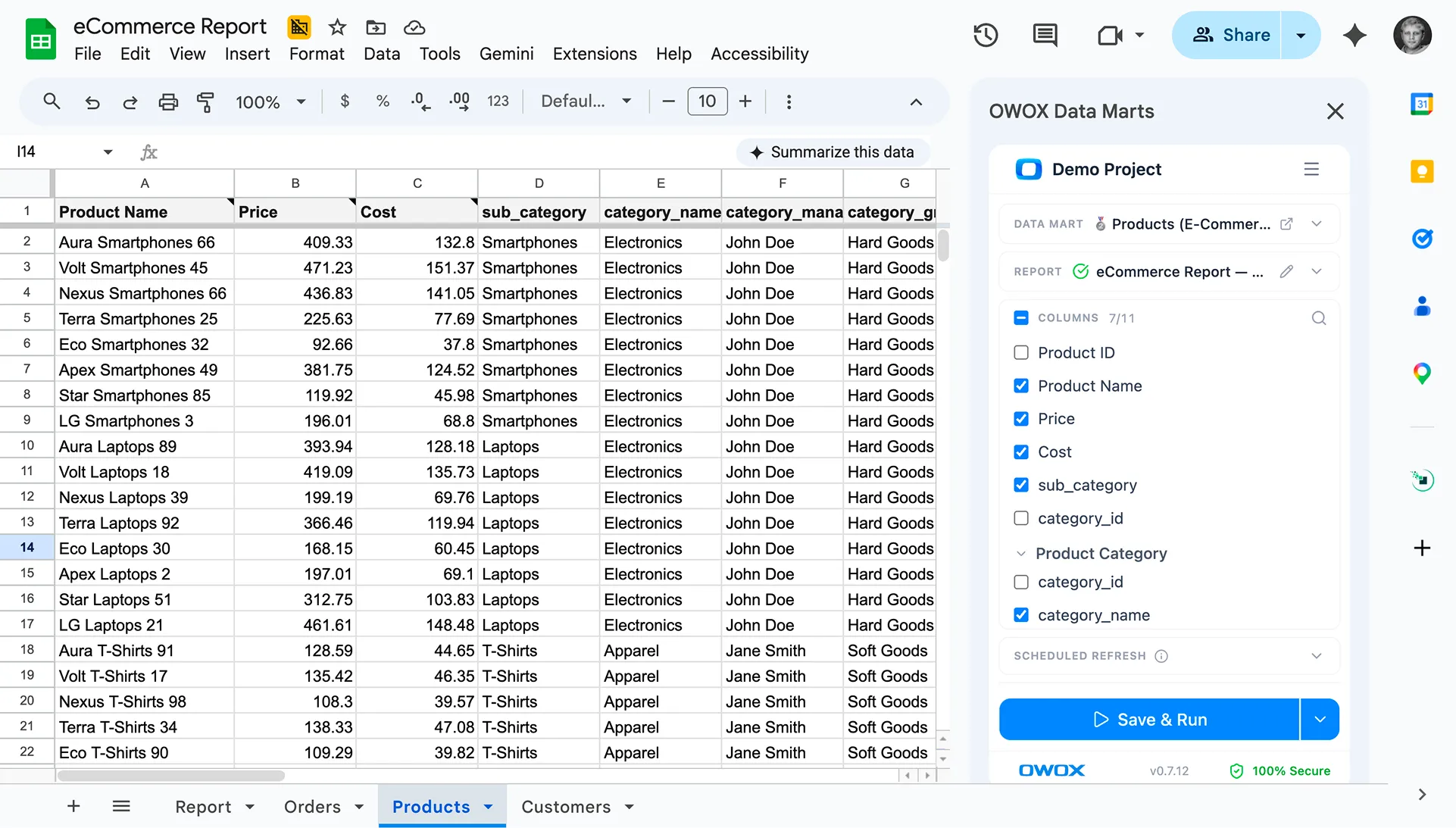
A Data Architecture Diagram maps how data moves, transforms, and connects across systems, but building and maintaining it requires structure behind the visuals. With OWOX Data Marts, you can turn your diagram into a governed, working model. Centralize transformations, manage dependencies, and deliver accurate datasets into BI tools and spreadsheets automatically.









"AI by its nature will hallucinate. You need guardrails so you can trust your data."
"We had six or seven different channels and no single source of truth. It was almost impossible"
"We regained time. And time is the one resource that never comes back."