Conceptual data modeling explained: definition and four examples
A conceptual data model is the highest-level view of a business's data: the things it tracks and how they relate, with no data types, keys or database in sight. This guide gives the definition, four worked examples, the components, the difference from logical and physical models, and a six-step way to build one that survives contact with the tables.
A conceptual data model is the highest-level description of a business’s data. It names the things the business tracks, called entities, and shows how they relate. It leaves out data types, keys and anything about a specific database.
What does a conceptual data model focus on? High-level ideas: which entities exist, what the important facts about each are, and what the rules between them are. It does not cover hardware, a particular database management system or how the data is stored.
Its purpose is agreement. It is the one model that business people and data people can both read, so it is where differences in meaning get caught before they become tables.
What a conceptual data model is
What a conceptual data model is
A conceptual data model answers three questions in plain language:
- What do we keep records of? Customers, orders, products.
- How are they connected? A customer places orders. An order contains products.
- What rules apply? An order belongs to exactly one customer. A product can appear in many orders.
It is the first of three levels of modeling. The logical model adds attributes and keys, and the physical model adds everything a specific database needs. In a DBMS course the conceptual model is the stage where an entity-relationship diagram is first drawn.
Conceptual data model examples
Conceptual data model examples
Four examples follow. Each is drawn with a few attributes so the entities are easy to recognise. A strict conceptual model would show only the entity names and the lines.
Retail sales
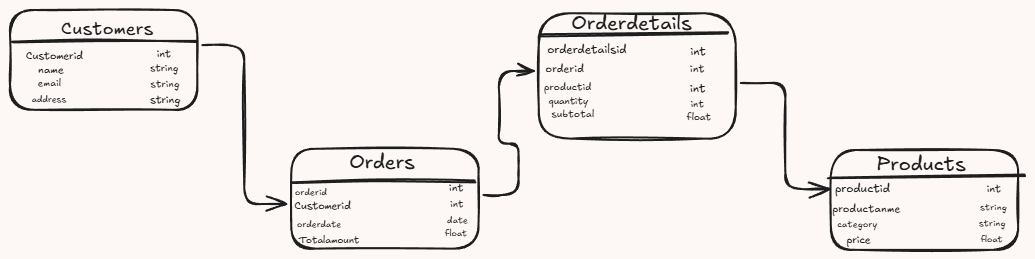
- Entities: Customer, Order, Order detail, Product.
- Relationships: a customer places many orders, an order has many detail lines, each line refers to one product.
- A rule worth writing down: is a returned order still an order? The answer decides every revenue report built later.
University
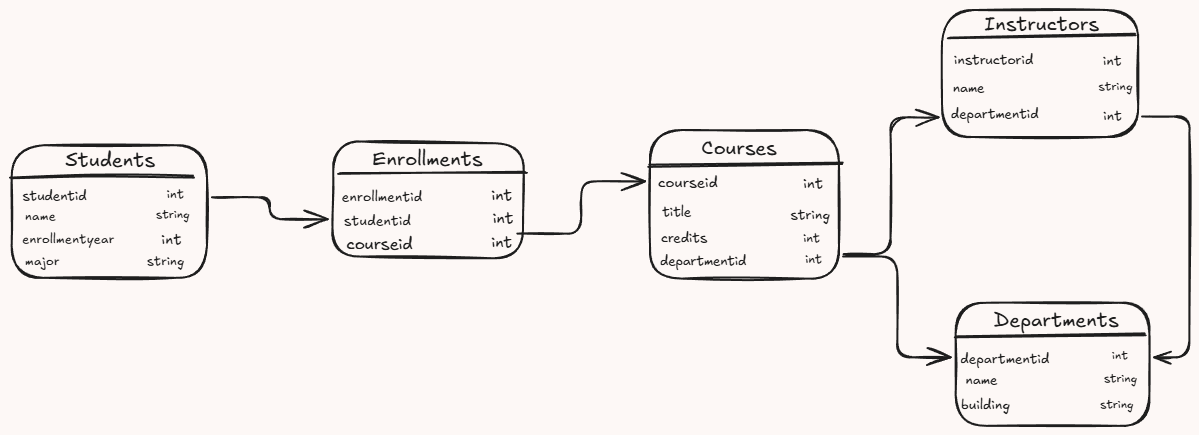
- Entities: Student, Enrollment, Course, Instructor, Department.
- Relationships: a student enrols in many courses, a course has many students, an instructor teaches courses and belongs to a department.
- Why Enrollment is an entity: the link between student and course has facts of its own, such as the term and the grade.
Healthcare
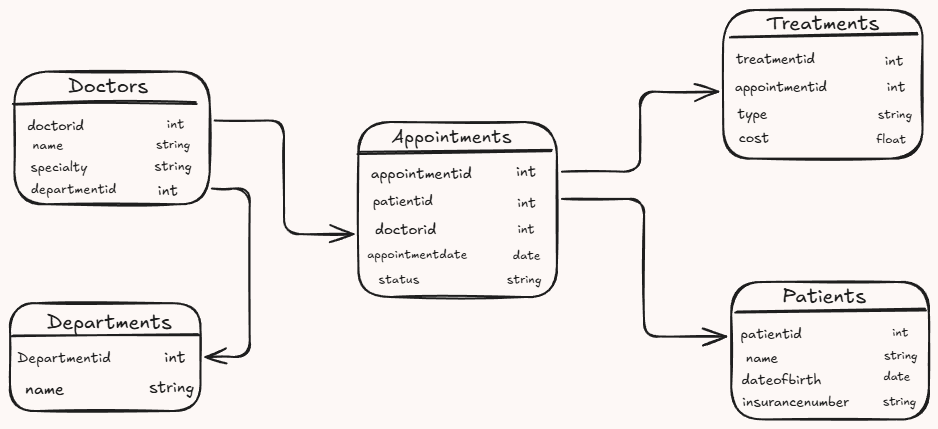
- Entities: Patient, Doctor, Department, Appointment, Treatment.
- Relationships: a patient books appointments with doctors, a doctor belongs to a department, an appointment can lead to treatments.
Hotel reservations
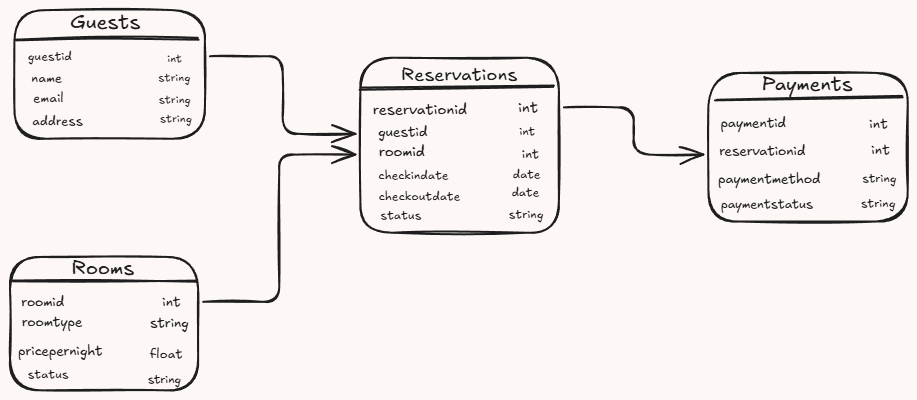
- Entities: Guest, Room, Reservation, Payment.
- Relationships: a guest makes reservations, a reservation is for a room and has payments.
- A rule worth writing down: can one reservation cover several rooms? The diagram has to say, because the answer changes what one row of Reservation means.
OWOX Data Marts
See your first report built in real time. 15 minutes.
- Connect your data warehouse
- Pick your metrics
- Get a live Google Sheets report
In the time it takes to write a ticket. Then imagine never writing that ticket again.
Book a DemoWe'll use your actual use case
Components of a conceptual data model
Components of a conceptual data model
A conceptual model has five kinds of statement. The last two are the ones most often skipped.
Entities
An entity is something the business would name in a meeting and needs to keep records of: Customer, Order, Product. A good test is whether it has more than one instance and whether those instances need telling apart.
Attributes
Attributes are the facts recorded about an entity. At the conceptual level, list only the ones that define it or that people argue about: an order’s status, a customer’s segment. The full list belongs in the logical model.
Relationships
A relationship is a named connection between two entities: places, contains, belongs to. Name it with a verb. A line without a verb hides the question of what the connection means.
Cardinality
Cardinality says how many of one entity go with how many of the other: one to one, one to many, many to many. “One customer, many orders” is a statement about the business, and getting it wrong later duplicates rows in every join.
Business rules
Rules are the conditions the data must meet: an order must have a customer, a room cannot be reserved twice for the same night. A model that carries these rules through to how each number is calculated is a semantic data model. They cost nothing to write here and are expensive to discover in a report.
Conceptual vs logical vs physical data models
Conceptual vs logical vs physical data models
The three levels describe the same data with increasing detail.
| Conceptual | Logical | Physical | |
|---|---|---|---|
| Shows | Entities, relationships, rules | Plus all attributes and keys | Plus data types, indexes, partitions |
| Tied to a database | No | No | Yes |
| Written for | Business and data people | Analysts and architects | Engineers |
| Answers | What do we track? | How is it structured? | How is it stored? |
The same sales process at each level:
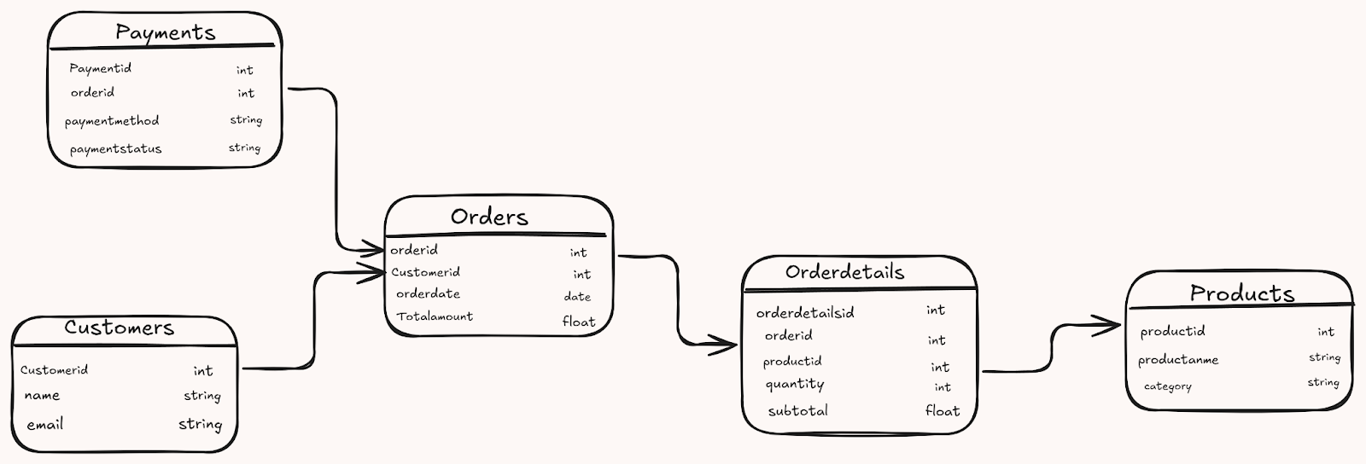
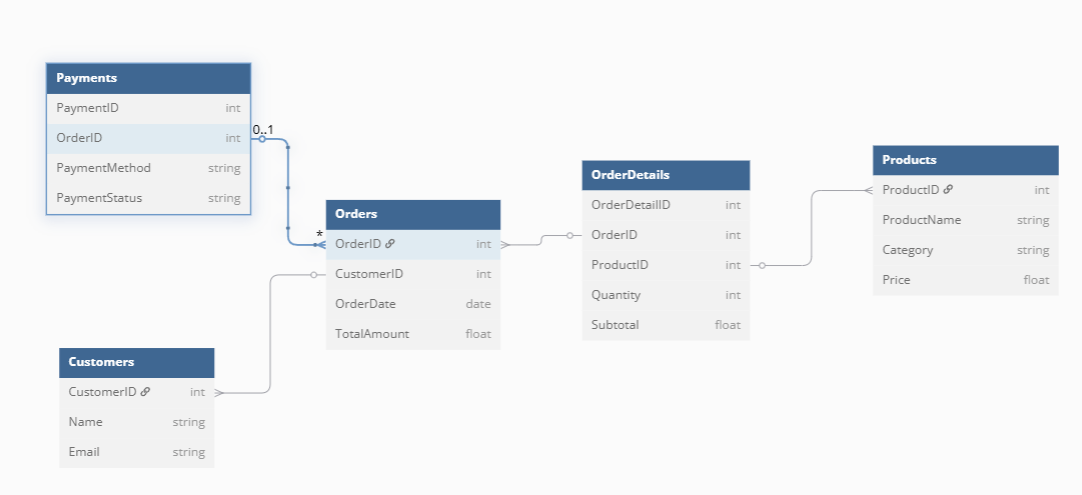
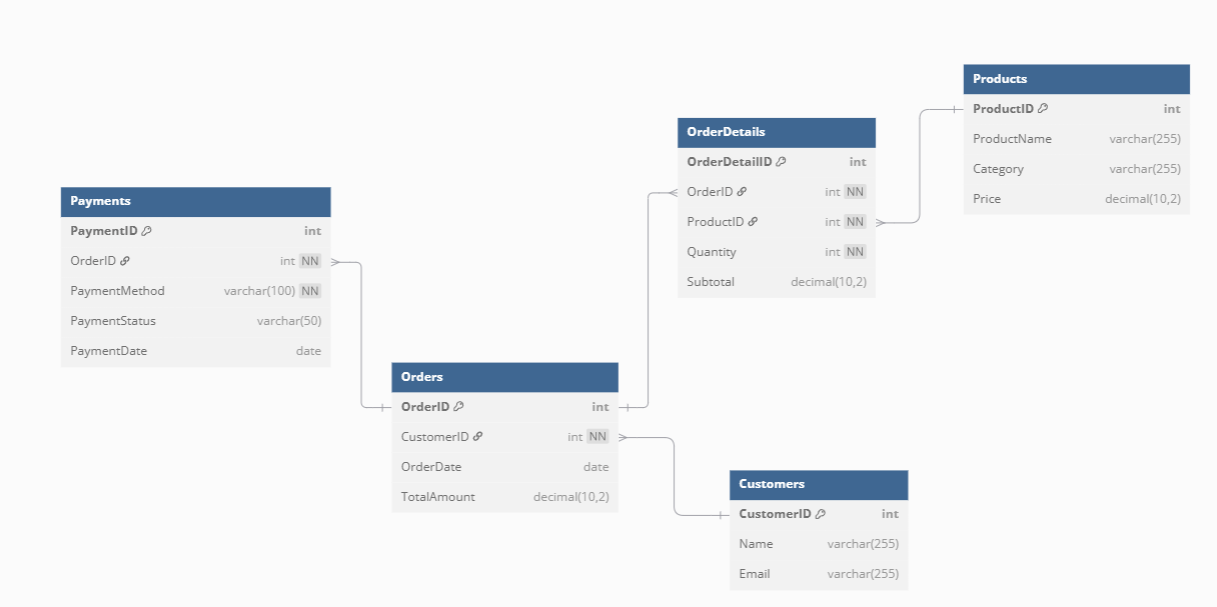
A longer comparison is in logical vs physical data models, and the wider classification is in types of data models.
How to create a conceptual data model
How to create a conceptual data model
Six steps, in this order. The whole exercise is a few hours for one business process, not a project.
- Pick one process and one question. “How we sell” and “what was revenue by product last quarter” give a boundary. A model of the whole company at once never finishes.
- List the nouns. Walk through the process with the people who run it and write down every thing they name. Those are candidate entities.
- Merge and split. Two names for one thing become one entity. One name used for two things, such as “customer” for both the buyer and the account, becomes two.
- Draw the relationships and name them. One verb per line, with cardinality on both ends.
- Write the rules that change a number. Which statuses count as a sale. When a customer counts as new. Keep the list short and specific.
- Check it against real data. Take ten real orders and see whether each fits the diagram. The exceptions are the model’s missing parts.
A whiteboard or any diagram tool is enough to draw it. A comparison of free options is in database diagram design tools.
Common mistakes
Four problems account for most conceptual models that get ignored.
- Starting from the tables. Copying the source system’s schema produces a physical model with the detail removed. Start from the process and the questions instead.
- No business owner in the room. Analysts can draw the boxes alone, but they cannot decide alone what counts as a customer.
- Unnamed relationships. A line between Customer and Order that nobody labelled will be read three ways.
- Stopping at the diagram. A model that lives in a slide deck is out of date within a month, and nothing tells its readers.
More in mistakes in data modeling.
Keeping the conceptual model true after it ships
Keeping the conceptual model true after it ships
The last mistake is the expensive one. A conceptual model records decisions: completed orders only, one customer per order. Those decisions end up in SQL, and the diagram and the SQL then change separately. When a report disagrees with the diagram, nobody can say which one is right.
One way to prevent that is to keep the decisions where the queries are. In OWOX Data Marts, each entity becomes a Data Mart: SQL, a table or a view that an analyst defines, with a description, an owner and described fields. Each line in the diagram becomes a relationship between two Data Marts, declared on their join keys. Reports in Google Sheets or Looker Studio read those Data Marts, so the rule written in the Orders Data Mart is the rule in every report.
The analyst still does the modeling and writes the SQL. What changes is that the model people agreed on is the thing the reports run on, and its definitions can be read by whoever questions a number. The industry data models show finished examples for several kinds of business, and Joinable Data Marts covers how relationships are declared.
Turn your data into decisions.
Governed data marts give you the clean foundation ML needs to actually work.
- No AI hallucinations
- Analyst-governed definitions
- Every number traces to SQL
Frequently Asked Questions
What is an example of a conceptual data model?
For retail sales: Customer, Order, Order detail and Product. A customer places many orders, an order has many detail lines and each line refers to one product. The same pattern applies to a university (Student, Enrollment, Course) or a hotel (Guest, Reservation, Room, Payment).
Can a conceptual data model change during a project?
Yes, and it should. New exceptions found in real data, a new product line or a changed definition all belong in the model. The risk is the opposite: the SQL changes and the diagram does not, so keep the model next to the queries that implement it.
What is the difference between a conceptual and a logical data model?
A conceptual model shows entities, relationships and rules with no technical detail. A logical model adds every attribute, the primary and foreign keys and exact cardinality, still without committing to a database. The physical model then adds data types, indexes and storage for one platform.
How do you create a conceptual data model?
Pick one process and one question, list the nouns people use, merge duplicates and split overloaded names, draw relationships with a verb and cardinality on each line, write down the rules that change a number, then check the diagram against a handful of real records.
What does a conceptual data model focus on?
High-level ideas: which entities the business tracks, how they relate and which rules apply. It leaves out data types, keys, hardware and any specific database management system, so that business and data people can both read it.
What are the components of a conceptual data model?
Entities (the things the business keeps records of), the key attributes of each, relationships named with a verb, cardinality (how many of one go with how many of the other) and business rules, such as which order statuses count as a sale.