

What Is a Dimensional Fact Model?
A Dimensional Fact Model (DFM) is a conceptual modeling technique used in data warehousing to visually represent data as fact schemas.
Dimensional Fact Model helps organize analytical data into measurable facts and descriptive dimensions using a tree-structured, graphical format. Designed for both analysts and business users, DFM simplifies how data is modeled and understood for reporting, analysis, and OLAP use.
Purpose of the Dimensional Fact Model
The purpose of the Dimensional Fact Model is to provide a clear and intuitive way to structure data for decision-making. It allows users to define what should be measured (facts) and how those measures should be analyzed (dimensions).
By separating metrics from context, DFM supports a variety of analytical scenarios in both relational and multidimensional OLAP platforms. It ensures that business users and developers have a shared understanding of how data is organized.
Core Components of the Dimensional Fact Model
The Dimensional Fact Model uses a structured format to represent business events and their context. Its key components make it easy to visualize and analyze data effectively.
- Fact: The central element representing a business event (e.g., sales). It may include fact attributes like “quantity sold” or “inventory level,” or simply record the occurrence of an event.
- Dimensions: Define the context of the fact, such as “item,” “sales agent,” or “month.” Each unique combination of dimension values forms a fact instance.
- Hierarchies: Exist within dimensions to support drill-down and aggregation (e.g., Item → Product Group). These are modeled as many-to-one relationships and may include optional links.
This setup supports both logical analysis and clear visual modeling.
Types of Key Figures and Aggregation in Dimensional Fact Model
Key figures, or fact attributes, represent the numerical values you want to analyze, and different types support different aggregation methods:
- Additive: Measures like “quantity sold” that can be summed across all dimensions.
- Semi-additive: Measures like “account balance,” which can be aggregated over some dimensions but not others.
- Non-additive: Measures like “ratios” or “percentages,” which require special calculations rather than direct summation.
Choosing the correct aggregation method for each key figure ensures accuracy in analytical reports and dashboards.
Steps to Derive Fact Schemas from ER-Based Systems
The Dimensional Fact Model outlines five structured steps for transforming data from ER-based systems into dimensional schemas. These steps can also be applied to other relational models if relationship cardinalities are known.
- Identify facts: Begin by selecting the key business processes or events to analyze.
- Build the attribute tree: Organize all attributes related to the fact into a tree structure.
- Prune and graft: Simplify the tree by removing irrelevant branches and connecting useful attributes from other trees if needed.
- Define dimensions: Group related attributes into meaningful dimensions for analysis.
- Define fact attributes and hierarchies: Specify measurable values (fact attributes) and create hierarchies within dimensions to support data aggregation.
This method ensures the final model is both analytically powerful and easy to interpret.
Strengths and Limitations of the Dimensional Fact Model
The Dimensional Fact Model offers a structured and intuitive approach to organizing analytical data. However, like any modeling method, it comes with both advantages and limitations depending on the use case.
Strengths:
- User-friendly design, easy to interpret for non-technical users
- Visual clarity helps teams quickly understand data structure
- Ideal for OLAP operations like drill-downs and aggregations
- Hierarchical structure aligns well with business reporting
Limitations:
- Less suitable for OLTP systems and frequent transactional updates
- As models grow, managing hierarchies and schemas can get complex
- Not optimized for unstructured or semi-structured data
The Dimensional Fact Model offers a practical framework for building analytical systems that are both scalable and user-friendly. Whether you're designing from scratch or translating existing ER models, DFM helps simplify the path to business insights.
Build Dimensional Fact Models Effortlessly with OWOX Data Marts
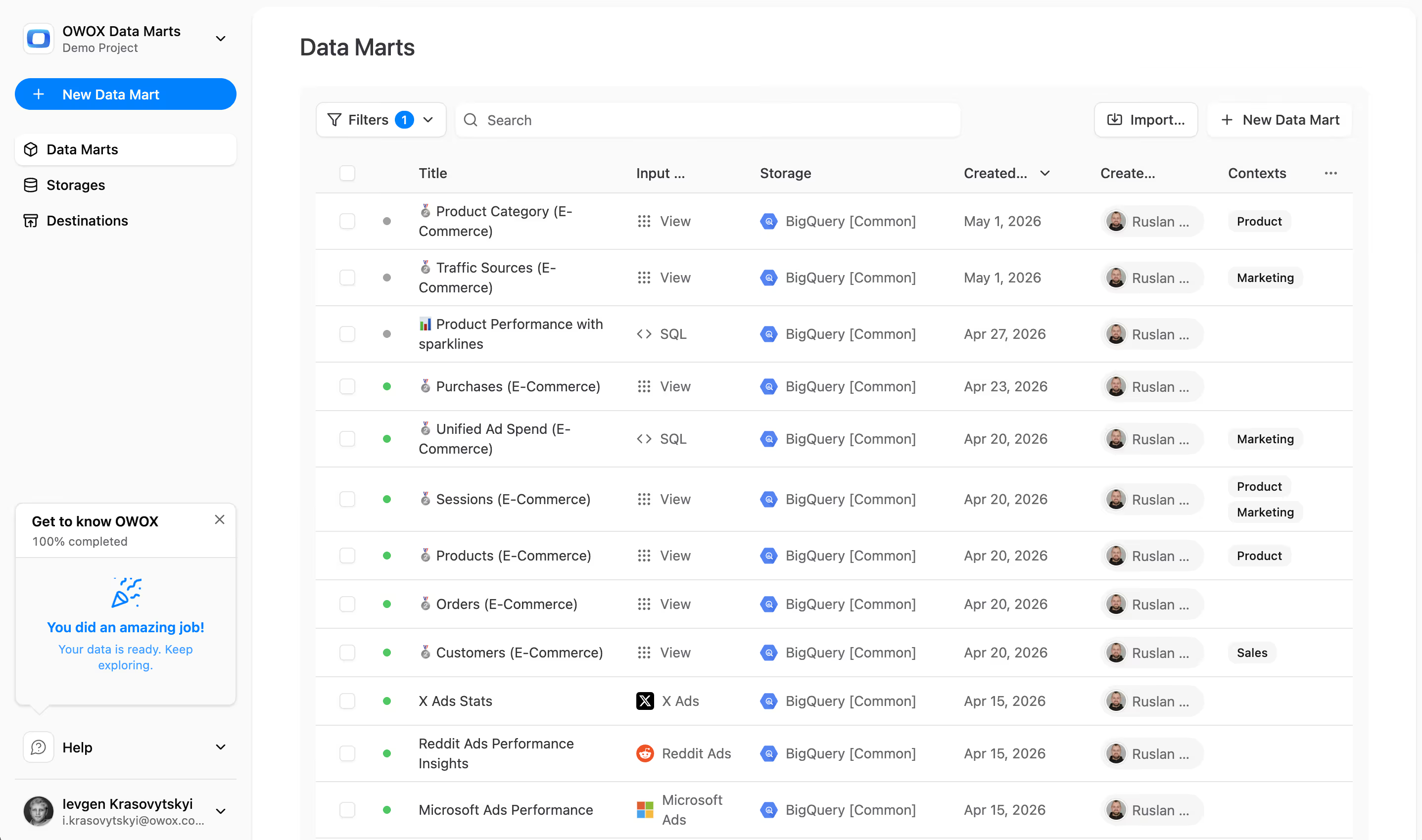
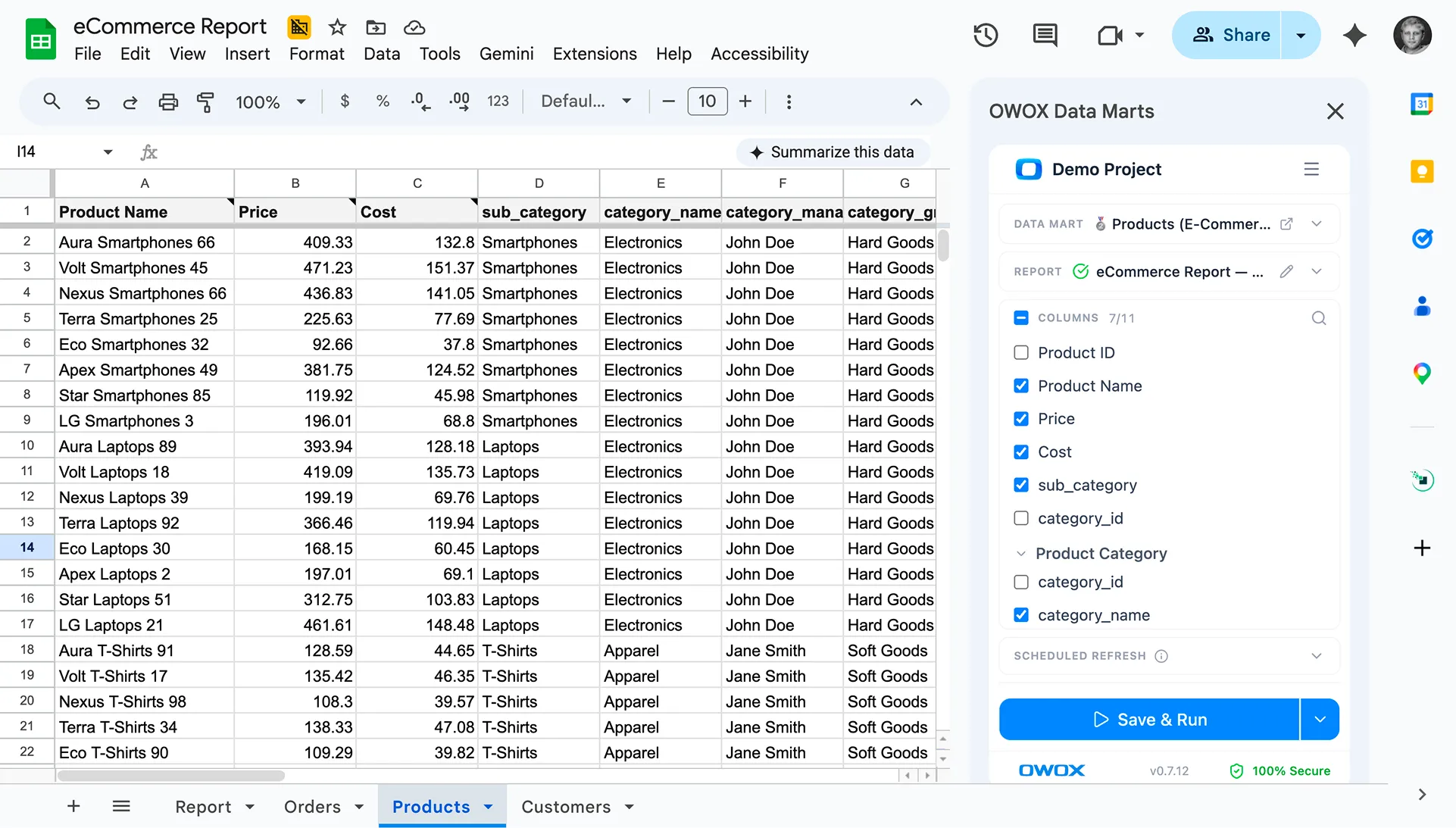
A Dimensional Fact Model helps organize metrics and dimensions for clear, scalable analysis, but maintaining it manually can be time-consuming. With OWOX Data Marts, analysts can design, document, and automate dimensional models directly from their warehouse. Each fact and dimension stays governed, reusable, and consistent across dashboards and reports.


.png)



"AI by its nature will hallucinate. You need guardrails so you can trust your data."
"We had six or seven different channels and no single source of truth. It was almost impossible"
"We regained time. And time is the one resource that never comes back."