

What Is the FORMAT Function in SQL?
In SQL, FORMAT turns raw values like dates, timestamps, and numbers into readable text patterns so reports, dashboards, and stakeholder-facing outputs are easier to understand.
What is FORMAT in SQL?
FORMAT in SQL is all about presentation. You take a value stored in a structured data type, such as a date, datetime, integer, or decimal, and convert it into a string that looks cleaner for humans. Think of changing a timestamp into something like 2026-03 or turning 12500.5 into $12,500.50.
General idea of formatting values in SQL
Analysts use formatting when raw values are technically correct but not ideal for reporting. A warehouse might store an order date as a timestamp down to the second, while a dashboard only needs a month label. Revenue may be stored as a decimal, but a report for executives may need currency formatting with separators and symbols.
This is where FORMAT or FORMAT-like functions help. They apply a pattern, and sometimes a locale, to produce a more readable result. The output is usually text, not a numeric or date type anymore. That detail matters a lot later when you sort, filter, or aggregate.
Differences between FORMAT as a function and general output formatting
Not every SQL system has a function literally named FORMAT. Some use TO_CHAR, DATE_FORMAT, CAST, CONCAT, LPAD, or other formatting expressions to achieve the same outcome. So the concept is broader than one exact keyword.
There is also a difference between formatting inside SQL and formatting done by the reporting layer. SQL formatting changes the query output into display-ready strings. General output formatting in a BI tool often keeps the underlying field as a date or number while only changing how it looks on screen. That makes BI formatting more flexible for sorting and filtering, while SQL formatting can be useful when you want consistent labels directly in a view, export, or data mart.
Common Uses of FORMAT for Analytics
FORMAT shows up everywhere in analytics because reporting is not just about correct data. It is also about readable data that people can scan fast and trust quickly.
Formatting dates and timestamps for reports
Date formatting is one of the most common use cases. Analysts often need values like 2026-03-19 14:22:07 transformed into cleaner labels such as 2026-03-19, Mar 2026, or Q1 2026. This helps dashboards feel structured and makes exported reports easier to read.
Formatted date labels are also useful when building grouped outputs for time-based reporting. A campaign performance view may need a month label, while a weekly report may need a year-week string. The raw timestamp still matters for calculations, but the formatted label improves presentation.
Formatting numbers, percentages, and currency
Numeric formatting makes performance metrics readable at a glance. Revenue can be shown with thousand separators, conversion rates can be displayed as percentages, and average order values can be presented as currency. These changes reduce friction for stakeholders who do not want to mentally parse long decimals or dense numeric output.
Common examples include:
- 1,250,000 instead of 1250000
- 12.4% instead of 0.124
- $9,876.50 instead of 9876.5
This is especially helpful in executive summaries, finance-facing dashboards, and exported CSVs that will be shared outside the analytics team.
Converting technical values into readable labels
FORMAT-like logic is also used to make technical values look less technical. You might transform 202603 into Mar 2026, convert boolean-style flags into Yes and No, or build readable IDs for reports. Even when this is not done by a function literally called FORMAT, the idea is the same: make machine-friendly data easier for humans to consume.
That can be a huge quality-of-life upgrade for marketers, finance teams, and leadership who need fast answers, not raw warehouse aesthetics.
FORMAT Syntax in Popular SQL Dialects
The hype comes with a catch: syntax varies a lot by platform. The function name, pattern rules, and locale support are not universal, so analysts should always check their dialect before dropping formatting logic into production queries.
FORMAT in SQL Server
SQL Server includes a FORMAT function that can format dates and numbers using a specified pattern. It is often used for display-oriented output, such as month-year labels or currency strings. It can also support culture-specific formatting, which is useful when reports need locale-aware separators or date styles.
For analysts, the main takeaway is simple: SQL Server FORMAT is powerful for presentation, but because it returns strings, it should be used carefully in reporting queries and not as a replacement for proper data types.
FORMAT-like functions in MySQL and PostgreSQL
MySQL and PostgreSQL often handle formatting with different functions. MySQL commonly uses DATE_FORMAT for dates and other expressions for numbers. PostgreSQL frequently uses TO_CHAR for both date and numeric formatting. The exact pattern tokens differ, which means a query written for one system will usually need adjustment before it runs in another.
This is a classic source of migration pain. A dashboard rebuild or warehouse move can break formatting logic even if the raw calculation is unchanged. Keeping that distinction clear saves time during model refactoring.
FORMAT in BigQuery and other analytics warehouses
BigQuery supports formatting through dedicated functions such as FORMAT_DATE, FORMAT_TIMESTAMP, and formatting expressions for strings and numbers. Other cloud warehouses may use their own style as well. In analytics environments, the common pattern is to format near the final reporting layer, not deep in transformation logic.
That approach keeps models cleaner and easier to reuse across tools. The warehouse stores truth; formatting shapes the final presentation.
FORMAT in Reporting and Data Marts
Formatting gets really interesting when reports move from ad hoc queries into repeatable pipelines, dashboards, and data marts. That is where consistency starts to matter as much as readability.
When to format in SQL vs BI tools
If the value still needs to be filtered, sorted, aggregated, or joined, it is usually better to keep it raw in SQL and apply display formatting in the BI layer. BI tools are often better at preserving numeric and date behavior while still showing polished output.
Format in SQL when you need stable labels in exports, shared views, or prebuilt reporting datasets. Format in BI when you want flexible display rules without sacrificing type-aware operations. The right choice depends on whether the field is for analysis or presentation.
Using formatting in views and data marts for dashboards
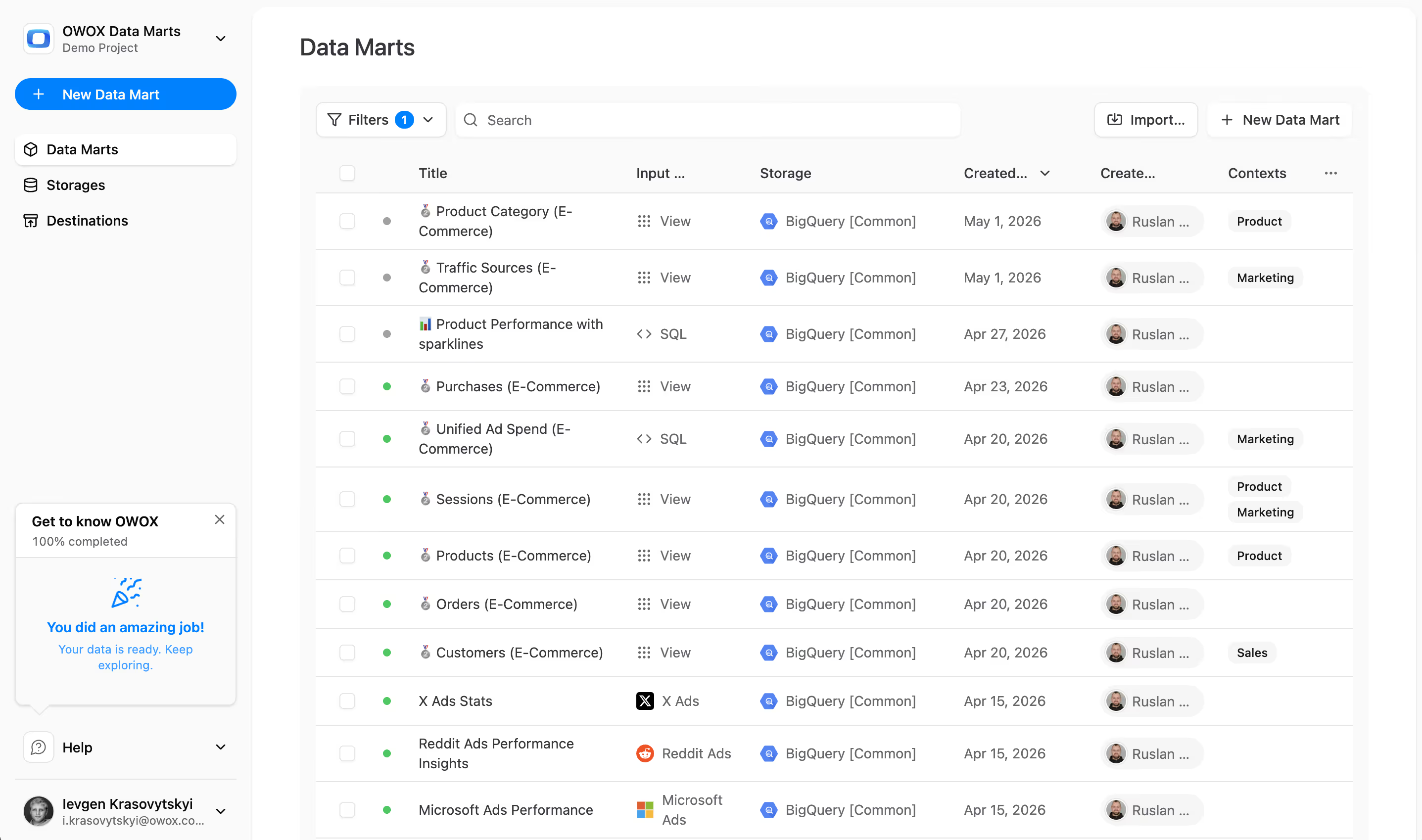
In views and data marts, formatting can make dashboard consumption much smoother. A curated reporting layer may include readable month labels, clean currency fields for exports, or prebuilt dimension names that standardize stakeholder-facing outputs.
But structure still matters. Strong modeling practices like SQL key constraints and data integrity and a clear understanding of primary and foreign keys in SQL help ensure that formatting does not hide broken relationships or duplicate logic. Pretty labels are great, but only when the underlying joins are solid.
Example: Using FORMAT in an Analytics Query
Let’s make this real with a reporting scenario that many marketing analysts know all too well: campaign revenue by month, with readable output for a stakeholder report.
Example: readable revenue and date for a marketing report
Imagine you have daily campaign revenue stored with a transaction date and a numeric revenue field. You want the output to show a month label and a display-ready revenue value.
For example, a query might group by month, sum revenue, and then format the final output into labels like Mar 2026 and $124,500.75. The raw aggregation should happen first. Then formatting should be applied in the final select so the report is easy to read.
A simplified pattern looks like this:
- Group transactions by month
- Calculate total revenue as a numeric field
- Format the month as a readable label
- Format the revenue for display
This type of query is perfect for stakeholder exports, dashboard labels, and one-off summaries. If you want help drafting readable query structures faster, analysts often explore ways to generate formatted SQL queries with AI assistants and then refine them for their warehouse dialect.
Pitfalls: performance, sorting, and data types
Formatting can bite hard when used too early. A formatted revenue string cannot be summed like a numeric field. A formatted date label may sort alphabetically instead of chronologically. And some formatting functions can be more expensive than simpler casts or native date expressions.
That is why a smart pattern is:
- Aggregate and filter with raw data types first
- Apply formatting at the final output layer
- Keep raw versions available for sorting and calculations
That balance gives you pretty output without breaking the logic underneath.
Best Practices for Using FORMAT in SQL
FORMAT is powerful, but the best analysts treat it like finishing paint, not structural concrete. Use it to improve clarity, not to replace sound modeling.
Keep raw data types, format only at the edges
The safest pattern is to store and model dates as dates, numbers as numbers, and timestamps as timestamps. Then format only in the outer query, final view, export layer, or dashboard-facing data mart. This keeps your transformations reusable and analytics-safe.
If your team applies the same output rules repeatedly, consider using stored procedures to encapsulate formatting logic where appropriate. That can reduce duplication and make recurring reporting outputs more consistent.
Avoid breaking joins, filters, and aggregations
Never format fields before operations that depend on the original type. Joining on a formatted key, filtering on a display string, or grouping only by a human-readable label can introduce errors that are hard to spot. Keep technical fields separate from display fields.
This is especially important for sensitive dimensions and customer-facing outputs. Before formatting names, IDs, or contact fields, think about privacy requirements and whether data masking and protecting sensitive fields before formatting should come first.
Document formatting rules for consistent reporting
Formatting rules should not live only in one analyst’s memory. Document how currencies, percentages, month labels, and localized outputs should appear across reports. Decide whether teams should show $1.2M or $1,200,000, whether dates should use YYYY-MM-DD or Mon YYYY, and where locale-specific formats are required.
That documentation prevents small inconsistencies from spreading across dashboards. It also makes handoffs easier when multiple analysts build on the same reporting layer. Consistent formatting feels small, but it has a big impact on trust.
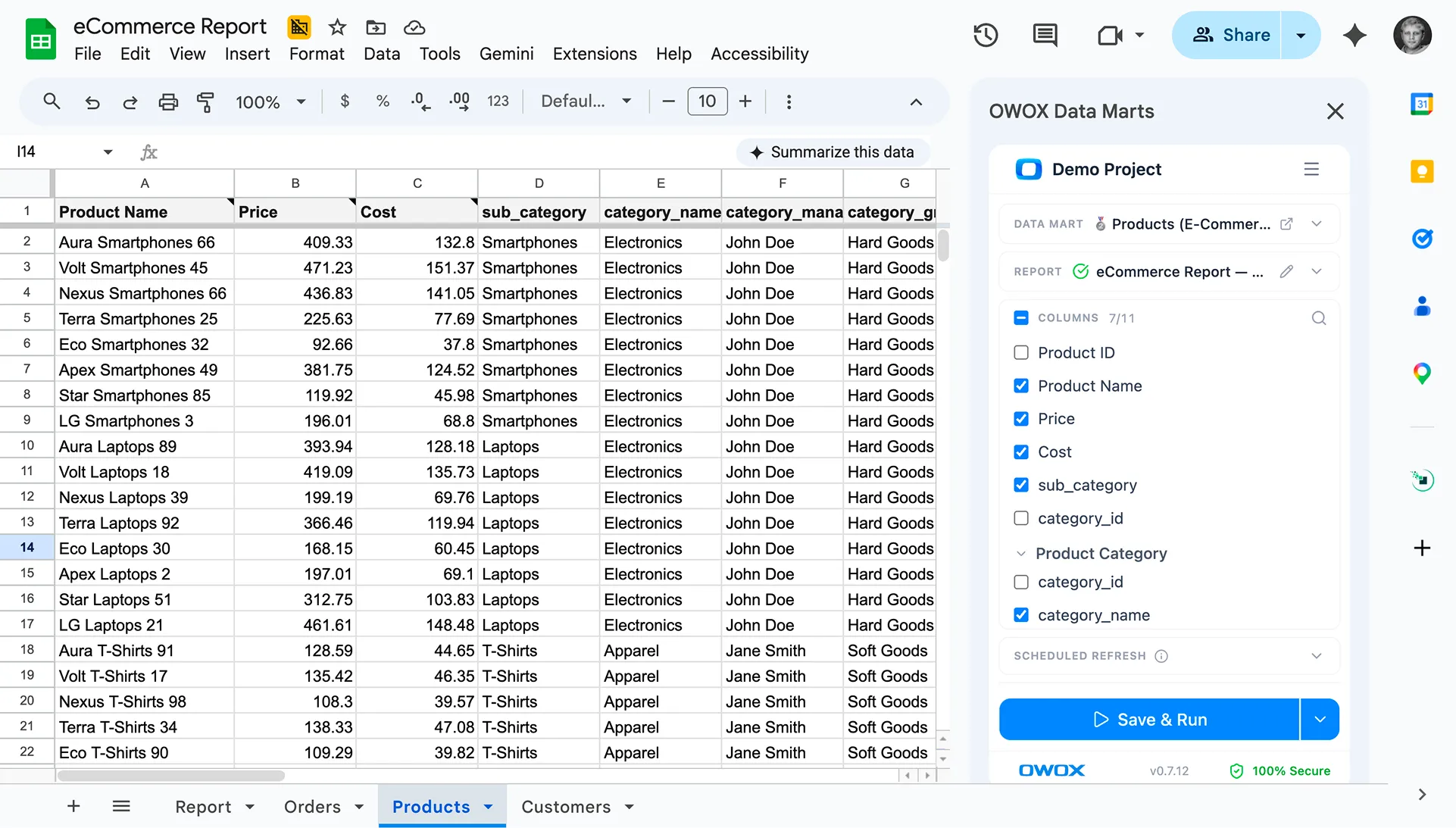
Want cleaner reporting layers without endless formatting cleanup? Build ready-to-use datasets in OWOX Data Marts and centralize logic for dashboard-ready fields, marketing reports, and reusable analytics outputs.
%202.png)



"AI by its nature will hallucinate. You need guardrails so you can trust your data."
"We had six or seven different channels and no single source of truth. It was almost impossible"
"We regained time. And time is the one resource that never comes back."