Self-Service Analytics Enablement
What is self-service analytics enablement?
Self-service analytics enablement is the process of giving business users the tools, data access, and training to answer their own questions without constant help from analysts or engineers. It combines data governance, curated data sets, and easy-to-use BI interfaces so teams can explore, visualize, and trust data independently.
Self-service analytics enablement is how you set teams up to answer their own data questions—by giving them the right tools, governed access to trusted datasets, and the skills to explore and visualize results without constantly pulling analysts or engineers into every request.
What is self-service analytics enablement?
What is self-service analytics enablement?
Simple definition and core idea
At its core, self-service analytics enablement is the combination of people, process, and platform that makes “I wonder…” turn into “I know” without a ticket queue. Business users can explore data, slice it by dimensions that matter, and build reports confidently—because the underlying data is curated and the rules are clear.
This is not “everyone gets a database login and a dream.” It’s enablement: you provide governed datasets, consistent definitions, and a usable interface so teams can move fast without breaking trust. If you want a bigger-picture refresher on how analytics fits together, see what data analytics is and how it works.
Self-service vs. traditional centralized reporting
Traditional centralized reporting usually looks like this: stakeholders ask questions, analysts translate them into queries, dashboards get updated, then stakeholders ask for “just one more breakdown.” It can work—but it doesn’t scale when every decision needs a custom pull.
Self-service flips the workflow. Analysts and data teams build a reliable foundation (datasets, metrics, governance). Then stakeholders explore within safe guardrails. Instead of being report factories, analysts become the people who design the data product: defining metrics, building reusable models, and guiding interpretation.
The outcome is speed with consistency: less waiting, fewer misunderstandings, and more time spent on the questions that actually move the business.
Key components of self-service analytics
Key components of self-service analytics
Curated, trusted datasets and Data Marts
Self-service fails fast when users are forced to start from raw, messy tables. Enablement starts with curated datasets: cleaned, standardized, and shaped around real business questions. This often means building data marts that package data by domain (marketing performance, ecommerce revenue, product usage) with consistent grain, keys, and definitions.
Curated datasets should make the “right thing” the easiest thing. Common practices include:
- Standardized dimensions (date, campaign, channel, product, region) with stable IDs.
- Defined grains (event-level vs. session-level vs. daily aggregates) so users don’t accidentally double-count.
- Pre-calculated or well-defined metrics (revenue, spend, conversions) with clear inclusion rules.
This is where strong data preparation and structuring for analysis pays off: you’re not just cleaning data—you’re making it usable at scale.
Accessible BI and visualization tools
The BI layer is the “steering wheel” of self-service. If it’s hard to use, users won’t use it. If it’s too flexible with no guardrails, you’ll get chaos. The sweet spot is an interface that lets users filter, segment, drill down, and build visualizations quickly—while pointing them toward approved datasets and definitions.
Accessibility is more than UI. It’s also:
- Fast performance (so exploration feels interactive, not like waiting for a batch job).
- Reusable building blocks (shared metrics, certified datasets, templates).
- Clear naming (tables and fields that read like business language).
When the BI experience is smooth, teams stop treating analytics as a special request—and start treating it as part of daily work.
Data governance, roles, and permissions
Governance is what keeps self-service from turning into “self-serve confusion.” You want broad access to insights, but controlled access to sensitive data and controlled flexibility around metric logic.
Practical governance for enablement often includes:
- Role-based access: who can view, explore, create, or publish shared assets.
- Certified sources: a short list of “gold” datasets and dashboards that are reviewed and trusted.
- Metric ownership: explicit owners for key KPIs (e.g., revenue, CAC, ROAS) who approve definition changes.
- Change management: versioning, release notes, and a clear path for requesting new fields or fixes.
The goal isn’t bureaucracy. It’s confidence. Users should know which numbers are official, where they came from, and what they mean.
Documentation, training, and data literacy
Tools and datasets don’t enable self-service by themselves. People need to know how to use them—and how to think with data. That’s where lightweight, always-available documentation and training come in.
Effective enablement materials are practical and specific:
- A data dictionary: definitions for fields and metrics, including edge cases.
- “How to” guides for common workflows (weekly performance readouts, funnel analysis, cohort checks).
- Examples of correct segmentation (and common traps like mixing grains or filtering after aggregation).
- Office hours or short training sessions focused on real use cases, not abstract features.
Data literacy is the multiplier. When users understand concepts like attribution scope, metric grain, and sampling risk, they ask better questions—and trust the answers more.
OWOX Data Marts
See your first report built in real time. 15 minutes.
- Connect your data warehouse
- Pick your metrics
- Get a live Google Sheets report
In the time it takes to write a ticket. Then imagine never writing that ticket again.
Book a DemoWe'll use your actual use case
Benefits for analysts, marketing, and BI teams
Benefits for analysts, marketing, and BI teams
Fewer ad-hoc requests, more time for deep analysis
The first win is operational: fewer “Can you pull this real quick?” pings. When stakeholders can answer common questions themselves, analysts reclaim time for high-impact work—like experiment design, forecasting, anomaly investigation, and improving measurement.
Even better, self-service reduces repeated manual effort. Instead of rebuilding the same report for five teams in five slightly different ways, you publish one trusted dataset and a reusable dashboard pattern.
Faster decisions for marketing and business stakeholders
Marketing teams live on speed. When data access depends on a queue, decisions lag behind reality. Self-service analytics enablement shortens the loop: launch, monitor, diagnose, iterate.
With the right guardrails, teams can:
- Spot performance shifts early (e.g., spend up, conversions down).
- Compare segments instantly (new vs. returning, geo splits, device differences).
- Answer follow-up questions on the spot, without waiting days for a new query.
This doesn’t replace analysts. It upgrades how analysts and stakeholders collaborate—so analysis time goes to the hardest questions, not the most frequent ones.
More consistent metrics and shared understanding
In many organizations, the biggest analytics problem isn’t the dashboard—it’s the meeting where five people bring five versions of “revenue.” Enablement drives standardization through shared datasets, defined metrics, and visible documentation.
When the organization aligns on definitions, debates move up the stack: not “Which number is right?” but “What should we do about what the number is telling us?” That’s where analytics becomes a competitive advantage inside the business.
Common challenges and how to avoid chaos
Common challenges and how to avoid chaos
Report sprawl and conflicting numbers
Self-service can produce a thousand dashboards—most of them abandoned, duplicated, or slightly wrong. That’s report sprawl, and it kills trust. The fix is to treat dashboards and datasets like products with lifecycle management.
Ways to keep it clean:
- Promote certified dashboards and archive outdated ones.
- Use templates for common views (weekly channel performance, campaign deep dives, funnel monitoring).
- Encourage reuse: build from approved datasets and semantic layers rather than starting from scratch.
Consistency doesn’t mean restricting exploration. It means giving people a reliable default and a clear path to extend it.
Poor data quality and lack of lineage
If quality is shaky, self-service just spreads the pain faster. Users will find broken fields, mismatched totals, and missing records—and then stop trusting the system. A solid quality workflow (tests, monitoring, clear ownership) is non-negotiable. For a deep dive, see common data quality issues and how to overcome them.
Lineage is the other half of trust: users need to know where a metric comes from and how it’s transformed. Without it, every discrepancy becomes a mystery. Establishing traceability and documentation across transformations supports data lineage and data trust—so teams can debug and validate faster.
Over-complicated tools and low adoption
It’s possible to over-engineer self-service: too many tools, too many layers, too much “flexibility,” and users bounce. Adoption comes from reducing cognitive load.
Keep it usable by:
- Starting with a small set of high-value use cases and expanding iteratively.
- Using business-friendly naming conventions and hiding internal-only fields.
- Providing “golden paths” (recommended datasets, certified dashboards, and example explorations).
- Measuring adoption: which dashboards are used, which fields cause confusion, where users drop off.
Self-service is a system, not a one-time setup. You improve it by watching how people actually use it.
Example: Enabling self-service on top of Data Marts
Example: Enabling self-service on top of Data Marts
From raw data to governed Data Marts
Scenario: a marketing team wants to understand weekly performance by channel, campaign, and landing page—plus validate spend vs. conversions. Raw sources include ad platform exports, web events, and CRM orders. The problem is that each source uses different IDs and timing, and “conversion” means different things depending on the team.
A practical enablement approach is to build governed data marts on top of your warehouse architecture (often alongside modern patterns such as modern data architectures like data lakehouses). You create a curated “marketing performance” mart with standardized dimensions and a clear grain (e.g., daily by campaign).
For example, a simplified mart table might look like mart_marketing_daily with fields like date, source, medium, campaign_id, campaign_name, sessions, cost, orders, revenue. Then you define metrics like ROAS and CAC consistently.
Users can then query reliably. Example SQL for a self-serve weekly view:
SQL
SELECT
DATE_TRUNC(date, WEEK) AS week,
source,
medium,
SUM(cost) AS cost,
SUM(revenue) AS revenue,
SAFE_DIVIDE(SUM(revenue), NULLIF(SUM(cost), 0)) AS roas
FROM mart_marketing_daily
WHERE date BETWEEN '2026-01-01' AND '2026-02-28'
GROUP BY 1, 2, 3
ORDER BY week, revenue DESC;
The magic isn’t the query—it’s that the mart makes this query safe for non-specialists. The grain is known, the metrics are defined, and the dimensions are consistent.
Publishing reusable dashboards and semantic layers
Next, you publish a small set of reusable dashboards built on the mart: a weekly executive overview, a channel performance drilldown, and a campaign diagnostics view. You also define a semantic layer (or a governed set of metrics and dimensions) so users don’t have to reinvent calculations like ROAS, conversion rate, or revenue per session.
This is where self-service becomes real: stakeholders can filter to a region, drill into a specific campaign, compare week-over-week, and share links—without creating a parallel universe of metric definitions.
Where self-service analytics fits in the data analytics process
Where self-service analytics fits in the data analytics process
Planning, data collection, preparation, and insight delivery
Self-service analytics enablement spans the entire analytics process. It starts in planning (what questions matter, what KPIs are official), continues through data collection (instrumentation and source coverage), and becomes tangible in preparation (cleaning, modeling, and building marts).
But the payoff shows up at the end: insight delivery. When teams can access trusted data on demand, insights are not a scheduled event—they’re a daily habit. If you want to see how this stage works in practice, read insights delivery as the final stage of analytics.
How OWOX Data Marts support self-service reporting
Self-service reporting works best when business users explore curated, trusted datasets rather than raw tables. OWOX Data Marts are designed to help teams structure warehouse data into analysis-ready marts that support consistent reporting and faster exploration. When your foundations are solid, self-service stops being risky—and starts being a superpower.
Learn how teams ship analytics faster
Organizations that scaled analytics without scaling headcount
 "For 10 years I was blind." The day Pürblack® founder stopped guessingSecondsto get reports across six channelsRead the story
  How OWOX Reports Helped Reformation Make Data-Backed DecisionsMinutesfrom data request to business decisionRead the story
 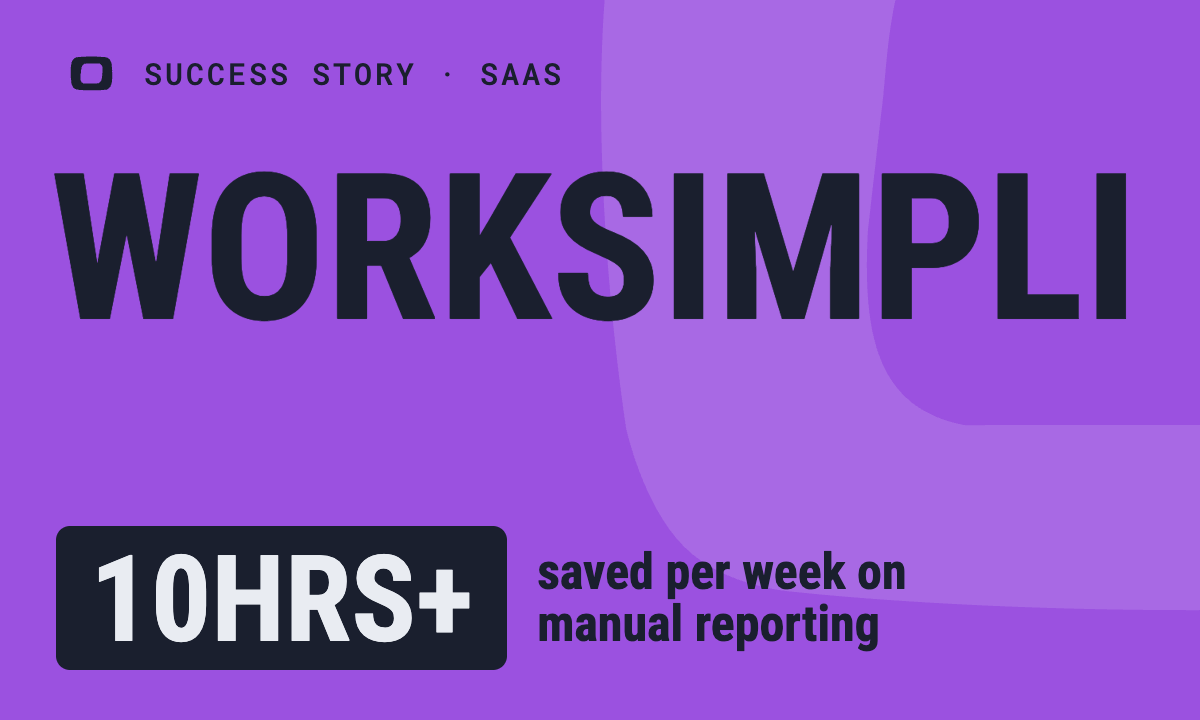 How OWOX Reports Streamlined Operations for WorkSimpli, Saving Over 10 Hours Weekly10hrs+saved per week on manual reportingRead the story
 Not testimonials. Comment threads.
Real things real customers said — each quote pinned to a specific claim, straight from the quotes database.
 Nodari RizunFounder & CEO, Pürblack®
“AI, by the nature of the models, will hallucinate. And because of that, you need something which will create guardrails to ensure that there are no hallucinations, that you can trust your data.”
Nodari RizunFounder & CEO, Pürblack®“I was blind, now I can see. OWOX opened our eyes.”
“We are extremely satisfied with the results achieved through our partnership with OWOX. I'm also impressed by quick and effective support we get from OWOX”
Turn your data into decisions.
Governed data marts give you the clean foundation ML needs to actually work.
- No AI hallucinations
- Analyst-governed definitions
- Every number traces to SQL