

What Is Session Merging?
Session merging is the process of combining fragmented raw interaction sessions into one consistent session so analysts can measure visits, conversions, and attribution more accurately.
What Is Session Merging?
In analytics, a session is supposed to represent one continuous stretch of user activity. Sounds simple. In practice, raw data loves chaos. Session merging steps in when that activity gets split into multiple pieces and rebuilds it into something usable for analysis.
Basic idea in web and app analytics
Web and app analytics tools often create sessions from streams of events such as page views, screen views, clicks, scrolls, and purchases. A session usually starts when a user becomes active and ends after a period of inactivity or a source change, depending on the platform and business rules.
Session merging is a modeling layer on top of that raw tracking logic. Instead of accepting every broken session as final, analysts apply rules to connect related sessions that likely belong to the same user journey. The goal is not to change history. The goal is to make the data reflect reality more closely.
Why sessions get fragmented in raw data
Raw analytics data can split one real visit into several technical sessions for many reasons. A campaign parameter may change mid-journey. A cookie may reset. A user may authenticate after browsing anonymously. Consent may be granted halfway through a session. Even a timeout rule can create a hard break when the person is still effectively in the same journey.
That fragmentation creates noise. One shopper can look like three visits. One conversion can appear disconnected from the landing source. One funnel can suddenly have strange drop-offs that are really just session boundaries, not user behavior.
When Do You Need Session Merging?
You need session merging when raw session logic creates reporting that is technically valid but analytically misleading. If the numbers feel inflated, disconnected, or too jumpy, session fragmentation is often hiding in the background.
Common causes: timeouts, UTMs, cross-device, consent changes
The most common trigger is timeout logic. A user opens a product page, leaves the tab inactive, then returns and purchases. Many tools count that as two sessions, even if the analyst wants to treat it as one journey.
Campaign parameters can also break sessions. If a user lands from paid search and later clicks an internal link with tagged parameters, the platform may start a new session. Cross-device behavior adds another layer: a person browses on mobile, logs in later on desktop, and the business wants one stitched journey at the user level.
Consent updates can fragment sessions too. Events collected before and after consent may be stored differently or tied to different identifiers. In event pipelines, these changes often show up as unexpected session restarts.
Business impact: visits, conversions, and attribution
Fragmented sessions can distort basic KPIs fast. Visits may be overstated because one journey becomes many sessions. Conversion rate may look weaker because conversions are spread across more sessions than actually occurred. Attribution can break because the converting session no longer contains the original acquisition touchpoint.
This matters most when teams optimize budgets, funnel stages, and retention tactics. If sessions are not modeled consistently, channel comparisons become shaky and report consumers start questioning the numbers instead of acting on them.
How Session Merging Works in Data Modeling
Session merging usually happens inside a transformation layer where analysts define logic to rebuild sessions from event-level data. That makes it part of a wider data modeling approach that structures analytics data into forms that are reliable for reporting and decision-making.
Key identifiers: user IDs, cookies, device IDs
The core input is identity. To merge sessions, the model needs signals that multiple event groups belong to the same person or journey. Common identifiers include:
- User IDs from authentication systems
- Browser cookies or client IDs
- Mobile device or app instance IDs
- Transaction IDs or lead IDs that connect touchpoints
No identifier is perfect. Cookies disappear. Device IDs stay device-specific. User IDs appear only after login. Strong session merging often combines several identifiers and prioritizes them based on confidence.
Typical rules for merging and closing sessions
The rules depend on the business definition of a session. A common pattern is to group events by identity and time order, then merge adjacent sessions when the gap between them is short enough or when a known identity bridge appears, such as a login event linking anonymous and authenticated activity.
Some models preserve source and medium from the first touch in the merged session. Others recalculate traffic source at the journey level using explicit attribution logic. Closing rules matter too. Analysts may end a merged session after a maximum duration, a purchase event, or a long inactivity period.
This is where teams can make or break reporting quality. Over-merging hides meaningful boundaries. Under-merging keeps fragmentation alive. It is also one of those areas where common data modeling mistakes show up quickly, especially when rules are undocumented or inconsistent across reports.
Handling edge cases and conflicting attributes
Real data always has edge cases. What if two fragmented sessions have different campaign sources? What if a user logs in on one device but not another? What if consent blocks part of the event stream? Good models define fallback logic instead of pretending those conflicts do not exist.
Typical strategies include assigning confidence levels, keeping both raw and merged attributes, and storing flags that explain why a merge happened. That gives analysts transparency. A merged session table should not be a black box. It should be inspectable and auditable.
Example: Session Merging in a Marketing Analytics Pipeline
Here is a realistic scenario. A user clicks a paid social ad, lands on the site, views products, leaves for 40 minutes, comes back directly, logs in, and completes a purchase. The raw event stream records two sessions because of the timeout. The business, however, wants one continuous marketing journey tied to the original acquisition source.
From event stream to unified session table
The pipeline starts with event-level data: timestamps, user identifiers, traffic source fields, and conversion events. A transformation job sorts events by user, detects session breaks, and then applies merge logic. In this case, the two sessions are merged because they belong to the same user and occur within the defined reconnect window.
A simplified SQL-style approach might use window functions to compare each event with the previous one, assign raw session boundaries, and then override those boundaries when identity and timing rules indicate continuity. The output is a unified session table with one session ID, one start time, one end time, session metrics, and chosen attribution fields.
Before vs. after metrics comparison
Before merging, reporting shows two sessions, one conversion, and a lower session conversion rate. The final purchase may even appear under direct traffic if the second session inherits the last source. After merging, the same journey appears as one session with one conversion and a source aligned to the original paid social touchpoint, depending on the attribution rule.
That single change can affect channel performance, funnel completion rates, and budget decisions. The events did not change. Only the modeling did. That is the power of session merging: cleaner logic, better interpretation.
Session Merging in Data Marts and Reporting
Once sessions are merged correctly, they become much easier to use across dashboards and recurring reports. Analysts no longer need every visualization to re-implement custom stitching logic.
Designing session-level tables in a data mart
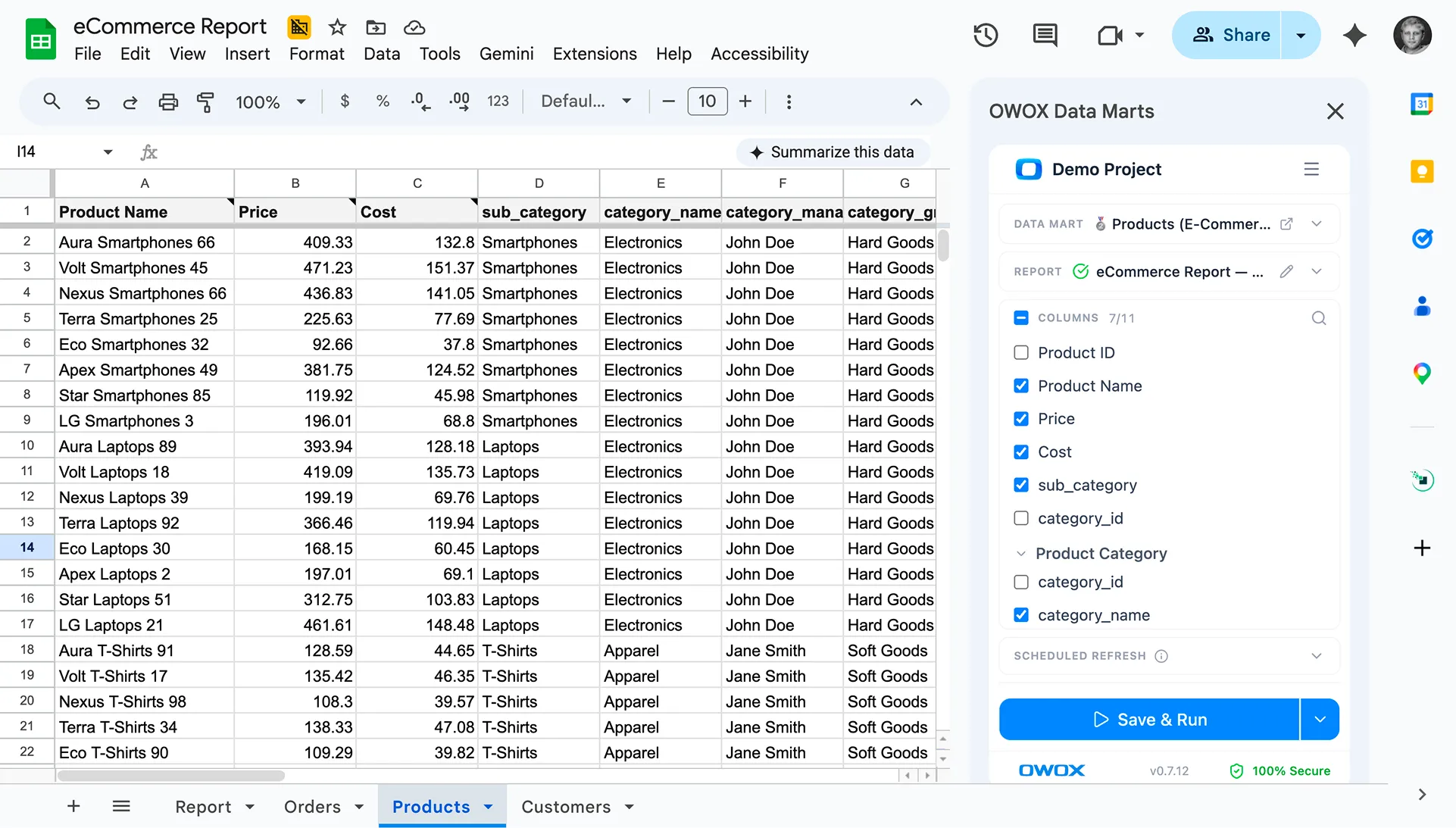
In a data mart, merged sessions are often stored as session-level fact tables with one row per unified session. Useful fields include user keys, session start and end timestamps, landing source, device type, conversion flags, revenue, and counts of important events.
This design fits well with dimensional data modeling for analytics, where session facts can join to dimensions such as channel, date, customer, and device. In some teams, merged session data is also exposed through flat-table data mart designs to keep BI tools fast and analyst-friendly.
How it affects funnels, LTV, and attribution reports
Funnels become more trustworthy because steps from one real journey are less likely to be split across technical sessions. Lifetime value analysis improves when acquisition and conversion activity connect to the same user path. Attribution reports get more stable because source changes caused by technical breaks no longer hijack credit unexpectedly.
This does not mean all reporting should rely only on merged sessions. Some teams still keep raw sessions for platform parity checks. But for business reporting, merged sessions usually provide a better foundation.
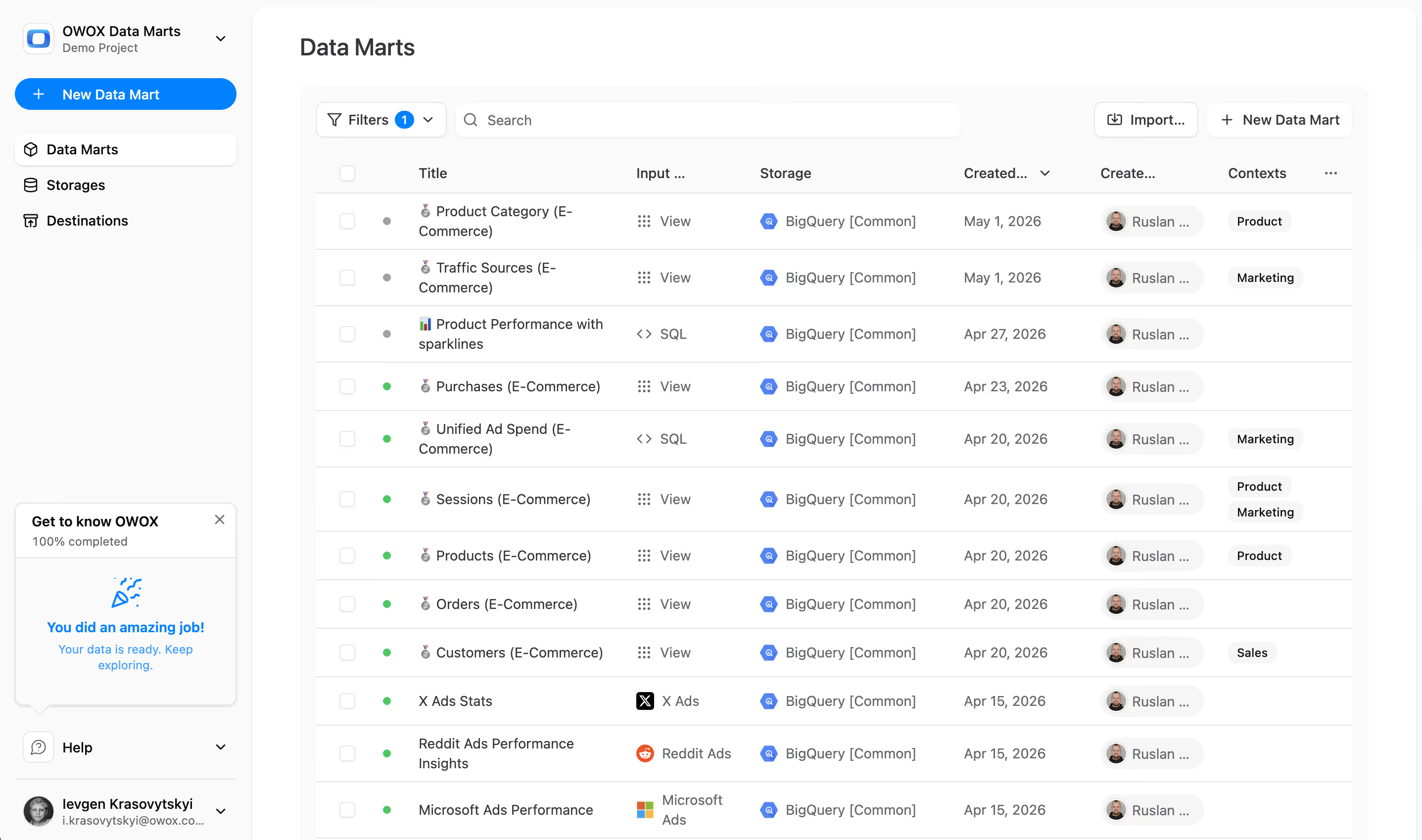
OWOX Data Marts Context
Session merging is not just a cleanup trick. It is foundational work that helps turn messy event streams into decision-ready analytics data.
Why clean, merged sessions are core to reliable analytics
When sessions are fragmented, every downstream metric inherits that mess. Clean merged sessions support consistent KPIs, clearer attribution, and fewer surprises in stakeholder meetings. They also make it easier to align marketing, product, and BI teams around one version of the journey.
That is why merged sessions often sit at the heart of analytics data marts and business reporting built around data marts. If the session layer is solid, the reports above it become far more dependable.
Where analysts usually see the results (dashboards, reports)
Analysts usually notice the impact in acquisition dashboards, funnel reports, session conversion views, attribution models, and executive KPI reporting. The shift can be subtle at first, then dramatic: fewer unexplained spikes, cleaner source-to-conversion paths, and metrics that match business logic instead of raw tracking quirks.
In other words, session merging is one of those behind-the-scenes modeling moves that makes dashboards feel less random and a lot more useful.
Want a cleaner foundation for session-based reporting? Explore OWOX Data Marts to organize analytics data into reporting-ready structures and make merged sessions easier to work with.
%202.png)



"AI by its nature will hallucinate. You need guardrails so you can trust your data."
"We had six or seven different channels and no single source of truth. It was almost impossible"
"We regained time. And time is the one resource that never comes back."