

What Is the TIMESTAMP_DIFF Function in SQL?
TIMESTAMP_DIFF is a SQL function that tells you how much time passed between two timestamp or datetime values, using a unit like seconds, minutes, hours, or days so you can measure duration directly inside a query.
What is the TIMESTAMP_DIFF function in SQL?
Time is everything in analytics. When did a session start? How long until a user clicked? How many hours passed before a purchase happened? TIMESTAMP_DIFF answers those questions by returning the difference between two time values in the unit you choose.
Basic idea and purpose
The function is built for time-based analysis. Instead of exporting timestamps and calculating durations somewhere else, analysts can compute the gap right in SQL. That makes it useful for reporting, funnel analysis, product usage tracking, campaign timing, and operational monitoring.
In practice, it helps turn raw event logs into metrics. A start time and end time become session duration. A send time and open time become email response delay. A signup time and subscription time become conversion lag.
Typical syntax and supported time units
The exact syntax can vary by SQL engine, but the common pattern is:
1TIMESTAMP_DIFF(end_time, start_time, time_unit)
The result is usually an integer representing the number of whole units between the two values. Common units include seconds, minutes, hours, days, and weeks. Some platforms may support additional units, but the core idea stays the same: pick the time grain that matches the question you are asking.
This is where the function gets exciting for analysts. One simple expression can make event data immediately usable in dashboards, retention tables, and BI models.
How TIMESTAMP_DIFF works (with simple examples)
At a basic level, TIMESTAMP_DIFF subtracts one timestamp from another and expresses the result in a chosen unit. The order of the inputs matters, and so does the unit.
Calculating session length and time on site
A classic use case is measuring how long a session lasted. If a user started browsing at 10:00 and left at 10:12, TIMESTAMP_DIFF can return 12 minutes. That is much easier than manually converting timestamps outside the database.
For web and app analytics, this can power metrics like average session duration, engaged session length, or time between first and last tracked event. It is especially helpful when session boundaries are already defined in your event model.
Measuring delays between events (emails, clicks, purchases)
Marketing teams love time-to-action metrics. You can compare an email send timestamp to an open timestamp, then open to click, then click to purchase. Those differences reveal how fast users move through a campaign journey.
The same logic works for product flows too. You might calculate the delay between account creation and first feature use, or between cart creation and checkout completion. These timing gaps often explain where users hesitate, drop off, or convert quickly.
Handling negative results and ordering of arguments
Argument order is critical. If the later time comes first and the earlier time comes second, the result is positive. Reverse them, and you may get a negative value. That is not necessarily wrong, but it usually means the query logic needs a second look.
Negative differences can appear when event ingestion is out of order, timestamps are inconsistent across systems, or the wrong columns are compared. Smart analysts treat unexpected negative results as a signal to validate data quality before publishing metrics.
Common use cases for data and marketing analysts
TIMESTAMP_DIFF shows up anywhere event timing matters. And in modern analytics, that means almost everywhere.
User behavior and funnel timing analysis
Analysts often use the function to measure how long users take to move from one step to another. For example, how many minutes pass between landing on a pricing page and starting a trial? How many hours between signup and first activation event?
These metrics add depth to funnel reporting. Instead of only knowing whether users converted, you also learn how quickly they moved. Fast conversions can signal strong intent. Long delays may highlight friction, confusion, or weak follow-up messaging.
Latency and performance metrics in product analytics
Product and BI teams can use TIMESTAMP_DIFF to track system or user-facing delays. That might include the gap between request creation and response logging, or the time between an internal event trigger and the next successful downstream event.
When analyzed at scale, these differences help surface bottlenecks. Averages are useful, but distributions are even better. If most events process quickly but a small group takes much longer, that is a clue worth investigating.
Cohort and retention windows based on time differences
Retention analysis often depends on elapsed time. You may want to know whether a user returned within 1 day, 7 days, or 30 days of signup. TIMESTAMP_DIFF makes that easy by comparing the return event timestamp to the first-seen timestamp.
This also helps with cohort definitions. You can classify users by how long it took them to activate, upgrade, or repeat purchase, then compare later behavior across those groups.
Practical tips and gotchas
TIMESTAMP_DIFF is simple on the surface, but small implementation details can change the meaning of your results fast.
Choosing the right time unit (seconds vs minutes vs days)
The unit should match the business question. If you are tracking page interactions or API latency, seconds may be the right choice. For onboarding and campaign response, minutes or hours may be more readable. For retention and lifecycle analysis, days or weeks are often better.
Be careful with overly coarse units. A difference reported in days may hide important variation within the same day. On the other hand, using seconds in an executive dashboard can create noise instead of insight. If a calculation appears in many reports, consider using stored procedures to encapsulate time-difference logic so the same unit and business rules are reused consistently.
Time zones, DATETIME vs TIMESTAMP, and consistency
Timestamps are only useful when they are comparable. Mixing local time, UTC, DATETIME fields, and TIMESTAMP fields can create confusing results. If two systems log the same event in different time zones, the time difference may be technically valid but analytically misleading.
Consistency matters across tables, pipelines, and models. It also helps to enforce key constraints that keep your event timestamps consistent when events are linked across entities and processing stages. And if timestamped records contain sensitive activity data, apply data masking for sensitive timestamped records where access needs to be controlled.
Dealing with NULLs and missing event timestamps
If one of the two values is NULL, the function usually returns NULL. That means incomplete event chains can quietly reduce row counts or distort averages if you do not handle them carefully.
A practical approach is to filter out missing timestamps when the duration is required, or use conditional logic to separate complete and incomplete cases. This is especially important in funnel reports, where missing event times may reflect tracking gaps rather than actual user behavior.
TIMESTAMP_DIFF in data mart–based reporting
In reporting environments, TIMESTAMP_DIFF is rarely just a one-off calculation. It usually becomes part of reusable metric logic inside a data mart.
Where TIMESTAMP_DIFF appears in a typical analytics data mart
You will often see it in fact tables, derived views, and semantic reporting layers that calculate durations between milestone events. Common examples include session duration, lead response time, order processing time, and time to conversion.
These calculations depend on strong table relationships. Event streams, sessions, orders, and customer records must be connected correctly, often through primary and foreign keys linking events across tables. Once the model is reliable, TIMESTAMP_DIFF becomes a clean building block for many KPIs.
OWOX Data Marts context: building metrics from event time differences
In a data mart workflow, the goal is to make raw event timing analysis repeatable. Instead of recalculating durations separately in every dashboard, analysts can define shared logic for event gaps and expose those fields to reporting tools.
That makes metrics more stable across teams. Marketing can look at time from click to purchase. Product can analyze time from signup to activation. BI can monitor process delays. Same source logic, different business questions, much less chaos.
Example: TIMESTAMP_DIFF in a reporting query
Here is a simple reporting scenario: measure the average number of minutes from a marketing email click to the resulting purchase for users who completed both events.
Simple SQL snippet for a report
The query could look like this:
1SELECT
2campaign_id,
3AVG(TIMESTAMP_DIFF(purchase_time, click_time, MINUTE)) AS avg_minutes_to_purchase
4FROM campaign_conversions
5WHERE click_time IS NOT NULL
6AND purchase_time IS NOT NULL
7GROUP BY campaign_id;
This produces one row per campaign with the average elapsed time between click and purchase. If you are building queries faster with assistance, it can also help to explore auto-generating SQL with time-difference calculations and then validating the logic before putting it into production reporting.
Interpreting the result in dashboards and BI tools
In a dashboard, this metric can reveal campaign quality beyond conversion rate alone. Two campaigns may drive the same number of purchases, but one may convert users in 15 minutes while the other takes 2 days. That difference matters for optimization, attribution windows, and budget pacing.
You can also segment the result by audience, device, region, or landing page to see where delays increase. That is where TIMESTAMP_DIFF really shines: it turns event timestamps into behavior, and behavior into action.
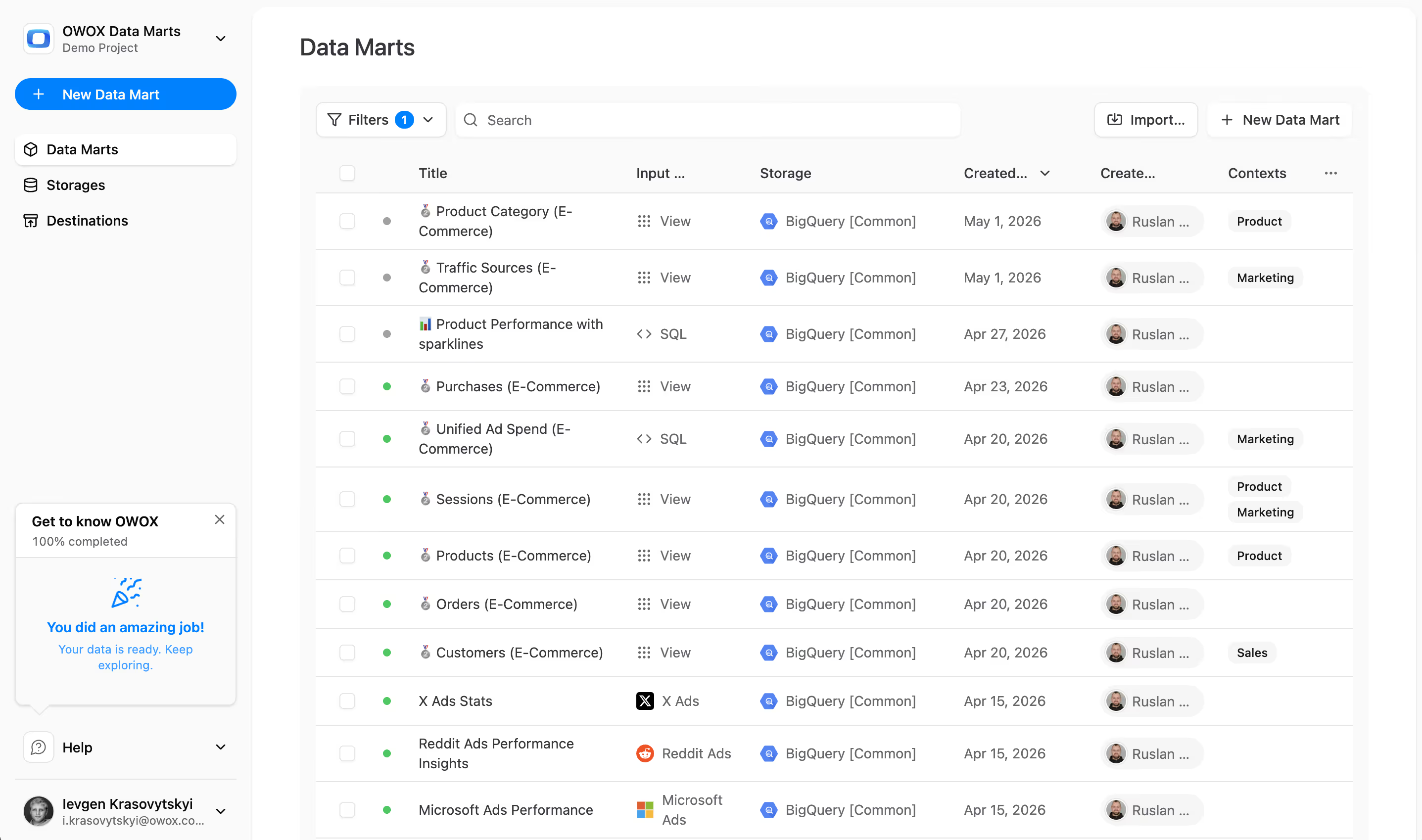
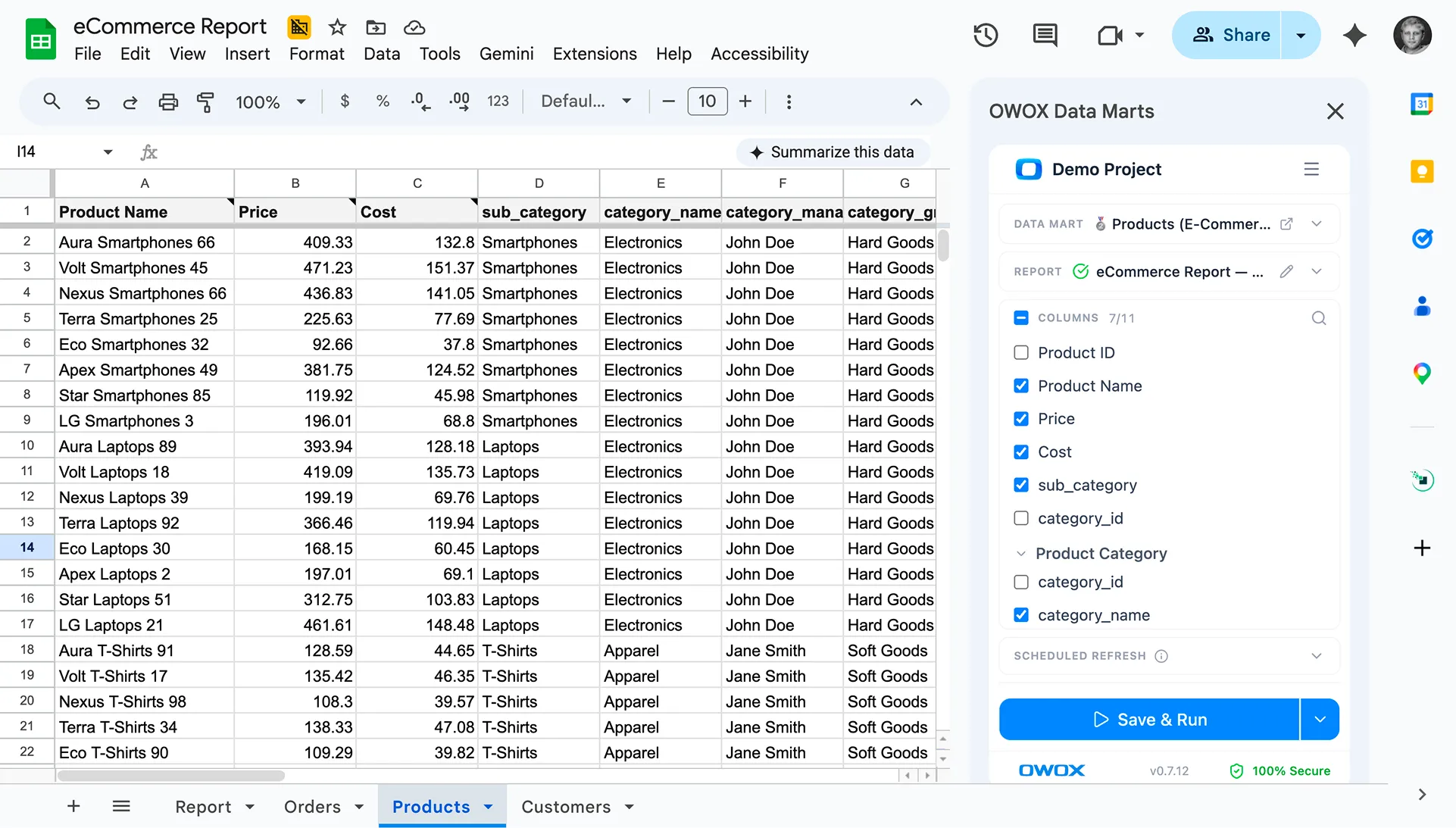
Want to make time-based metrics easier to reuse? Build them once in OWOX Data Marts, organize your reporting data, and keep duration logic ready for every analytics workflow.
%202.png)



"AI by its nature will hallucinate. You need guardrails so you can trust your data."
"We had six or seven different channels and no single source of truth. It was almost impossible"
"We regained time. And time is the one resource that never comes back."