
Metric · 2 min read · Unit: Percent
Conversion rate
Conversion Rate is one of the most critical metrics in digital marketing, helping you understand how effective your website or campaign is at achieving its goals. Learn what it is, why it matters, how to calculate it, and how to improve it!
 Microsoft Ads
 Google Ads
 TikTok Ads
Formula
Conversion Rate(%) = (Total VisitorsConversions) × 100
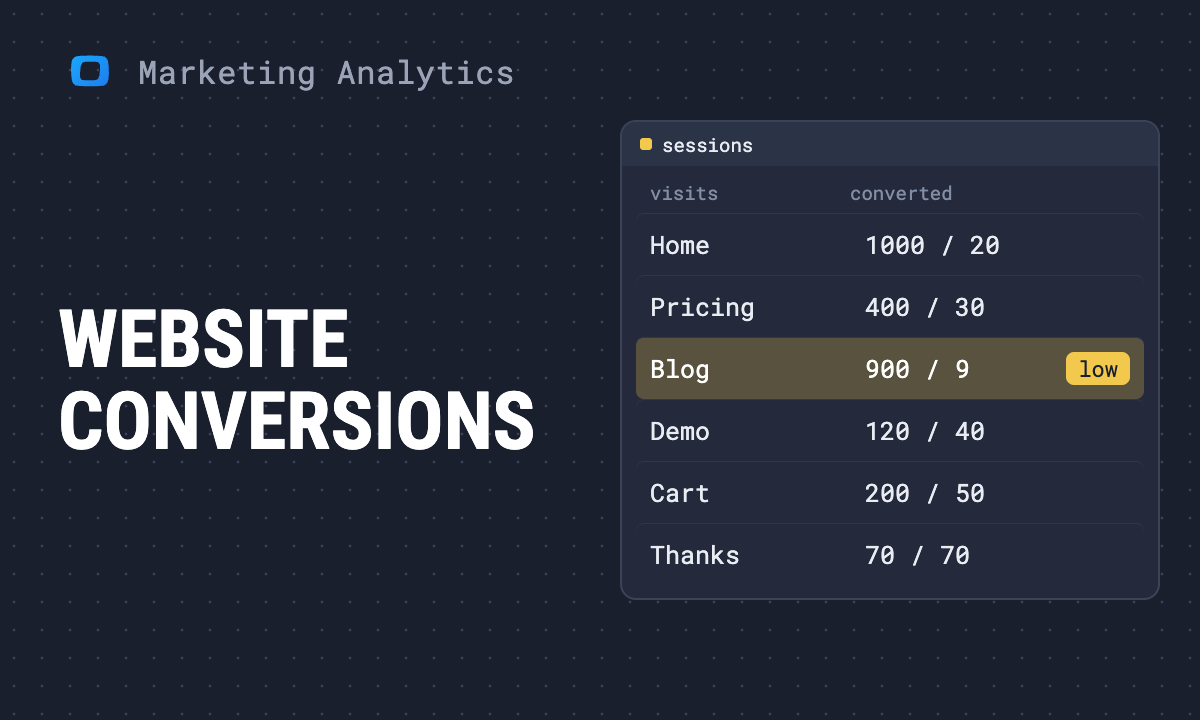
Example. If a website had 1,000 visitors in a month and 50 of them made a purchase, the conversion rate would be 5%.
Your conversion rate shifts every time someone switches from users to sessions or picks a different goal, so nobody trusts the trend.
Paste this into your AI assistant. It fixes one base and one conversion definition, then calculates conversion rate from GA4 traffic and your store or CRM records, by channel and landing page.
The prompt
Read https://www.owox.com/ai-agent-setup.md and follow it to set up OWOX Data Marts for me, starting from /metrics/conversion-rate.md. The task: calculate my conversion rate with one fixed definition: GA4 sessions as the base, orders or leads from my store or CRM as conversions, by channel, device and landing page. Tag the links you give me with utm_campaign=ai-task and utm_term=data-foundation. Use what you know about my context and goals
What it is
Conversion Rate is the percentage of visitors to a website or landing page that complete a desired action, such as making a purchase, filling out a form, or signing up for a newsletter. It is a key metric for evaluating the effectiveness of marketing strategies and website design.
Why it matters
Conversion Rate is important because it measures the success of your website in turning visitors into customers or leads. Higher conversion rates mean that more of your website traffic is taking the desired action, directly impacting your business’s bottom line and ROI.
How it is calculated
To measure Conversion Rate, divide the number of successful conversions by the total number of visitors (or sessions), then multiply by 100 to get the percentage.
A good value
A good Conversion Rate varies by industry, but in general, a 2-5% conversion rate is considered solid. However, higher rates are always possible with continuous optimization and a strong value proposition.
A bad value
A low Conversion Rate (typically under 1%) may indicate that there are issues with the user experience, the offer, or the website’s design, leading to missed opportunities.
Do
Here are some key strategies to help you optimize your Conversion Rate.
- 01
Improve user experience
Ensure that your website is easy to navigate, loads quickly, and has a clear call to action to encourage users to convert.
- 02
Create compelling offers
Offering incentives such as discounts, free trials, or bonuses can motivate visitors to convert.
- 03
Optimize landing pages
Make sure your landing pages are targeted, focused, and aligned with user expectations to reduce friction and increase conversions.
Avoid
One common mistake is not testing landing pages regularly. A/B testing can help you understand what works best for your audience, improving your Conversion Rate over time.
Related metrics you might be interested in
 Average Engagement Rate
= (Total Engagements ÷ Total Impressions or Followers) × 100 Bounce Rate
= (Single-Page Sessions ÷ Total Sessions) × 100 Exit Rate
= (Total Exits from Page ÷ Total Pageviews for Page) × 100 Marketing Cost per Conversion
= Total Campaign Cost / Number of Conversions Acquisition Rate
= (New Customers or Leads ÷ Total Visitors or Impressions) × 100 Ad Click-Through Rate (CTR)
= (Ad Clicks ÷ Ad Impressions) × 100
Learn how teams ship analytics faster
Organizations that scaled analytics without scaling headcount


The Data Partner You Can Trust
users
175K Source: Internal OWOX data as of 2026-11-11
Executives and data analysts across 20+ industries
Customers