

What Is a Bridge Table?
A bridge table is used in data modeling to handle many-to-many relationships between fact and dimension tables.
In dimensional modeling, direct many-to-many relationships can cause issues like inaccurate aggregations or double counting. Bridge tables solve this by transforming those relationships into multiple one-to-many relationships. This approach ensures accurate analysis and clean reporting in Star or Snowflake schemas.
Key Benefits of Bridge Tables
Bridge tables play an important role in maintaining the accuracy and structure of data models. They help simplify complex relationships and enable cleaner, more flexible reporting.
Here are the key advantages:
- Accurate data joins: Bridge tables ensure proper linking between two data streams, even in complex many-to-many relationships.
- Consistent filtering: When a filter is applied to one side of the bridge, it also filters the related data on the other side, supporting both detail-level and summary-level filters.
- Avoids double counting: By structuring relationships clearly, bridge tables prevent duplication of values during aggregations, resulting in accurate reporting.
Using Bridge Tables to Manage Many-to-Many Relationships
Bridge tables help handle many-to-many relationships in data models by introducing an intermediate table that links each unique pair of related records. For example, consider students enrolling in multiple courses, and each course having multiple students.
A bridge table called Enrollments would store one row per student-course pair, using a composite key of Student ID and Course ID. This structure breaks the many-to-many link into two one-to-many relationships, simplifying queries and ensuring accurate results.
This setup transforms the many-to-many relationship into two one-to-many relationships, making reporting and analysis much easier and more accurate.
Bridge Table Example for Property and Owner Mapping
Consider a real estate database where a property can have multiple owners, and an owner can own multiple properties—a classic many-to-many scenario.
A bridge table can be used to manage this relationship. For example:
- Property Table: Contains Property_ID and related details.
- Owner Table: Contains Owner_ID and related details.
- Bridge Table: Contains both Property_ID and Owner_ID pairs.
This ensures queries return accurate ownership details without data duplication or incorrect metrics, enabling reliable results during filtering, aggregation, or analysis.
Key Restrictions and Limitations of Bridge Tables
While bridge tables are useful, they also come with certain limitations that should be considered during data modeling.
- Not supported in dynamic query mode: Bridge tables can cause errors when dynamic query mode is enabled, as it requires clear, single join paths.
- Conflicts with multiple bridge tables: If a model includes more than one bridge between the same entities, the system may not know which one to use, leading to query failures.
- No cross-filtering logic: Expressions or filters that reference both sides of a bridge table are not allowed in detail or summary filters.
- Aggregations may fail: Pre-filtered or average-based aggregations are not supported when the query includes a bridge table.
- Analytic functions are restricted: Functions like ranking or running totals will generate errors if they involve data connected through a bridge table.
Bridge tables are a practical solution for many-to-many relationships in dimensional models, especially when dealing with multi-valued attributes or shared associations. Understanding when and how to use them can significantly improve the accuracy and maintainability of your reporting systems.
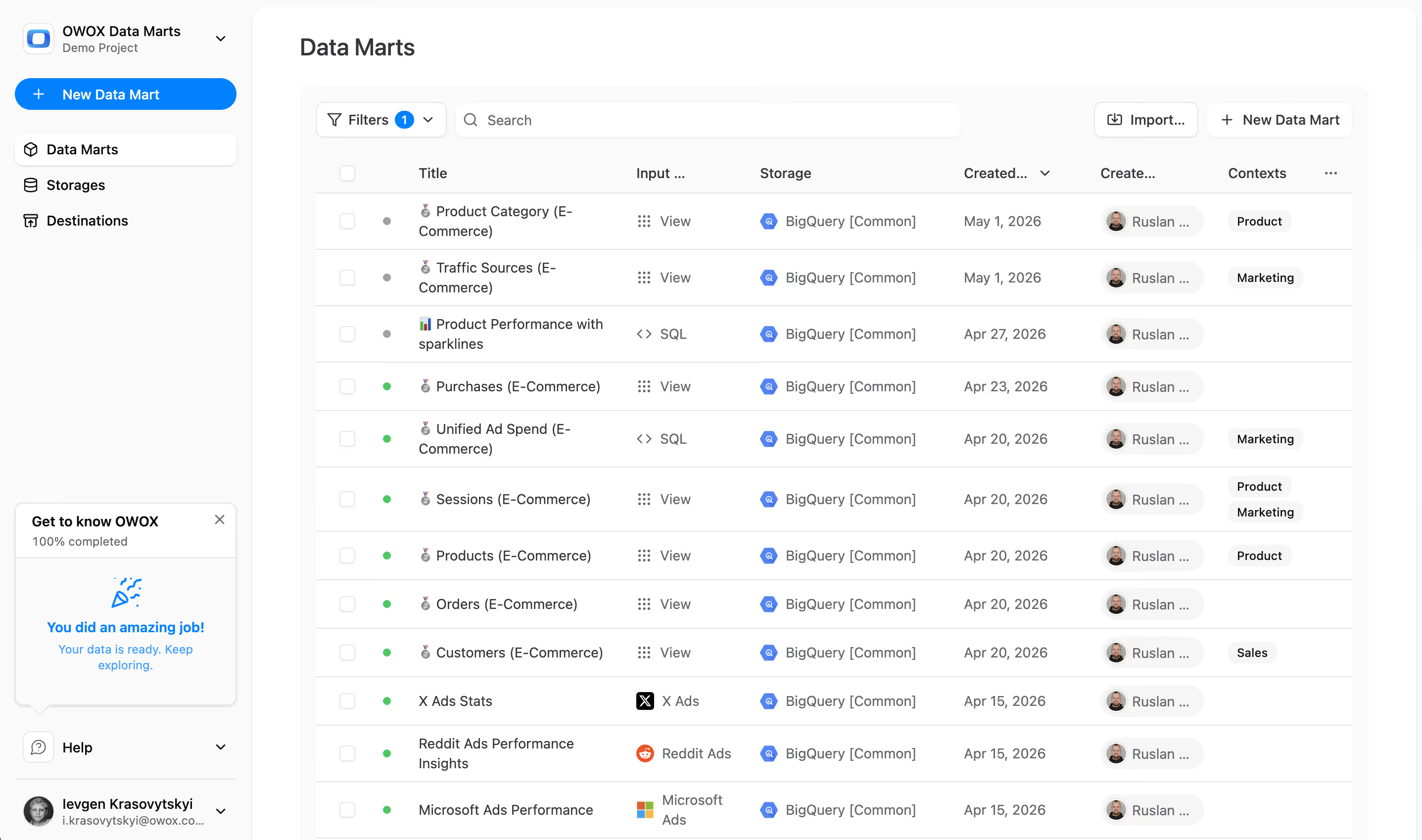
Streamline Bridge Table Usage with OWOX Data Marts
Bridge tables simplify many-to-many relationships, but managing them across reports can get messy fast.
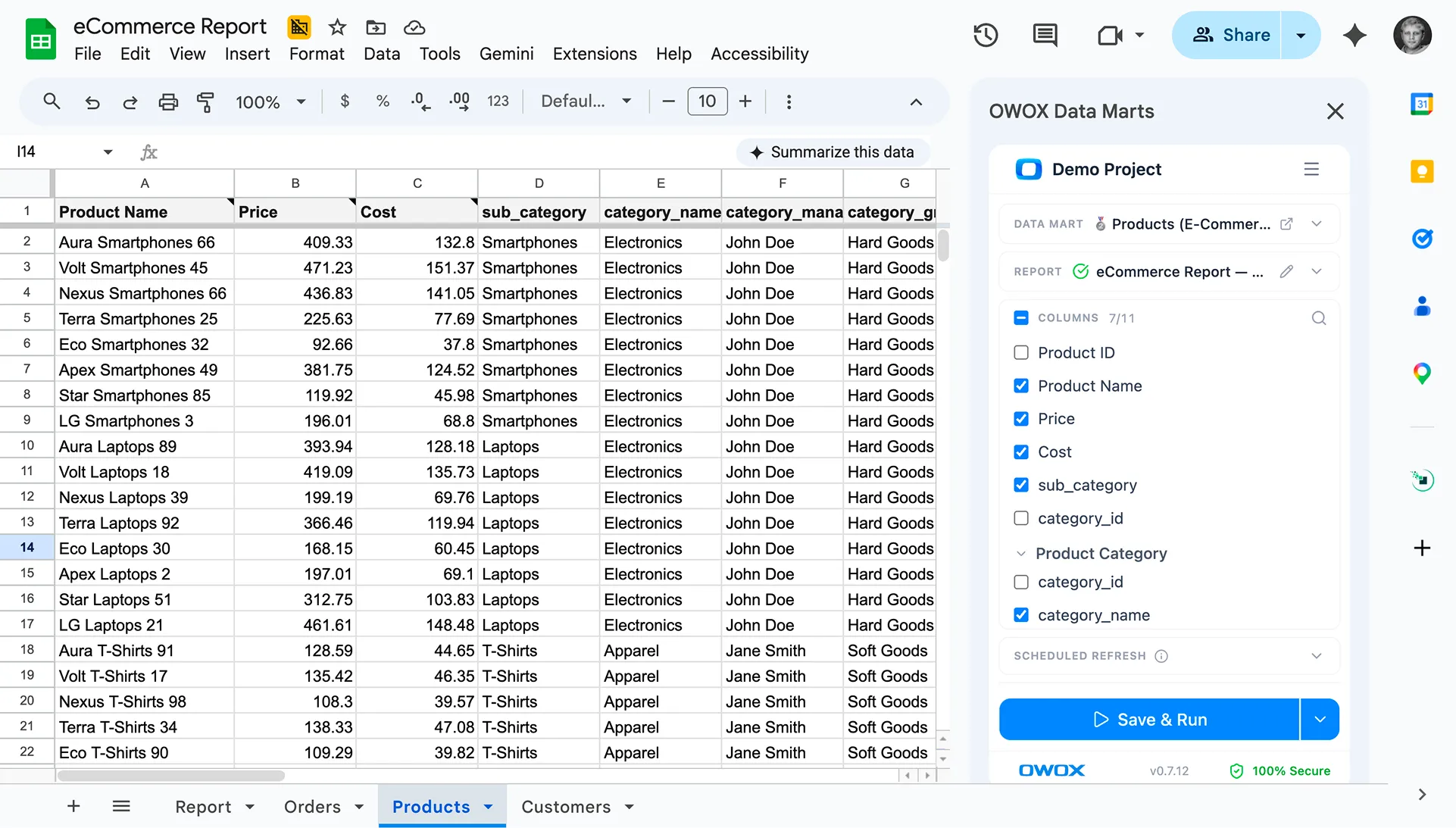
With OWOX Data Marts, analysts can centralize these relationships, maintain consistent joins, and ensure every dashboard pulls from one trusted logic layer.
Deliver cleaner, faster insights, without redundant queries or manual fixes.





"AI by its nature will hallucinate. You need guardrails so you can trust your data."
"We had six or seven different channels and no single source of truth. It was almost impossible"
"We regained time. And time is the one resource that never comes back."