

What Is Data Consumption?
Data consumption refers to how data is accessed, processed, and used to drive decision-making and business strategies.
Data consumption involves how users interact with data, affecting its collection, processing, and utilization. It includes not just the volume of data accessed but also the timing, context, and purpose of consumption.
For businesses, understanding data consumption is crucial to leverage insights effectively, make informed decisions, and optimize operations for improved efficiency and success.
Why Data Consumption Matters
Data consumption is crucial for businesses to thrive. It enables informed decision-making by providing insights that help businesses make smarter choices. Effective data usage also enhances performance by improving processes and outcomes.
Additionally, analyzing user behavior allows companies to offer personalized experiences, such as content recommendations on streaming platforms or product suggestions on e-commerce sites. Efficient data consumption gives businesses a competitive edge, ensuring growth and sustainability in a fast-paced environment.
Types of Data Consumption
Data consumption takes different forms, each with unique challenges and opportunities. Here are the most common types:
- Transactional Data: Data generated through transactions, used to analyze business operations.
- Social Media Data: Content created by users, providing insights into trends and sentiment.
- Web Analytics Data: Information about website usage that helps understand visitor behavior.
- Sensor Data: Collected by IoT devices, offering real-time data for decision-making.
Understanding these types allows businesses to tailor their strategies, using data like social media to improve marketing campaigns or sensor data for better efficiency in operations.
How Can Data Teams Optimize Consumption and Cut Costs?
Data teams can optimize consumption and reduce costs through strategic approaches to data management and resource utilization.
- Simplify Data Architecture: Standardize repositories and organize data into domains.
- Streamline Data Consumption: Automate pipelines and redesign data-gathering processes.
- Charge for Data Product Usage: Track query metrics and estimate data warehouse costs.
- Analyze Supply Chain Data: Optimize inventory, streamline logistics, and select cost-effective suppliers.
The Impact of Data Consumption in the Digital World
Data consumption has grown significantly with the rise of smart devices and internet connectivity. It drives industry innovation by improving operational efficiency, predicting consumer behavior, and enhancing products. Data also influences public policy, guiding decisions in health, education, and infrastructure.
As businesses rely more on data, ethical concerns like privacy and security arise. To foster trust, organizations must balance data usage with transparency, ensuring responsible practices while driving innovation and societal progress.
The Future of Data Consumption
Data consumption is rapidly evolving, driven by new technologies and shifting consumer behaviors. As businesses face this change, they must stay aware of trends like personalized experiences, real-time data usage with faster internet speeds, and increased focus on data privacy and security. Adapting to these shifts will be essential for maintaining relevance.
With the expansion of IoT and AI, data consumption will see significant changes, as devices generate vast amounts of real-time data. This creates both challenges and opportunities for businesses to use this information to make better decisions, making effective data management key to future success.
With the rise of technologies like IoT and AI, data consumption is becoming a driving force for innovation. It enables businesses to improve efficiency, predict trends, and offer personalized experiences, making data optimization essential for staying competitive.
Simplify Data Consumption with OWOX Data Marts
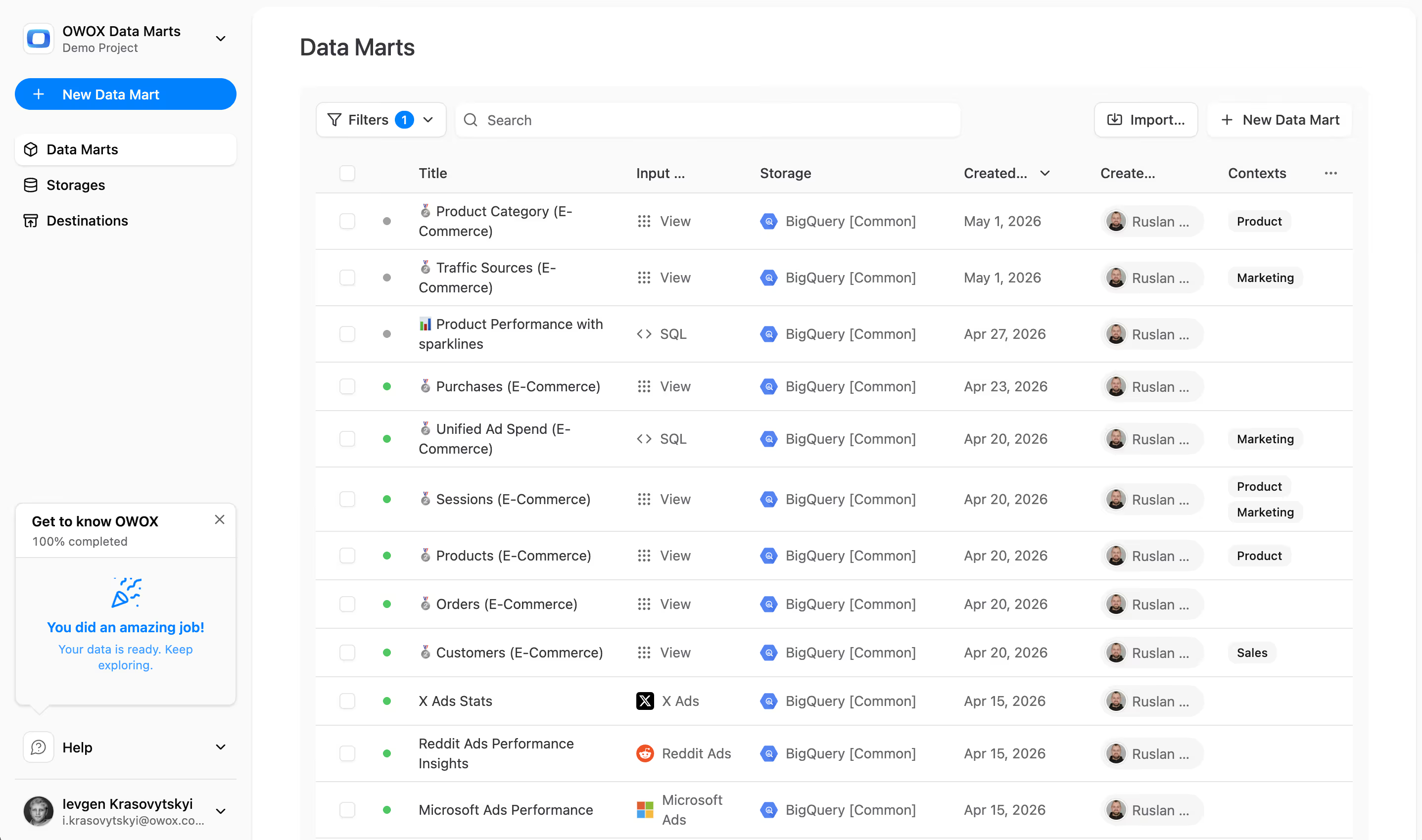
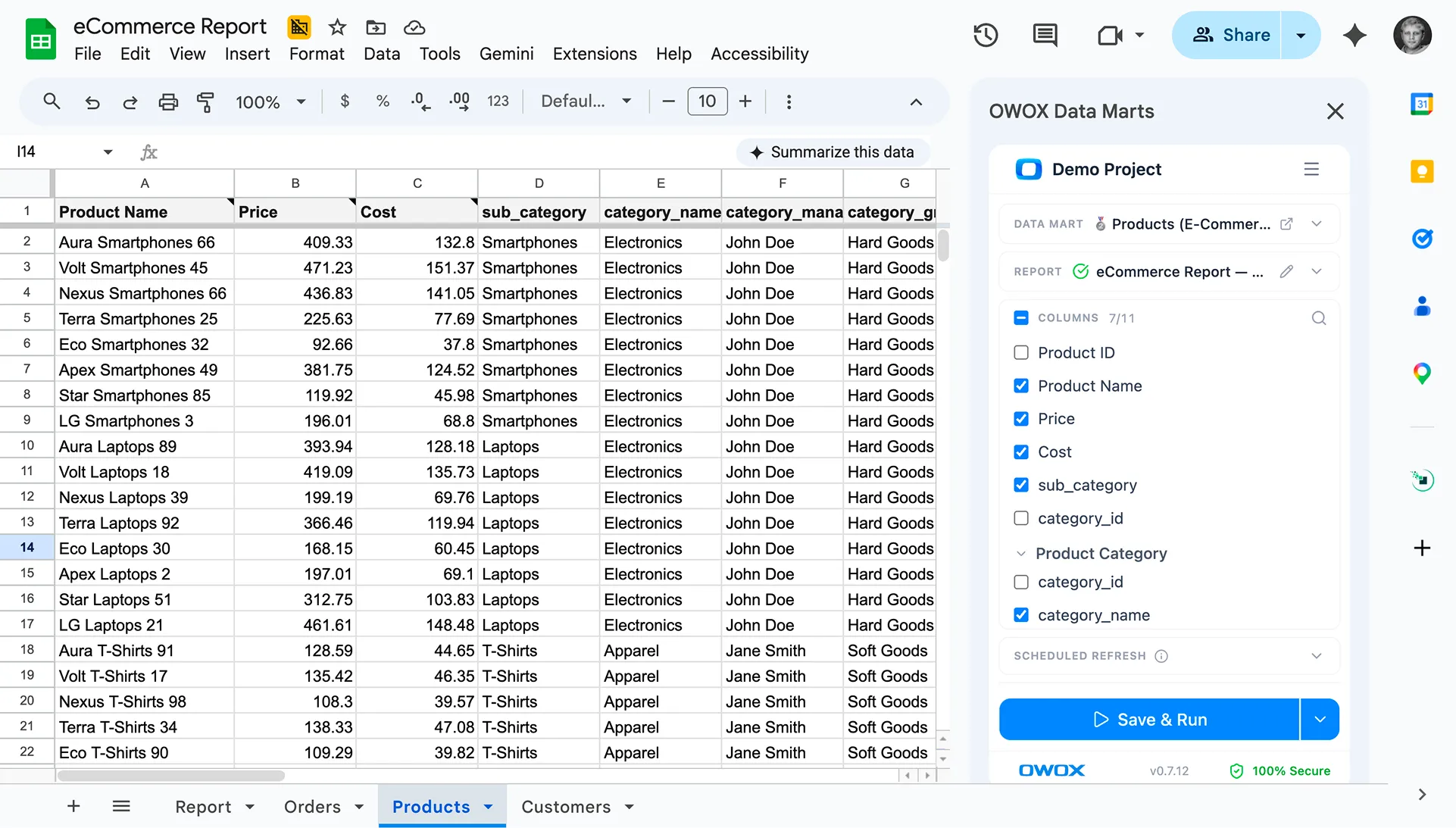
Efficient data consumption starts with having a single, reliable source that serves every team consistently. With OWOX Data Marts, analysts can define reusable datasets that feed directly into tools like Google Sheets, Looker Studio, or Power BI, giving business users access to governed, up-to-date data without writing SQL. This ensures fast, consistent insights across your entire organization.




"AI by its nature will hallucinate. You need guardrails so you can trust your data."
"We had six or seven different channels and no single source of truth. It was almost impossible"
"We regained time. And time is the one resource that never comes back."