

What Is Data Standardization?
Data standardization is the process of turning messy, inconsistent data from different systems into one shared format so teams can join it, model it, and trust it in analysis.
What Is Data Standardization?
In analytics, data rarely arrives in a neat, ready-to-use shape. One source says “Paid Search,” another says “ppc,” and a third stores the same idea as “google_ads.” Data standardization fixes that by making values, formats, and naming rules consistent across sources.
Simple definition for analytics teams
For analytics teams, data standardization means agreeing on how data should look before it reaches reporting. That includes using the same field names, the same date formats, the same units, and the same category labels across tools and teams.
The goal is simple: if two datasets describe the same thing, they should describe it in the same way. When that happens, your joins work, your models stay cleaner, and your dashboards stop arguing with each other.
Data standardization vs. data cleaning vs. data transformation
These terms are related, but they are not identical. Data cleaning focuses on fixing bad data, such as nulls, duplicates, broken strings, or obvious errors. Data transformation is broader and includes reshaping, aggregating, filtering, or enriching data for analysis.
Data standardization sits in the middle of that workflow. It is specifically about consistency. You are not just correcting mistakes; you are defining one approved way to represent fields, values, and structures so data from multiple systems can work together.
Why Data Standardization Matters in Data Modeling
Strong models do not happen by accident. They depend on consistent inputs. That is why data standardization is a core building block of what data modeling is and how it structures your warehouse.
Consistent dimensions and metrics across sources
When dimensions like channel, country, device, or product category are standardized, analysts can compare performance across platforms without building custom logic every time. The same is true for metrics. Revenue, sessions, conversions, and cost need shared definitions if teams want one version of the truth.
Without standardization, every report becomes a mini interpretation project. With it, reusable dimensions and metrics become possible.
Impact on joins, keys, and relationships
Standardization has a direct effect on joins. If one table stores order IDs as strings and another stores them as integers, the relationship becomes fragile. If user IDs include prefixes in one source but not another, matching records gets messy fast.
Consistent keys, formats, and field definitions reduce failed joins and unexpected row duplication. That matters in star schemas, flat reporting tables, and any model where relationships drive analysis.
Common issues when data is not standardized
When data is not standardized, problems pile up quickly:
- Duplicate categories like “Email,” “email,” and “E-mail”
- Conflicting metric definitions across departments
- Broken joins caused by mismatched data types
- Currency and unit confusion
- Dashboards that show different numbers for the same question
None of this is exciting. But fixing it is. Standardization removes the friction that slows down every analyst downstream.
Key Elements of Data Standardization
Standardization is not one rule. It is a collection of decisions that make datasets predictable, reusable, and easier to govern.
Naming conventions (fields, tables, metrics)
Teams need a common language for naming. That can include using snake_case for columns, keeping table names descriptive, and choosing stable metric labels like revenue_usd or first_purchase_date.
Consistent naming helps analysts understand datasets faster and reduces the risk of creating slightly different versions of the same metric. It also makes documentation far easier to maintain.
Data types, formats, and units
Dates should follow one format. Numbers should use the correct numeric type. Revenue should use a clear currency standard. Distances, weights, and time values should also be normalized when they come from systems with different units.
If one source stores cost in cents and another in dollars, standardization ensures they are aligned before reporting. This is the kind of tiny mismatch that causes very loud dashboard errors.
Taxonomies, categories, and reference data
Taxonomies define controlled sets of business values. For marketing, that might mean approved channel groups, campaign objectives, or traffic source categories. For product analytics, it could mean standard event names or feature groups.
Reference tables are often used to map raw values to standardized categories. That is how “fb,” “facebook_ads,” and “Meta Paid” can all roll up into one consistent channel label.
Identifiers and keys (user_id, order_id, campaign_id)
Identifiers are where standardization gets serious. Keys need stable structure, consistent type, and clear meaning. A campaign_id should represent the same business object everywhere it appears. A user_id should not shift format between tools unless mapping logic is defined.
If identifiers are inconsistent, attribution breaks, customer journeys fragment, and joining tables becomes a gamble instead of a workflow.
How to Implement Data Standardization in Practice
Standardization works best when it is operational, not just theoretical. It needs rules, implementation, and ongoing maintenance.
Defining standards: data contracts and documentation
Start by defining what “correct” looks like. Document approved field names, accepted values, key formats, metric formulas, and unit rules. Data contracts between data producers and consumers help keep these rules explicit.
This is also where data mapping techniques become useful. Mapping documents show how raw source fields connect to standardized warehouse fields, which makes onboarding new sources much faster.
Standardization in ETL/ELT pipelines and SQL
Once standards are defined, apply them in your pipelines. In ETL or ELT processes, standardization often includes casting data types, renaming columns, mapping categories, normalizing text values, and converting units before data reaches reporting layers.
SQL is a common place to do this work. For example, an analyst might standardize channel names with a CASE statement, cast order_id to a shared type, and convert all revenue values to one currency column. This is also where teams run into common data transformation challenges such as inconsistent source logic, undocumented fields, and changing schemas.
Monitoring and maintaining standards over time
Standardization is not a one-time cleanup. New sources appear. Marketing teams rename campaigns. Product events evolve. Standards need monitoring so drift does not creep back in.
Good maintenance includes schema checks, value validation, anomaly reviews, and regular updates to mapping tables and documentation. The best standard is the one teams can actually keep alive.
Example: Standardizing Marketing and Product Data
Imagine a company combining ad platform data, web analytics, and product usage events into one warehouse for growth reporting.
Unifying channel and campaign naming
The marketing team pulls campaign data from multiple ad platforms. One source uses “Paid Social,” another uses “social_paid,” and UTMs contain free-text names entered by different people. Analysts create a mapping table that converts all raw labels into approved values such as Paid Search, Paid Social, Email, and Organic Search.
They also standardize campaign naming into a shared pattern, such as region_objective_audience_offer. Suddenly, campaign reporting becomes sortable, comparable, and much less chaotic.
Aligning revenue, cost, and conversion metrics
Next, the team aligns metrics. Ad platforms report cost with different precision. Product data records purchases in local currencies. Conversion events are named differently between web and app tracking. Standardization converts cost and revenue into agreed fields and maps conversions into a shared event taxonomy.
A simplified SQL step might look like this: cast IDs to one type, lower-case raw channel values, map them to approved categories, and convert revenue to a single currency field used across reports.
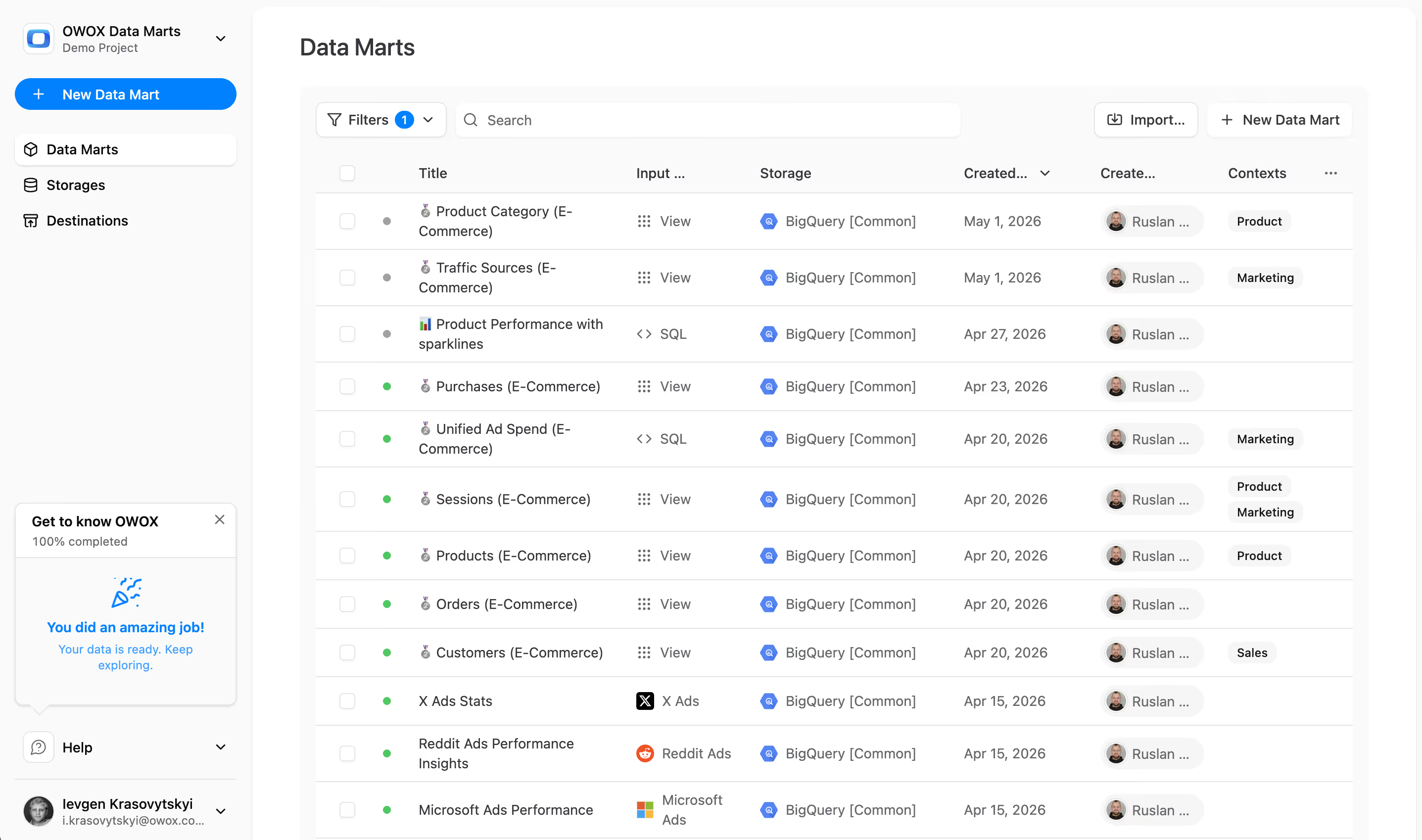
Making data ready for data marts and dashboards
After standardization, the team can build clean reporting tables where channel, campaign, user, revenue, and conversion fields follow one consistent structure. That makes the data ready for dashboards, attribution analysis, and performance reviews.
Instead of rebuilding logic inside every BI chart, the heavy lifting is done upstream. That is the big win.
Data Standardization in the Context of Data Marts
Data marts become dramatically more useful when they are built on standardized inputs. Otherwise, they just package inconsistency into a nicer-looking table.
Building reusable, standardized dimensions
Standardization makes it possible to create reusable dimensions for channel, campaign, customer, product, and time. These dimensions can then support multiple use cases without being redefined for every dashboard.
This is especially helpful when designing data marts with flat tables, where clarity and consistency are essential for fast reporting.
How standardization simplifies self-service reporting
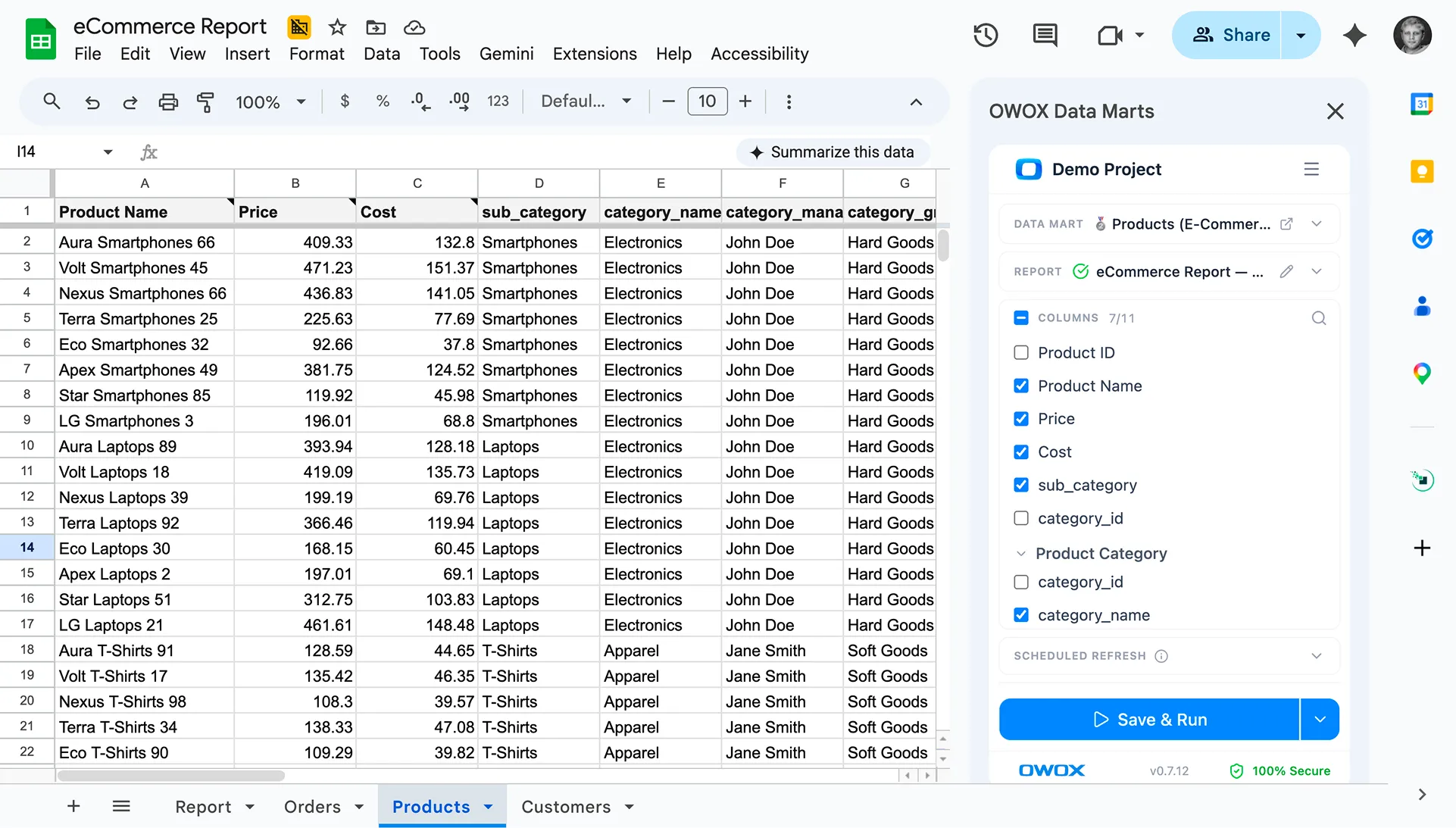
Self-service reporting only works when people can trust the fields they use. If dimensions are standardized and metrics are clearly defined, business users can explore data with less analyst support and fewer misunderstandings.
That is one reason business reporting built around data marts is so effective: standardized data lowers the barrier to reliable analysis.
OWOX Data Marts note
In the context of data marts, standardization helps turn raw warehouse data into analysis-ready datasets that teams can actually use. It supports consistency across reporting layers and makes repeated business questions much easier to answer.
Want cleaner reporting inputs without constant rework? Explore OWOX Data Marts for building standardized, analysis-ready datasets, and see how better data marts can support faster, more reliable reporting.
%202.png)



"AI by its nature will hallucinate. You need guardrails so you can trust your data."
"We had six or seven different channels and no single source of truth. It was almost impossible"
"We regained time. And time is the one resource that never comes back."