

What Is the DATE_ADD Function in SQL?
The DATE_ADD function in SQL lets you move a date or datetime forward by a specific interval, like 7 days, 1 month, or 2 hours, making it a go-to tool for reporting windows, cohort logic, and time-based analysis.
What is the DATE_ADD function in SQL?
DATE_ADD is one of those deceptively simple SQL functions that powers a huge amount of analytics work. At its core, it takes a date-like value and adds a defined unit of time to it. That could mean calculating an order follow-up date, extending a campaign end date, or creating a rolling 30-day filter.
Analysts use DATE_ADD all the time because business questions are rarely about one fixed date. They are about what happens after signup, before conversion, within 7 days of a click, or 30 days after first purchase. DATE_ADD helps turn those time rules into clear SQL logic.
It also improves consistency. Instead of hardcoding dates into every report, you can define dynamic windows that adjust automatically as fresh data arrives. That makes dashboards more reliable and transformations easier to maintain.
DATE_ADD syntax and supported intervals
The exact syntax depends on the SQL dialect, but the idea stays the same: start with a date or datetime value, then add a time interval to it.
Basic DATE_ADD syntax
A common pattern looks like this:
1DATE_ADD(date_value, INTERVAL 7 DAY)
In practice, you provide the starting value, the amount to add, and the unit. Some platforms use a function with arguments in a different order, while others rely on interval expressions. Even so, the goal is always the same: shift a date forward in a predictable way.
This is especially useful in filters, calculated fields, and join conditions where you need to compare events across a defined time span.
Common interval types (DAY, MONTH, YEAR, HOUR, etc.)
DATE_ADD usually supports a wide range of interval types. The most common ones in analytics are:
- DAY for daily reporting windows
- WEEK for weekly comparisons
- MONTH for billing cycles and subscription analysis
- YEAR for YoY logic
- HOUR and MINUTE for session, event, or attribution timing
- SECOND for fine-grained event streams
The interval you choose depends on the data grain. If your reporting table stores daily snapshots, adding hours may not make sense. But if you work with raw events, hourly and minute-based shifts can be critical.
Dialect differences (BigQuery, MySQL, PostgreSQL alternatives)
SQL dialects do not always agree on date functions, and DATE_ADD is a classic example. In BigQuery, DATE_ADD is commonly used with DATE values, while related functions like DATETIME_ADD or TIMESTAMP_ADD are used for other types. MySQL also supports DATE_ADD with interval syntax.
PostgreSQL often takes a different route and uses direct interval arithmetic, such as adding INTERVAL '7 days' to a date or timestamp. So while the business logic stays the same, the exact expression may change when you switch warehouses.
That is why analysts should always check function behavior in the target environment, especially when migrating dashboards or generating SQL queries with AI assistants. The logic may be right, but the syntax can still be off.
Practical DATE_ADD examples for analytics
DATE_ADD becomes really powerful when you move beyond simple date shifts and use it to structure reporting logic that updates automatically.
Shifting reporting periods (yesterday, last 7/30 days)
One of the most common uses is building dynamic date filters. Instead of hardcoding a report for a fixed week, you can define a moving window relative to the current date.
For example, you might filter records where event_date is between DATE_ADD(CURRENT_DATE, INTERVAL -7 DAY) and CURRENT_DATE. Some dialects would use DATE_SUB for the backward shift, but the idea is the same: define a relative reporting period.
This pattern is perfect for daily dashboards, campaign pacing reports, and operational monitoring. It reduces manual updates and helps teams stay focused on the latest performance.
Building cohorts and retention windows
DATE_ADD is a staple in cohort analysis. Suppose you assign each user a signup date and want to check whether they returned within 7, 14, or 30 days. You can use DATE_ADD to define the boundaries of each retention window.
For example, a user belongs in a 7-day retention bucket if an activity date falls between signup_date and DATE_ADD(signup_date, INTERVAL 7 DAY). That makes it easy to join signup events with later sessions or transactions.
This logic is especially useful in product analytics, subscription reporting, and lifecycle marketing, where timing after the first touch matters as much as the event itself.
Marketing use cases: campaign duration and attribution windows
Marketing teams constantly work with date ranges. DATE_ADD helps define campaign end dates, post-click attribution windows, and follow-up periods after impressions or email sends.
Example: imagine you want to count purchases that happened within 7 days after an ad click. You could join clicks to purchases and keep only rows where purchase_time is less than or equal to DATE_ADD(click_time, INTERVAL 7 DAY). That creates a clear attribution boundary without manually calculating every cutoff date.
This approach also helps with promo analysis. If a discount starts on one date and runs for 14 days, DATE_ADD can generate the valid period directly inside your query, making campaign reporting much easier to audit.
Common pitfalls and edge cases
DATE_ADD is powerful, but date logic can get messy fast. Tiny assumptions about types, calendars, or missing values can create major reporting errors.
Time zones and DATETIME vs TIMESTAMP
Not all date-like fields behave the same way. A DATE has no time component. A DATETIME usually stores a calendar date and clock time without time zone conversion. A TIMESTAMP often represents a specific moment in time and may be interpreted relative to time zones.
If you add one day to a timestamp in a system that converts across time zones, the result may not match your business-day expectation. That matters a lot for global reporting, session cutoffs, and conversion windows.
To avoid confusion, define whether your transformation uses local business time or UTC, and keep that rule consistent across joins and filters.
Month-end issues when adding months
Adding months is not always straightforward. What happens when you add one month to January 31? Different systems may handle the result differently, often rolling to the last valid day of the target month.
That can affect billing cycle analysis, renewal models, and monthly cohorts. If your logic depends on exact month boundaries, test those end-of-month cases explicitly instead of assuming all months behave the same.
This kind of validation becomes even more important when your transformations depend on relationships enforced by key constraints in SQL or when event tables are joined through primary and foreign keys in SQL.
Nulls, invalid dates, and performance notes
If the source date is null, DATE_ADD usually returns null. That sounds obvious, but it can silently remove rows from downstream comparisons or produce incomplete aggregates.
Invalid dates and poorly typed columns are another issue. If a field is stored as text instead of a proper date or timestamp, the query may fail or force expensive conversions. Clean typing matters.
Performance can also suffer when DATE_ADD is wrapped around indexed columns inside filters or joins. In some systems, applying a function directly to a column makes it harder for the optimizer to use partitioning or indexing efficiently. Whenever possible, structure predicates so the raw column stays easy to scan.
DATE_ADD in data marts and reporting workflows
In modern analytics stacks, DATE_ADD is not just a report helper. It is part of reusable transformation logic that shapes trusted reporting tables.
Using DATE_ADD in scheduled transformations
Scheduled jobs often rely on relative dates, such as rebuilding the last 3 days of data, calculating active subscriptions as of tomorrow, or labeling records inside a rolling 28-day window. DATE_ADD makes these transformations dynamic, so they continue working without manual date edits.
This is a strong fit for recurring SQL tasks and using stored procedures for recurring date-based transformations. It keeps logic centralized and makes repeated reporting processes less fragile.
When these workflows touch sensitive records, date logic should also align with governance practices such as data masking in SQL pipelines, especially in shared analytics environments.
How DATE_ADD supports reusable data mart logic
Reusable data marts thrive on standardized time definitions. If every team calculates “active in the last 30 days” differently, trust in reporting drops fast. DATE_ADD helps encode those rules once and apply them consistently across transformations and BI layers.
For example, a customer mart might define a retention flag based on whether a purchase occurred before DATE_ADD(first_order_date, INTERVAL 30 DAY). Once that logic is baked into the model, downstream dashboards can use the same business definition without rebuilding it from scratch.
That is what makes DATE_ADD such a practical building block: simple syntax, huge payoff in consistency.
DATE_ADD vs alternative date manipulation functions
DATE_ADD is not the only way to work with time, but it is often the clearest when you need to move forward from a known date.
DATE_ADD vs DATE_SUB
DATE_ADD moves a value forward, while DATE_SUB moves it backward. In many analytical tasks, both can solve related problems. You might use DATE_SUB to define “last 30 days” from today, and DATE_ADD to define “30 days after signup.”
Some teams prefer using DATE_ADD with negative intervals for backward shifts. Others use DATE_SUB for readability. The best choice is usually the one that makes the business rule easiest to understand at a glance.
DATE_ADD vs direct arithmetic or other date functions
Some SQL dialects allow direct arithmetic on dates, and others provide specialized functions for DATE, DATETIME, and TIMESTAMP values. Those options can work, but DATE_ADD is often more explicit because it spells out the intended interval unit.
That clarity matters. Adding 1 to a date can be ambiguous across systems, while DATE_ADD with INTERVAL 1 DAY is hard to misread. When queries become part of production reporting, explicit logic usually wins.
In short, DATE_ADD is a reliable, analyst-friendly way to express time shifts, especially when precision, readability, and reuse all matter.
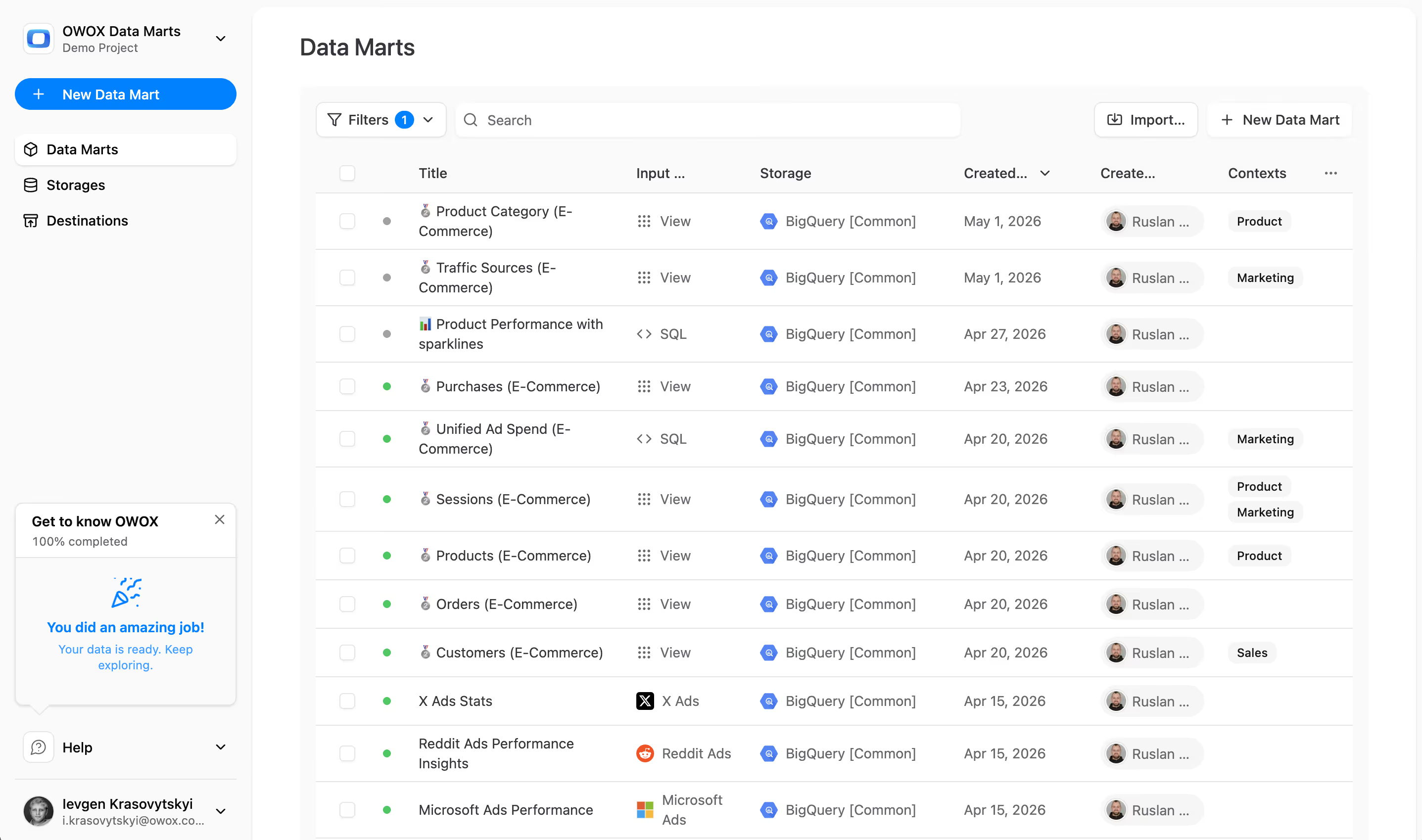
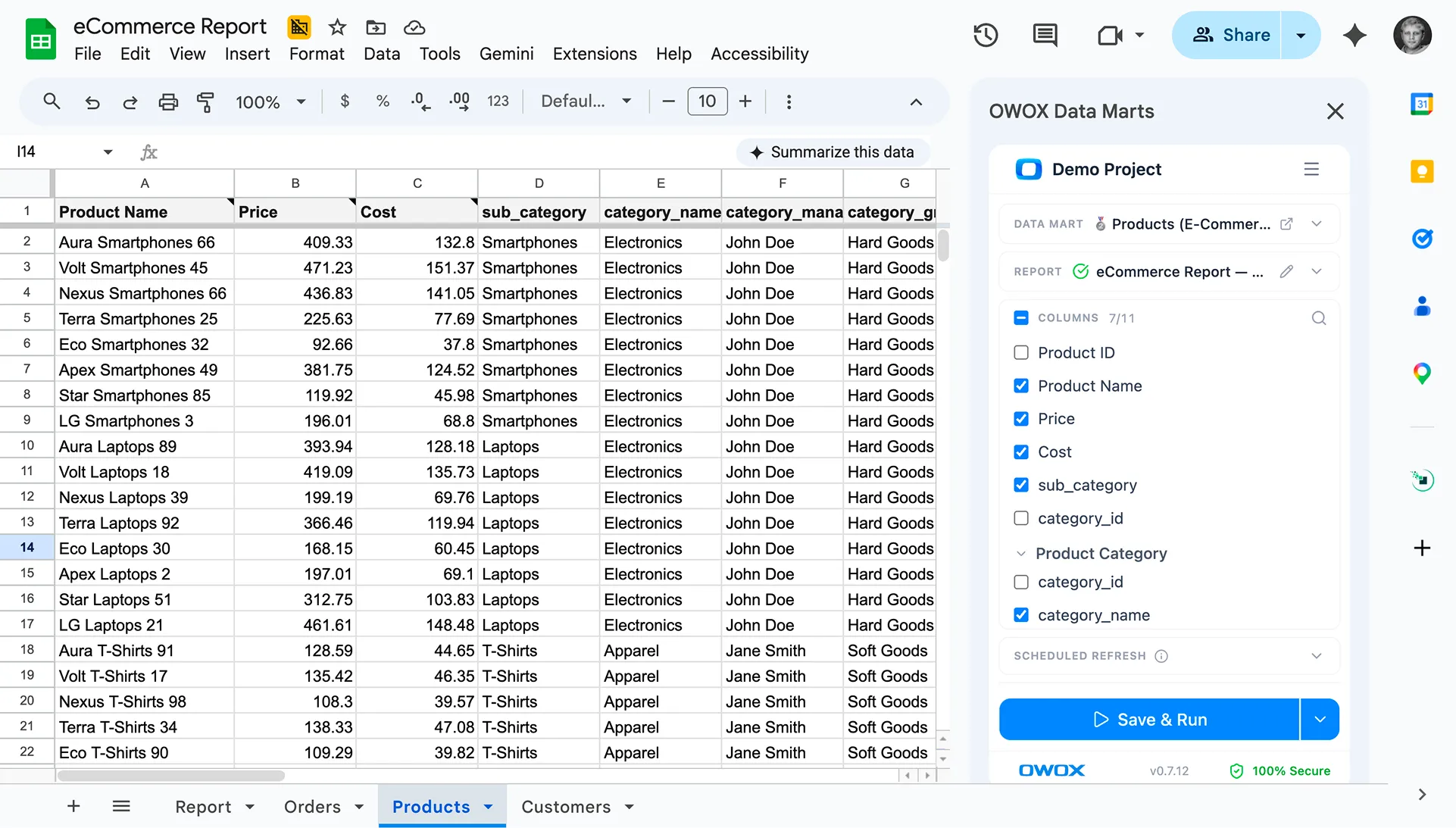
If you want cleaner data marts, more consistent reporting workflows, and reusable time-based logic, explore OWOX Data Marts. It is a practical way to turn SQL transformations into analytics-ready datasets.
%202.png)



"AI by its nature will hallucinate. You need guardrails so you can trust your data."
"We had six or seven different channels and no single source of truth. It was almost impossible"
"We regained time. And time is the one resource that never comes back."