

What Is a Fact Constellation Schema?
A Fact Constellation Schema is a type of data warehouse schema that contains multiple fact tables sharing dimension tables, forming a complex but flexible data model.
Fact Constellation Schema is also known as a Galaxy Schema because it represents a collection of interconnected star schemas. This structure supports multidimensional analysis across different business processes, such as sales, marketing, and finance, while ensuring data consistency and reusability across shared dimensions.
Benefits of a Fact Constellation Schema
A Fact Constellation Schema enables organizations to manage multiple business domains efficiently within a single analytical framework.
- Data Reusability: Shared dimensions reduce redundancy across related data models.
- Comprehensive Analysis: Supports cross-functional insights, connecting various business areas.
- Scalability: Handles growing datasets and additional fact tables with ease.
- Consistency: Ensures that all business units refer to the same dimension definitions.
- Enhanced Query Performance: Allows parallel processing across multiple fact tables.
This schema structure makes it ideal for enterprises that require holistic and integrated analytics.
How to Design a Fact Constellation Schema
Designing a Fact Constellation Schema requires careful planning to ensure scalability and accuracy.
- Identify Facts and Dimensions: Determine key business processes and the metrics to track.
- Establish Shared Dimensions: Define common entities like time, customer, and product that can connect multiple facts.
- Design Fact Tables: Create individual fact tables for each business area (e.g., sales, orders, inventory).
- Map Relationships: Link dimension tables to all related fact tables for consistent analysis.
- Validate Model Logic: Ensure relationships are optimized for query performance.
A well-designed constellation schema simplifies complex analytics across interconnected datasets.
Steps for Implementing a Fact Constellation Schema
Implementing a Fact Constellation Schema involves a structured approach to maintain consistency across data sources.
- Step 1: Identify all fact tables representing core business areas.
- Step 2: Define and create shared dimension tables.
- Step 3: Load data into fact and dimension tables using ETL processes.
- Step 4: Validate the data relationships and constraints.
- Step 5: Test queries to confirm accuracy and performance.
Implementing these steps allows analysts to leverage multi-domain data efficiently and build a unified analytical ecosystem.
Limitations and Challenges of a Fact Constellation Schema
Despite its flexibility, the Fact Constellation Schema can present some challenges:
- High Complexity: Managing multiple fact and dimension tables can be difficult.
- Performance Overhead: Complex joins may slow down queries.
- Data Maintenance: Updating shared dimensions requires careful synchronization.
- Steeper Learning Curve: Users must understand relationships across multiple schemas.
- Resource Intensive: Requires strong computing power and well-optimized queries.
Proper data governance and optimization techniques can help mitigate these challenges.
Real-World Use Cases of a Fact Constellation Schema
The Fact Constellation Schema is widely used across industries with interconnected data systems.
- Retail: Integrates sales, inventory, and promotions for cross-functional reporting.
- Finance: Combines revenue, expense, and investment data for consolidated analysis.
- Marketing: Connects campaign, conversion, and customer behavior metrics.
- Healthcare: Links patient, treatment, and billing information for comprehensive insights.
- Telecom: Merges call data, usage, and subscription records for unified analytics.
These examples show how the schema provides a unified view of complex, multi-domain business processes.
Best Practices for Designing a Fact Constellation Schema
To build an effective Fact Constellation Schema, follow these best practices:
- Plan for Reuse: Identify shared dimensions early to reduce duplication and improve future scalability.
- Optimize Joins: Index keys and relationships to improve query speed and maintain high performance.
- Maintain Data Quality: Ensure consistency across fact tables and dimensions for accurate reporting.
- Automate ETL Processes: Streamline data loading, transformation, and updates to reduce manual work.
- Document Schema Relationships: Maintain clear, detailed diagrams for analysts and developers to reference easily.
Applying these practices ensures the schema remains scalable, consistent, and efficient for enterprise-wide analytics.
Simplify Complex Schema Management with OWOX Data Marts
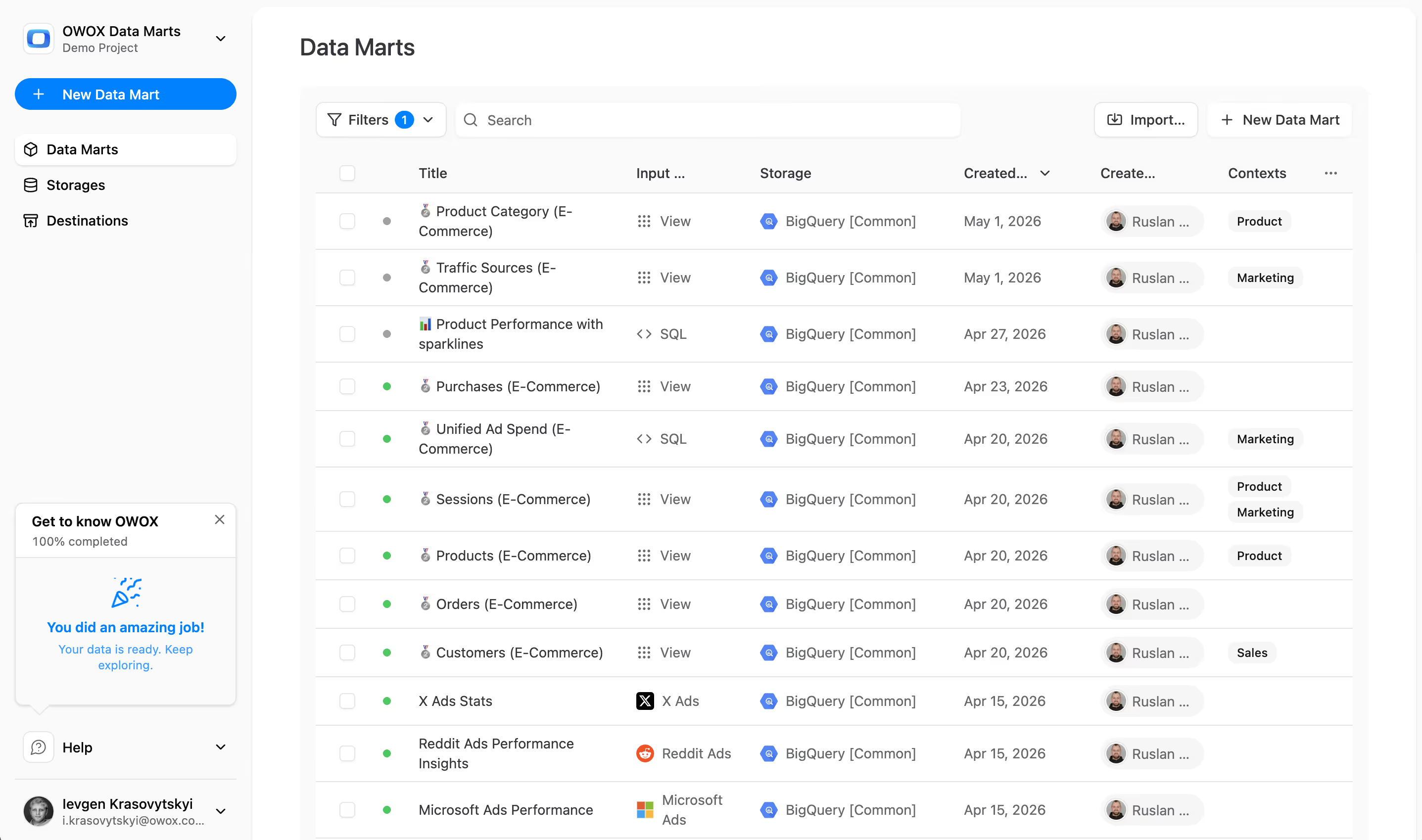
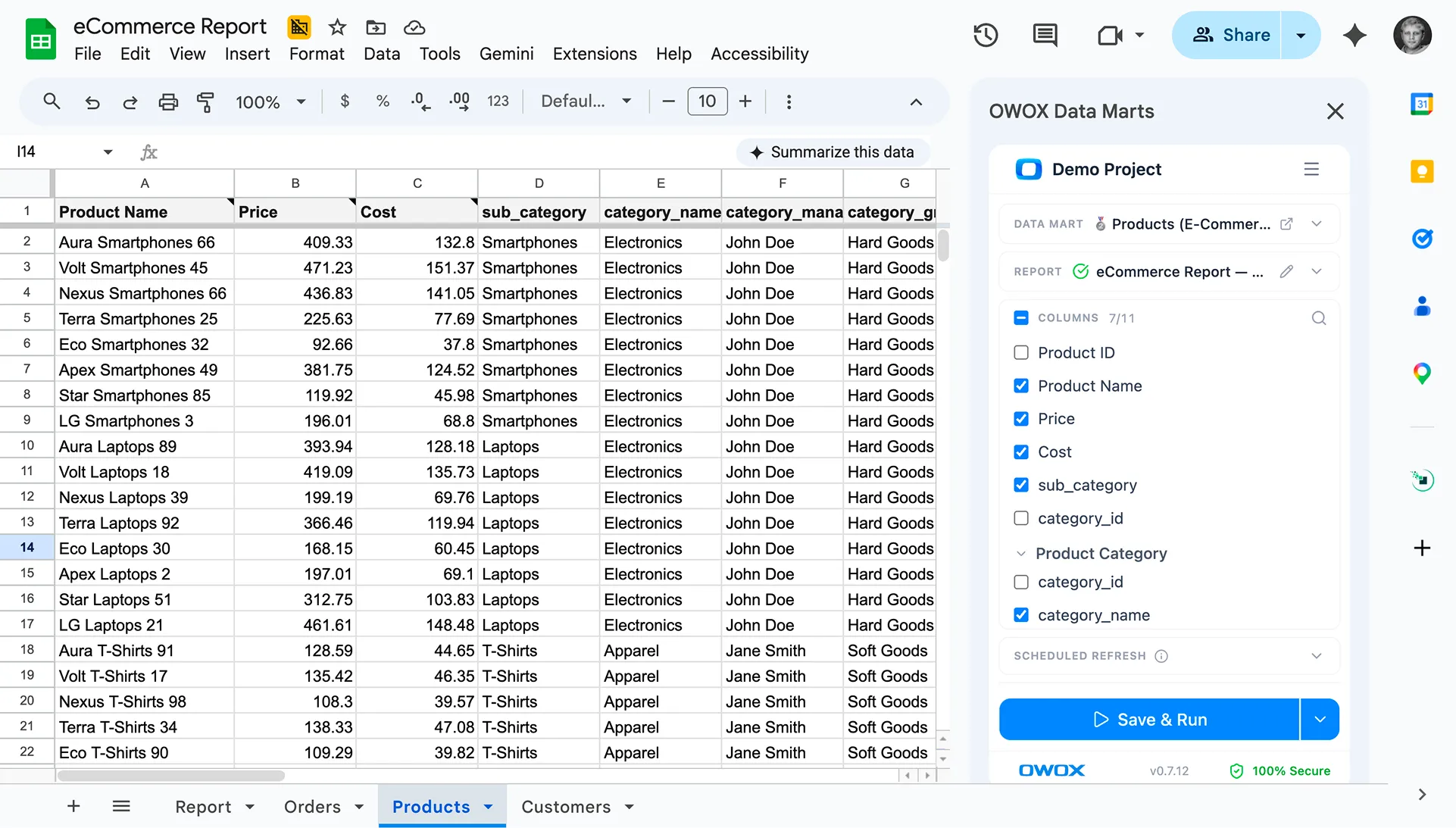
OWOX Data Marts Cloud helps teams create and manage complex schema structures like Fact Constellations without manual overhead. It allows analysts to build interconnected marts, automate updates, and maintain governed metrics across all systems. With centralized logic, consistent data definitions, and flexible integrations, OWOX ensures your schema architecture remains reliable, scalable, and analytics-ready.





.png)


"AI by its nature will hallucinate. You need guardrails so you can trust your data."
"We had six or seven different channels and no single source of truth. It was almost impossible"
"We regained time. And time is the one resource that never comes back."