

What Is the FORMAT_TIMESTAMP Function in SQL?
FORMAT_TIMESTAMP is an SQL function that turns a raw TIMESTAMP into a formatted text value, so analysts can display dates and times in a clean, readable, and report-friendly way.
What is FORMAT_TIMESTAMP in SQL?
At its core, FORMAT_TIMESTAMP is about presentation. It takes a timestamp value and outputs a string based on the pattern you define, which is perfect when raw event time needs to become something humans can instantly read.
Basic idea in one sentence
FORMAT_TIMESTAMP converts a TIMESTAMP into a custom-formatted string such as 2025-03-17, 17 Mar 2025, or 2025-03-17 14:30.
Where you’ll meet it (BigQuery and similar SQL engines)
Analysts most often run into FORMAT_TIMESTAMP in Google BigQuery, especially when building reporting tables, dashboard datasets, campaign exports, and product analytics views. Similar formatting functions also exist in other SQL systems, though syntax and supported tokens can vary.
That matters because formatting is rarely just cosmetic. Date labels affect how reports are understood, how exports are consumed, and whether a business team trusts what they see. A timestamp that looks machine-generated can slow people down. A timestamp that looks clear and consistent keeps analysis moving.
FORMAT_TIMESTAMP syntax and parameters
The function is simple in concept, but the details matter. A small formatting choice can change whether your output sorts correctly, reflects the right local time, or matches the rest of your reporting layer.
General syntax
In BigQuery, the typical structure is a format string plus the TIMESTAMP value you want to convert, and optionally a time zone. The result is text, not a TIMESTAMP anymore.
Think of it like this: you provide the pattern, then the timestamp, and SQL returns a label shaped exactly the way you asked for. That makes it useful for dashboard headers, export columns, and custom time dimensions.
Common format string tokens (YYYY, MM, DD, HH, etc.)
Common formatting patterns usually represent year, month, day, hour, minute, and second. Analysts often build outputs such as year-month, full date, or date plus hour for hourly reporting.
- Year token for a four-digit year
- Month token for numeric month
- Day token for day of month
- Hour token for 24-hour time
- Minute and second tokens for precise event timing
For example, a pattern can produce values like 2025-03 for monthly grouping labels, 2025-03-17 for daily reports, or 2025-03-17 09:00 for hourly monitoring. The key is consistency. If one table uses month names and another uses numeric months, reporting can get messy fast.
Locale and time zone considerations
This is where things get real. A timestamp represents a precise moment, but the displayed value can shift depending on the time zone you apply. Midnight UTC might still be the previous day in another region.
If your business reports in a specific market time zone, format timestamps using that same context. Otherwise, campaign reports, product events, and finance exports can show different dates for the exact same activity.
Locale can also influence how textual month or weekday names appear. In most analytics workflows, numeric date formats are safer because they are more predictable, easier to sort, and less likely to confuse downstream tools.
Common use cases for analysts
FORMAT_TIMESTAMP shows up all over the analytics stack because raw event time is rarely the final output a stakeholder wants to see.
Readable dates for dashboards and reports
One of the most common uses is turning technical timestamps into readable labels for charts, scorecards, and scheduled reports. Instead of exposing a long raw timestamp, analysts can display a clean date or a date-time string that matches reporting standards.
This is especially useful when non-technical users consume the data. A marketing manager wants to read “2025-03-17,” not interpret a raw timestamp field with implicit time zone assumptions.
Building time-based labels and groupings
Analysts also use FORMAT_TIMESTAMP to create labels like month-year, day-hour, or weekday-date combinations. These can improve chart readability and make exported datasets easier to scan.
When the same formatting pattern is reused across many workflows, it can be smart to use stored procedures to standardize formatting logic. That helps reduce inconsistencies between teams and keeps recurring transformations under control.
At the same time, remember that formatted timestamps are strings. They look great as labels, but they are not always the best field for grouping, sorting, or joining. Usually, analysts group by the native date or timestamp field first, then format for display second.
Preparing data for CSV/Excel exports and BI tools
Exports are another major use case. CSV files, spreadsheets, and even some BI connectors behave better when date-time fields are already standardized. A clearly formatted timestamp column can reduce ambiguity when data leaves the warehouse.
This becomes even more important when teams share data across departments or regions. A consistent string format is easier to validate and document. If you are distributing user-level or operational data, pair clean formatting with good practices for handling sensitive data in SQL so that readability does not come at the expense of privacy.
FORMAT_TIMESTAMP vs related functions
FORMAT_TIMESTAMP is powerful, but it is just one part of the date-time toolkit. Knowing when not to use it is just as important as knowing when to use it.
FORMAT_TIMESTAMP vs PARSE_TIMESTAMP
These two functions move in opposite directions. FORMAT_TIMESTAMP takes a TIMESTAMP and turns it into a string. PARSE_TIMESTAMP takes a string and interprets it as a TIMESTAMP based on a pattern.
If your source data arrives as text, parsing comes first. If your source data is already a proper TIMESTAMP and you only need a display label, formatting is the right move.
FORMAT_TIMESTAMP vs DATE/TIME formatting functions
Use FORMAT_TIMESTAMP when the source field is a TIMESTAMP. If you are working with a DATE or TIME type instead, use the matching formatting function for that type. This keeps your logic cleaner and reduces unnecessary conversions.
Strong typing matters in analytics engineering. Choosing the right function for the right column type supports more reliable transformations and aligns with broader best practices around designing reliable SQL schemas.
When to format in SQL vs in BI tools
Here is the challenge: just because you can format in SQL does not mean you always should. If the value is only for visual presentation in one dashboard, the BI layer may be the better place to handle it.
But if you need a standardized label reused across multiple dashboards, exports, data marts, or automated reports, formatting in SQL can create consistency. A good rule is this: keep native date-time fields for logic and analysis, and create formatted string fields only where presentation or interoperability requires them.
Example: Using FORMAT_TIMESTAMP in a query
Let’s make it practical with a realistic analytics scenario.
Formatting event timestamps in BigQuery
Imagine you have a table of product events with an event_timestamp column stored as TIMESTAMP. You want a daily report with a clean local date label and an hour label for operations monitoring.
A query might format the same timestamp in two ways: one field as YYYY-MM-DD for the reporting date, and another as YYYY-MM-DD HH:00 for hourly buckets. That gives stakeholders readable output while preserving the original raw timestamp for deeper analysis.
This is also the kind of transformation analysts often prototype quickly, especially when they generate SQL queries with AI and then refine the date-time logic manually for accuracy.
Avoiding common pitfalls (time zones, string sorting, performance)
The biggest pitfall is time zone mismatch. If your raw timestamp is stored in UTC but the business reports in a local time zone, formatting without the correct time zone can shift records into the wrong day or hour.
Another issue is sorting. A formatted value is a string, so some patterns sort well and some do not. Formats like YYYY-MM-DD sort naturally in chronological order. Formats like Mar 2025 or 17/03/2025 may not behave as expected in every tool.
Performance matters too. Applying FORMAT_TIMESTAMP across huge datasets can add overhead, especially if done repeatedly in ad hoc queries. For heavy reporting workloads, it is often smarter to create presentation-ready fields once in a reporting table rather than reformatting on every dashboard refresh.
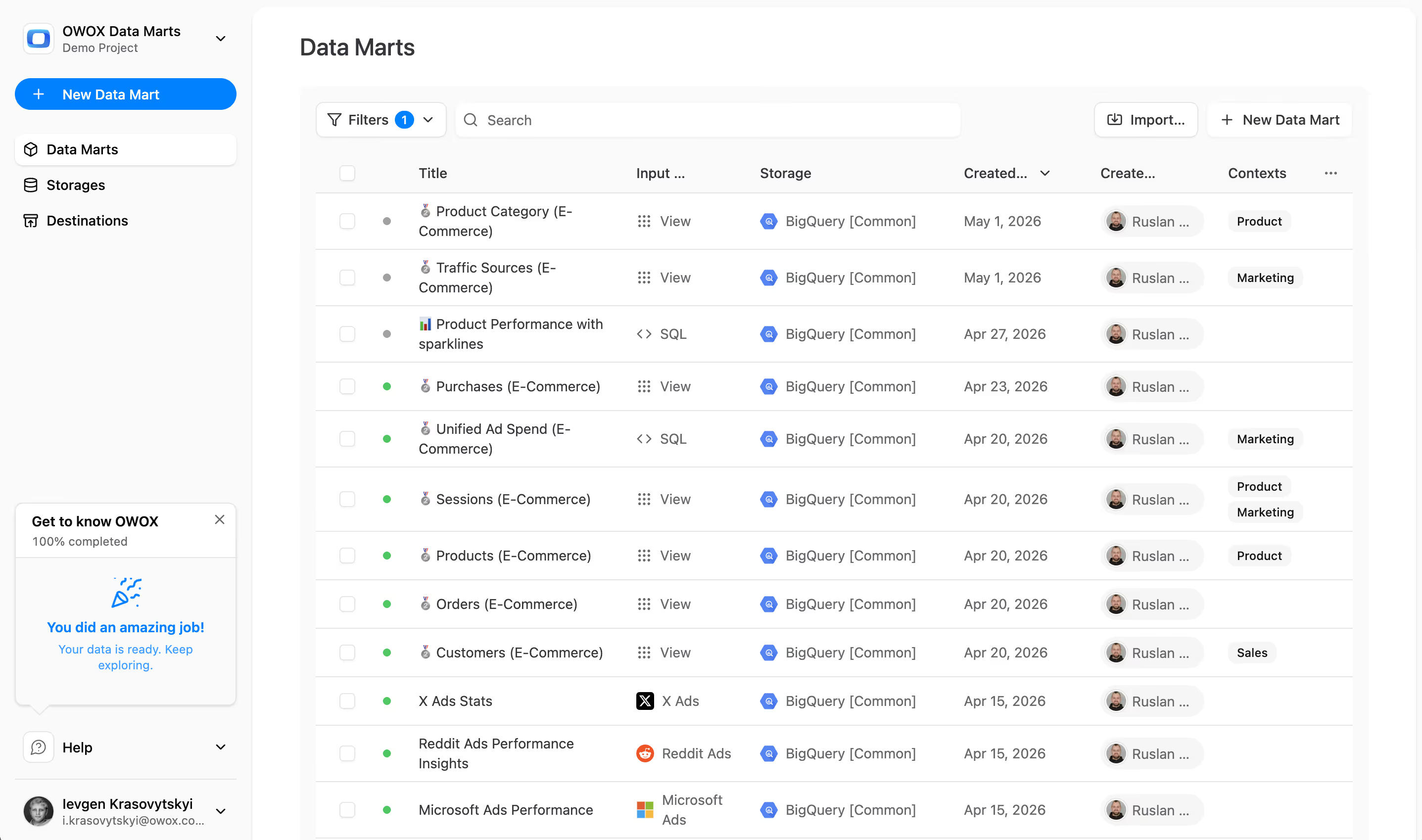
How FORMAT_TIMESTAMP fits into OWOX Data Marts
In a modern analytics workflow, formatting is not just about making data pretty. It is about making reporting-ready tables easier to reuse, trust, and scale.
Standardizing time formats in reporting-ready tables
In OWOX Data Marts, standardized timestamp formatting can help create consistent dimensions across marketing, product, and revenue reporting layers. Instead of every analyst reinventing date labels, teams can align on one approved format for daily, weekly, or hourly outputs.
That consistency works best when the underlying model is structured well, with stable relationships between entities and clean identifiers such as primary and foreign keys in SQL. Once the structure is reliable, formatted time dimensions become much easier to apply across marts.
Why consistent timestamp formatting matters for cross-channel analytics
Cross-channel analytics gets messy fast when each source uses a different timestamp style. One platform may report in UTC, another in local account time, and a third as plain text. Without standard formatting rules, blending those sources into one reporting layer can create confusion and false discrepancies.
Consistent FORMAT_TIMESTAMP logic helps teams align campaign performance, website events, CRM milestones, and product usage signals into a shared reporting language. That means cleaner dashboards, more reliable exports, and fewer “why does this date look different here?” conversations.
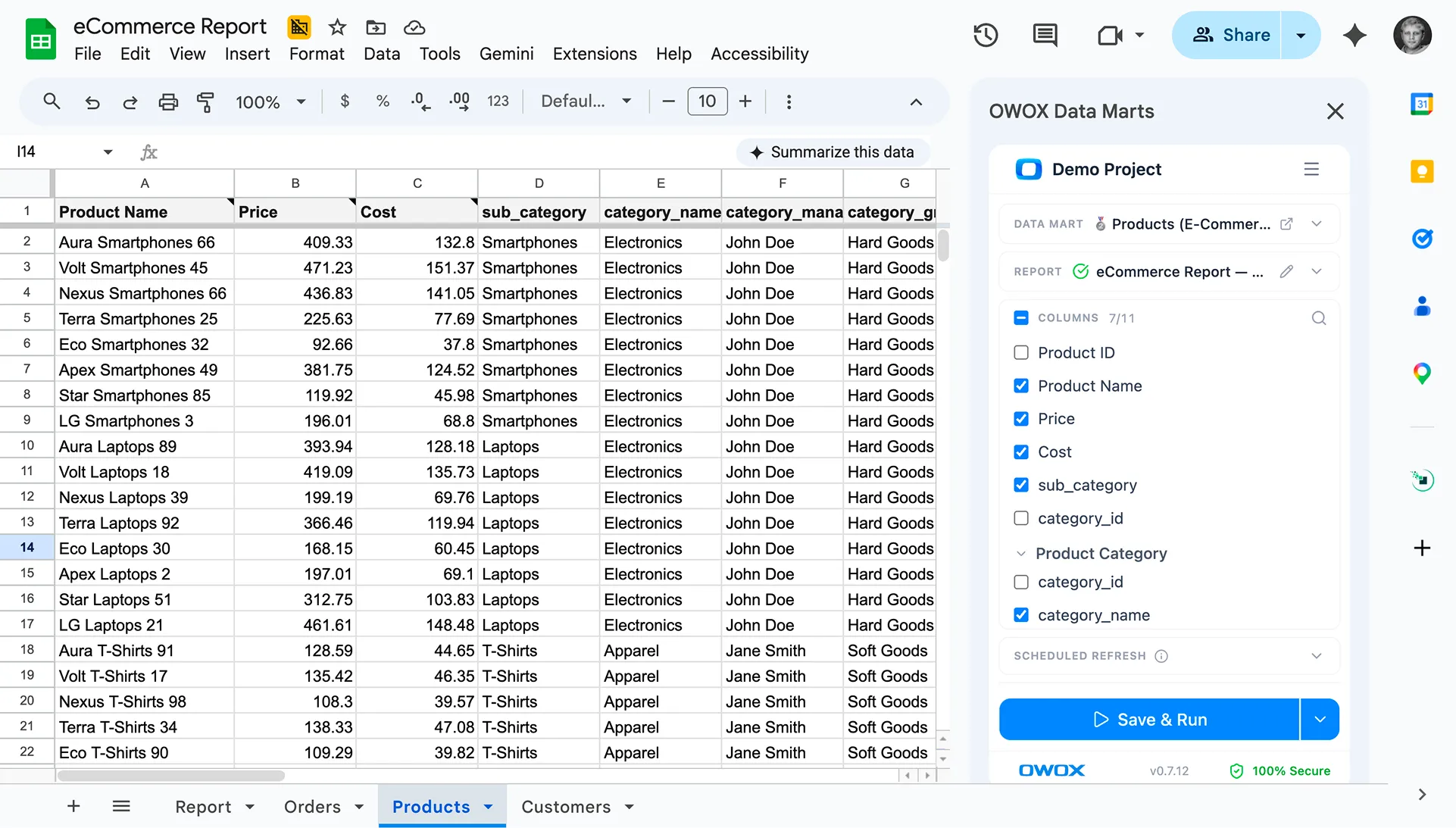
If you want to make reporting tables easier to use, OWOX Data Marts can help you standardize fields, time labels, and analysis-ready datasets. Explore how to build reporting-ready data marts and standardize analytics data in one place.
%202.png)



"AI by its nature will hallucinate. You need guardrails so you can trust your data."
"We had six or seven different channels and no single source of truth. It was almost impossible"
"We regained time. And time is the one resource that never comes back."