

What Is Grain in a Fact Table?
Grain in a fact table defines the level of detail captured by each record in that table.
Grain in a fact table determines what a single row in the fact table represents, such as a transaction, a daily sale, or a website session. Clearly defining the grain ensures consistency in data modeling, accurate aggregations, and reliable reporting across different analytical queries.
Importance of Defining Grain in a Fact Table
Defining grain is one of the most critical steps in fact table design because it governs how metrics are measured and aggregated.
- Consistency: Ensures every record represents the same level of detail, preventing mismatched metrics.
- Clarity in analysis: Helps analysts understand what each row represents, improving data interpretation.
- Accurate reporting: Maintains reliable aggregations when combining data across dimensions.
- Performance optimization: Reduces redundancy by storing only the necessary level of detail.
- Data governance: Sets clear boundaries for data collection, improving model transparency and trust.
Benefits of Grain in a Fact Table
Defining a clear and consistent grain in a fact table ensures that data is structured for accuracy, performance, and scalability.
It forms the foundation for trustworthy analytics and easier reporting across business teams.
- Accurate analysis: A well-defined grain prevents duplication and ensures calculations, such as totals or averages, are consistent across reports.
- Simplified data joins: Consistent granularity makes it easier to connect fact tables with dimension tables without mismatched or missing data.
- Efficient storage: Storing only the required level of detail minimizes redundancy and optimizes warehouse performance.
- Improved scalability: Clear grain definitions make it simpler to expand data models as new metrics or dimensions are introduced.
- Reliable reporting: When every record follows a defined level of detail, business users can trust the accuracy of dashboards and insights.
Limitations and Challenges of Grain in a Fact Table
While defining grain provides structure and clarity, it also introduces complexities that require careful management throughout the data modeling process.
- Ambiguous definitions: If the grain isn’t clearly defined, different teams may interpret the same fact table differently, leading to reporting inconsistencies.
- High storage costs: Choosing an overly detailed grain, such as recording every click or event, can create massive datasets that strain storage and processing resources.
- Aggregation errors: When fact tables with different grains are joined, it can cause duplicate counts or missing values in aggregated results.
- Complex redesigns: Changing the grain later often requires re-engineering ETL pipelines and reloading data, disrupting existing reports.
- Integration challenges: Combining data from systems with varying granularities—like daily versus hourly data—can make synchronization and analysis difficult.
Best Practices for Defining Grain in a Fact Table
Establishing the right grain ensures accuracy, clarity, and long-term scalability in your data warehouse.
- Define grain early: Decide what each row represents—transaction, day, session—before building measures or dimensions.
- Align with business logic: Match the grain to real-world events that stakeholders care about, such as “one order per row.”
- Avoid mixed grains: Maintain one consistent level of detail per fact table to prevent aggregation issues.
- Use surrogate keys: Connect facts and dimensions through stable identifiers rather than business IDs.
- Document thoroughly: Record the grain definition and any exceptions to support data governance and maintenance.
- Validate with stakeholders: Ensure analysts and business users agree on how metrics should be represented and summarized.
Real-World Examples of Grain in a Fact Table
Grain definitions vary by business context but always define how granularly events are recorded and analyzed.
- E-commerce: Each row represents an individual order line item, capturing quantity, price, and discount for that specific product.
- Marketing analytics: Grain may represent one ad impression per user per campaign, supporting cost and conversion analysis.
- Web analytics: Each fact row could represent one page view per session per hour, tracking engagement and behavior trends.
- Finance: Grain could represent one transaction per account, allowing reconciliation and audit tracking.
- Logistics: Each record might represent a shipment per route per day, ensuring precise delivery performance tracking.
Simplify Grain in a Fact Table with OWOX Data Marts
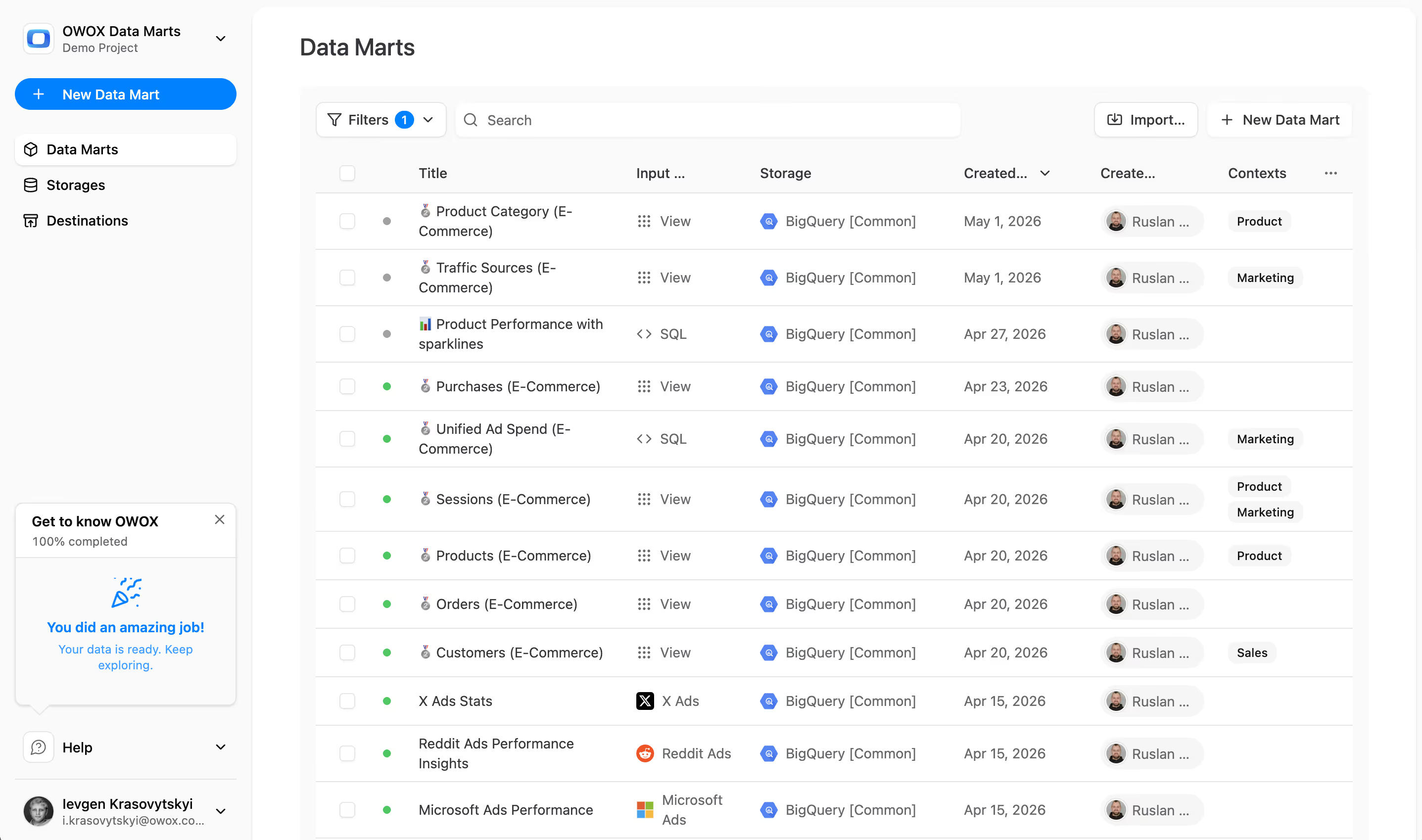
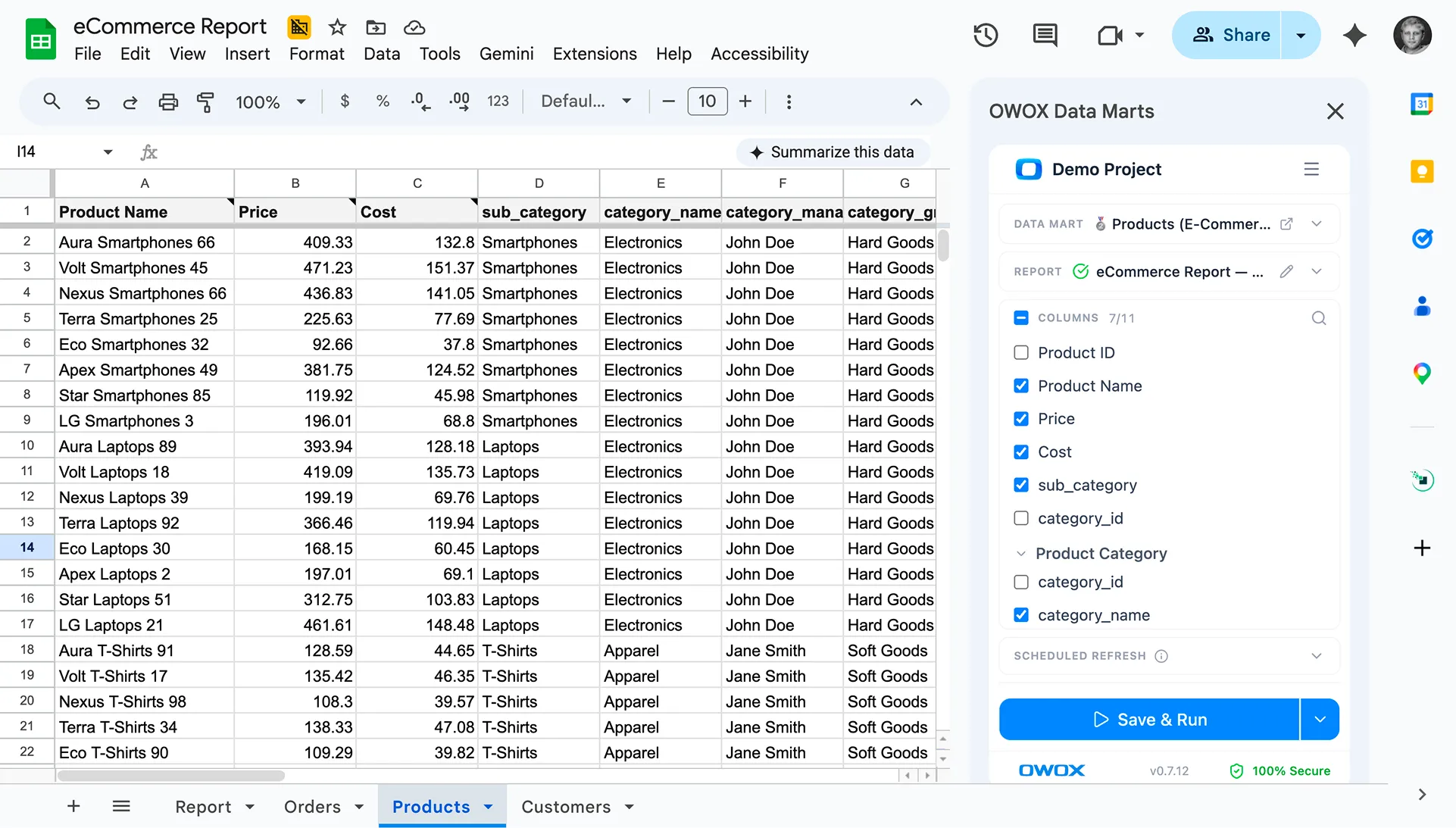
OWOX Data Marts helps analysts define, document, and manage fact table grain directly within SQL or connector-based data marts. Each mart includes output schemas, key definitions, and refresh triggers, ensuring consistent granularity across reports. Whether you’re tracking daily sales, transactions, or sessions, OWOX keeps your models clean and governed.






.png)





"AI by its nature will hallucinate. You need guardrails so you can trust your data."
"We had six or seven different channels and no single source of truth. It was almost impossible"
"We regained time. And time is the one resource that never comes back."