

What Is a Modeled Conversion?
A modeled conversion is a conversion that wasn’t directly captured but was estimated by analytics or ad platforms using patterns in available data, helping reports recover part of the picture lost to privacy rules, missing identifiers, and tracking gaps.
What Is a Modeled Conversion?
In analytics terms, a modeled conversion is an inferred outcome. Instead of saying, “we saw this exact user convert,” the platform says, “based on what we do know, this conversion likely happened and should be counted.” That makes modeled conversions a practical bridge between messy real-world tracking and the cleaner numbers teams need for analysis.
Simple explanation in analytics terms
Think of it as statistical reconstruction. A platform observes enough signals from similar users, sessions, campaigns, or devices to estimate conversions that were probably missed. The goal is not to fake data. The goal is to reduce undercounting when direct measurement is incomplete.
Modeled vs. observed (measured) conversions
Observed conversions are directly recorded events, like a purchase event tied to a known click or session. Modeled conversions are estimated additions based on patterns in measured behavior.
- Observed conversions: captured by actual tags, events, IDs, or confirmed match logic.
- Modeled conversions: estimated when some tracking signal is unavailable or blocked.
In many reports, the two are blended together. That is useful for decision-making, but analysts should always know whether a number is fully measured, partially modeled, or completely platform-estimated.
Why Modeled Conversions Exist
Modeled conversions exist because digital measurement is no longer perfect, if it ever was. User behavior spans devices, browsers, consent states, and ad ecosystems that do not always share full identity signals.
Privacy, cookies, and tracking limitations
Privacy restrictions are one of the biggest reasons modeling became standard. Consent choices, browser controls, shortened cookie lifetimes, and restricted identifiers can all prevent direct attribution. When a user converts but the click or session cannot be fully linked, platforms may estimate the missing conversion rather than leave the journey invisible.
Cross-device and cross-browser behavior
A user can click an ad on mobile, research later on a laptop, and purchase in a different browser. If those touchpoints cannot be stitched together with confidence, direct measurement breaks. Modeling helps fill that identity gap by looking at broader behavior patterns and conversion probabilities across similar paths.
Sampling and data loss in ad & analytics platforms
Some conversion loss also comes from plain operational reality: dropped tags, blocked scripts, delayed processing, partial event collection, or platform-specific aggregation rules. Modeling is often used to smooth those gaps so campaign reporting is less distorted by technical loss.
How Modeled Conversions Work in Practice
Although each platform has its own logic, the general workflow is familiar: collect available signals, identify missing measurement areas, estimate likely outcomes, and surface a combined conversion total in reporting.
Typical inputs a model can use (events, IDs, device data)
Models can use many types of non-sensitive or partially available signals, depending on the system and permissions. Typical inputs may include ad interactions, session timestamps, campaign metadata, device type, geography, conversion lag patterns, aggregate event counts, and available identifiers.
The exact fields vary, but the pattern is the same: use what is still observable to estimate what is no longer directly linkable.
Common modeling approaches at a high level
At a high level, platforms may use statistical inference, probability-based matching, historical pattern analysis, or machine learning models trained on situations where conversion paths were observed more completely. Then they apply those learned relationships to traffic with missing links.
For analysts, the key point is not the exact algorithm. It is understanding that modeled conversions are estimates generated from data patterns, not row-level proof of a single user action.
Where you usually see modeled conversions in reports
You usually encounter modeled conversions in ad platform reports, web analytics interfaces, attribution summaries, and cross-channel dashboards. Sometimes they appear as part of the main conversion metric. Sometimes they are broken out in a dedicated column or described in product documentation. If totals suddenly improve while raw event counts stay flat, modeling may be part of the story.
Impact on Reporting, Attribution, and Data Modeling
Modeled conversions can significantly change how performance looks, especially for channels affected by privacy limits. That is why analysts need structure, not guesswork, when bringing them into warehouse reporting.
How modeled conversions change your KPIs
When modeled conversions are included, conversion rate, CPA, ROAS, and channel contribution may all shift. Usually, the numbers look more complete than purely observed tracking. That can be helpful, but it also means period-over-period comparisons become tricky if the amount of modeling changes over time.
This is one reason what data modeling is and why it matters for reporting becomes so important. If your business logic does not clearly define which conversion metric is being used, stakeholders may compare numbers that are not truly comparable.
Attribution models and blended modeled + observed data
Attribution gets especially interesting here. A platform may already assign credit across channels using an attribution model, and then the conversion total itself may include both observed and modeled pieces. That means one metric can combine two layers of logic: estimated conversions and distributed credit.
Analysts should label these metrics carefully and avoid treating them as raw ground truth. They are decision-useful, but they are not the same thing as directly observed event logs.
Handling modeled conversions in data warehouse schemas
In a warehouse, keep modeled and observed conversions distinguishable. You might store them as separate measures, separate source-specific facts, or a shared fact table with flags for measurement type. If you are designing fact tables in a star schema, this distinction should be explicit so BI tools can aggregate correctly and users can choose the right metric for each analysis.
That is also central to clean reporting logic and long-term maintainability.
Practical Tips for Analysts
Modeled conversions are powerful, but only if everyone understands what they are looking at. Transparency wins.
How to document modeled vs. observed metrics
Document the source, level of aggregation, and measurement method for each conversion metric. State whether it is observed, modeled, or blended. Include notes on whether the platform reports the value directly or whether your team calculates it downstream.
This is where semantic data models and clear metric definitions really matter. A good semantic layer prevents teams from mixing unlike metrics under the same dashboard label.
Building dashboards with transparent definitions
Use clear naming such as “Conversions (Observed),” “Conversions (Modeled),” and “Conversions (Total Reported).” If space allows, add a tooltip or metric description. A simple note can prevent serious confusion in marketing reviews and executive reporting.
It also helps to keep source-level tabs separate from blended business views so users can inspect how numbers were constructed.
Sanity checks and validation ideas
Run basic checks regularly:
- Compare observed-only trends against blended totals.
- Watch for sudden jumps in modeled share by channel or device.
- Check whether platform totals align directionally with backend orders or CRM outcomes.
- Track the ratio of modeled to observed conversions over time.
You are not trying to “prove” every modeled conversion. You are checking whether the estimates behave consistently and make analytical sense.
Example: Using Modeled Conversions in a Marketing Data Mart
Here is a realistic way to structure modeled conversions so analysts can compare measured and estimated performance without creating metric chaos.
Example field design (flags, separate columns, and tables)
In a marketing data mart, you might keep a campaign performance fact table with fields like:
- report_date
- source_platform
- campaign_id
- clicks
- cost
- observed_conversions
- modeled_conversions
- total_reported_conversions
- has_modeled_data_flag
Another option is a more granular conversion fact with a measurement_type field set to observed or modeled. For teams working on dimensional data modeling for marketing analytics, this kind of structure makes downstream reporting much easier.
Example queries: comparing modeled vs. observed performance
A simple analysis query might aggregate by channel and compare conversion types side by side:
1SELECT
2    source_platform,
3    SUM(observed_conversions) AS observed_conv,
4    SUM(modeled_conversions) AS modeled_conv,
5    SUM(total_reported_conversions) AS total_conv,
6    SUM(cost) / NULLIF(SUM(total_reported_conversions), 0) AS cpa_total
7FROM
8    marketing_campaign_fact
9GROUP BY
10    source_platform;
You could also calculate the modeled share:
modeled_share = modeled_conversions / total_reported_conversions
If that share spikes for one platform after a privacy-related change, you immediately know KPI movement may reflect measurement logic, not only marketing performance.
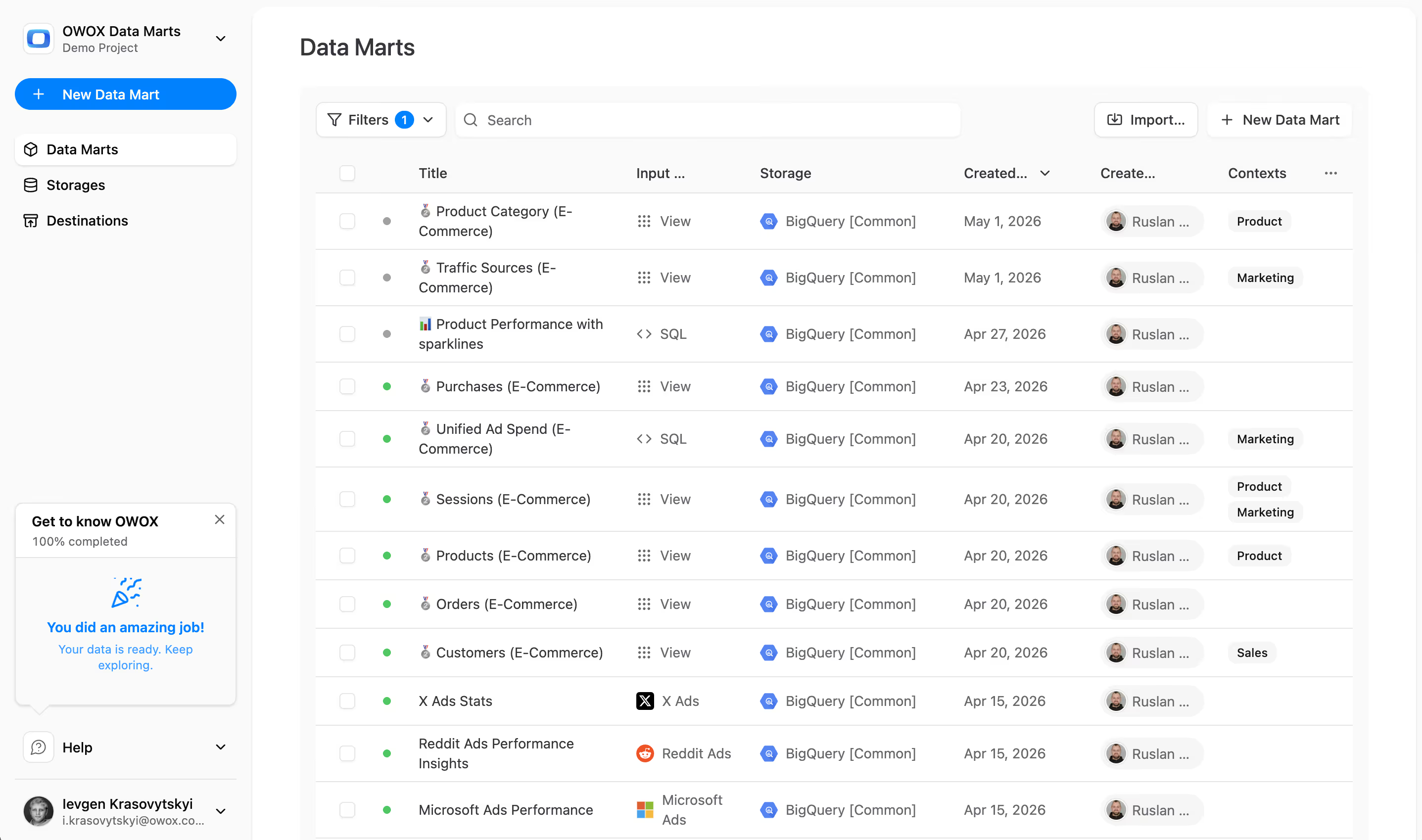
Modeled Conversions in OWOX Data Marts
In practice, modeled conversions often show up when analysts combine ad platform reporting with warehouse-based business metrics and need a clear view of what was measured directly versus what was estimated upstream.
Where modeled conversions typically appear in analysis
They usually appear in channel performance dashboards, attribution views, paid media summaries, and marketing-to-revenue reporting layers. In business reporting built around Data Marts, modeled conversions are most useful when they are separated, labeled, and compared alongside more directly observed outcomes such as orders or qualified leads.
Why clear data mart design matters for mixed metrics
When observed and modeled metrics live together without clear structure, reporting gets messy fast. Definitions drift. Trust drops. Meetings get loud. A clean data mart design keeps metric lineage visible, preserves source context, and helps teams analyze performance without confusing estimated platform metrics with directly measured business events.
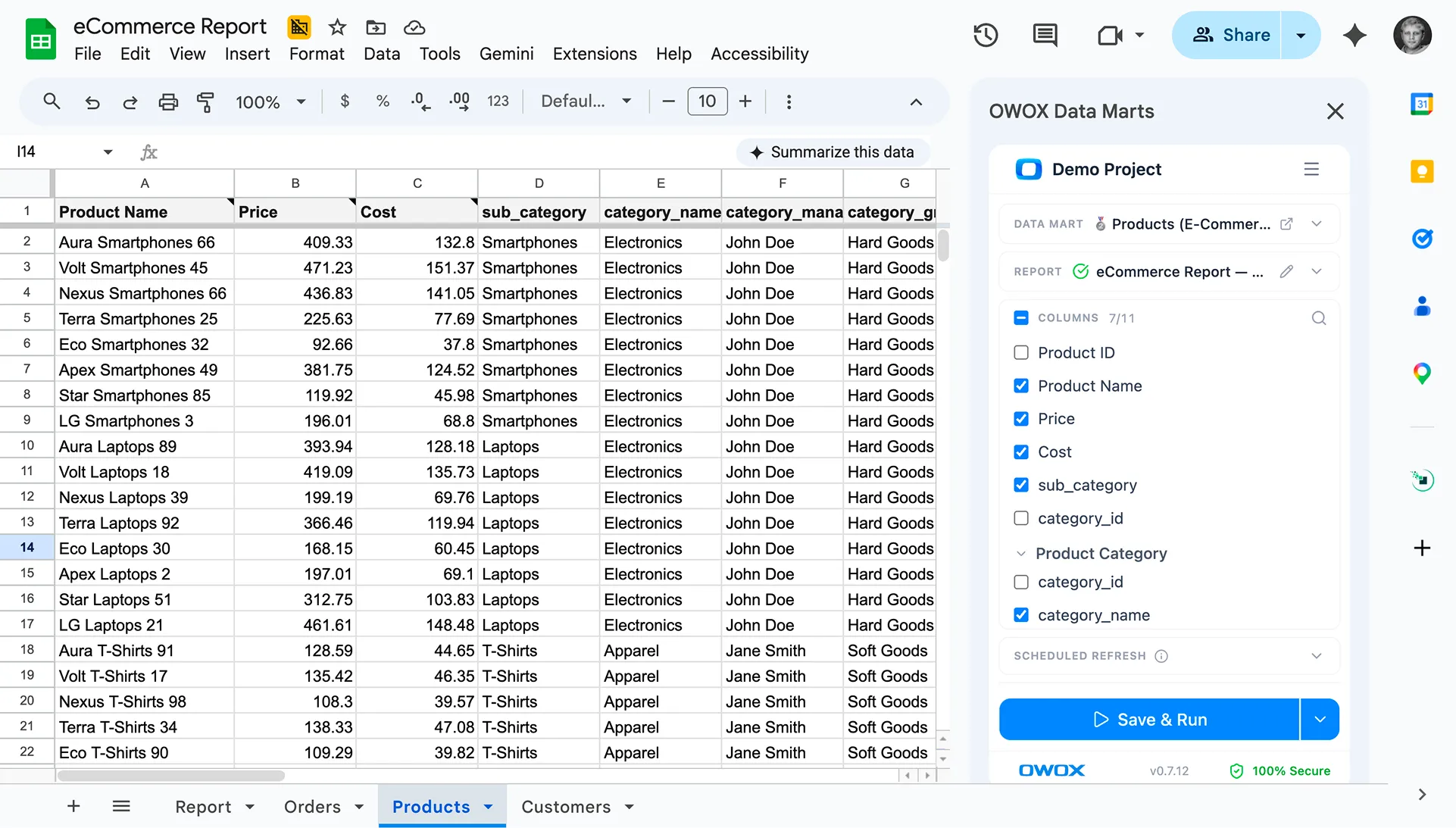
Need a cleaner place to analyze mixed conversion metrics? Build a focused marketing data mart with transparent metric logic in OWOX Data Marts. It makes it easier to compare observed, modeled, and blended reporting without losing the plot.
%202.png)



"AI by its nature will hallucinate. You need guardrails so you can trust your data."
"We had six or seven different channels and no single source of truth. It was almost impossible"
"We regained time. And time is the one resource that never comes back."