

What Are Orchestration Tools?
Orchestration tools automate, manage, and optimize complex workflows, enabling teams to efficiently integrate and control various systems, applications, and processes.
Orchestration tools are essential for managing complex workflows across multiple systems. They enable automation, reduce manual intervention, and ensure processes are streamlined. These tools help synchronize data and tasks, increasing efficiency and reducing errors in large-scale operations.
Importance of Orchestration Tools
Orchestration tools are critical for automating complex workflows, ensuring smooth and efficient operations.
Here are the key reasons why orchestration tools are important:
- Streamline Complex Processes: Orchestration tools automate multi-step workflows, making it easier to manage complex tasks without manual intervention.
- Reduce Human Error: By automating repetitive tasks, these tools reduce the risk of mistakes that can occur with manual processes.
- Enhance Efficiency: Automation allows teams to focus on more critical tasks, improving overall productivity and reducing time spent on routine activities.
- Ensure Consistency: Orchestration tools ensure that processes run in the same way every time, improving consistency and reliability.
- Improve Collaboration: These tools facilitate smooth communication between different systems and teams, promoting better collaboration across departments.
- Enable Scalability: As organizations grow, orchestration tools can handle increased workloads, making it easier to scale operations efficiently.
- Track and Monitor Progress: With built-in monitoring and orchestration tools, teams can track workflows and receive alerts for potential issues, ensuring that processes run smoothly.
Key Features of Orchestration Tools
When evaluating different orchestration tools, it's important to consider several key features to ensure that the tool fits your team’s needs and can handle your workflow effectively.
Here’s what to keep in mind:
- Ease of Use: The tool should be intuitive and easy to set up, allowing you to get started quickly without extensive training.
- Scalability: Your orchestration tool should be able to adapt to changes in workload, scaling up or down as necessary.
- Integration Capabilities: Ensure that the tool can easily integrate with the other applications and systems you’re currently using.
- Community & Support: A strong support system and active community can make a big difference. Opt for tools with a large user base and responsive support channels.
- Cost Effectiveness: While feature-rich tools are appealing, they should fit within your budget. Consider free, open-source options if cost is a concern.
Popular Orchestration Tools for Data Teams
Data teams rely on orchestration tools to automate, schedule, and manage complex data workflows across various systems.
Here are some of the most popular orchestration tools used by data teams:
- Apache Airflow: A powerful open-source tool designed for managing complex workflows and scheduling tasks, Apache Airflow is widely used for orchestrating data pipelines and workflows in data engineering.
- Luigi: Developed by Spotify, Luigi is an excellent choice for managing long-running batch jobs and building complex pipelines.
- Kubernetes: While primarily a container orchestration tool, Kubernetes is widely used for automating the deployment, scaling, and management of containerized applications.
- Apache NiFi: NiFi is a data flow management tool that enables automated data ingestion, transformation, and delivery.
- Dagster: A newer tool in the orchestration space, Dagster offers a modern approach to building data pipelines, emphasizing transparency, testing, and the ability to define "data assets."
Use Cases for Orchestration Tools
Orchestration tools are essential for automating and managing workflows, particularly in data processing and integration.
Below are key use cases for orchestration tools:
- Complex Data Pipelines: Ideal for automating complex data pipelines that require advanced scheduling, monitoring, and seamless coordination between multiple systems.
- High Flexibility and Visibility: Suitable for workflows demanding high flexibility and visibility, offering hybrid execution models for easy management and real-time monitoring.
- Dependency Management and Visualization: Best for workflows with clear task dependencies, helping to manage and visualize tasks to maintain an organized process.
- Data Quality and Versioning: Essential for ensuring data quality, tracking changes, and versioning data pipelines, ensuring consistency and reliable execution throughout the process.
- Cloud-Native Orchestration: Perfect for modern cloud-native environments, providing advanced observability, automation, and scalable orchestration to optimize distributed workloads.
How to Choose the Right Orchestration Tool
Choosing the right orchestration tool is crucial for optimizing workflows and ensuring efficient task management across systems.
Here are some key points to consider when selecting an orchestration tool:
- Understand Your Workflow Requirements: Assess the complexity of your workflows to determine if you need a simple tool or a more advanced solution for managing complex dependencies and scheduling.
- Scalability: Ensure the tool can scale with your organization’s needs, handling increasing workloads without compromising performance.
- Integration with Existing Systems: Choose a tool that integrates seamlessly with your current tech stack and supports the systems you rely on for data processing, storage, and analysis.
- Ease of Use: Look for a tool with an intuitive interface that is easy to set up and manage, especially if your team lacks extensive technical expertise.
- Cost and Licensing: Consider the total cost, including licensing fees and maintenance costs, and compare it with the tool’s features to ensure it fits within your budget.
- Community and Support: A strong user community and responsive support channels can help resolve issues quickly and provide valuable resources for getting the most out of the tool.
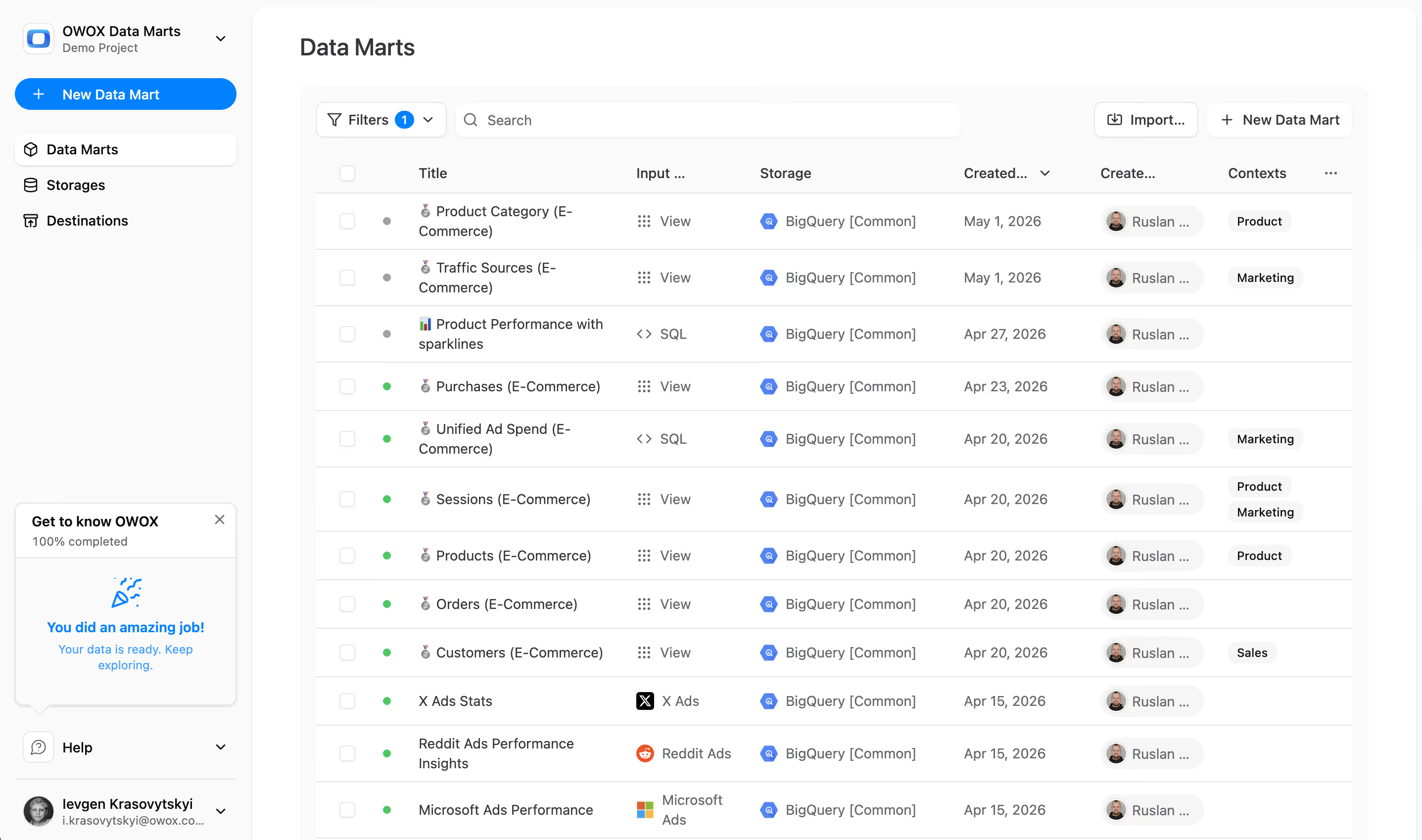
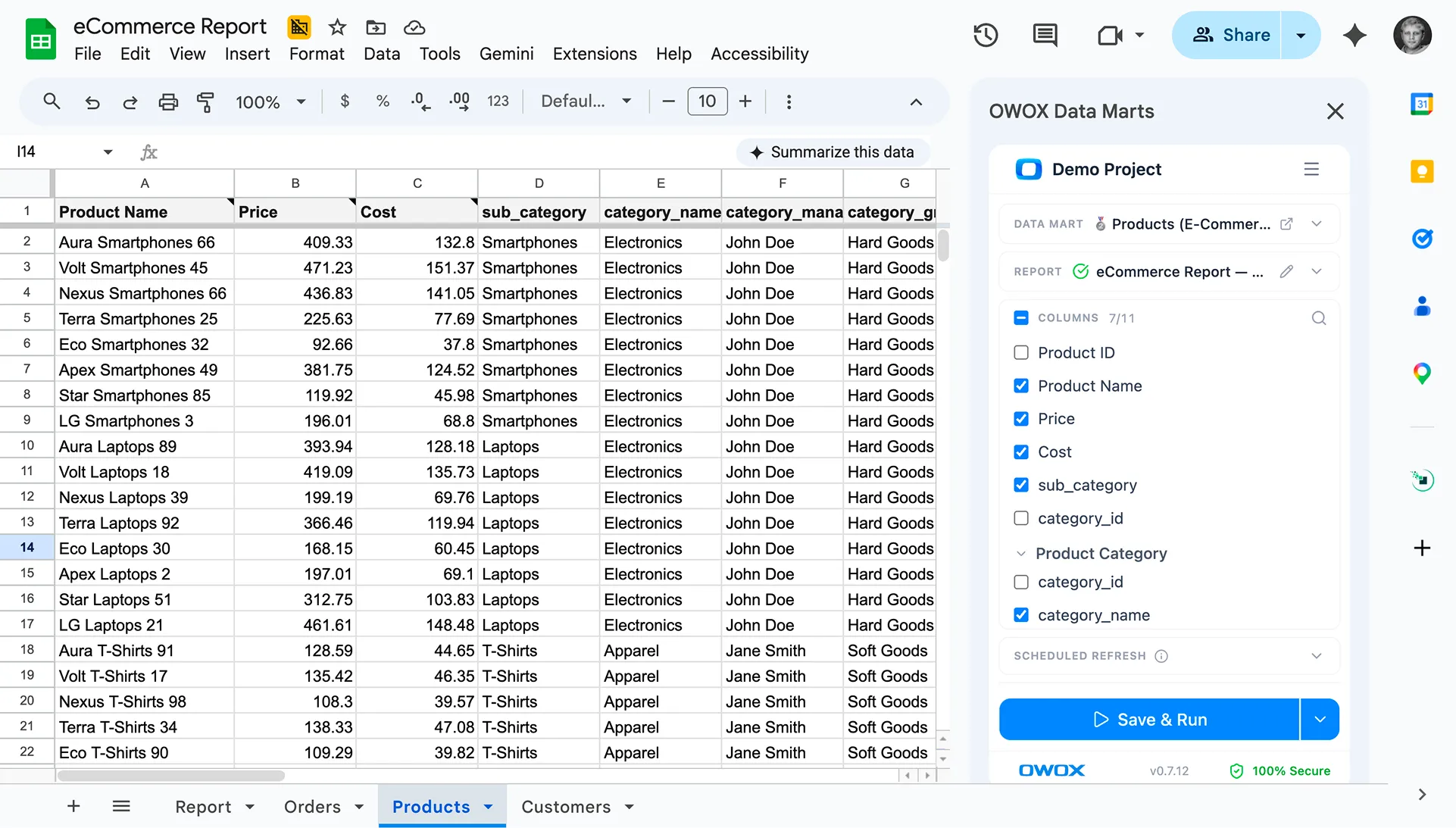
Enhance Your Data Handling with OWOX BI SQL Copilot for BigQuery
OWOX BI SQL Copilot simplifies BigQuery queries with automated query generation, real-time data analysis, and seamless integration. This intuitive tool saves time, enhances productivity, and allows data teams to easily manage large datasets, enabling quicker insights and more efficient decision-making with minimal technical effort.




"AI by its nature will hallucinate. You need guardrails so you can trust your data."
"We had six or seven different channels and no single source of truth. It was almost impossible"
"We regained time. And time is the one resource that never comes back."