
Metric · 2 min read · Unit: Count
Direct traffic
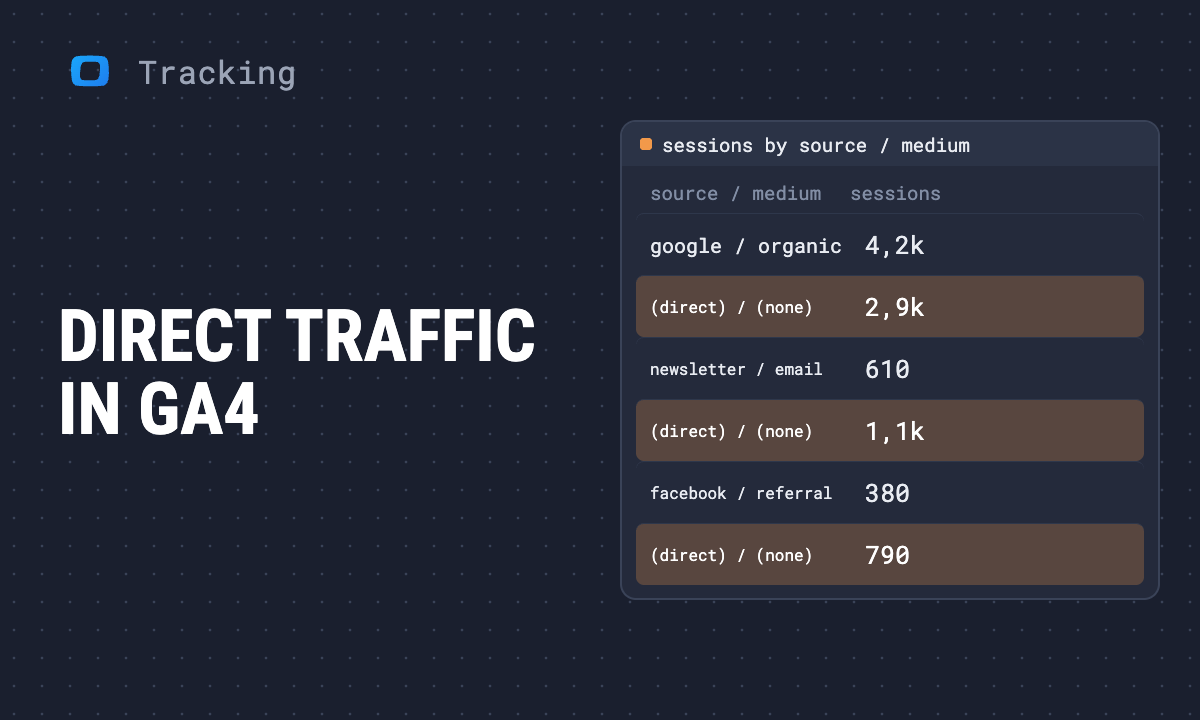
Direct Traffic refers to users who arrive at your website by typing your URL directly into their browser or via sources that can’t be clearly tracked. Learn what it is, why it matters, how it’s measured, and how to better understand and optimize it.
Formula
Direct Traffic = Sessions Without a Referrer or Identifiable Source
Example. If your website had 25,000 total sessions in a month and 6,000 of them came from users typing your domain directly or from unknown sources, your Direct Traffic would be 6,000 sessions.
What it is
Direct Traffic is the portion of your website traffic that comes from users entering your website URL directly, using bookmarks, or arriving from untagged or untraceable sources. It represents visits where no clear referring source is identified.
Why it matters
Direct Traffic is often an indicator of brand recognition, customer loyalty, or offline marketing effectiveness. It can also reveal tracking issues or missing UTM parameters, making it essential to monitor for both performance and data accuracy.
How it is calculated
Direct Traffic is tracked via analytics platforms like Google Analytics. When a session lacks referral data – such as clicks from typed URLs, bookmarks, QR codes, or improperly tagged links – it’s attributed as Direct Traffic.
A good value
A healthy level of Direct Traffic varies by business type, but 10%–20% of total traffic is often a good sign of brand recognition or returning users. It’s important this segment is growing alongside properly attributed traffic.
A bad value
Excessively high Direct Traffic (e.g., 50%+) may indicate tracking errors, missing UTM parameters, or analytics misconfiguration – leading to poor channel visibility.
Do
Use these strategies to better understand and optimize Direct Traffic in your analytics.
- 01
Use UTM tags on all campaign links
Avoid misattributed Direct Traffic by tagging email, paid, and partner links with UTM parameters to capture the true source.
- 02
Improve brand recall and memorability
Make your URL easy to remember and type to encourage Direct Traffic from offline channels like TV, print, or word-of-mouth.
- 03
Monitor for tracking errors
Regularly audit your analytics setup to identify and fix any tracking issues that might misclassify traffic as Direct.
Avoid
Assuming all Direct Traffic is intentional or branded can mislead decision-making. Always investigate traffic spikes, tagging issues, and changes in behavior patterns.
Related metrics you might be interested in
 Organic Traffic
= Total Website Sessions from Search Engines (Unpaid) Referral Traffic
= Total Website Sessions Originating from External Non-Search, Non-Paid Links SEO Traffic
= Total Website Sessions from Organic Search Engines (Unpaid) Traffic Growth
= Previous Period TrafficCurrent Period Traffic−Previous Period Traffic × 100 Google Analytics Traffic
= Total Number of User Sessions Across All Channels Marketing Funnel Analysis
= (Users at Stage N ÷ Users at Stage N−1) × 100Funnel Conversion Rate (%) = (Final Stage Completions ÷ Initial Stage Entrants) × 100
Learn how teams ship analytics faster
Organizations that scaled analytics without scaling headcount


The Data Partner You Can Trust
users
176K Source: Internal OWOX data as of 2026-10-02
Executives and data analysts across 20+ industries
Customers
Calculate Direct Traffic on your own data.
OWOX Data Marts helps you investigate the makeup of Direct Traffic, detect tagging gaps, and uncover hidden referral paths – empowering you to track user journeys more accurately and reduce blind spots in your analytics.
- No AI hallucinations
- Analyst-governed definitions
- Every number traces to SQL