What Is Modularity in Data? Definition & Benefits
What Is Modularity?
Modularity refers to dividing a system into independent modules, each handling a specific function. This simplifies design, development, testing, and maintenance.
Dividing a system into smaller, independent components helps simplify complex software development. These components, known as modules, work together but can also function separately.
This approach reduces complexity, making software easier to manage, understand, and update. By ensuring modules are cohesive and loosely connected, modularity enhances efficiency, flexibility, and overall system performance in software engineering.
Why Modularity Is Important?
Breaking a complex system into smaller modules improves efficiency, organization, and maintainability. It allows developers to manage, update, and reuse components without disrupting the entire system.
- Enhances Code Organization – Dividing software into modules creates a structured and logical codebase, making it easier to understand and navigate.
- Improves Collaboration – Teams can work on separate modules independently, reducing conflicts and streamlining development.
- Promotes Code Reusability – Well-defined modules can be reused across different projects, saving time and effort.
- Simplifies Maintenance – Updates and bug fixes can be applied to individual modules without affecting the entire system.
- Speeds Up Development – Reusing tested modules reduces development time and enhances software quality.
Key Principles of Modularity
Modularity follows key principles that improve software development by making systems more organized, efficient, and scalable. Below are some essential principles:
- Improves Readability and Maintenance – Smaller, well-structured modules make the code easier to understand, update, and manage.
- Enables Parallel Development – Multiple teams can work on different modules simultaneously without affecting other parts of the system.
- Simplifies Debugging and Testing – Issues can be isolated within individual modules, making troubleshooting and testing more efficient.
- Encourages Reusability – Modules can be reused in different projects, reducing development time and effort.
- Enhances Flexibility – Updates or modifications can be made to specific modules without disrupting the entire system.
OWOX Data Marts
See your first report built in real time. 15 minutes.
- Connect your data warehouse
- Pick your metrics
- Get a live Google Sheets report
In the time it takes to write a ticket. Then imagine never writing that ticket again.
Book a DemoWe'll use your actual use case
How to Implement Modularity?
To fully benefit from modularity, software engineers should follow key practices that ensure better organization, flexibility, and maintainability. Here are some essential steps:
- Clear Interfaces – Define how modules interact to prevent conflicts and ensure seamless integration.
- Encapsulation – Keep internal module details hidden to allow changes without affecting the entire system.
- Loose Coupling – Minimize dependencies between modules, making updates and replacements easier.
- High Cohesion – Ensure each module focuses on a specific function to improve readability and maintainability.
- Version Control – Use tools like Git to manage different module versions efficiently.
By following these steps, modular systems can be designed efficiently and effectively.
Real-World Applications of Modularity
Real-World Applications of Modularity
Many industries use modular design to build scalable and efficient systems. This approach enhances flexibility, customization, and ease of maintenance.
- Content Management Systems (CMS) – Platforms like WordPress and Drupal use plugins to add features without changing core code. This makes customization easier and improves scalability.
- Mobile App Development – Frameworks like React Native and Flutter allow developers to reuse components across iOS and Android. This speeds up development and ensures consistency.
- Web Development – Reusable components in frameworks like React simplify website and app creation. This approach improves efficiency and maintains uniformity.
- Operating Systems – Linux separates the kernel, drivers, and system services, allowing easy updates and hardware compatibility without affecting the entire system.
- Software Libraries – Pre-built libraries in various programming languages let developers integrate complex functions without writing code from scratch, improving efficiency.
Build Modular Data Systems with OWOX Data Marts
Build Modular Data Systems with OWOX Data Marts
Modularity in data architecture ensures flexibility, scalability, and easier maintenance, but achieving it manually can be complex. With OWOX Data Marts, you can design modular components for metrics, transformations, and data flows that connect seamlessly across your stack. Each module stays independent yet governed, enabling faster development, easier updates, and consistent reporting logic.

![[GA4] BigQuery Export: How to Connect Step-by-Step](https://cdn.owox.ai/www/webflow/6a0f4cb2459d23e022c5435a_-GA4-BIGQUERY-EXPORT.png/public)

Learn how teams ship analytics faster
Organizations that scaled analytics without scaling headcount
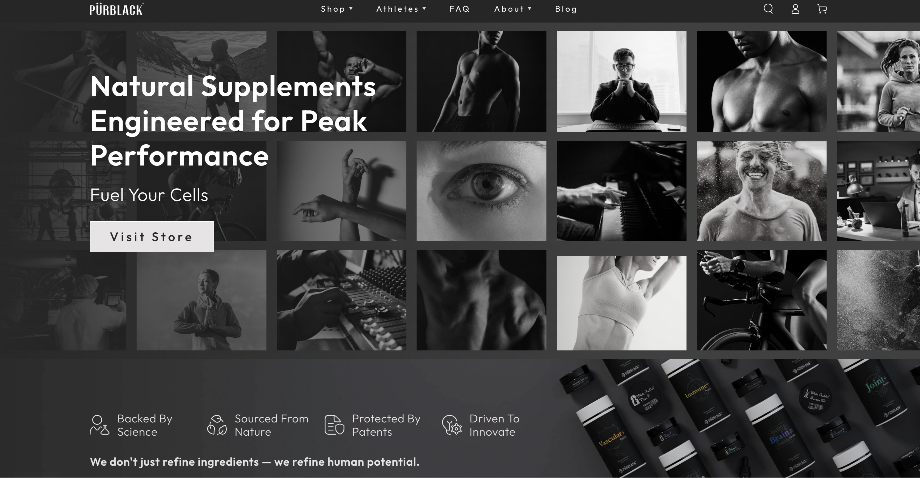 "For 10 years I was blind." The day Pürblack® founder stopped guessingSecondsto get reports across six channelsRead the story
  How OWOX Reports Helped Reformation Make Data-Backed DecisionsMinutesfrom data request to business decisionRead the story
  How OWOX Reports Streamlined Operations for WorkSimpli, Saving Over 10 Hours Weekly10hrs+saved per week on manual reportingRead the story
 Not testimonials. Comment threads.
Real things real customers said — each quote pinned to a specific claim, straight from the quotes database.
 Nodari RizunFounder & CEO, Pürblack®
“AI, by the nature of the models, will hallucinate. And because of that, you need something which will create guardrails to ensure that there are no hallucinations, that you can trust your data.”
Nodari RizunFounder & CEO, Pürblack®“I was blind, now I can see. OWOX opened our eyes.”
“We are extremely satisfied with the results achieved through our partnership with OWOX. I'm also impressed by quick and effective support we get from OWOX”
Turn your data into decisions.
Governed data marts give you the clean foundation ML needs to actually work.
- No AI hallucinations
- Analyst-governed definitions
- Every number traces to SQL