What is ARRAY type consistency in SQL?
ARRAY type consistency in SQL is the rule that all elements in an array must share the same data type, or a type that can be implicitly cast to a common type. It prevents mixing incompatible values in a single array, helping SQL engines optimize storage, comparisons, and query execution.
ARRAY type consistency in SQL means an array should contain elements of the same data type (or values that can be implicitly cast to a shared type), so you don’t end up mixing incompatible values and getting unpredictable results.
What is ARRAY type consistency in SQL?
What is ARRAY type consistency in SQL?
An ARRAY is a single field that holds an ordered list of values. ARRAY type consistency is the rule that the values inside that list must be compatible: ideally the same type (like all INT64 or all STRING), or at least castable to a common type according to your SQL engine’s rules.
This matters because an array isn’t just “a bag of stuff.” SQL engines treat arrays as typed containers. That typing affects how arrays are stored, how elements are compared, which functions you can run, and whether your query compiles at all.
In practice, type consistency shows up any time you build arrays (ARRAY literals, ARRAY_AGG, UNNEST + re-aggregation), join arrays to reference tables, or use array elements in filters and calculations.
Why ARRAY type consistency matters for analysts
Why ARRAY type consistency matters for analysts
Arrays are awesome for analytics: event parameters, lists of items in a cart, campaign touchpoints, consent flags, audiences, content tags. But the moment your arrays get “type-wobbly,” reporting becomes fragile. Consistency is what keeps your analysis repeatable when dashboards refresh and pipelines scale.
Data quality and predictable query results
When array elements share a stable type, downstream logic becomes deterministic. If a “product_id” array is always INT, you can safely join it to a product table, sort it numerically, or compute min/max. If it sometimes slips into STRING or mixes numeric and non-numeric values, you’ll get either silent coercions (bad) or hard failures (also bad).
Type consistency also supports broader data integrity practices. Arrays don’t replace relational modeling, but they often coexist with it, so it’s helpful to think in the same discipline as SQL constraints for data integrity: define what’s allowed, enforce it, and make “invalid states” hard to represent.
Performance and query optimization
Typed arrays are easier for SQL engines to optimize. If the engine knows “this is an ARRAY
In contrast, inconsistent typing can trigger extra casts, more expensive expression evaluation, and less predictable execution plans. Even if the query runs, you can pay for it in scan cost, CPU time, and memory pressure—especially with nested data or big UNNEST operations.
Avoiding hard‑to‑debug type errors
Array type issues love to show up at the worst time: right before a release, after a schema change, or when a new data source starts sending “creative” values. Errors like “No matching signature” or “Cannot coerce” are often thrown far from where the array was built, which makes debugging feel like chasing a ghost through CTEs.
Consistency reduces the surface area for these failures. If you standardize arrays at ingestion or in a mart layer, your report queries can stay simple, and you won’t need to sprinkle casts everywhere just to keep the pipeline alive.
OWOX Data Marts
See your first report built in real time. 15 minutes.
- Connect your data warehouse
- Pick your metrics
- Get a live Google Sheets report
In the time it takes to write a ticket. Then imagine never writing that ticket again.
Book a DemoWe'll use your actual use case
How ARRAY type consistency works
How ARRAY type consistency works
The exact rules differ across SQL dialects, but the core idea stays the same: an array has an element type, and the engine enforces that type when you construct the array, aggregate into it, or operate on it.
Same-type requirement for array elements
Conceptually, an array is declared as ARRAY
If you try to insert an incompatible type, one of two things happens:
- The engine implicitly casts the value to T (only if there’s a safe, allowed conversion).
- The query fails at compile time or runtime because the element can’t be coerced.
For analysts, the key takeaway is that the “shape” of an array is not just its length; it’s also its element type, and that type propagates into any UNNEST or array function you use later.
Implicit type casting rules
Implicit casting is where things get interesting (and occasionally dangerous). Many engines will unify numeric literals to a common numeric type, or cast NULLs to match context. Some will also coerce between closely related types (for example, different integer widths), while refusing conversions that could lose meaning (like arbitrary STRING to INT without an explicit cast).
For arrays, implicit casting can occur in:
- Array literals that mix numeric forms (like 1 and 2.5).
- CASE expressions used to build array elements (when branches return different types).
- ARRAY_AGG over a column that is sometimes parsed or transformed.
Analyst move: prefer explicit CAST when you’re standardizing an array type. It makes the intent obvious, and it makes failures happen where the data is transformed, not later in a dashboard query.
Nulls and empty arrays
NULLs are usually “typeless” until context assigns a type. Inside arrays, a NULL element is typically allowed as long as it can be treated as the array’s element type (for example, ARRAY
Empty arrays can be trickier, because an empty literal doesn’t always provide enough information for the engine to infer the element type. In many dialects, you may need to specify the type explicitly when creating an empty array so the engine knows whether it’s ARRAY
From a reporting perspective, it’s important to distinguish:
- NULL array: unknown or missing list.
- Empty array: known to be “no values.”
They often mean different things in funnels and attribution logic (e.g., “no campaigns” vs “campaigns not captured”).
Practical examples in SQL
Let’s make this real with an analytics scenario: you’re modeling ecommerce sessions, and you want an array of product IDs viewed per session, plus a few quality checks to ensure the array stays usable for joins and reporting.
Creating and querying typed arrays
Imagine an events table where product_id is stored as a string in raw logs (common in event payloads), but your product dimension uses an integer key. You can standardize the array to INT at query time:
Example:
Build a per-session array of product IDs (as INT), then count distinct products viewed:
SELECT
    session_id,
    ARRAY_AGG(
        CAST(product_id AS INT64)
        ORDER BY event_timestamp
    ) AS product_ids_int,
    ARRAY_LENGTH(
        ARRAY(
            SELECT DISTINCT x
            FROM UNNEST(
                ARRAY_AGG(CAST(product_id AS INT64))
            ) AS x
        )
    ) AS distinct_products_viewed
FROM events
WHERE event_name = 'view_item'
GROUP BY session_id;
What this gives you is a stable ARRAY
Common errors when mixing types
The classic mistake is building arrays from mixed expressions. For example, using a CASE that sometimes returns an INT and sometimes returns a STRING, then aggregating it into an array. Another common one: combining IDs and labels in a single array because “it’s convenient.” That convenience disappears the moment you try to filter numerically or join.
When you see errors like “cannot coerce” or “no matching signature,” isolate the array construction step and check each branch/expression feeding it. Arrays amplify type confusion: a single incompatible value can break the whole result.
If you’re using AI assistance to draft queries with UNNEST, array functions, and tricky CASE logic, it helps to sanity-check that the proposed array has a single consistent element type. This is exactly the kind of situation where using AI to help write complex SQL with arrays can speed you up, as long as you keep your “type discipline” turned on.
Safe patterns for building arrays from different sources
Sometimes you truly have multiple sources with different types (say, one stream provides numeric IDs, another provides strings). The safe pattern is: normalize first, then array-ify.
- Standardize at the edge: CAST to the target type in a staging CTE or view.
- Use SAFE casts where available: Convert invalid values to NULL instead of failing the query, then filter them out.
- Keep arrays single-purpose: Don’t mix IDs, names, and flags in one array; create separate arrays if needed.
Example approach (conceptually): create a normalized column product_id_int, then ARRAY_AGG(product_id_int). That way, the array is just an aggregation of a known-typed column, not a grab bag of mixed logic.
Best practices for reporting and analytics
Best practices for reporting and analytics
Arrays are powerful, but they’re also a contract. If your contract is vague (“this array might contain anything”), every downstream consumer pays the price. If your contract is strict (“ARRAY
Designing schemas with arrays in mind
Decide early what the element type should be and align it with your dimensional model. If an array holds keys that join to a dimension table, store those keys in the same type as the dimension’s primary key. That keeps joins simple and avoids repeated casting.
This ties directly to relational fundamentals like primary and foreign keys in SQL. Even if the relationship is “multi-valued” (one session maps to many products), the key types should still match across structures.
Also consider whether an array is the right representation. Arrays are great for ordered lists and repeated attributes, but for heavy analysis (especially many-to-many relationships with metrics), a bridge table can be more transparent and BI-friendly.
Working with arrays in BI tools and dashboards
Many BI tools expect flat tables. Arrays often require UNNEST/explode steps, which can change row counts and break naive aggregations. Type consistency helps here because your flattening logic becomes standardized: the exploded column has a known type, filters work predictably, and joins don’t require custom per-dashboard fixes.
Practical dashboard tip: pre-flatten common arrays into mart tables at the grain your reports need (for example, session-product rows), and keep the original array for traceability. When you do keep arrays in report-facing tables, document the element type and whether NULL/empty arrays have distinct meaning.
Testing and validating array types in queries
Type issues are easiest to solve when they’re caught early. Add lightweight checks in transformations and scheduled queries:
- Cast explicitly in one place: one normalization layer, many consumers.
- Validate parse success: count rows where a SAFE cast returns NULL unexpectedly.
- Assert expectations: for critical fields, fail or quarantine data when types drift.
If you need repeatable enforcement logic, database automation patterns like stored procedures for enforcing business rules can help centralize normalization steps and checks.
And when arrays contain sensitive attributes (even indirectly, like user identifiers or raw query strings), apply privacy safeguards consistently before arrays are built. Techniques from data masking techniques are easier to apply when your array element type is stable and your transformation points are well-defined.
Where ARRAY type consistency fits in OWOX Data Marts
Where ARRAY type consistency fits in OWOX Data Marts
In a mart mindset, the goal is simple: make data analyzable without heroic query gymnastics. Arrays can absolutely be part of that—especially for event-rich marketing and product datasets—but only if their types stay consistent and documented.
Ensuring clean, analyzable arrays in marts
ARRAY type consistency fits naturally into mart-building as a standardization step: normalize element types once, then publish arrays that downstream analysts can trust. That means fewer dashboard-level casts, fewer surprises when new traffic sources appear, and cleaner UNNEST patterns.
It also supports maintainability. When you evolve a mart, you can change logic behind the scenes while keeping the array’s public “contract” the same (element type, meaning, null behavior). That’s how you keep reporting stable while the business moves fast.
Using consistent arrays for reliable marketing and product reporting
Consistent arrays are especially useful for:
- Marketing: arrays of campaign touchpoints, ad IDs, or channel group labels (kept as a single, documented type).
- Product analytics: arrays of feature flags, screen names, or item IDs tied to a known dimension key type.
- Experimentation: arrays of variant exposures, where type consistency helps filtering and rollups stay correct.
When those arrays are typed and predictable, your segmentation logic becomes safer, your joins become cleaner, and your metrics become much harder to accidentally break.
If you’re building data marts and want your arrays to stay clean, consistent, and ready for analysis, try modeling and validating them in OWOX Data Marts. It’s a solid way to standardize reporting-friendly structures so your dashboards run on dependable, typed data.
Learn how teams ship analytics faster
Organizations that scaled analytics without scaling headcount
 "For 10 years I was blind." The day Pürblack® founder stopped guessingSecondsto get reports across six channelsRead the story
  How OWOX Reports Helped Reformation Make Data-Backed DecisionsMinutesfrom data request to business decisionRead the story
 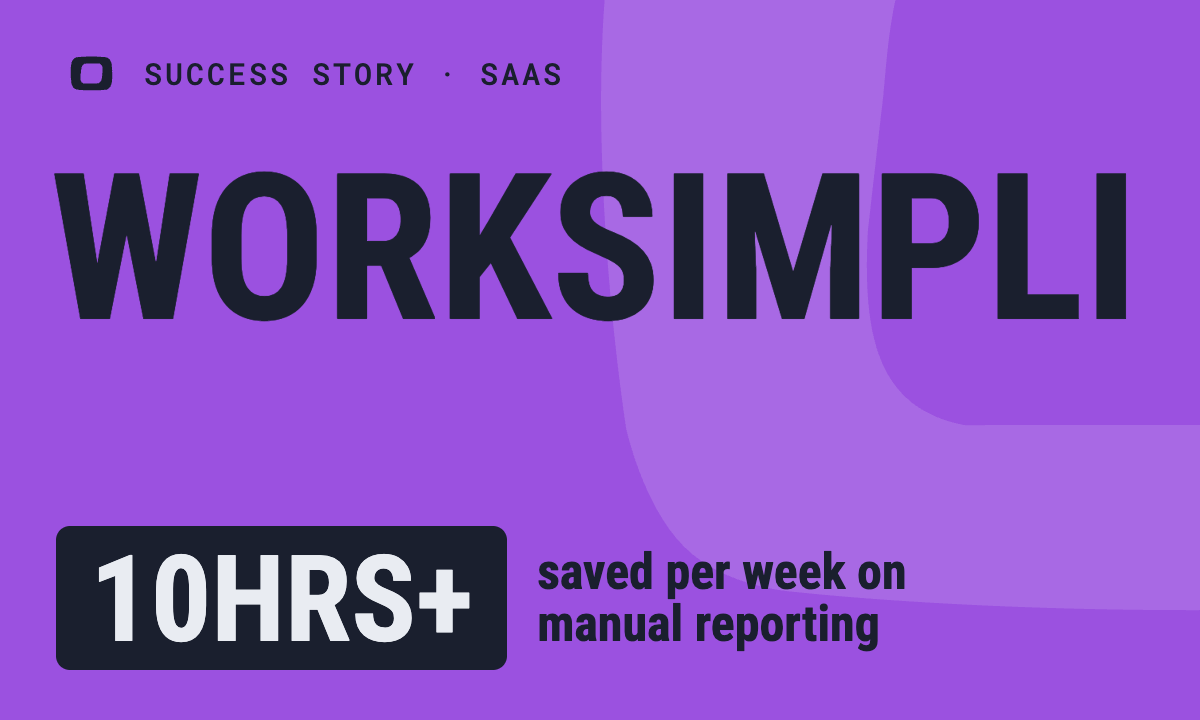 How OWOX Reports Streamlined Operations for WorkSimpli, Saving Over 10 Hours Weekly10hrs+saved per week on manual reportingRead the story
 Not testimonials. Comment threads.
Real things real customers said — each quote pinned to a specific claim, straight from the quotes database.
 Nodari RizunFounder & CEO, Pürblack®
“AI, by the nature of the models, will hallucinate. And because of that, you need something which will create guardrails to ensure that there are no hallucinations, that you can trust your data.”
Nodari RizunFounder & CEO, Pürblack®“I was blind, now I can see. OWOX opened our eyes.”
“We are extremely satisfied with the results achieved through our partnership with OWOX. I'm also impressed by quick and effective support we get from OWOX”
Turn your data into decisions.
Governed data marts give you the clean foundation ML needs to actually work.
- No AI hallucinations
- Analyst-governed definitions
- Every number traces to SQL