What is CAST AS ARRAY in SQL?
CAST AS ARRAY is an SQL operation (common in modern data warehouses like BigQuery) that converts a value or expression into an array data type. It’s used when you need to handle multiple values as a single field, such as working with lists, unnesting data, or standardizing schema for analytics queries.
CAST AS ARRAY is an SQL operation that converts a value or expression into an array data type, so you can treat multiple values as a single field when querying, joining, and reporting.
What does CAST AS ARRAY mean in SQL?
What does CAST AS ARRAY mean in SQL?
Basic idea of array casting
In SQL, “casting” means changing a value from one data type to another. CAST AS ARRAY specifically converts something into an array—an ordered collection of values with the same element type (like an array of strings or an array of integers).
This is handy when your logic expects an array but your source is a scalar value, a nullable field, or an expression that sometimes behaves like a single item and sometimes like a list. With array casting, you can standardize the type so your downstream logic (filters, UNNEST operations, joins, and aggregations) doesn’t break.
Where you’ll typically see CAST AS ARRAY (e.g., BigQuery)
You’ll typically run into CAST AS ARRAY in modern cloud data warehouses that support arrays as first-class types—BigQuery is a common example in analytics workflows. Arrays show up a lot when:
- Ingesting nested event data (sessions, events, parameters, items).
- Working with JSON-like structures that land as repeated fields.
- Modeling “one-to-many” attributes (tags, categories, experiment variants) without exploding row counts.
Even if your warehouse supports arrays, not every dataset is perfectly consistent. CAST AS ARRAY becomes a practical tool to make messy real-world data behave like a clean analytics model.
Why analysts use CAST AS ARRAY in queries
Why analysts use CAST AS ARRAY in queries
Handling multi-valued attributes (tags, categories, IDs)
Analytics data loves lists. A user can have multiple interests, a product can belong to multiple categories, and a campaign can carry multiple labels. Arrays let you store those multi-valued attributes in one column without creating extra join tables for every “list” field.
CAST AS ARRAY is often used when you’re transforming data from a scalar field into a list format so you can apply the same logic everywhere. For example, a “category” field might be a single string for some records, but you want to treat it as “categories[]” across the board to support consistent filtering and rollups.
Normalizing inconsistent schemas
Inconsistent schemas are a classic pain: one source sends a single ID, another sends an array of IDs, and a third sends NULL. Your reporting query then turns into a pile of CASE expressions.
Casting into an array helps normalize these differences at query time (or during modeling), so every downstream step works with a predictable type. That predictability matters when you’re building reusable views, scheduled transformations, or dashboard queries that should not fail because one record arrived in a different shape.
Preparing data for UNNEST and joins
UNNEST is the move when you want to analyze array elements as rows—counting tags, joining item IDs to a product table, or filtering users who have a specific attribute. But UNNEST expects an array input. If your input isn’t an array (or is sometimes not an array), you either can’t unnest it, or you’ll get type errors.
CAST AS ARRAY can be the “adapter” that turns your input into something UNNEST can handle reliably—especially in mixed datasets where some fields are repeated and others are scalar.
OWOX Data Marts
See your first report built in real time. 15 minutes.
- Connect your data warehouse
- Pick your metrics
- Get a live Google Sheets report
In the time it takes to write a ticket. Then imagine never writing that ticket again.
Book a DemoWe'll use your actual use case
Syntax and simple examples of CAST AS ARRAY
Syntax and simple examples of CAST AS ARRAY
Casting a single value to an array
The goal here is simple: take one value and make it a one-element array, so later logic can treat it like any other list.
Depending on SQL dialect, you might see approaches like casting a typed array literal or wrapping the scalar in an array constructor and ensuring the element type matches what you need.
Conceptually:
- Input: “email” (STRING)
- Output: [“email”] (ARRAY
)
This matters when you have downstream code that expects arrays—like “does this user have any of these channels?” or “explode categories to category-level metrics.”
Casting query results to an array
Sometimes you don’t want “one value → one-element array.” You want to turn a set of rows into an array. That’s common when building compact representations like “all campaign IDs touched in a session” or “all experiments a user was assigned to.”
In many warehouses, this is done via aggregation into arrays (for example, collecting distinct values) and then optionally casting to a specific array type to lock the schema. The cast becomes useful when the expression is ambiguous (especially with NULLs) or when you want to guarantee the exact element type.
If you’re experimenting with these patterns, it can be faster to prototype with helpers like using AI to generate SQL queries, then validate types and edge cases yourself (especially around NULL behavior and duplicates).
Common mistakes and type errors
Array casting is straightforward until it isn’t. Most failures come from mismatched element types or “unknown” types caused by NULLs.
- Mixing types inside the array: arrays typically require all elements to share a type. An array that mixes INT and STRING will error or force unexpected coercion.
- NULL without a declared type: casting expressions that can become NULL may produce “cannot determine type” issues. Analysts often fix this by explicitly typing the NULL (so the engine knows the intended element type).
- Assuming a scalar can be cast directly: in some dialects, you can’t “CAST(123 AS ARRAY
)” without constructing an array first. Know whether your engine supports direct scalar-to-array casts or requires an array constructor. - Forgetting that arrays are 1-to-many: once you UNNEST, you can multiply rows. If you join unnested arrays to fact tables without care, you can double-count metrics.
The exciting part: once you understand these gotchas, arrays become a power tool—not a surprise generator.
Practical use cases in analytics workflows
Practical use cases in analytics workflows
Marketing and product analytics examples
In marketing analytics, arrays show up everywhere:
- UTM history: a session could touch multiple campaigns (think: redirects, cross-domain, or multi-touch modeling outputs).
- Audience tags: users can belong to multiple segments (new vs. returning, high intent, region, device class).
- Creative labels: one ad might have multiple labels (format, message angle, offer type).
In product analytics, arrays are equally common:
- Event parameters: repeated key-value pairs can be stored as arrays of structs.
- Experiment assignments: users can be assigned to multiple tests at once.
- Item lists: carts, wishlists, and orders naturally contain lists of items.
CAST AS ARRAY helps you make these attributes consistently queryable—especially if some sources provide a single value and others provide a list.
Filtering and aggregating over arrays
Once you’ve got arrays, the workflow usually becomes: (1) standardize type, (2) filter on elements, (3) aggregate safely.
Filtering can mean:
- Checking whether an array contains a specific element (e.g., a tag or campaign ID).
- Filtering by any-match logic (“users who have at least one of these categories”).
- Filtering by computed properties (“arrays longer than 3,” “first touch equals X”).
Aggregation can mean:
- Counting distinct elements across users or sessions.
- Building arrays of distinct values for a reporting dimension.
- Rolling up nested records into a single row per user/session.
If these steps become part of repeatable pipelines, you may wrap them into stored procedures in SQL so you can standardize array behavior across teams and dashboards.
Working with arrays in reporting layers
Reporting tools often prefer flat tables: one row per grain (user/day, session, order line). Arrays can be fantastic for modeling, but they can also confuse reporting layers that don’t understand nested types well.
Common strategies include:
- Flatten for BI: UNNEST arrays into a bridge table for reporting, while keeping the original array field for engineering/advanced analysis.
- Pre-aggregate array signals: store derived fields like “primary_category,” “has_paid_tag,” or “campaign_count” alongside the raw array.
- Protect sensitive elements: if arrays contain IDs or user attributes, apply governance controls and consider data masking techniques where required.
The key is intentionality: arrays aren’t “better” than flat tables—they’re a different shape with different tradeoffs.
CAST AS ARRAY in the context of Data Marts
CAST AS ARRAY in the context of Data Marts
Designing tables with array fields vs. normalized tables
In a data mart, your mission is clarity: stable schemas, predictable grains, and query patterns that analysts can reuse without fear. Arrays can support that mission when they represent a true “list attribute” that belongs to the row’s grain (e.g., a session’s list of campaign touches).
Normalized tables (with separate dimension or bridge tables) can be better when you need:
- Frequent joins by individual elements.
- Strong relational constraints and governance.
- Many-to-many relationships that drive lots of slicing and dicing.
If you go the relational route, concepts like key constraints in SQL and primary and foreign keys become essential for keeping the model trustworthy as it grows.
How array casting affects performance and readability
CAST AS ARRAY can improve readability when it reduces conditional logic (“sometimes scalar, sometimes array”) and creates consistent types. But overusing casts inside heavy queries can hurt readability too—especially when every field is wrapped in multiple conversions.
Performance-wise, casting itself is rarely the big cost compared to what you do next (like UNNEST + joins + aggregations). The real performance risks usually come from:
- Unnesting huge arrays and multiplying rows unexpectedly.
- Joining unnested results without controlling the join grain.
- Applying filters after UNNEST instead of before (when possible).
A practical rule: cast early enough to standardize types, but be deliberate about when you explode arrays into rows.
OWOX Data Marts context: arrays in analytics-ready schemas
In analytics-ready schemas, arrays often act like “packed dimensions”—keeping related values close to the fact row (session, user, order) while avoiding a pile of tiny lookup tables. CAST AS ARRAY becomes a helpful modeling technique when you need to enforce consistent array types across sources, pipelines, or incremental loads.
The win is consistency: when your data mart tables store fields in predictable types (including arrays), analysts can write simpler, reusable queries—and spend their energy on insights rather than debugging schema surprises.
Example: Using CAST AS ARRAY in a BigQuery-like SQL
Example: Using CAST AS ARRAY in a BigQuery-like SQL
Step-by-step query example
Scenario: You’re building a sessions table for marketing analysis. Some records have a single campaign ID in campaign_id, while others already have an array in campaign_ids. You want one consistent array field called all_campaign_ids so you can UNNEST it and join to a campaign dimension.
Here’s a BigQuery-like pattern that standardizes the type and prepares for UNNEST:
1) Standardize to an array at the session level
SELECT
session_id,
user_id,
COALESCE(
campaign_ids,
CAST([campaign_id] AS ARRAY<STRING>)
) AS all_campaign_ids
FROM sessions_raw
2) Explode the array to analyze campaigns
 WITH standardized AS ( ... )
 SELECT
 s.session_id,
 s.user_id,
 cid AS campaign_id
 FROM standardized s,
 UNNEST(s.all_campaign_ids) AS cid
3) Join to a campaign table and aggregate
 WITH exploded AS ( ... )
 SELECT
 campaign_id,
 COUNT(DISTINCT session_id) AS sessions
 FROM exploded
 GROUP BY campaign_id
This approach forces a consistent array type, so your pipeline doesn’t split into two branches (“array case” vs. “scalar case”).
Result interpretation for dashboards and reports
The final output gives you a clean campaign-level metric (sessions by campaign_id) that’s safe for dashboards—because you standardized the schema before expanding the data.
Two important interpretation checks for reporting:
- Attribution logic: if a session has multiple campaign IDs, counting the session once per campaign is valid for “touched by” reporting, but not for “single-source” attribution. Your metric definition must match the logic.
- Double-counting risk: whenever you UNNEST, you change the grain. Make sure downstream joins and aggregations operate at the intended level (campaign/session vs. campaign/user vs. campaign/day).
Done right, CAST AS ARRAY is the small move that keeps your reporting stable even when input data changes shape.
Want to turn messy nested data into analytics-ready tables faster? Build cleaner models and reusable datasets with OWOX Data Marts—so your team can focus on insights, not schema whack-a-mole. Try it by creating a workspace in the app.
Learn how teams ship analytics faster
Organizations that scaled analytics without scaling headcount
 "For 10 years I was blind." The day Pürblack® founder stopped guessingSecondsto get reports across six channelsRead the story
 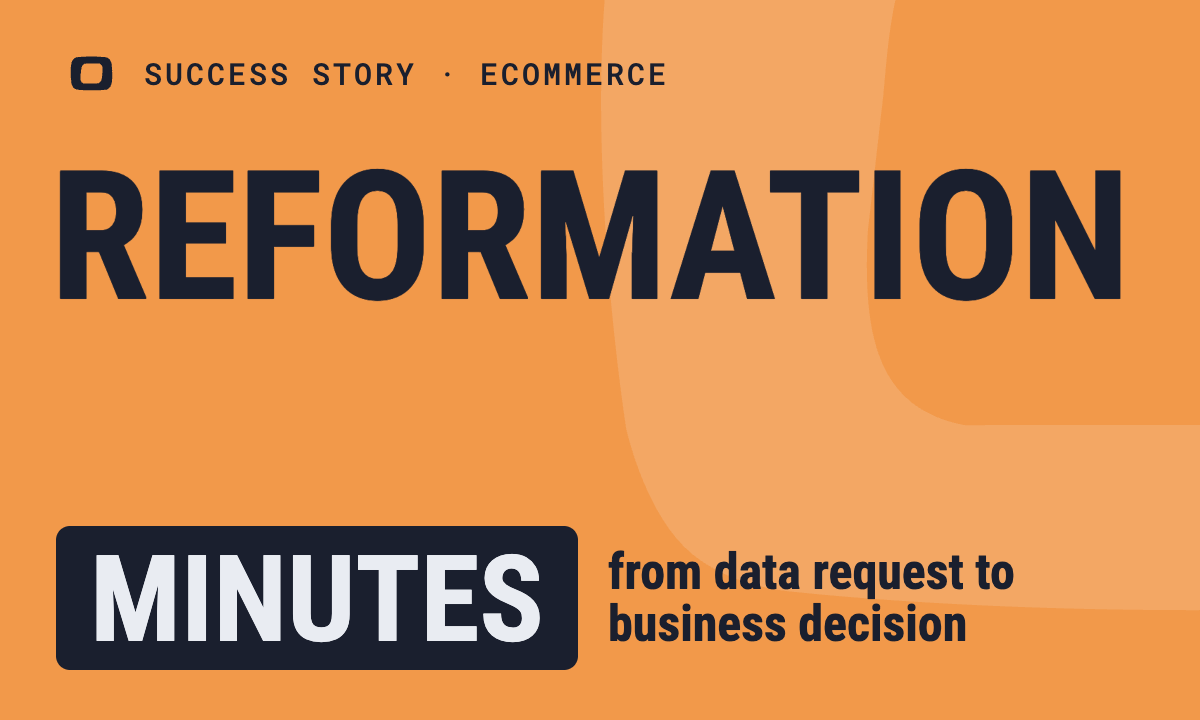 How OWOX Reports Helped Reformation Make Data-Backed DecisionsMinutesfrom data request to business decisionRead the story
 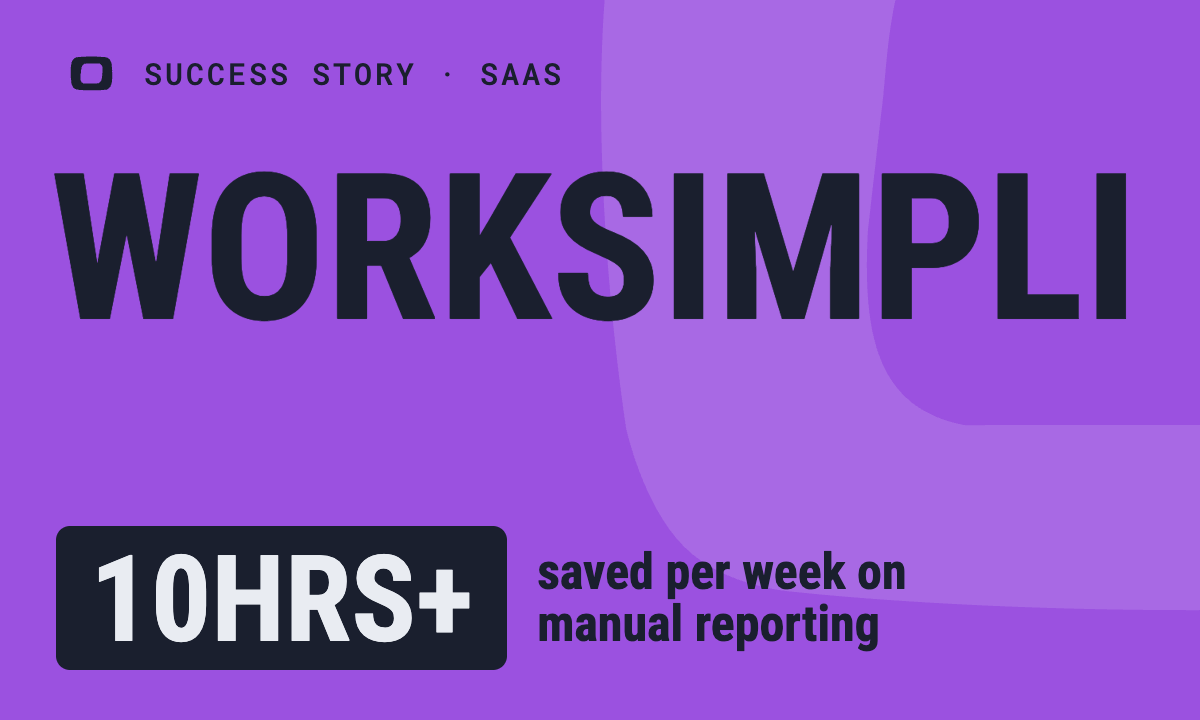 How OWOX Reports Streamlined Operations for WorkSimpli, Saving Over 10 Hours Weekly10hrs+saved per week on manual reportingRead the story
 Not testimonials. Comment threads.
Real things real customers said — each quote pinned to a specific claim, straight from the quotes database.
 Nodari RizunFounder & CEO, Pürblack®
“AI, by the nature of the models, will hallucinate. And because of that, you need something which will create guardrails to ensure that there are no hallucinations, that you can trust your data.”
Nodari RizunFounder & CEO, Pürblack®“I was blind, now I can see. OWOX opened our eyes.”
“We are extremely satisfied with the results achieved through our partnership with OWOX. I'm also impressed by quick and effective support we get from OWOX”
Turn your data into decisions.
Governed data marts give you the clean foundation ML needs to actually work.
- No AI hallucinations
- Analyst-governed definitions
- Every number traces to SQL