What is CAST AS BIGNUMERIC in SQL?
CAST AS BIGNUMERIC is a SQL operation that converts a value to a high‑precision numeric type, typically used for very large or very precise decimal numbers (such as in Google BigQuery). It helps prevent rounding, overflow, or scientific notation issues when working with financial, marketing, or attribution data in analytical queries.
CAST AS BIGNUMERIC is a SQL operation that converts a value into a high‑precision decimal type, so you can safely calculate with very large or very precise numbers without unexpected rounding, overflow, or weird scientific-notation output (especially in Google BigQuery).
What does CAST AS BIGNUMERIC mean in SQL?
What does CAST AS BIGNUMERIC mean in SQL?
In SQL, “casting” means forcing a value to be interpreted as a different data type. CAST AS BIGNUMERIC specifically tells the database: “Treat this value as a high-precision decimal number.” That matters when your source data comes in as strings, integers, floats, or lower-precision numeric types, and you need stable arithmetic for reporting and modeling.
How casting works in SQL
CAST changes the data type of an expression at query time. For example, you might cast a string like ‘123.45’ into a numeric type so you can sum it, multiply it, or join it consistently with other numeric fields.
In analytical SQL, casts are often used to:
- Make calculations deterministic (the same input produces the same output type and precision).
- Prevent implicit conversion surprises (where the engine picks a type for you).
- Standardize types across multiple sources (ad platforms, CRM exports, backend revenue, etc.).
BIGNUMERIC vs NUMERIC: what’s the difference?
Both NUMERIC and BIGNUMERIC are fixed-precision decimal types (as opposed to floating-point types that can introduce binary rounding artifacts). The key difference is capacity: BIGNUMERIC supports a wider range and higher precision than NUMERIC, so it’s better suited for extremely large values and/or many decimal places.
Practically, think of it like this: NUMERIC is great for most “normal” financial and marketing reporting. BIGNUMERIC is your backup plan when you have:
- Very large totals (big revenue, massive spend, high-volume microtransactions).
- High-precision ratios and fractional allocations (attribution splits, revenue share, blended models).
- Inputs that would otherwise be rounded, overflowed, or coerced into scientific notation.
When you actually need CAST AS BIGNUMERIC
When you actually need CAST AS BIGNUMERIC
If your current queries “work,” it’s tempting to ignore data types. But precision problems often show up later: totals don’t tie out, ROAS changes by a few basis points between dashboards, or a single outlier campaign breaks an entire aggregation. CAST AS BIGNUMERIC is a defensive move when you care about exactness.
Typical use cases in analytics (finance, ROAS, LTV, attribution)
High-precision casting becomes important when your metrics depend on many multiplications, divisions, and allocations:
- Finance & billing: invoice totals, tax calculations, currency conversions, refunds, and proration.
- ROAS/ROI: spend and revenue across many joins (ads → sessions → orders) where rounding can accumulate.
- LTV: long time horizons and cohort math that repeatedly aggregates and divides.
- Attribution: fractional credit allocation (0.3333… style weights) across touchpoints and channels.
In these scenarios, you want a type that keeps decimals stable across steps, so the final KPI is trustworthy.
Common problems it solves: overflow, rounding, scientific notation
CAST AS BIGNUMERIC is a problem-solver when your data type is the hidden villain:
- Overflow: A value doesn’t fit into a smaller type, causing errors or failed loads/queries.
- Rounding drift: Repeated operations on limited-precision numbers produce totals that don’t match source-of-truth systems.
- Scientific notation surprises: Large numbers represented in a way that’s annoying for reporting exports or downstream tools.
It’s also useful when your source comes as STRING (common in CSVs, API exports, and semi-structured ingestion) and you need exact decimal math rather than float approximations.
OWOX Data Marts
See your first report built in real time. 15 minutes.
- Connect your data warehouse
- Pick your metrics
- Get a live Google Sheets report
In the time it takes to write a ticket. Then imagine never writing that ticket again.
Book a DemoWe'll use your actual use case
Syntax and basic examples
In BigQuery-style SQL, you typically use CAST(expression AS BIGNUMERIC). You’ll see it inside SELECTs, CTEs, and transformation layers where you’re standardizing incoming fields before doing serious math.
Simple CAST AS BIGNUMERIC example
Here’s the minimal pattern:
CAST a literal:
SELECT
CAST('123.45' AS BIGNUMERIC) AS amount;
Once it’s BIGNUMERIC, any arithmetic you do with it will follow high-precision decimal rules for that type (instead of relying on implicit conversions).
Casting from STRING, INT64, and NUMERIC
Different sources, same goal: convert them into a consistent high-precision type before joining or calculating.
- From STRING: CAST(string_field AS BIGNUMERIC)
- From INT64: CAST(int_field AS BIGNUMERIC)
- From NUMERIC: CAST(numeric_field AS BIGNUMERIC)
If you’re building complex transformations and want help checking the edge cases (like unexpected characters in strings, or where casting should happen), consider using AI to help write and review complex SQL—especially for large reporting queries where a small type mismatch can ripple into dozens of downstream metrics.
Example: safe arithmetic with very large values
Say you’re multiplying a very large quantity by a high-precision unit price. Casting both sides (or the critical side) can prevent precision loss and keep your totals consistent:
SELECT
CAST(units AS BIGNUMERIC) * CAST(unit_price AS BIGNUMERIC) AS gross_revenue
FROM sales;
Even if units is an integer and unit_price is a string from an import, you’ve standardized them into a high-precision decimal before multiplying—exactly where errors love to hide.
Gotchas and best practices
BIGNUMERIC is powerful, but it’s not magic. You still have to respect how decimal types behave: limits exist, casts can fail, and choosing the “biggest type everywhere” can make your model harder to maintain than it needs to be.
Precision, scale, and truncation risks
High precision doesn’t mean “infinite precision.” If you cast a value that has more decimal places than the type can store (scale), the system may round or reject it depending on the function and context. Similarly, extremely large magnitudes can still exceed limits.
Best practices:
- Cast early, but intentionally: standardize raw fields at the edge of your model (staging layer), then reuse those standardized columns.
- Be explicit in critical KPIs: ROAS, ROI, margin, and blended rates should have deliberate types so they don’t change when someone edits a join.
- Validate “dirty” inputs: strings like “1,234.56” or “$99.00” may require cleaning before casting, otherwise casts can fail.
Performance considerations in large queries
Casting itself is usually not the biggest performance bottleneck, but it can become costly when applied repeatedly across huge datasets—especially if you cast the same field multiple times in nested expressions.
To keep things fast and readable:
- Cast once, reuse: cast in a CTE or a staging view, then reference the typed column everywhere else.
- Avoid type ping-pong: don’t cast to STRING for formatting and then back to BIGNUMERIC for math in the same pipeline.
- Standardize logic: if many reports need the same “typed and cleaned” calculation, centralize it.
One practical way to standardize and reuse type-safe logic is using stored procedures to standardize complex SQL logic, especially when your organization repeats the same transformations across multiple marts and dashboards.
How to choose between NUMERIC and BIGNUMERIC
Choose the smallest type that guarantees correctness for the metric’s expected range and precision. That’s the sweet spot: stable math without overcomplicating the model.
- Use NUMERIC when typical currency math and standard KPIs fit comfortably and you don’t see overflow/rounding issues.
- Use BIGNUMERIC when you have very large totals, high-precision fractional allocation, or you’ve already encountered rounding drift or overflow errors.
If you’re unsure, test with worst-case inputs (largest spend day, biggest customer, highest-volume campaign) and compare totals across types before you lock the model.
Example: Using CAST AS BIGNUMERIC in marketing reporting
Example: Using CAST AS BIGNUMERIC in marketing reporting
This is where CAST AS BIGNUMERIC gets fun: marketing reporting is a mix of large values (enterprise spend), tiny values (micro-conversions, fractional attribution), and lots of joins. That’s a perfect storm for subtle numeric issues.
Handling large spend and revenue values
Imagine you ingest daily campaign spend as STRING from an ad platform export, while revenue comes from ecommerce as NUMERIC. You want a clean, comparable base before aggregation:
WITH typed AS (
    SELECT
        campaign_id,
        DATE(date) AS dt,
        CAST(spend AS BIGNUMERIC)   AS spend_bn,
        CAST(revenue AS BIGNUMERIC) AS revenue_bn
    FROM marketing_fact
)
SELECT
    dt,
    campaign_id,
    SUM(spend_bn)   AS spend,
    SUM(revenue_bn) AS revenue
FROM typed
GROUP BY
    dt,
    campaign_id;
Now your downstream ROAS/ROI calculations operate on consistent high-precision fields instead of relying on whatever types happened to arrive that day.
Avoiding precision loss in ROAS and ROI calculations
ROAS and ROI are ratios—division is where rounding issues can show up fast, especially when totals get big or when you do multiple steps (campaign → channel → blended portfolio).
Example ROAS with type-safe division:
SELECT
    campaign_id,
    SAFE_DIVIDE(
        SUM(revenue_bn),
        SUM(spend_bn)
    ) AS roas
FROM typed
GROUP BY
    campaign_id;
If you’re working with restricted datasets (for example, sharing dashboards broadly while keeping sensitive metrics protected), you may also need to think about how precision and exposure intersect. That’s a good moment to revisit data masking and handling sensitive metrics while keeping your numeric logic consistent and auditable.
Where CAST AS BIGNUMERIC fits in OWOX Data Marts
Where CAST AS BIGNUMERIC fits in OWOX Data Marts
In a data mart mindset, the goal is repeatable reporting: the same definitions, the same types, the same outputs—no matter who queries the dataset or which dashboard tool is connected. High-precision types help you get there when your KPIs depend on exact decimal math.
Why high‑precision types matter in reporting data models
Reporting models often join facts (spend, clicks, orders) with dimensions (campaign, channel, geo). If your measures have inconsistent types across tables, you can get:
- Inconsistent aggregations (especially after joins that multiply rows).
- Hard-to-debug discrepancies between “raw totals” and “modeled totals.”
- Different results depending on query shape (which is the worst kind of bug).
Using deliberate numeric types—sometimes BIGNUMERIC for the “golden” measures—keeps core metrics stable as your model evolves. And stable metrics make it easier to enforce integrity rules like key constraints and data integrity in SQL in the parts of the pipeline where that applies.
Using consistent types across your marts and dashboards
Consistency is the real win: if spend is BIGNUMERIC in one table and FLOAT in another, your blended KPI layer becomes a guessing game. A clean approach is to standardize types in the mart layer and expose the same typed measures to every dashboard.
That design pairs naturally with strong relational modeling—clear keys, predictable joins, and less accidental duplication. If you’re tightening up your reporting schema, it helps to think in terms of designing robust data models with primary and foreign keys so your high-precision measures don’t get distorted by messy relationships.
Want to build reporting-ready marts where metrics stay precise from raw data to dashboard? Try OWOX Data Marts to model consistent, high-quality datasets and keep your calculations reliable as your reporting scales.
Learn how teams ship analytics faster
Organizations that scaled analytics without scaling headcount
 "For 10 years I was blind." The day Pürblack® founder stopped guessingSecondsto get reports across six channelsRead the story
 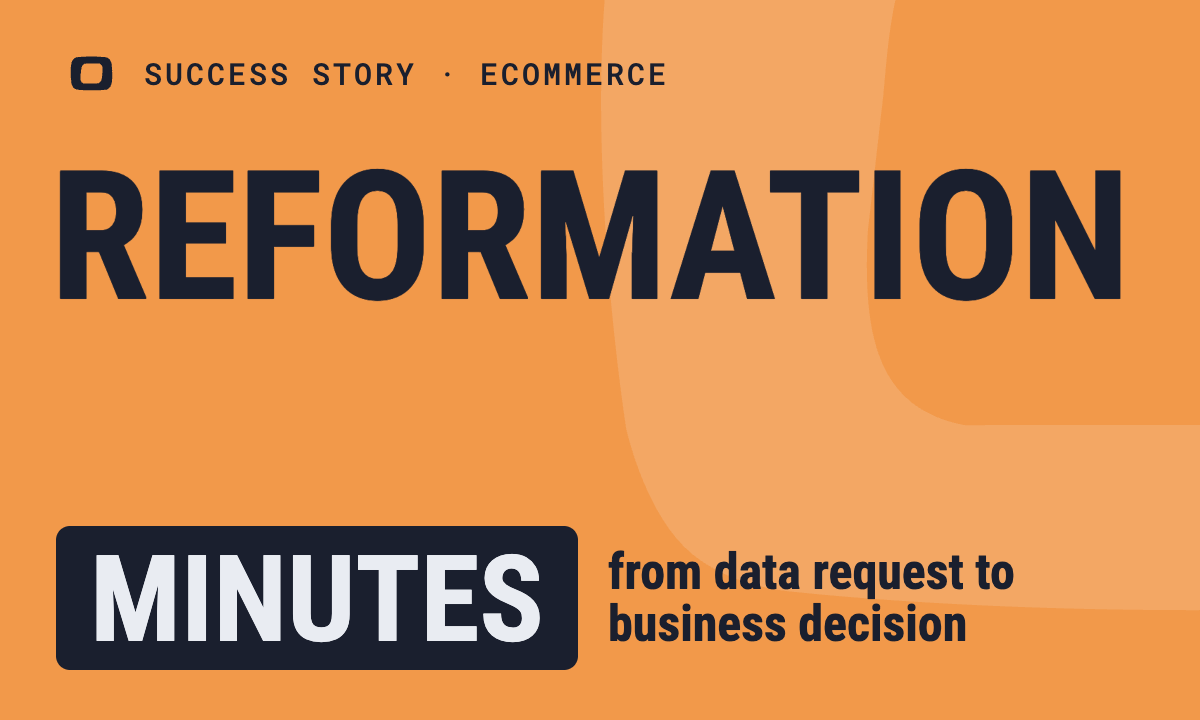 How OWOX Reports Helped Reformation Make Data-Backed DecisionsMinutesfrom data request to business decisionRead the story
 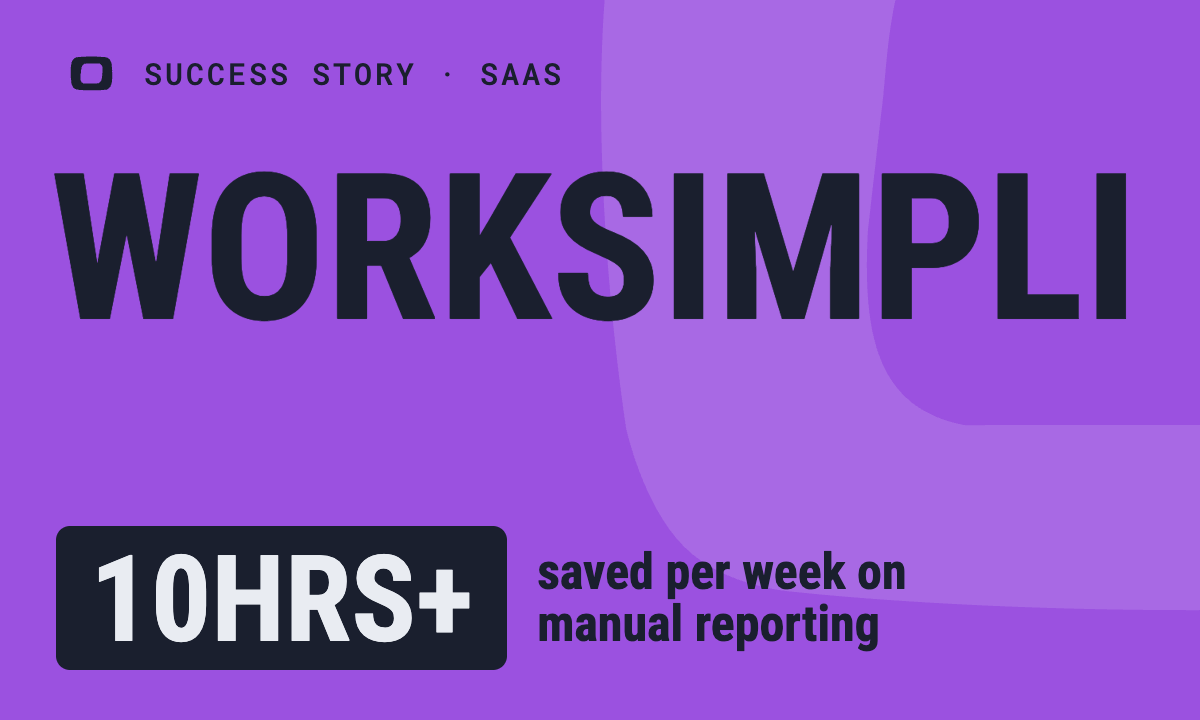 How OWOX Reports Streamlined Operations for WorkSimpli, Saving Over 10 Hours Weekly10hrs+saved per week on manual reportingRead the story
 Not testimonials. Comment threads.
Real things real customers said — each quote pinned to a specific claim, straight from the quotes database.
 Nodari RizunFounder & CEO, Pürblack®
“AI, by the nature of the models, will hallucinate. And because of that, you need something which will create guardrails to ensure that there are no hallucinations, that you can trust your data.”
Nodari RizunFounder & CEO, Pürblack®“I was blind, now I can see. OWOX opened our eyes.”
“We are extremely satisfied with the results achieved through our partnership with OWOX. I'm also impressed by quick and effective support we get from OWOX”
Turn your data into decisions.
Governed data marts give you the clean foundation ML needs to actually work.
- No AI hallucinations
- Analyst-governed definitions
- Every number traces to SQL