What is CAST AS BYTES in SQL?
CAST AS BYTES is an SQL type conversion that transforms a value (like STRING, INT, or other types) into a BYTES data type. It represents data as raw binary, which can be useful for hashing, encryption workflows, compact storage, or working with encoded values in analytics environments such as cloud data warehouses.
CAST AS BYTES is an SQL type conversion that turns a value like a STRING or INT into the BYTES data type—raw binary data you can use for hashing, encryption-style workflows, compact storage, or handling encoded values in analytics warehouses.
What does CAST AS BYTES mean in SQL?
What does CAST AS BYTES mean in SQL?
In SQL, “cast” means “treat this value as a different type.” When you CAST AS BYTES, you’re explicitly converting a value into a binary representation rather than keeping it as human-readable text or a numeric type. That’s powerful when you want consistent byte-level input for functions (like hashing), or when you need to move data through pipelines that expect binary payloads.
BYTES data type in plain language
Think of BYTES as a sequence of raw 0s and 1s grouped into bytes. Unlike STRING (characters) or INT (numbers), BYTES isn’t meant to be “read” by analysts directly. It’s meant to be processed.
In analytics work, BYTES often shows up when:
- You need a stable binary input for hashing/fingerprinting.
- You store encrypted or tokenized payloads.
- You work with encoded values (for example, Base64-encoded text that represents binary).
- You want to avoid accidental transformations that can happen with text (like trimming or collation quirks).
How CAST differs from implicit conversion
Many SQL engines will try to “help” by implicitly converting types (like comparing a STRING to an INT by converting one side). That help can be unpredictable, dialect-specific, and sometimes flat-out dangerous for analytics correctness.
CAST is explicit. It documents intent and makes your pipeline behavior more stable over time. If the conversion isn’t valid, a CAST will typically error (or return NULL in “safe cast” variants), which is better than silently producing wrong joins, broken filters, or inconsistent hashing inputs.
Syntax examples of CAST AS BYTES
Syntax examples of CAST AS BYTES
The exact syntax can vary by SQL dialect, but the concept stays the same: you provide a value/expression and request BYTES as the output type. Your warehouse may also offer helper functions to convert between strings, hex, Base64, and bytes.
Basic syntax
The general pattern looks like this:
CAST(expression AS BYTES)
Typical sources you might cast include STRING identifiers, numeric IDs, or concatenated keys. Just remember: the meaning of the resulting bytes depends on how your engine encodes the original value (especially for strings). Consistency is the point—so keep your method standardized within a project.
Common dialect specifics (e.g., BigQuery-style examples)
In BigQuery-style SQL, you’ll often see BYTES used alongside functions that explicitly transform strings to bytes and back (for example, encoding/decoding helpers). A common pattern is to cast a STRING to BYTES before hashing, because hash functions tend to accept BYTES or behave more predictably with BYTES input.
If you’re drafting or iterating on these snippets quickly, it can help to generate a starting point and then harden it with your warehouse rules. The article on using ChatGPT to generate SQL queries is handy for speeding up the “first draft,” but always validate types and outputs—BYTES mistakes are the kind that look fine until you reconcile numbers.
OWOX Data Marts
See your first report built in real time. 15 minutes.
- Connect your data warehouse
- Pick your metrics
- Get a live Google Sheets report
In the time it takes to write a ticket. Then imagine never writing that ticket again.
Book a DemoWe'll use your actual use case
When analysts actually use CAST AS BYTES
When analysts actually use CAST AS BYTES
Most analysts don’t wake up excited to “convert types.” But CAST AS BYTES shows up in real work more than you might expect—especially when you care about privacy, stable identifiers, or interoperability between systems.
Hashing and fingerprinting IDs
Hashing is the headline use case. You take an identifier (email, user_id, device_id, CRM key), convert it into a stable byte representation, then hash it. The key is consistency: the exact same input must produce the exact same output across runs, tables, and tools.
This matters even more when your identifiers are used as joins. If you’re building relationships between tables, you’re essentially relying on primary and foreign keys—and hashed keys are still keys. If one pipeline hashes “User123” and another hashes “user123” (or trims spaces differently), your joins quietly fall apart.
Encryption and tokenization workflows
Analysts may not implement encryption themselves, but they often consume outputs from security and privacy workflows. Those outputs are frequently stored as BYTES (or as encoded strings that represent bytes).
CAST AS BYTES can appear in tokenization pipelines where you:
- Standardize inputs before tokenization (so the same person gets the same token).
- Store tokens/encrypted blobs as BYTES for downstream processing.
- Limit exposure of sensitive fields in analytics layers.
If you’re exploring privacy-preserving transformations, the overview of data masking techniques helps frame where hashing, tokenization, and partial redaction fit—and where BYTES often becomes the “carrier” type.
Working with encoded strings (Base64, etc.)
Sometimes you inherit data that is “binary pretending to be text,” like Base64 strings that represent images, event payloads, or encrypted values. In those cases, converting to BYTES is the bridge to doing anything meaningful—validating length, hashing payloads, storing efficiently, or decoding for controlled use cases.
Even when a warehouse stores these payloads as STRING, you’ll often convert to BYTES before applying functions that expect binary input, or before writing to standardized tables where the schema uses BYTES for these fields.
Practical example: using CAST AS BYTES in a query
Practical example: using CAST AS BYTES in a query
Here’s a realistic analytics scenario: you want a privacy-safe, joinable user key for reporting across web events and CRM exports. You don’t want to expose raw identifiers in reporting tables, but you still need stable matching.
Example: hashing user identifiers
In a BigQuery-style approach, you can normalize the input, convert it to BYTES, then hash it. The normalization step is non-negotiable if you want stable results.
Example query:
SELECT
user_id,
TO_HEX(SHA256(CAST(LOWER(TRIM(CAST(user_id AS STRING))) AS BYTES))) AS user_key_sha256
FROM analytics.raw_events;
What’s happening here:
- CAST(user_id AS STRING) ensures a consistent textual representation (useful if user_id can be numeric in some sources).
- TRIM and LOWER standardize formatting so “User123” and “ user123 ” don’t diverge.
- CAST(… AS BYTES) turns that standardized string into bytes.
- SHA256 hashes the bytes (stable, deterministic).
- TO_HEX turns the hash into a readable hex string for debugging and joining.
If you operationalize this logic (for example, generating keys during ingestion), consider wrapping it in a repeatable pattern—sometimes even as a routine/stored procedure depending on your platform and governance. The guide on stored procedures in SQL is useful when you need to centralize logic and prevent every analyst from re-implementing key generation slightly differently.
Example: storing binary representation efficiently
Another practical use: storing the raw hash as BYTES rather than as a long hex string. Hex doubles the length because every byte becomes two characters. If your warehouse and BI layer can handle BYTES cleanly, keeping the hash in BYTES can be a more compact representation.
A pattern you might use:
- Store hash_bytes (BYTES) in a curated table for compactness and function compatibility.
- Expose a derived hash_hex (STRING) in analyst-facing views for readability and ad hoc debugging.
This approach keeps the storage/compute layer efficient while still giving humans something they can work with when investigating anomalies.
Gotchas and best practices with CAST AS BYTES
Gotchas and best practices with CAST AS BYTES
BYTES is awesome—until you have to debug it at 6 PM before a stakeholder meeting. A little discipline makes it painless.
Readability and debugging issues
Raw BYTES isn’t meant for eyeballing. If you select a BYTES column in a console, you may see escape sequences or unreadable output. That’s normal. The fix is to expose helper representations when needed (hex or Base64) in views or debug queries.
Best practice: standardize a “debug format” for binary fields (for example, always provide a hex string alongside the BYTES column in investigation queries).
Performance and storage considerations
Converting types and hashing at query time can be expensive at scale. If you repeatedly CAST AS BYTES and hash in downstream reports, you’re paying the compute tax over and over.
Common best practices:
- Compute hashed keys once in a curated layer, then reuse them.
- Normalize inputs before casting (trim/case/encoding rules) and keep that logic consistent.
- Be intentional about which fields are keys and enforce consistency the same way you would with constraints.
Also remember: binary keys still behave like keys. If you rely on uniqueness or relationships, you should think in terms of constraints and data integrity checks. The overview of key constraints in SQL is a good mental model for treating these “opaque” identifiers with the same seriousness as classic integer keys.
Converting back from BYTES to readable formats
Sometimes you need to render BYTES as text. The safe move is to convert to a known readable encoding (hex/Base64) rather than trying to “cast back” and hoping it becomes the original string.
Important nuance: casting BYTES back to STRING only makes sense if those bytes actually represent text in the expected encoding. If the bytes are a hash or encrypted blob, there is no “original text” to recover from a cast. In those cases, convert to hex/Base64 for readability, not for meaning.
CAST AS BYTES in the context of OWOX Data Marts
CAST AS BYTES in the context of OWOX Data Marts
BYTES pops up in real reporting pipelines when teams unify identifiers across sources, apply privacy transformations, or standardize event payload handling. The trick is to use BYTES where it makes the system robust, but not let it leak into places where humans need clarity.
Where BYTES show up in real reporting pipelines
Common places BYTES appears in a data mart-style workflow:
- Identity stitching: stable hashed join keys derived from emails/logins/IDs.
- Privacy layers: tokenized identifiers and masked fields carried forward without exposing raw values.
- Event payload processing: encoded attributes that need byte-level handling before they become clean dimensions.
In practice, this often means BYTES is used in staging/curation steps, while reporting tables expose readable surrogate keys or formatted versions for analysts.
Keeping Data Mart layers analyst‑friendly
A strong pattern is: keep BYTES in the “plumbing” layers, and present friendly types in the “semantic” layers. Analysts can still join reliably, but they don’t have to decode binary fields during everyday reporting.
Pragmatic tips:
- Store the canonical key in BYTES for compactness and consistency.
- Expose a hex/base64 string version in views used by BI tools and ad hoc analysis.
- Document normalization rules (trim, lowercase, null handling) right next to the model, so “same user” always means “same bytes.”
Want to build analyst-friendly data mart layers without losing the rigor of warehouse-grade typing? Try OWOX Data Marts to organize transformations, keep identifiers consistent, and make reporting outputs easier to trust and use—fast.
Learn how teams ship analytics faster
Organizations that scaled analytics without scaling headcount
 "For 10 years I was blind." The day Pürblack® founder stopped guessingSecondsto get reports across six channelsRead the story
  How OWOX Reports Helped Reformation Make Data-Backed DecisionsMinutesfrom data request to business decisionRead the story
 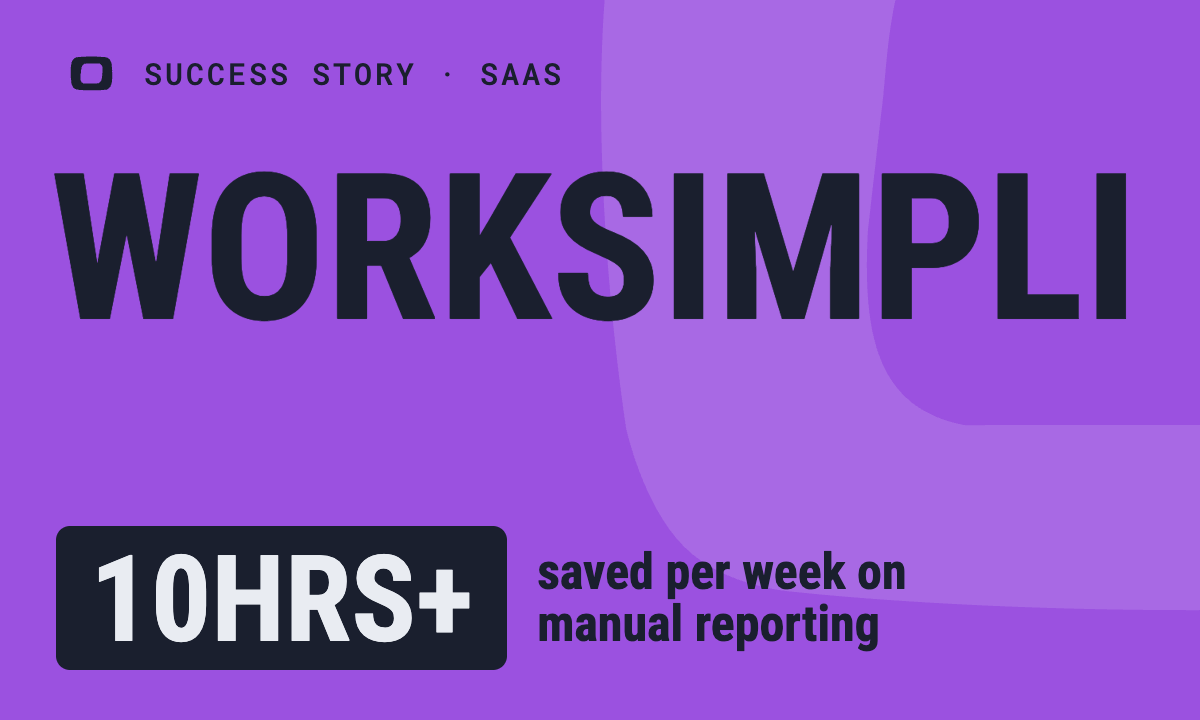 How OWOX Reports Streamlined Operations for WorkSimpli, Saving Over 10 Hours Weekly10hrs+saved per week on manual reportingRead the story
 Not testimonials. Comment threads.
Real things real customers said — each quote pinned to a specific claim, straight from the quotes database.
 Nodari RizunFounder & CEO, Pürblack®
“AI, by the nature of the models, will hallucinate. And because of that, you need something which will create guardrails to ensure that there are no hallucinations, that you can trust your data.”
Nodari RizunFounder & CEO, Pürblack®“I was blind, now I can see. OWOX opened our eyes.”
“We are extremely satisfied with the results achieved through our partnership with OWOX. I'm also impressed by quick and effective support we get from OWOX”
Turn your data into decisions.
Governed data marts give you the clean foundation ML needs to actually work.
- No AI hallucinations
- Analyst-governed definitions
- Every number traces to SQL