What is COALESCE in ARRAY in SQL?
COALESCE in ARRAY usually refers to using the SQL COALESCE function together with array expressions to replace NULL arrays or NULL elements with default values. Analysts use it to guarantee non‑null arrays in SELECTs, aggregations, and reports, so dashboards don’t break or show unexpected NULLs.
COALESCE in ARRAY means using the SQL COALESCE function with arrays to turn NULL arrays or NULL values inside array workflows into safe defaults, so your queries return predictable results instead of messy blanks.
What is COALESCE in ARRAY in SQL?
What is COALESCE in ARRAY in SQL?
Arrays are powerful in analytics because they let you keep multiple values in one field, like product categories, event parameters, or campaign tags. But arrays become tricky fast when NULL shows up. That is where COALESCE steps in and keeps things under control.
Quick recap of COALESCE
COALESCE returns the first non-NULL value from a list of expressions. In plain English: if the first value is missing, SQL tries the next one, then the next one, until it finds something usable.
Analysts often use it for scalar values like numbers, strings, or dates. For example, COALESCE(revenue, 0) replaces a missing revenue value with zero. The same idea can be applied to arrays, as long as the SQL dialect supports compatible array expressions.
How COALESCE interacts with arrays conceptually
With arrays, COALESCE usually works in two main ways. First, it can replace a NULL array with a default array, often an empty one. Second, it can be used in logic around array processing to replace missing element values before or after array construction.
This matters because a NULL array and an empty array are not the same thing. A NULL array means “no value is known.” An empty array means “there are definitely no items.” In reporting, that difference can change counts, filters, joins, and dashboard behavior.
Common ways to use COALESCE with arrays
Common ways to use COALESCE with arrays
In real BI work, COALESCE with arrays is less about theory and more about making queries reliable. It helps downstream models stay stable even when source data is inconsistent.
Replacing a NULL array with an empty array
This is the most common pattern. If a field like user_interests or promo_codes is NULL, you can return an empty array instead. That prevents errors in tools that expect an array column to always exist with the same type.
A typical idea looks like this: return tags if present, otherwise return an empty array of the same element type. This is especially useful before UNNEST, FLATTEN, or export steps.
Default values for NULL array elements
Sometimes the array itself exists, but individual elements inside it are NULL. In that case, analysts may rebuild the array and apply COALESCE to each item. For example, a list of channel names might contain NULL for unknown sources, and you may want to convert those to ‘unknown’ before reporting.
This approach is common when arrays are created from nested event data. It keeps labels consistent and makes grouped reports easier to read.
Using COALESCE in ARRAY_AGG and other aggregations
Aggregations can produce NULL unexpectedly, especially when no rows match a grouping condition. Wrapping an ARRAY_AGG result in COALESCE helps guarantee the output is still an array. That means a customer with no matching events can still appear with an empty array instead of a NULL field.
It is a small move, but it makes a huge difference for downstream logic, API responses, and BI layers that assume repeatable schemas.
OWOX Data Marts
See your first report built in real time. 15 minutes.
- Connect your data warehouse
- Pick your metrics
- Get a live Google Sheets report
In the time it takes to write a ticket. Then imagine never writing that ticket again.
Book a DemoWe'll use your actual use case
Syntax examples in popular SQL dialects
Syntax examples in popular SQL dialects
The exact syntax depends on your SQL engine, but the core pattern stays the same: COALESCE must receive compatible types, and your fallback array should match the expected array structure.
BigQuery-style examples
In BigQuery, you might replace a missing array like this:
SELECT
    COALESCE(product_ids, ARRAY<INT64>[]) AS product_ids
FROM
    orders;
To replace NULL elements while rebuilding an array, a pattern may look like:
SELECT
    ARRAY(
        SELECT
            COALESCE(x, 'unknown')
        FROM
            UNNEST(channels) AS x
    ) AS clean_channels
FROM
    sessions;
For aggregated arrays, you may use:
SELECT
    user_id,
    COALESCE(
        ARRAY_AGG(page_name),
        ARRAY<STRING>[]
    ) AS pages
FROM
    events
GROUP BY
    user_id;
If you want help drafting or validating these patterns faster, many analysts generate SQL queries with ChatGPT and then adjust the syntax for their warehouse.
PostgreSQL-style examples
In PostgreSQL, the same idea uses native array literals and casts. For example:
SELECT
    COALESCE(tags, ARRAY[]::text[]) AS tags
FROM
    campaigns;
To handle NULL elements during array creation, you might combine ARRAY with a subquery:
SELECT
    ARRAY(
        SELECT
            COALESCE(tag, 'unknown')
        FROM
            UNNEST(tags) AS tag
    ) AS clean_tags
FROM
    campaigns;
The important part is the explicit cast. Without it, PostgreSQL may not know what kind of empty array you mean.
Typical patterns in BI/analytics queries
In reporting queries, COALESCE with arrays often appears in staging models, mart views, and semantic layers. Analysts use it to make dimensions and repeated fields safer before dashboards touch them.
Example: imagine you are building a campaign performance mart where each session has an array of marketing touchpoints. Some sessions have no touchpoint data at all, and some contain NULL channel names. You want a stable field for reporting.
SELECT
    session_id,
    COALESCE(
        ARRAY(
            SELECT
                COALESCE(channel, 'unknown')
            FROM
                UNNEST(touchpoints) AS channel
        ),
        ARRAY<STRING>[]
    ) AS clean_touchpoints
FROM
    session_attribution;
This pattern gives every session a usable array, which is much safer for dashboards than mixing NULL arrays with half-clean values.
Practical analytics use cases
COALESCE in array logic shines when messy source data meets strict reporting expectations. And yes, that happens all the time.
Ensuring stable schemas for dashboards
Dashboards work best when fields have predictable types. If one refresh returns an array and another returns NULL, charts, calculated fields, or data extracts may fail or behave differently. Replacing NULL arrays with empty arrays keeps the schema consistent across refreshes.
This is especially useful when dashboards consume nested ecommerce, CRM, or product analytics data. Stable array handling supports cleaner transformations and better SQL key constraints and data integrity practices across reporting models.
Cleaning event properties and marketing attributes
Event streams often contain arrays of parameters like coupon codes, search terms, item categories, or experiment labels. Some values may be blank, masked, or partially missing. COALESCE helps normalize those arrays before they reach marts or reports.
That can also be relevant when sensitive values need controlled replacement. In workflows involving protected customer or campaign data, this cleanup may sit alongside broader data masking techniques in SQL so analysts can preserve structure without exposing raw values.
Avoiding surprises in joins and UNNEST/FLATTEN operations
UNNEST or FLATTEN logic can behave differently depending on whether an array is NULL or empty. A NULL array may skip rows completely, while an empty array may produce no child rows but still preserve the parent row in surrounding logic. That difference can ripple through attribution, funnel, or product analysis.
Using COALESCE before expansion makes intent explicit. If your query assumes “no items,” return an empty array. If your query needs to preserve unknown status, keep NULL and handle it deliberately.
Pitfalls, limitations, and best practices
Pitfalls, limitations, and best practices
COALESCE is simple, but array handling is not always forgiving. A few small mistakes can produce hard-to-debug type errors or misleading results.
Type mismatches between COALESCE arguments
The biggest issue is type compatibility. All COALESCE arguments must resolve to a common type. If your source is an array of integers, your fallback cannot be an array of strings. If your SQL dialect requires explicit casts for empty arrays, add them.
This matters even more in reusable logic, such as views, macros, or using COALESCE inside stored procedures, where unclear typing can break larger workflows.
Performance and readability considerations
Wrapping every field in nested COALESCE logic can make a query noisy. If you are repeatedly cleaning the same arrays, consider doing it once in a staging layer instead of every dashboard query. That improves readability and reduces repeated transformations.
Also, rebuilding arrays element by element can be heavier than simple scalar replacement. Keep the logic only where it adds real value for reporting or data quality.
When to use COALESCE vs. IF/CASE with arrays
Use COALESCE when your goal is straightforward: replace NULL with a default. Use IF or CASE when the replacement depends on a condition beyond NULL checking, such as array length, source system, or event type.
A good rule: COALESCE is for fallback values. CASE is for business rules. If you mix both jobs into one giant expression, the query becomes harder to test and maintain.
How this appears in Data Marts and reporting
How this appears in Data Marts and reporting
In data marts, consistency beats cleverness. Predictable arrays make downstream reporting far easier to maintain.
Designing resilient array fields in Data Marts
When mart designers expose array columns, they should define what NULL and empty mean for each field. For example, an empty array may mean “confirmed no categories,” while NULL may mean “category data not loaded yet.” That definition should stay consistent across tables and transformations.
This becomes even more important when marts depend on related entities and clean joins. Good modeling with primary and foreign keys in SQL works better when array behavior is predictable and documented.
OWOX Data Marts context: why predictable arrays matter
In OWOX-style reporting workflows, analysts often prepare curated datasets for dashboards, attribution, and performance analysis. Arrays may represent repeated attributes, event dimensions, or grouped identifiers. If those fields randomly switch between NULL and non-NULL forms, reporting logic becomes brittle.
Using COALESCE with arrays helps create resilient marts that are easier to query, validate, and visualize. It is not flashy, but it is one of those quiet fixes that keeps analytics pipelines from turning into chaos.
Want cleaner reporting tables with predictable array fields and fewer dashboard surprises? Explore OWOX Data Marts to build more reliable data marts and faster reporting workflows.
Learn how teams ship analytics faster
Organizations that scaled analytics without scaling headcount
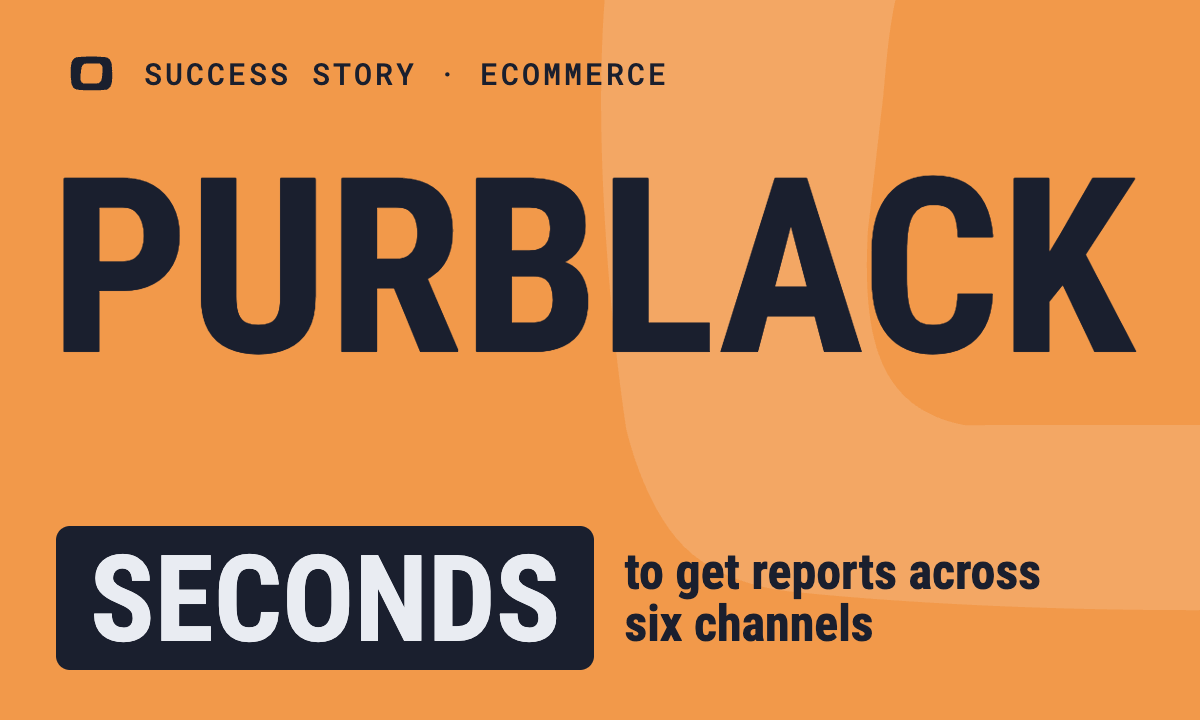 "For 10 years I was blind." The day Pürblack® founder stopped guessingSecondsto get reports across six channelsRead the story
  How OWOX Reports Helped Reformation Make Data-Backed DecisionsMinutesfrom data request to business decisionRead the story
  How OWOX Reports Streamlined Operations for WorkSimpli, Saving Over 10 Hours Weekly10hrs+saved per week on manual reportingRead the story
 Not testimonials. Comment threads.
Real things real customers said — each quote pinned to a specific claim, straight from the quotes database.
 Nodari RizunFounder & CEO, Pürblack®
“AI, by the nature of the models, will hallucinate. And because of that, you need something which will create guardrails to ensure that there are no hallucinations, that you can trust your data.”
Nodari RizunFounder & CEO, Pürblack®“I was blind, now I can see. OWOX opened our eyes.”
“We are extremely satisfied with the results achieved through our partnership with OWOX. I'm also impressed by quick and effective support we get from OWOX”
Turn your data into decisions.
Governed data marts give you the clean foundation ML needs to actually work.
- No AI hallucinations
- Analyst-governed definitions
- Every number traces to SQL