What is the DATE_TRUNC function in SQL?
The DATE_TRUNC function in SQL rounds a date or timestamp down to a specified precision, such as year, month, day, or hour. It’s used to group events into consistent time buckets for reporting and analysis, making it easier to build charts, cohorts, and aggregated metrics over time.
The DATE_TRUNC function in SQL cuts a date or timestamp down to a chosen time unit like month, week, day, or hour, so analysts can bucket events into clean, consistent periods for reporting.
What is the DATE_TRUNC function in SQL?
What is the DATE_TRUNC function in SQL?
Time data gets messy fast. One event happens at 09:01, another at 09:59, and another at 10:00. If you want to analyze trends, those raw timestamps are too detailed. DATE_TRUNC solves that by snapping each value down to the start of a time period.
Basic idea in plain language
Think of DATE_TRUNC as a timestamp organizer. If you truncate a timestamp to the month, every date in that month becomes the first moment of that month. If you truncate to the day, every timestamp on that date becomes midnight of that day.
For example, a timestamp like 2025-03-14 16:42:11 truncated to month becomes 2025-03-01 00:00:00. Truncated to hour, it becomes 2025-03-14 16:00:00. The original value is not rounded to the nearest unit. It is always pushed down to the beginning of the selected period.
Why analysts use DATE_TRUNC in reporting
Analysts use DATE_TRUNC because charts and dashboards usually need grouped time buckets, not raw event-level timestamps. Monthly revenue, weekly active users, daily sessions, hourly orders, cohort start dates: all of these depend on consistent bucket boundaries.
It also makes aggregations easier. Once timestamps are truncated, you can group by the result and calculate sums, counts, averages, or conversion rates without building custom date logic over and over again.
DATE_TRUNC syntax and common time parts
DATE_TRUNC syntax and common time parts
The exact syntax depends on your SQL engine, but the idea stays the same: choose a time part and apply it to a date or timestamp expression.
General syntax with examples
A common pattern looks like this:
DATE_TRUNC('month', order_timestamp)That expression returns the start of the month for each order timestamp. Then you can group by it:
SELECT DATE_TRUNC('month', order_timestamp) AS order_month,SUM(revenue)
FROM orders
GROUP BY 1;
This is one of the most common building blocks in analytics SQL because it creates a reporting-friendly date dimension on the fly.
Supported date parts (year, quarter, month, week, day, hour, etc.)
Most SQL systems support major calendar and clock units. Common date parts include:
- year
- quarter
- month
- week
- day
- hour
- minute
- second
Some systems support additional parts or variants, such as ISO week, month start rules, or custom week boundaries. That matters a lot in reporting, especially when finance, marketing, and product teams expect different definitions of a week or quarter.
Differences across SQL dialects (Postgres, BigQuery, Snowflake, etc.)
Here is where things get spicy. DATE_TRUNC is widely available, but engines do not always behave the same way.
In PostgreSQL, DATE_TRUNC usually takes the time part as text first, then the timestamp. In BigQuery, syntax and supported types can differ depending on whether you are truncating DATE, DATETIME, or TIMESTAMP values. Snowflake also supports DATE_TRUNC, but exact return types and argument order may vary from what you expect if you switch between platforms.
The lesson is simple: always check how your warehouse handles input type, output type, week start, and time zone behavior before standardizing logic across reports.
OWOX Data Marts
See your first report built in real time. 15 minutes.
- Connect your data warehouse
- Pick your metrics
- Get a live Google Sheets report
In the time it takes to write a ticket. Then imagine never writing that ticket again.
Book a DemoWe'll use your actual use case
Practical examples of using DATE_TRUNC
Practical examples of using DATE_TRUNC
This is where DATE_TRUNC earns its keep. It turns event chaos into trend-ready reporting.
Grouping metrics by month or week
Suppose you want to track monthly signups. Instead of grouping by the raw signup timestamp, truncate it to the month:
SELECT DATE_TRUNC('month', signup_time) AS signup_month, COUNT(*) AS users
FROM user_events
GROUP BY 1
ORDER BY 1;
For weekly reporting, swap month for week. This is especially useful for campaign analysis, retention tracking, and seasonality checks. If you want to generate and debug SQL queries with AI, DATE_TRUNC is one of those functions worth prompting carefully because week logic and timestamp types can change results fast.
Building daily and hourly reports
Daily and hourly buckets are common in operational dashboards. A support team may need ticket volume by hour. An ecommerce analyst may want orders by day. A growth team may track app installs by hour after a product launch.
DATE_TRUNC makes those views easy to build because every event in the same period gets the same truncated value. That means fewer custom transformations and cleaner groupings in BI tools.
Example: imagine a product analyst needs hourly checkout events for a launch day dashboard. They could write:
SELECT DATE_TRUNC('hour', event_time) AS event_hour, COUNT(*) AS checkout_events
FROM events
WHERE event_name = 'checkout'
AND event_time >= '2025-03-14 00:00:00'
AND event_time < '2025-03-15 00:00:00'
GROUP BY 1
ORDER BY 1;
This produces one row per hour, which is perfect for charts, anomaly detection, and launch monitoring.
Handling time zones and timestamps
This part is easy to underestimate and painful to debug. If your timestamps are stored in UTC but your business reports in a local time zone, truncating before converting can shift events into the wrong day or week.
Best practice: convert timestamps into the reporting time zone first, then truncate. Otherwise, a late-night transaction in local time may be grouped into the next day in UTC. For global businesses, this can create mismatched dashboard totals and confused stakeholders very quickly.
DATE_TRUNC vs other date functions
DATE_TRUNC vs other date functions
DATE_TRUNC is powerful, but it is not the same as every other date function that seems similar at first glance.
DATE_TRUNC vs CAST/DATE
CAST or DATE often strips the time portion from a timestamp and returns just the calendar date. That is useful when you only need day-level reporting.
DATE_TRUNC is more flexible. It can truncate to year, quarter, month, week, hour, and more. If you need anything beyond day-level conversion, DATE_TRUNC is usually the better fit.
DATE_TRUNC vs EXTRACT
EXTRACT pulls out one component of a date, like the month number or hour number. For example, EXTRACT(MONTH FROM order_time) might return 3.
DATE_TRUNC returns a full date or timestamp aligned to a time boundary, like 2025-03-01 00:00:00. That makes DATE_TRUNC better for grouping complete periods, while EXTRACT is better for slicing by attributes such as “all March records” or “all events that happened at 9 AM.”
DATE_TRUNC vs rounding or formatting dates
Formatting functions change how a date looks, not what it means. A formatted string may display a month nicely, but it is still presentation logic. DATE_TRUNC changes the actual value into a bucket-ready timestamp or date.
And unlike numeric rounding, DATE_TRUNC does not round to the nearest unit. It always moves backward to the start of the chosen period. That distinction matters when accuracy in time grouping is non-negotiable.
Common pitfalls and best practices
Common pitfalls and best practices
DATE_TRUNC feels simple until definitions, scale, and edge cases enter the room. Then it becomes a quality-control test for your whole reporting setup.
Week definitions and locale differences
Not every system agrees on when a week starts. Some use Sunday. Some use Monday. Some support ISO weeks. If your dashboards compare data across tools, this can create subtle but brutal discrepancies.
Set one standard and document it. Better yet, use stored procedures to standardize date logic when your team repeatedly applies the same week and period definitions across reports.
Performance considerations in large queries
Applying DATE_TRUNC to millions or billions of rows is common, but it can still affect performance, especially if it prevents partition pruning or index usage. If your warehouse supports partitioned tables by date, be careful not to wrap filtering columns in ways that make scans larger than necessary.
It is often better to filter raw timestamp ranges first, then truncate in the select or group by. Also, if you work with customer-level or event-level datasets, remember that performance and governance go together with handling sensitive data in analytical databases responsibly.
Working with incomplete periods (current week, month, quarter)
Current periods are tricky because they are still in progress. Comparing the current month to a full previous month can make trends look worse than they are. The same goes for current week and current quarter.
Best practice: label incomplete periods clearly or compare them only to equivalent partial periods. If today is the 14th, compare month-to-date against the first 14 days of the previous month, not the entire previous month.
DATE_TRUNC in Data Marts and OWOX context
DATE_TRUNC in Data Marts and OWOX context
In analytics engineering, DATE_TRUNC is more than a convenience function. It is a foundation for making time-based data models stable and reusable.
Using DATE_TRUNC for stable time buckets in Data Marts
Data marts often need canonical time buckets so metrics stay consistent across teams and dashboards. A shared definition of order_date, session_week, or revenue_month reduces confusion and makes downstream reporting dramatically easier.
That works best when the underlying models are clean too, including the fundamentals of SQL data integrity and constraints and thoughtful joins between fact and dimension tables. Time logic should not live as a random copy-paste in every chart query.
How DATE_TRUNC supports consistent BI dashboards
BI dashboards depend on repeatable groupings. If one chart uses raw timestamps, another uses cast dates, and a third uses local time with weekly truncation, trust disappears fast.
DATE_TRUNC helps teams align on the same calendar logic across reporting layers. Combined with well-structured marts and designing relational models for analytics, it creates dashboards that stay coherent even as data volume and use cases grow.
Want cleaner time buckets and more reliable reporting workflows? Build faster with OWOX Data Marts and streamline how your team prepares analytics data for consistent BI dashboards.




Learn how teams ship analytics faster
Organizations that scaled analytics without scaling headcount
 "For 10 years I was blind." The day Pürblack® founder stopped guessingSecondsto get reports across six channelsRead the story
  How OWOX Reports Helped Reformation Make Data-Backed DecisionsMinutesfrom data request to business decisionRead the story
 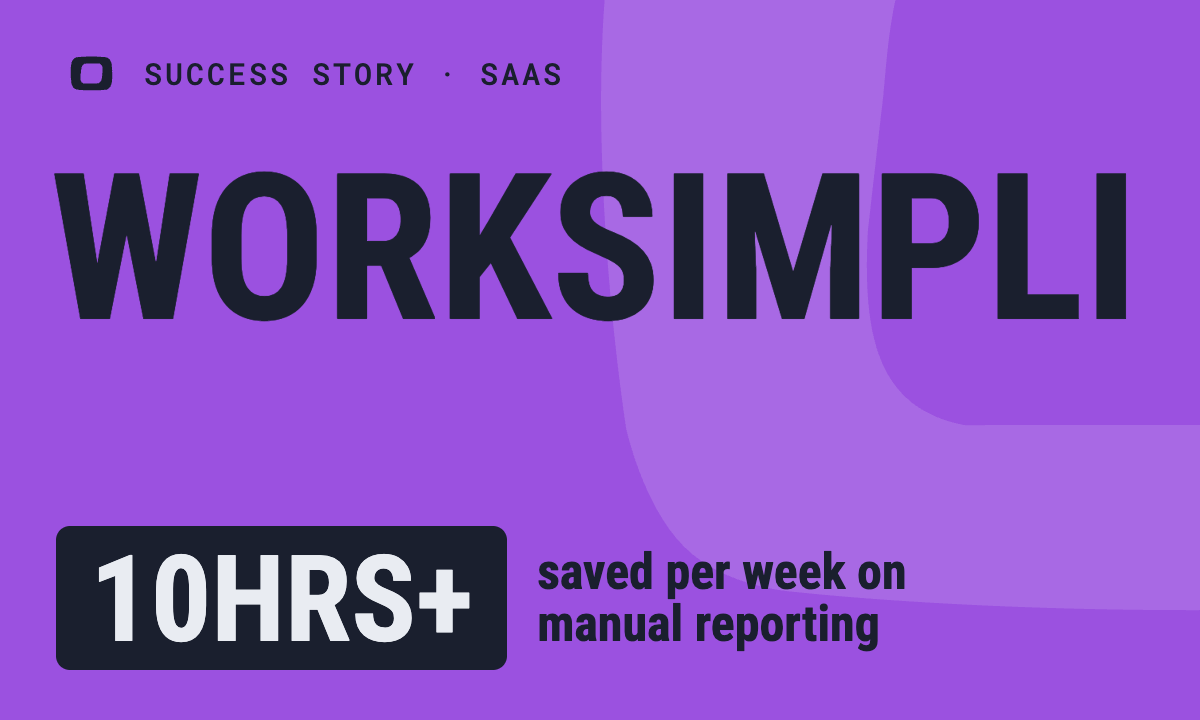 How OWOX Reports Streamlined Operations for WorkSimpli, Saving Over 10 Hours Weekly10hrs+saved per week on manual reportingRead the story
 Not testimonials. Comment threads.
Real things real customers said — each quote pinned to a specific claim, straight from the quotes database.
 Nodari RizunFounder & CEO, Pürblack®
“AI, by the nature of the models, will hallucinate. And because of that, you need something which will create guardrails to ensure that there are no hallucinations, that you can trust your data.”
Nodari RizunFounder & CEO, Pürblack®“I was blind, now I can see. OWOX opened our eyes.”
“We are extremely satisfied with the results achieved through our partnership with OWOX. I'm also impressed by quick and effective support we get from OWOX”
Turn your data into decisions.
Governed data marts give you the clean foundation ML needs to actually work.
- No AI hallucinations
- Analyst-governed definitions
- Every number traces to SQL