

What Is the FORMAT_DATETIME Function in SQL?
FORMAT_DATETIME is a SQL function that turns a DATETIME value into a text string in the layout you want, making dates and times easier for people to read in reports, dashboards, and exports without changing the original value.
What is FORMAT_DATETIME in SQL?
When analysts work with DATETIME fields, the raw value is perfect for filtering, joining, and aggregating. But raw date-time values are not always ideal for business-facing output. That is where FORMAT_DATETIME steps in.
Syntax and basic idea
FORMAT_DATETIME takes a DATETIME and a format pattern, then returns a string. In BigQuery-style SQL, the idea is simple: keep the actual DATETIME intact, but display it as something friendlier like 2025-03-17, Mar 17, 2025, or 17:45.
This is especially useful when you need labels for dashboards, exported tables, or presentation-ready views. It is a display tool, not a transformation that changes the datatype of the original field.
FORMAT_DATETIME vs raw DATETIME values
A raw DATETIME is structured data. It supports sorting in true chronological order, date math, and time-based filtering. A formatted result from FORMAT_DATETIME is just text.
That difference matters. DATETIME values are for analysis logic. Formatted strings are for readability. If you replace raw DATETIME fields too early, downstream queries can get messy fast.
FORMAT_DATETIME syntax and common format patterns
The power of FORMAT_DATETIME comes from format elements. These tokens tell SQL exactly how to present the year, month, day, hour, minute, and second.
Function syntax and arguments
The common pattern looks like this:
1FORMAT_DATETIME(
2  'format_string',
3  datetime_expression
4)
The first argument is the layout you want. The second is the DATETIME value to format. The result is always a string.
For example, a DATETIME can be shown as a compact date for reporting, or as a detailed timestamp-style label for logs and exports.
Most-used format elements for dates
Some date-related format elements show up constantly in analytics workflows:
- %Y for four-digit year
- %y for two-digit year
- %m for month number
- %d for day of month
- %b for abbreviated month name
- %B for full month name
These are useful for labels like 2025-03-17, Mar 2025, or March 17. They help convert technical date fields into business-friendly outputs.
Most-used format elements for time
Time formatting is just as handy when analysts need readable event times or reporting cutoffs. Common elements include:
- %H for hour in 24-hour format
- %I for hour in 12-hour format
- %M for minutes
- %S for seconds
- %p for AM or PM
With these, you can create strings like 14:30:00 or 02:30 PM depending on the reporting need.
Typical mistakes with format strings
The biggest mistake is forgetting that the output becomes text. Once formatted, the field no longer behaves like a DATETIME in calculations.
Another common issue is using the wrong function for the datatype. FORMAT_DATETIME expects a DATETIME value, not a DATE or TIMESTAMP. Analysts also sometimes build labels that look nice but sort badly, such as month names without a numeric order key.
Finally, inconsistent formatting across models can create reporting chaos. One view might use YYYY-MM-DD while another uses DD/MM/YYYY. Same data, different presentation, more confusion.
FORMAT_DATETIME vs related date/time functions
FORMAT_DATETIME is part of a wider family of date and time functions. Choosing the right one keeps queries clean and avoids silent mistakes.
FORMAT_DATETIME vs FORMAT_TIMESTAMP
Use FORMAT_DATETIME when your source field is DATETIME. Use FORMAT_TIMESTAMP when your source field is TIMESTAMP.
This matters because TIMESTAMP values are tied to a specific moment in time, while DATETIME values represent a calendar date and time without timezone handling. If your source data includes timezone-sensitive events, FORMAT_TIMESTAMP is usually the better match.
FORMAT_DATETIME vs FORMAT_DATE
FORMAT_DATE is for DATE values only. It works great when there is no time component. FORMAT_DATETIME is the right fit when both date and time are stored together.
If your business logic only needs the calendar day, formatting a DATE keeps things simpler. If your logic needs the hour or minute too, DATETIME formatting gives more flexibility.
When you should not use FORMAT_DATETIME
Do not use FORMAT_DATETIME for filtering, joining, or grouping when the raw DATETIME can do the job better. Text labels are harder to maintain and easier to misuse.
You also should not format too early in transformation pipelines. If a field still needs date arithmetic, bucketing, or relationship logic, keep it as DATETIME until the final reporting layer.
Practical examples for analytics and reporting
This function shines when analytics output needs to be understandable at a glance. It is small, but it can make dashboards feel far more polished.
Formatting for human-readable reports and dashboards
Imagine an ecommerce analyst building a daily operations dashboard. The raw order_created_at field is a DATETIME, but the business team wants a clean label like Mar 17, 2025 14:30.
A query might format the field for presentation while keeping the raw field available for filtering and sorting. If you want to speed up repetitive query drafting, guides on generating SQL queries faster with AI can help analysts move quicker without losing control of the logic.
Example:
1SELECT
2order_id,
3order_created_at,
4FORMAT_DATETIME('%b %d, %Y %H:%M', order_created_at) AS order_created_label
5FROM orders;
Creating year, month, and day labels
Analysts often need label fields for charts and pivot tables. FORMAT_DATETIME can generate values like 2025, 2025-03, or Mar 17 for display purposes.
These labels are helpful in dashboard dimensions where business users expect readable text rather than raw technical fields. Just remember that labels are best treated as presentation columns, not as the analytical source of truth.
Grouping and bucketing dates without breaking aggregations
This is where teams need discipline. You can display a formatted month label, but grouping should usually happen on a proper date bucket or extracted date part first.
For example, group by a month-level date expression, then apply formatting in the select list or final layer. That keeps aggregations stable and sorting correct. A label like Apr 2025 may look great, but a true month bucket is what keeps your metrics accurate.
FORMAT_DATETIME in data mart workflows
In modern analytics stacks, formatting is often most useful near the consumption layer, where cleaned business-ready data becomes available to reporting tools.
Using FORMAT_DATETIME in SQL views and data marts
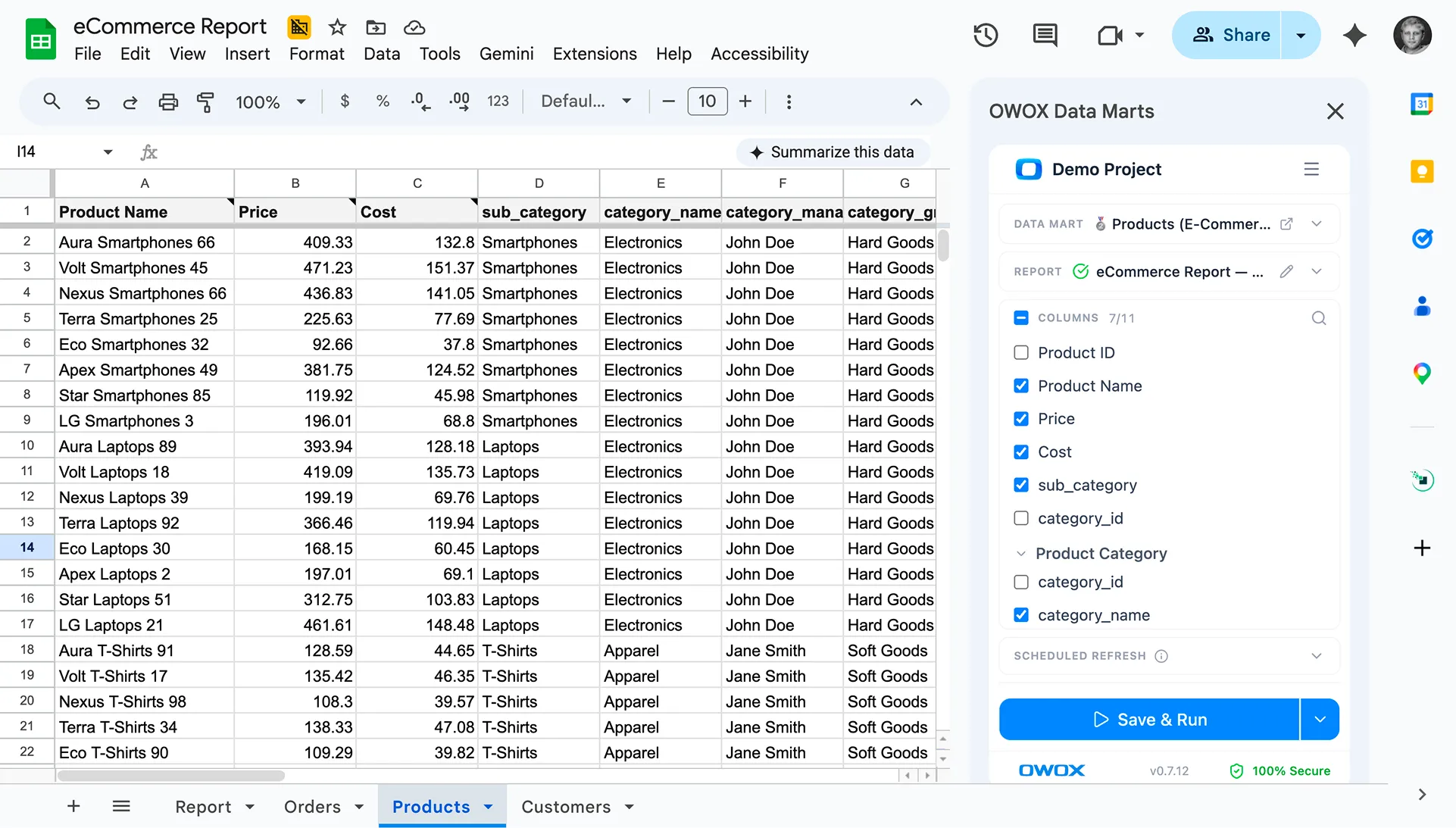
FORMAT_DATETIME works well in SQL views that support reporting teams. You can expose both the raw DATETIME and one or more readable string columns so users get flexibility without losing analytical depth.
In more advanced transformation setups, formatting may appear inside procedures or reporting models that finalize dimensions and labels. If your team manages layered SQL logic, it is worth understanding using stored procedures for complex SQL transformations so formatting stays in the right stage of the workflow.
It also helps to preserve clean relationships between tables before formatting fields for consumption. Solid modeling basics like primary and foreign keys in SQL matter much more than pretty labels if you want trustworthy reporting.
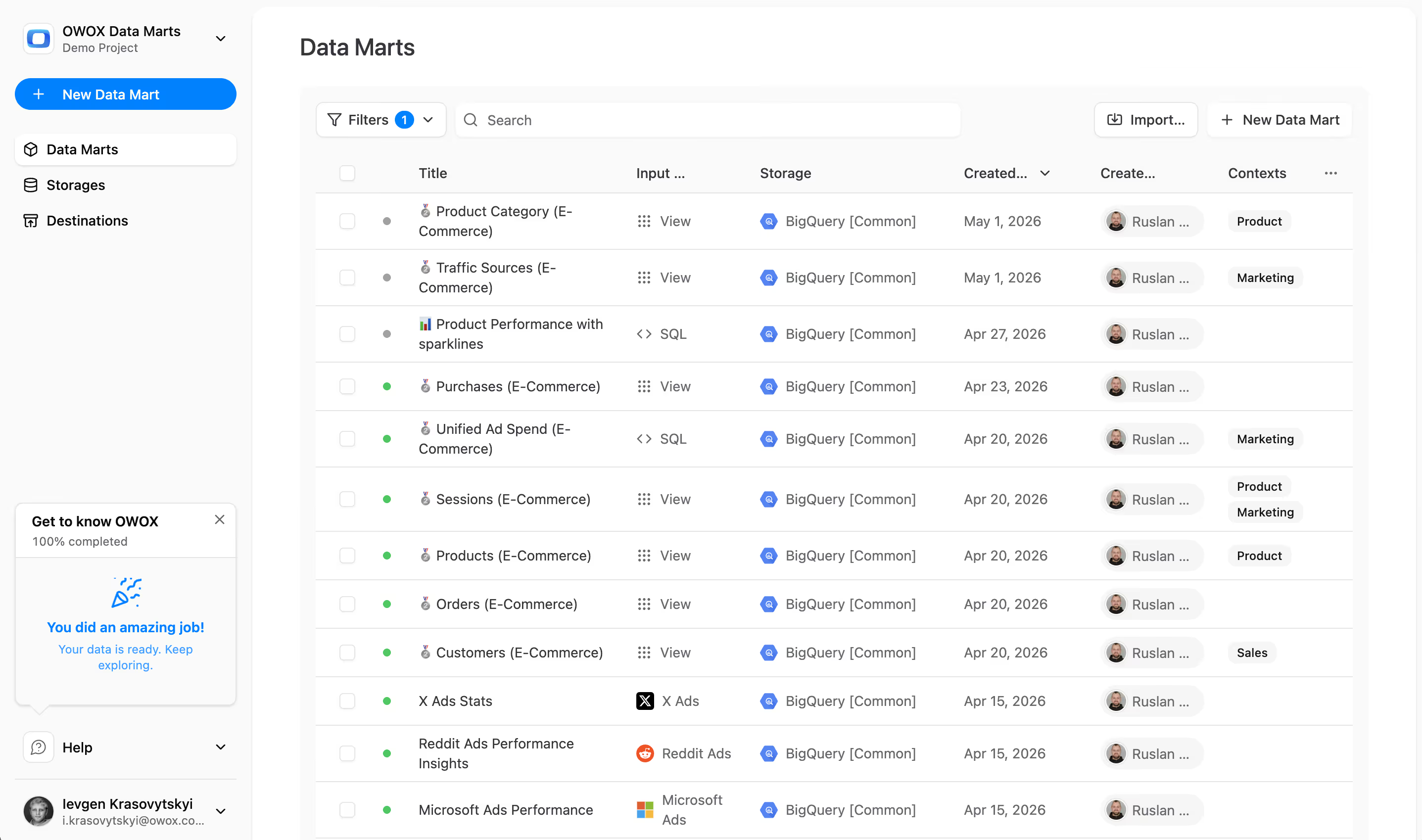
OWOX Data Marts context: readable date fields in final reporting layers
In a data mart workflow, FORMAT_DATETIME is most useful in the final reporting layer where business users interact with curated fields. That is the sweet spot: raw values stay available for analysis, and readable fields make dashboards cleaner and exports easier to scan.
Used this way, the function supports clarity without interfering with transformations, joins, or core metric logic upstream.
Best practices when using FORMAT_DATETIME
FORMAT_DATETIME is simple, but strong habits make a huge difference in maintainability and reporting quality.
Keep raw date/time fields alongside formatted strings
Always keep the original DATETIME field when adding a formatted label. This gives analysts one field for business-friendly display and another for filtering, sorting, and calculations.
That same principle of preserving structure is important across SQL design in general. Topics like key constraints in SQL reinforce why clean, dependable data foundations matter more than presentation-only shortcuts.
Avoid formatting too early in the pipeline
If you format in staging tables or early transformations, you lock a flexible datatype into a plain string too soon. That makes later logic harder, especially when teams need date math, hourly rollups, or custom periods.
Push formatting closer to the final output layer. And if date-time fields contain sensitive operational details, governance techniques like data masking in SQL may be relevant before wide reporting access is granted.
Performance and maintainability tips
Be consistent with format patterns across dashboards and marts. Standard labels reduce confusion and make documentation easier.
Use formatting only where it adds value. Not every query needs a prettified date. In many exploratory or intermediate models, raw DATETIME is the better choice.
Finally, separate business logic from display logic. Aggregate and join with native date-time types first. Format at the end. That approach keeps SQL cleaner, results more reliable, and reporting much easier to scale.
Need cleaner reporting layers with readable date fields and analyst-friendly outputs? Build faster with OWOX Data Marts and turn raw warehouse tables into ready-to-use data marts built for reporting workflows.
%202.png)



"AI by its nature will hallucinate. You need guardrails so you can trust your data."
"We had six or seven different channels and no single source of truth. It was almost impossible"
"We regained time. And time is the one resource that never comes back."