TOF, MOF, BOF: marketing funnel stages and metrics explained
TOF, MOF and BOF are the top, middle and bottom of the marketing funnel. What happens at each stage, which metrics to track, and how to see where the funnel leaks.
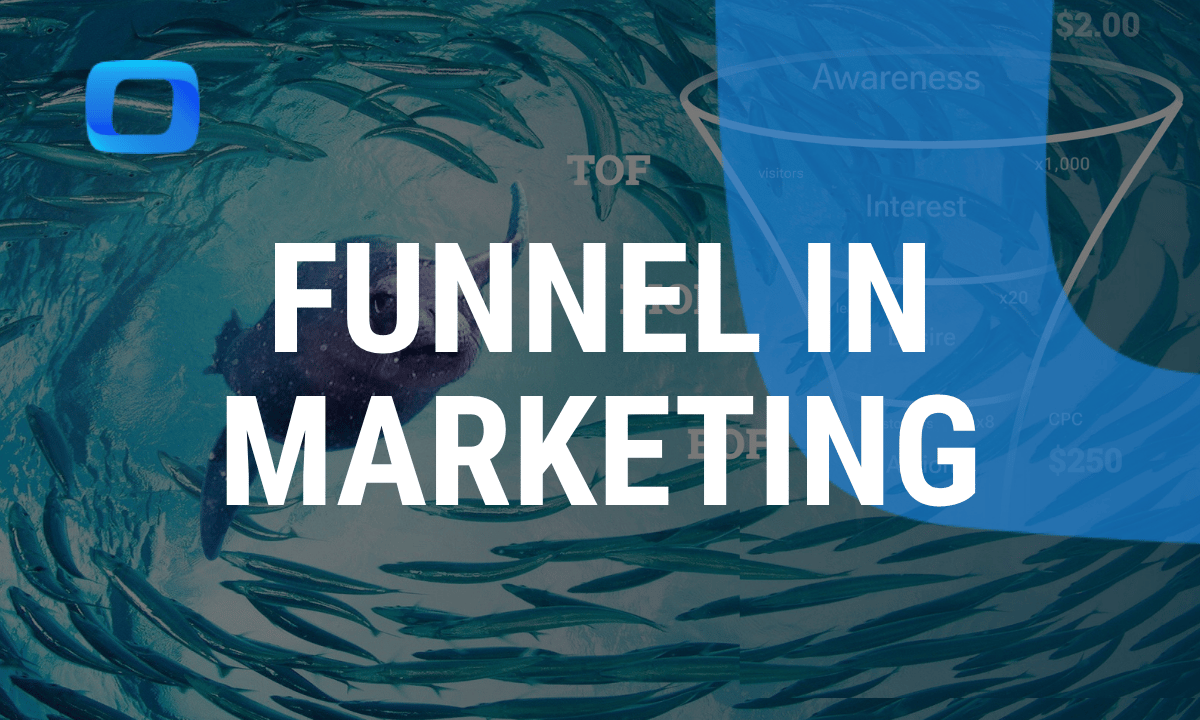
TOF, MOF and BOF stand for top, middle and bottom of the funnel. They are the three stages a customer passes through on the way from first hearing about a brand to buying from it.
| Stage | Stands for | The customer is | Typical metrics |
|---|---|---|---|
| TOF | top of funnel | becoming aware of the brand | reach, impressions, site traffic |
| MOF | middle of funnel | comparing options | leads, engagement, email sign-ups |
| BOF | bottom of funnel | ready to buy | conversion rate, revenue, ROI |
The same letters show up in ad accounts: TOF ads are aimed at people who do not know you yet, and BOF ads at people who visited, added to cart, or asked for a demo.
A marketing funnel is this path drawn as a shape: wide at the top, because many people notice you, and narrow at the bottom, because few of them buy. Its use is practical. It shows at which stage you lose people, which is where the next dollar or hour should go.
From attraction to loyalty: the stages of the marketing funnel
From attraction to loyalty: the stages of the marketing funnel
The marketing funnel is divided into certain stages, each representing a phase in the customer’s journey. These stages typically include attraction, interest, desire, action, and finally, loyalty.
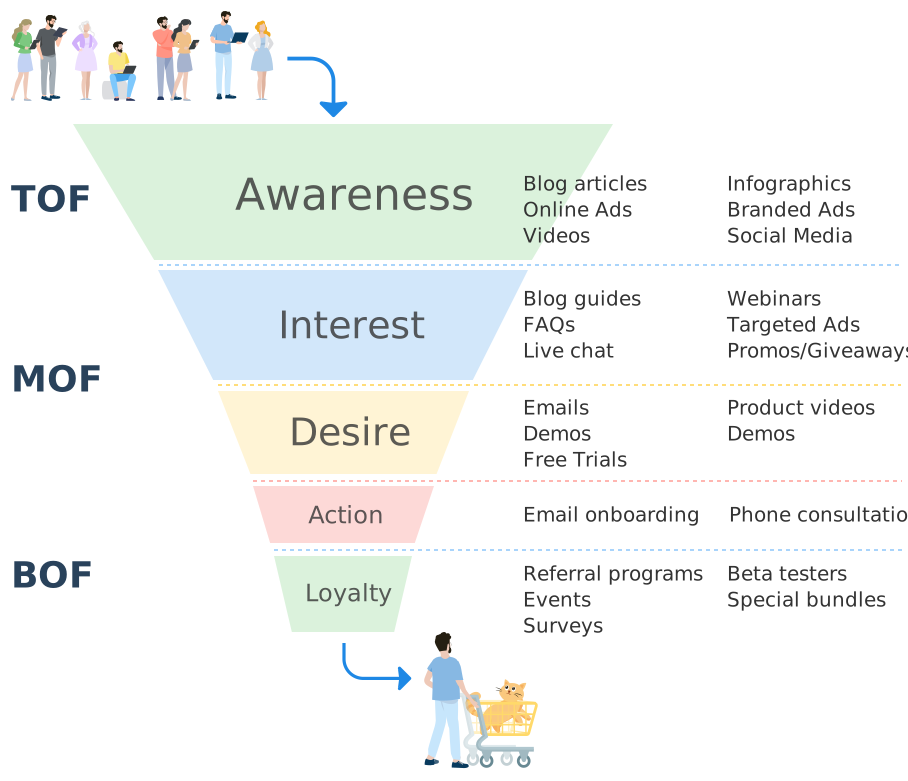
In the attraction stage, the customer learns about your brand and your business.
The interest (sometimes called discovery) stage involves the customer showing interest in your products or services.
During the desire (or consideration) stage, the customer evaluates your offerings, and in the action (or conversion) stage, they purchase (sometimes making another action that could be considered as a goal, eg. booking a call).
The loyalty stage is all about the retention and involves building the relationship, keeping the customer engaged for repeat purchases.
The importance of a Well-Defined marketing funnel
The importance of a Well-Defined marketing funnel
A well-structured sales funnel is essential for efficient lead generation and making sales, enabling businesses to deliver more qualified leads to the sales team, or generating more sales. It also helps in allocating resources more effectively, ensuring that marketing efforts are targeted, impactful and lead to revenue goals.
Driving business success through a holistic approach
A structured approach to marketing funnels can drive business success by ensuring marketing and sales efforts align with each other, and also - with the customer’s journey. It allows businesses to identify key touchpoints that will enable them to move the customer to the next stage.
Aligning marketing efforts with the customer journey
Aligning marketing efforts with the customer journey is really crucial in marketing, so that the content used are relevant to the customer at each funnel stage. This alignment helps deliver more personalized and compelling messages, improving the customer’s experience and increasing the likelihood of a sale or conversion.
Improving lead generation and conversion rates
A well-defined marketing funnel can significantly improve lead generation and conversion rates. Businesses can generate more qualified leads by segmenting marketing actions and delivering content that is useful for audiences at each stage of the buyer’s journey. This, in turn, makes the conversion process easier and more efficient, leading to higher conversion rates, and as a result - higher ROI.
Enhancing customer experience and loyalty
When designed correctly, a marketing funnel is much more than a tool for attracting and converting customers. In fact, it becomes a vital mechanism for enriching the overall experience of customers and fostering their loyalty. Enterprises can forge deeper, more meaningful connections with their customers by providing customized and pertinent content at every funnel phase.
The outcome is not only a spike in customer satisfaction but also a tangible boost in customer loyalty. Crafted with care, this business approach can serve as a powerful relationship bridge between a company and its customers.
OWOX Data Marts
See your first report built in real time. 15 minutes.
- Connect your data warehouse
- Pick your metrics
- Get a live Google Sheets report
In the time it takes to write a ticket. Then imagine never writing that ticket again.
Book a DemoWe'll use your actual use case
Key metrics and objectives at each stage
Key metrics and objectives at each stage
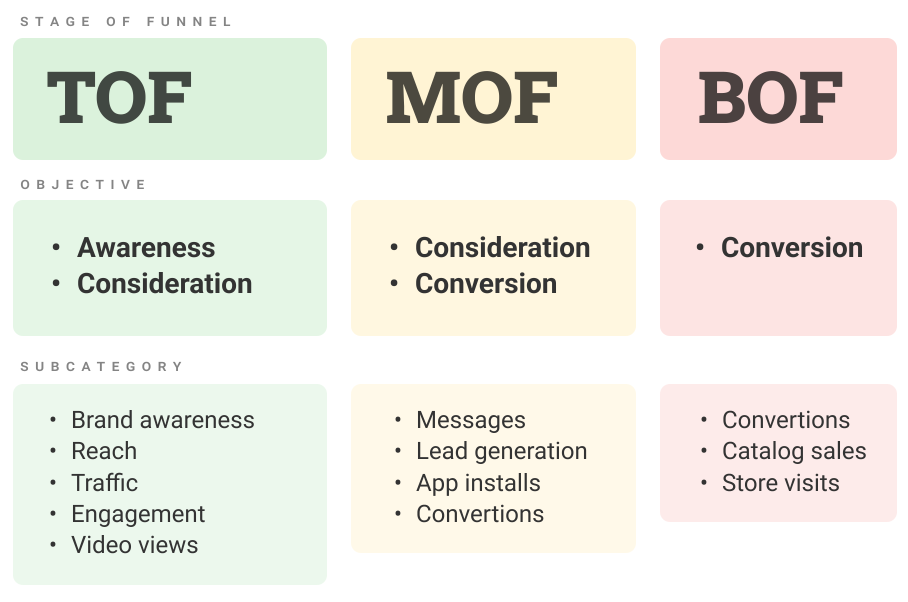
At each stage of the marketing funnel, there are metrics and KPIs (Key performance indicators) to measure the effectiveness of marketing efforts that businesses should focus on and make necessary adjustments to improve performance.
Top-of-Funnel (TOF) metrics and objectives
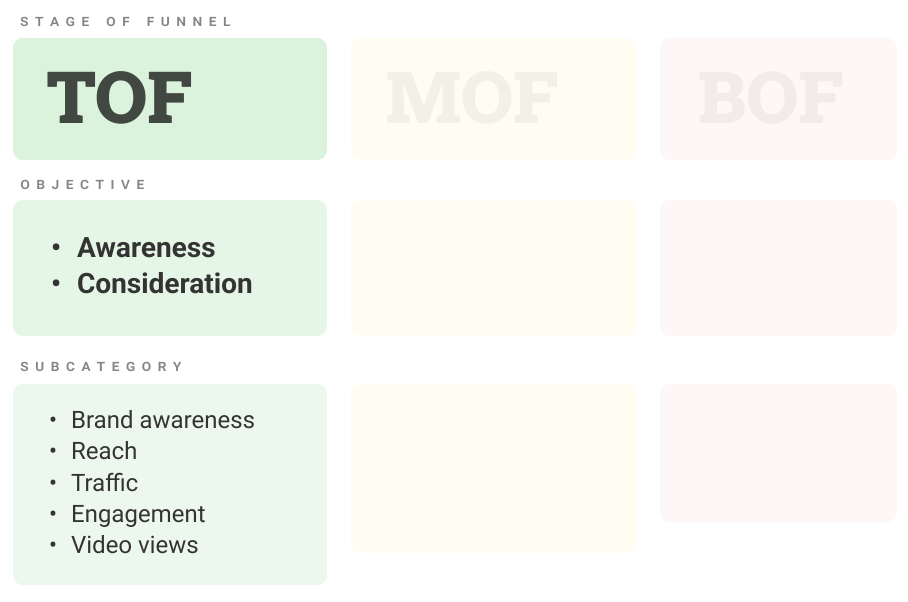
The top-of-the-funnel (TOF) is the first stage in the customer’s journey. Here, the primary goal is to generate awareness and attract potential buyers. The key metrics at this stage include reach, brand awareness, website traffic, engagement, and number of leads.
Reach and brand awareness
Reach refers to the total number of people who have seen your brand or message. The goal is to optimize the extent of your brand’s exposure to reach a wide range of potential customers.
Conversely, brand awareness is all about the level of consumer familiarity with your brand and your business. A strong brand awareness indicates that your brand is well-known and recognized by consumers, fostering greater trust and increasing the probability of conversion. Marketers typically use SEO, content marketing, social media marketing, and paid advertising to increase reach and brand awareness.
Website traffic and engagement
Website traffic is represented by the number of unique users who access your website. Larger volume of website traffic shows that your brand effectively captivates potential buyers. Engagement shows user interaction with your website. You can see the engagement increased by a higher session duration, lower bounce rate, lower exit %. To boost your website traffic and engagement, concentrate on generating top-notch content that brings significant value to your audience, optimize your website for search engines, and promote it through diverse advertising channels.
Lead generation
Lead generation is the process of attracting and converting strangers and prospects into leads or potential buyers. The objective is to generate as many leads that are ready to buy as possible. This can be achieved through multiple strategies, such as offering valuable free content in exchange for their contact information (e.g., email address), providing free products or software trials, or using lead generation forms on social networks.
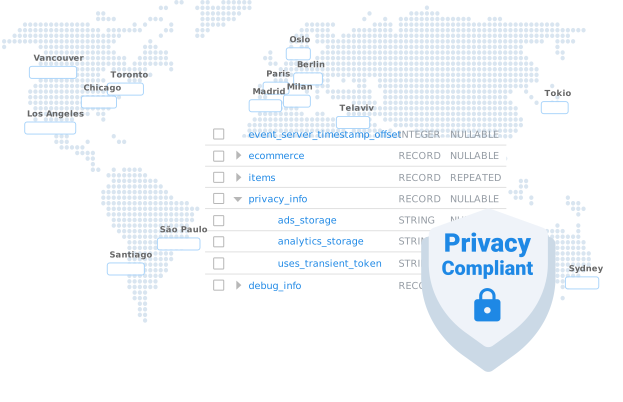
Just don’t forget about privacy policy and GDPR.
Middle-of-Funnel (MOF) metrics and objectives
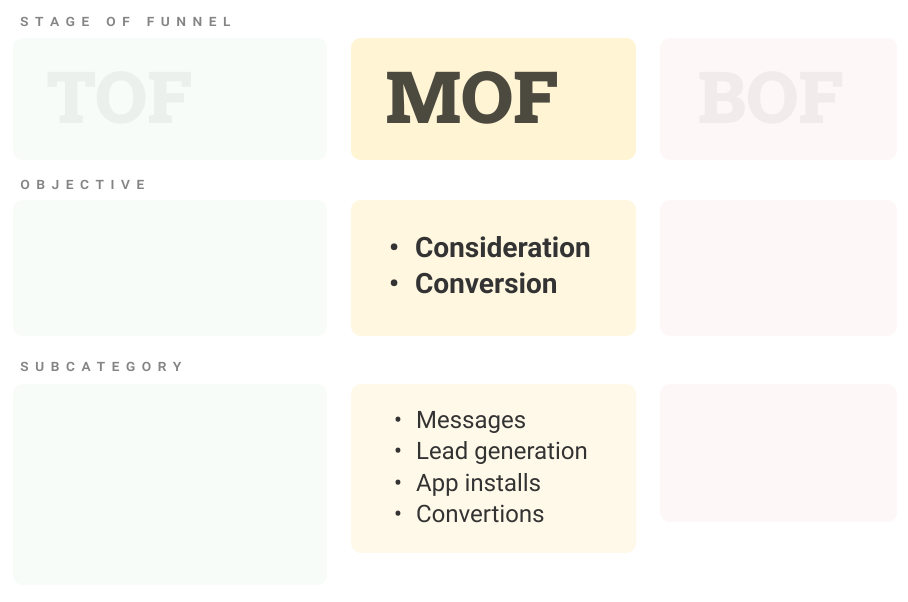
The middle of the funnel (MOF) is where leads are nurtured, and relationships are being built in order to move the prospect closer to the sale. The key metrics at this stage include lead nurturing, engagement, relationship building, and lead qualification and segmentation.
Lead nurturing and engagement
Lead nurturing involves building relationships with leads by providing them with valuable content that is relevant to their desires, pains, challenges or goals. High engagement at this stage indicates that leads find your content helpful and are more likely to move further down the funnel. Effective lead nurturing can be achieved through email marketing, content marketing, phone calls, social network and personalized communication.
Qualification and segmentation
Lead qualification involves identifying the most promising leads based on their likelihood to convert. Segmentation, on the other hand, involves dividing leads into meaningful groups based on their specific characteristics or behaviors. This allows businesses to deliver more personalized and effective marketing messages, increasing the likelihood of conversion.
Bottom-of-Funnel (BOF) metrics and objectives
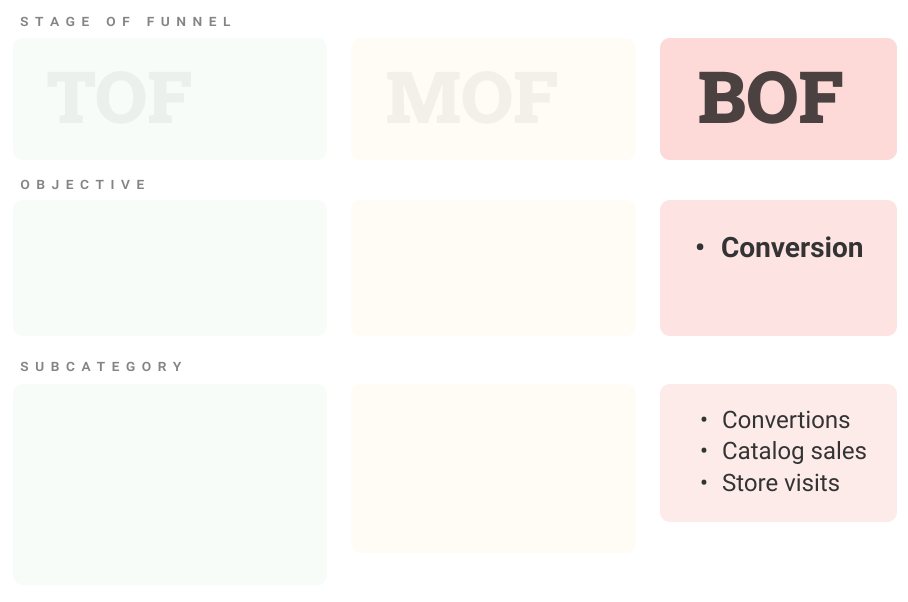
The bottom of the funnel (BOF) is where leads are converted into customers. The key metrics at this stage include conversion rates, sales revenue, return on investment (ROI) or return on the ads spent (ROAS).
Conversion rates
Conversion rate refers to the percentage of leads that convert into customers. High conversion rates indicate that your marketing efforts are effective and that leads are finding value in your offerings. To increase conversion rates, focus on providing excellent customer service, offering competitive pricing, and ensuring that your product or service meets your customers’ needs.
Sales revenue
Sales revenue is the total income generated from sales. Increasing sales revenue is a crucial objective for any business and indicates the success of your marketing efforts. To increase sales revenue, you should focus on rising conversion rates, average order value and reducing churn rate.
Return on investment (ROI)
ROI measures the profitability of your marketing efforts. It is calculated by dividing the net profit by the total cost of the marketing activities. A high ROI indicates that your marketing efforts are cost-effective and generate a significant return. To increase ROI, optimize your marketing strategies, reduce costs, and increase sales revenue.
Retention stage metrics and objectives
Retention metrics focus on customer loyalty, satisfaction, repeat purchases, and customer lifetime value (LTV). Objectives include increasing customer engagement, reducing churn, and maximizing customer profitability.
Customer satisfaction and loyalty
Customer satisfaction measures how products or services meet or surpass customer expectations. It’s a key indicator of customer loyalty and repeat business. High satisfaction leads to customer loyalty, which results in repeat purchases and referrals. Companies can enhance satisfaction and loyalty through excellent customer service, personalized experiences, and loyalty programs.
Repeat purchase rate
Repeat Purchase Rate is a crucial metric that indicates the percentage of customers who have shopped more than once. It’s a direct indicator of customer loyalty and satisfaction. Businesses can improve this rate by offering quality products, excellent customer service, and implementing effective customer retention strategies like loyalty programs and personalized marketing.
Customer lifetime value (LTV)
LTV is the total revenue a business can reasonably expect from a single customer account. It considers a customer’s revenue value and compares that number to the company’s predicted customer lifespan. Businesses can increase LTV by enhancing customer experience, offering additional services or products, and implementing effective retention strategies.
Funnel marketing techniques for maximum conversions
Funnel marketing techniques for maximum conversions
Funnel marketing techniques involve strategies at each stage of the customer journey: awareness (TOF), consideration (MOF), and decision (BOF). These strategies aim to guide prospects toward conversion.
Top-of-Funnel (TOF) strategies for effective awareness
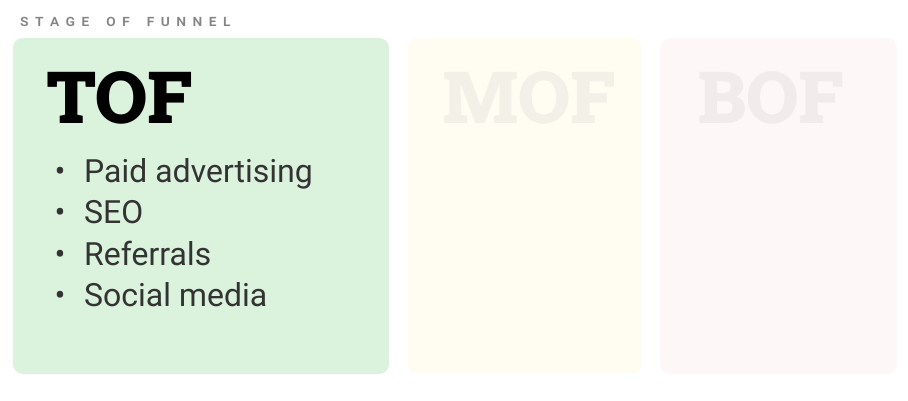
TOF strategies aim to attract potential customers. This involves optimizing SEO and content marketing to increase visibility and reach. Techniques include creating high-quality, relevant content, using targeted keywords, and leveraging social media platforms. The goal is to create awareness and attract as many potential customers as possible.
Middle-of-Funnel (MOF) strategies to nurture leads
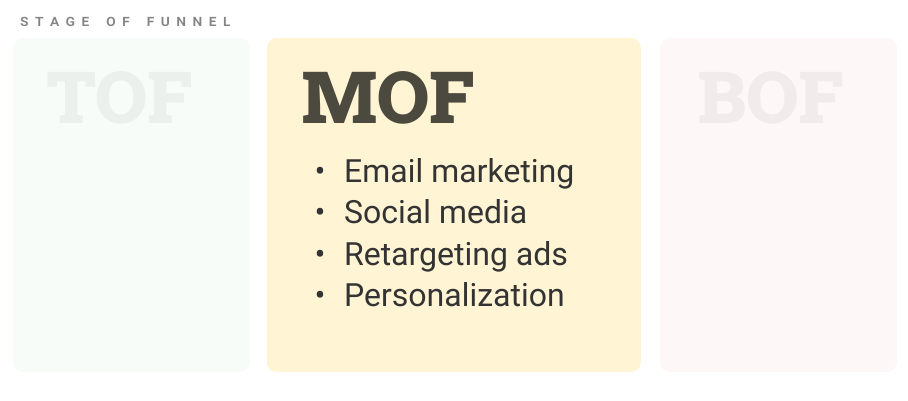
MOF strategies focus on nurturing leads and building relationships. This includes leveraging social media and paid advertising to engage and educate prospects about the brand and its offerings. Techniques involve email marketing, retargeting ads, and personalized content. The objective is to move prospects further down the funnel toward conversion.
Bottom-of-Funnel (BOF) strategies for conversion
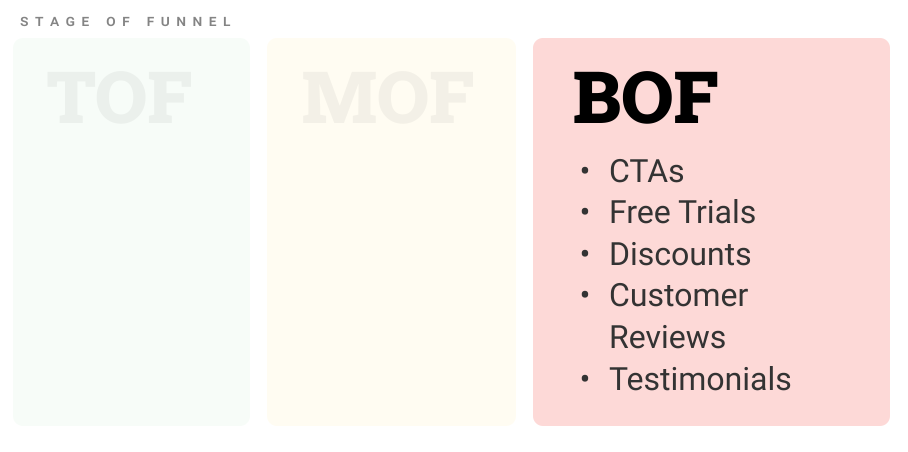
BOF strategies aim to convert leads into customers. This involves Conversion Rate Optimization (CRO) techniques such as creating compelling CTAs, offering free trials or discounts, and showcasing testimonials or case studies. The goal is to convince prospects that your product or service is the best choice, leading to a purchase decision.
Retention strategies to drive repeat business
Retention strategies to drive repeat business
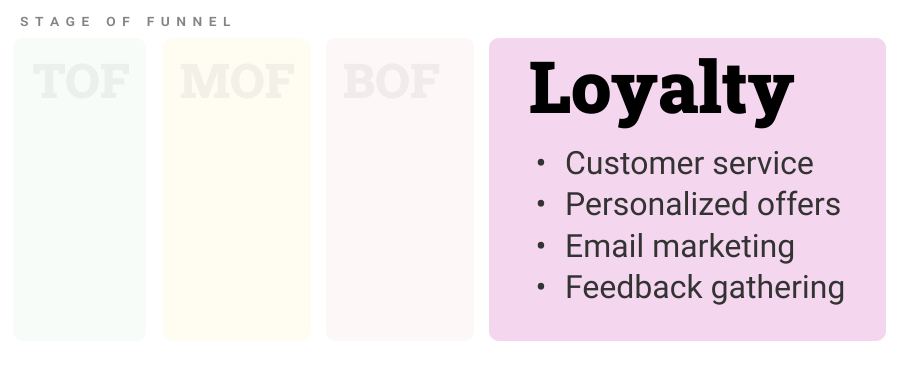
Retention strategies aim to keep customers engaged and encourage repeat business. This involves providing excellent customer service, creating loyalty programs, and offering personalized experiences. Regular communication through email marketing, social media engagement, and customized offers can help maintain a strong customer relationship. Additionally, asking for feedback and acting on it demonstrates that you value their opinion, which can enhance customer loyalty. It’s also crucial to monitor customer satisfaction and loyalty metrics to identify areas for improvement. Remember, retaining existing customers is often more cost-effective than acquiring new ones.
Digital marketing funnel: enhancing your online presence
Digital marketing funnel: enhancing your online presence
The digital marketing funnel is a strategic approach to online marketing. It involves optimizing SEO and content marketing for TOF, leveraging social media and paid advertising for MOF, and Conversion Rate Optimization (CRO) for BOF.
Building a user-friendly website and landing pages
A user-friendly website and effective landing pages are crucial for digital marketing success. The websites should possess easy-to-use navigation, captivating aesthetics, and comprehensive details regarding your products or services. The design of landing pages should be tailored towards achieving a specific objective, such as capturing potential customers or promoting a particular product or service.
Optimizing for mobile devices and responsiveness
With the increasing use of mobile devices, it’s essential to ensure your website is mobile-friendly. It should look good and function well on all devices, including smartphones and tablets. A responsive design automatically adjusts the layout based on the device’s screen size, providing a seamless user experience.
Implementing effective call-to-action (CTA) buttons
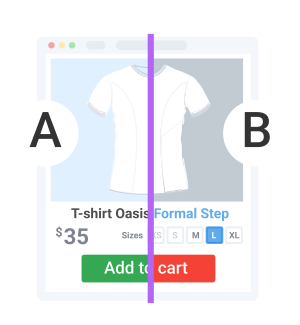
CTAs play a vital role in directing users towards desired actions, whether it’s subscribing to a newsletter or completing a purchase. Well-crafted CTAs are characterized by their clarity, brevity, and persuasive nature. Effective CTAs are clear, concise, and compelling. They should stand out visually on the page and be placed strategically to catch the user’s attention. A/B testing can help determine the most effective CTAs.
Leveraging social proof and testimonials
The inclusion of customer testimonials and reviews, known as social proof, can significantly bolster your credibility and reliability. These testimonials serve as tangible proof of the worthiness of your offerings, whether products or services. Showcasing testimonials on your website and social media channels can instill confidence in potential customers and sway their decision to purchase.
Utilizing email marketing and automation
Email marketing is an effective strategy to foster potential customers and maintain a loyal customer base. It enables customized communication and has the potential to yield substantial returns on investment. Utilizing automation tools aids in streamlining email campaigns by sending tailored messages according to user actions or predetermined timelines. This approach ensures that your brand remains memorable and encourages repeat patronage.
Measuring the funnel across channels
Measuring the funnel across channels
Each stage of the funnel is measured in a different place. TOF numbers sit in the ad platforms, MOF numbers in web analytics and the email tool, BOF numbers in the store or the CRM. A funnel report has to bring them together, or it only shows the stage one tool can see.
That makes “where are we losing people?” harder than it sounds. The answer needs ad cost, sessions, leads and orders joined by campaign and date, and someone has to decide how: which click gets the order, and whether returned orders count.
In practice an analyst writes that join once, in SQL, in your warehouse. With OWOX Data Marts, the result is published as a Data Mart, and marketers read the same funnel numbers in Google Sheets or Looker Studio without rebuilding them per channel. OWOX does not model the funnel for you; it the ad cost data and publishes the query your analyst wrote.
The return side of the funnel, and why its definition matters, is covered in what ROAS is and how to calculate marketing ROI.
Funnel optimization best practices
Funnel optimization best practices
Funnel optimization involves:
- Regular data analysis
- A/B testing
- Simplify the customer journey
- Align sales and marketing
- Continuously improve and optimizing the funnel.
Conduct regular data analysis and A/B testing
Regular data analysis allows businesses to monitor their funnel’s performance and identify areas for improvement. A/B testing entails experimenting with many versions of a webpage or marketing campaign to determine which version shows the best performance.
Simplify the customer journey and remove barriers
Simplifying the customer journey involves making it as easy as possible for visitors to move through the funnel and finally make a conversion even (typically a purchase, but that might be booking a call or starting a trial). This includes removing any barriers or obstacles, overcoming most of the objectives that might prevent visitors from converting. OWOX Data Marts provides insights into website user behavior, helping businesses identify and remove fix the issues in the user flow.
Align sales and marketing
Aligning sales and marketing involves ensuring that both teams work towards the same goals and use the same data, that everybody trust to make decisions. That’s why it’s crucial to have a single source of truth within your data.
Continuously improve and optimize
Funnel optimization is the ongoing process of analyzing the data, pinpointing the stage that loses the most people, and changing one thing there at a time.
Turn your data into decisions.
Governed data marts give you the clean foundation ML needs to actually work.
- No AI hallucinations
- Analyst-governed definitions
- Every number traces to SQL
Frequently Asked Questions
What do TOF, MOF and BOF mean in marketing?
They are the three stages of the marketing funnel. TOF is top of funnel, where people first become aware of a brand. MOF is middle of funnel, where they compare options. BOF is bottom of funnel, where they are ready to buy. Each stage has its own content, ads and metrics.
What are the top 3 use cases of the funnel?
The top three uses of a funnel are to visualize the customer journey, identify areas for improvement, and optimize marketing efforts to increase conversion rates and ROI.
What are funnels in digital marketing?
In digital marketing, funnels represent the journey customers take from not being aware of a product or service to making a purchase. They are called "funnels" because the number of customers decreases at each stage of the journey.