

What Is Machine Learning and AI?
Machine learning and AI empower computers to learn from data, recognize patterns, and perform intelligent tasks without explicit human programming.
Machine learning, a branch of AI, enables algorithms to analyze data, identify patterns, and predict outcomes without direct programming. AI, on the other hand, simulates human intelligence, enabling machines to learn, reason, and make decisions.
These technologies power applications like image recognition, natural language processing, recommendation systems, and autonomous systems, shaping modern innovations and automation.
What Is the Connection Between AI and Machine Learning?
AI and ML are closely connected but not identical. AI is the broader concept that enables machines to sense, reason, and adapt like humans. ML, a subset of AI, allows machines to learn from data autonomously. AI includes various subfields like deep learning, robotics, and natural language processing, with ML being one of its core components.
Key Differences Between Artificial Intelligence and Machine Learning
Benefits of Machine Learning and Artificial Intelligence
Machine learning and AI boost efficiency, accuracy, personalization, scalability, innovation, and cost savings.
- Efficiency: Automates complex processes, saving time and resources while allowing businesses to focus on strategic tasks.
- Accuracy: Enhances decision-making by analyzing data and making precise predictions.
- Personalization: Customizes products and services based on user preferences and behavior.
- Scalability: Handles large datasets, enabling businesses to expand operations efficiently.
- Innovation: Identifies new opportunities and develops solutions to complex problems.
- Cost Savings: Reduces manual effort, optimizes operations, and lowers business costs.
Use Cases of Machine Learning and AI
AI and ML are transforming industries by automating processes, enhancing decision-making, and optimizing resource utilization. Organizations integrate these technologies to improve efficiency, drive productivity, and enhance customer experiences.
Common Applications:
- Healthcare: Patient data analysis, outcome forecasting, drug discovery, diagnostics, and patient monitoring.
- Manufacturing: Predictive maintenance, IoT analytics, and operational efficiency.
- Ecommerce: Demand forecasting, supply chain optimization, and personalized recommendations.
- Finance: Fraud detection, risk assessment, and automated trading.
- Telecom: Network optimization, predictive maintenance, and business process automation.
AI and ML enable businesses to innovate, improve efficiency, and gain competitive advantages.
Machine learning and AI extend beyond automation, requiring attention to data quality, biases, and ethical considerations. Building reliable AI models involves selecting the right algorithms, ensuring interpretability, and addressing security risks. While machine learning models improve over time, challenges like overfitting, data drift, and transparency must be carefully managed to maintain accuracy and fairness.
Enhance Your Data Handling with OWOX BI SQL Copilot for BigQuery
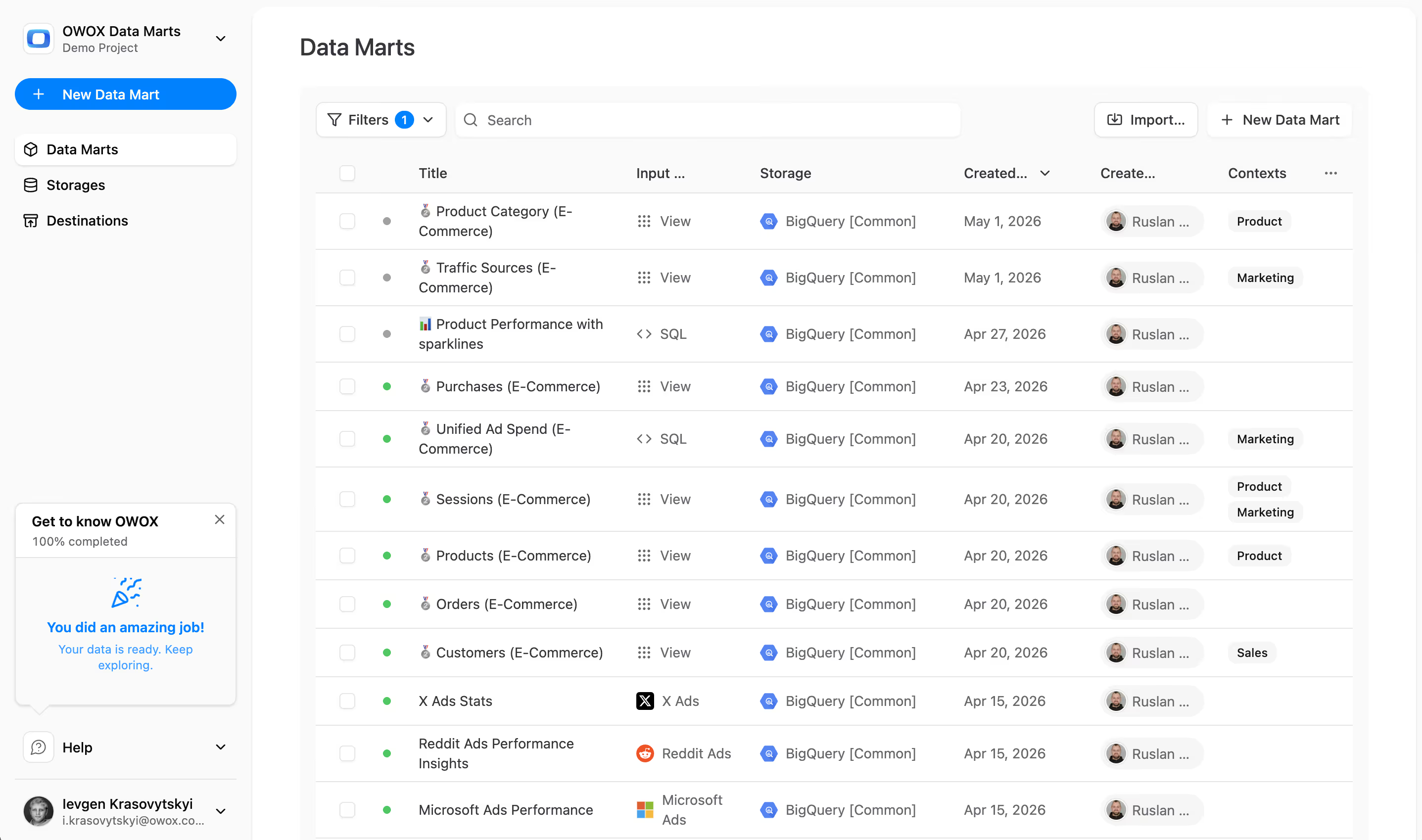
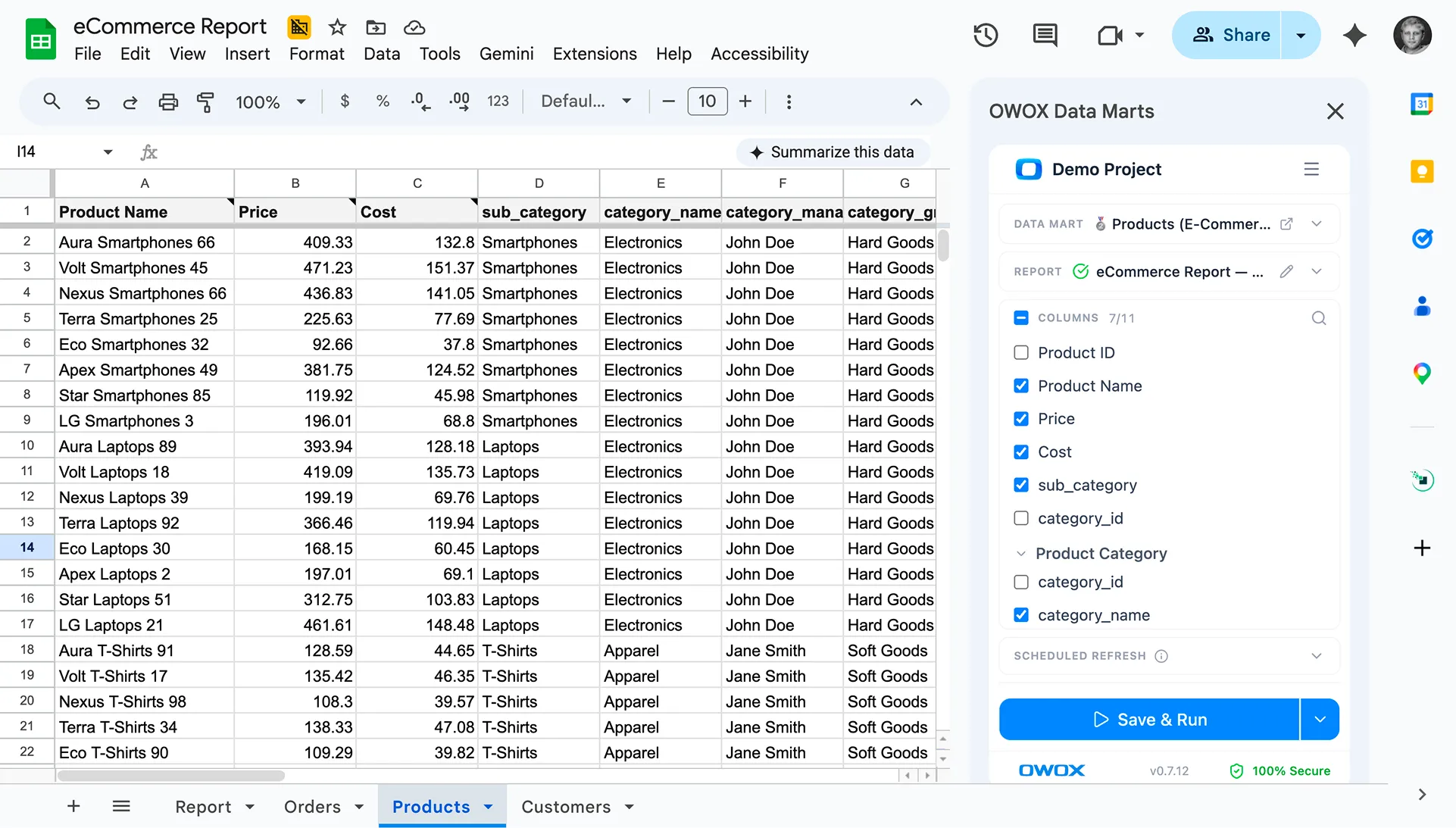
OWOX BI SQL Copilot simplifies BigQuery data management by automating query-building, optimizing performance, and improving efficiency. It enhances data accuracy, scalability, and analysis, allowing businesses to focus on insights rather than manual SQL writing. This tool ensures a seamless, intuitive experience for data-driven decision-making.




"AI by its nature will hallucinate. You need guardrails so you can trust your data."
"We had six or seven different channels and no single source of truth. It was almost impossible"
"We regained time. And time is the one resource that never comes back."