
Cost Per Thousand (CPM)
Cost Per Thousand (CPM) measures the cost of serving 1,000 ad impressions. Here’s everything you need to know: what it is, why it matters, how to calculate it, and how to optimize it!
What is Cost Per Thousand (CPM)?
What is Cost Per Thousand (CPM)?
Cost Per Thousand (CPM) is an advertising metric that represents the cost of delivering 1,000 impressions of your ad. It’s widely used in display, video, and programmatic advertising to assess cost-efficiency for visibility-driven campaigns.
Why Is CPM Important?
CPM helps advertisers understand how much they’re paying for brand exposure. It’s especially important for campaigns focused on reach, awareness, or viewability rather than direct response.
How to Calculate CPM
Divide your total campaign cost by the number of impressions (in thousands) to get your Cost Per Thousand.
OWOX Data Marts
See your first report built in real time. 15 minutes.
- Connect your data warehouse
- Pick your metrics
- Get a live Google Sheets report
In the time it takes to write a ticket. Then imagine never writing that ticket again.
Book a DemoWe'll use your actual use case
The CPM Formula:
CPM = (Total Cost ÷ Total Impressions) × 1,000
Example of CPM in Action
If you spend $500 on a campaign that gets 100,000 impressions, your CPM is ($500 ÷ 100,000) × 1,000 = $5. This means you paid $5 per 1,000 views.
Optimize Your CPM with OWOX Data Marts
Optimize Your CPM with OWOX Data Marts
OWOX Data Marts connects cost and impression data across platforms, helping you track CPM by audience, format, and device. Use these insights to improve efficiency and maximize exposure.
What Is a Good CPM?
A good CPM depends on your industry and platform, but generally ranges between $2–$10. Lower CPMs paired with high visibility mean strong efficiency.
What Is a Bad CPM?
A high CPM with low engagement may signal ineffective targeting or expensive placements that don’t deliver value.
Best Practices for CPM
Use these strategies to keep CPM low while maintaining ad quality.
Target Smartly
Avoid overly broad targeting—refined audience segments can lower CPM while increasing relevance.
Test Creative Formats
Compare static, carousel, and video formats to find which drives impressions at the best cost.
Monitor Placement Performance
Review platform and device-level CPM to remove underperforming placements.
Common Mistakes to Avoid with CPM
Common Mistakes to Avoid with CPM
Don’t optimize for low CPM alone—focus on both visibility and post-impression performance like clicks or conversions.
Learn how teams ship analytics faster
Organizations that scaled analytics without scaling headcount
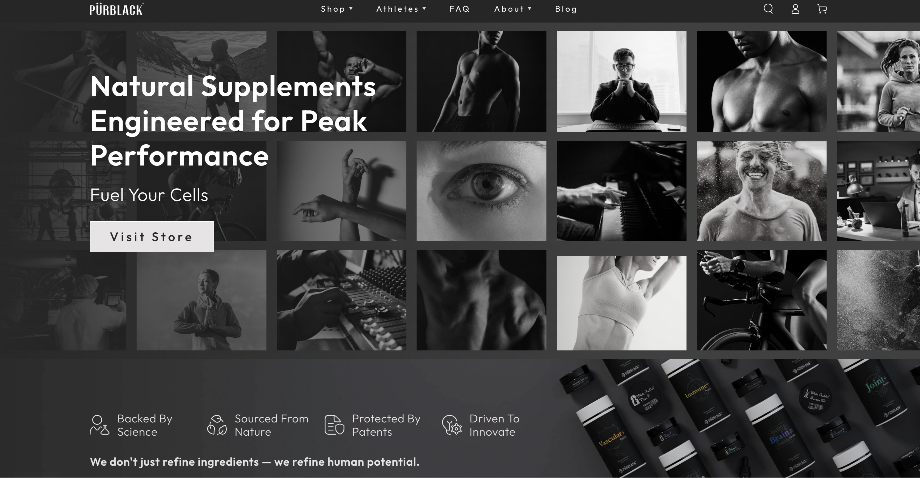 "For 10 years I was blind." The day Pürblack® founder stopped guessingSecondsto get reports across six channelsRead the story
  How OWOX Reports Helped Reformation Make Data-Backed DecisionsMinutesfrom data request to business decisionRead the story
  How OWOX Reports Streamlined Operations for WorkSimpli, Saving Over 10 Hours Weekly10hrs+saved per week on manual reportingRead the story
 Not testimonials. Comment threads.
Real things real customers said — each quote pinned to a specific claim, straight from the quotes database.
 Mark SimmonsCMO, Pürblack®
“We had six or seven different channels and no single source of truth — it was almost impossible, a lot of guesswork.”
 Nodari RizunFounder & CEO, Pürblack®
“Golden data is clean data — the measure of reality, true and not false, that you can trust based on its source. If you have that, you're good.”
Nodari RizunFounder & CEO, Pürblack®“Most businesses look at a Shopify or Google Analytics dashboard and think it's the source of truth. It's not — that data was never cleaned.”
Rediscover your data analytics with OWOX Data Marts.
Connect your sources, define Cost Per Thousand once, and read the same number in Sheets, BI and AI chat.
- No AI hallucinations
- Analyst-governed definitions
- Every number traces to SQL