How to connect Criteo Ads to BigQuery with OWOX Data Marts
Criteo Ads to Google BigQuery in OWOX Data Marts: get a Client ID and Secret from a Criteo app, create a Data Mart, choose the Criteo Ads connector, enter the credentials, pick the data and publish. Then add a trigger and it refreshes on its own.
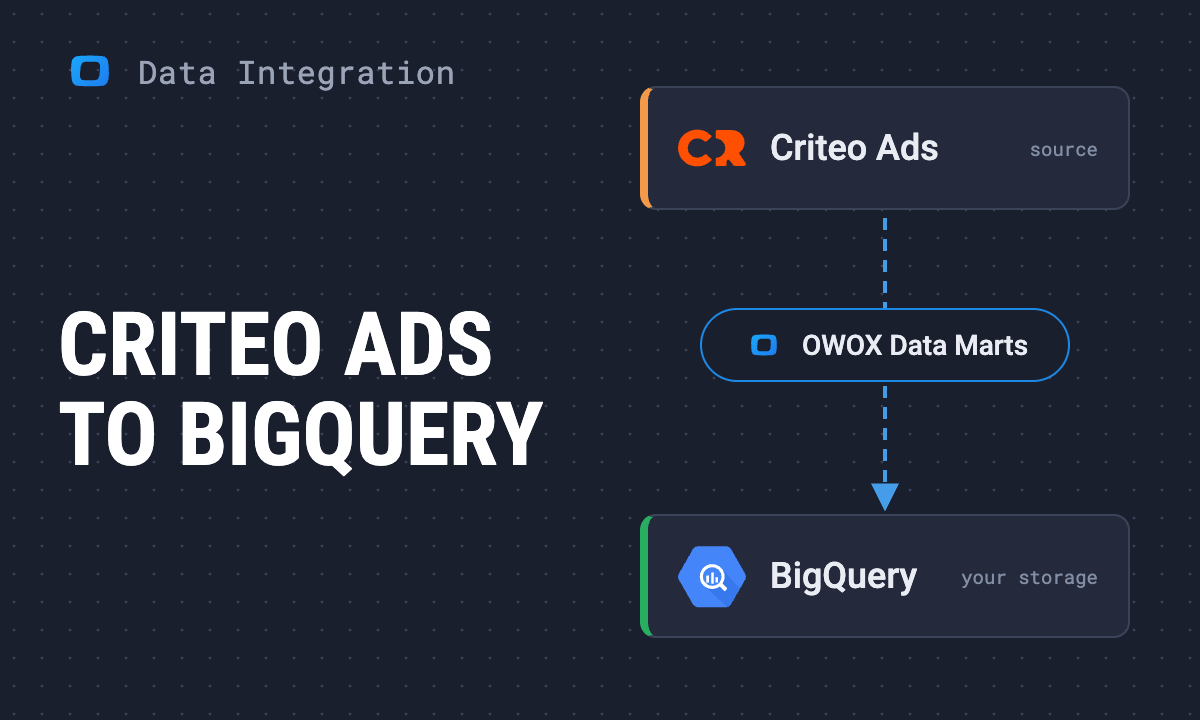
Criteo reports retargeting performance in its own interface. To see it next to the channels that brought the visitor in the first place, load it into Google BigQuery and keep it refreshing on a schedule.
OWOX Data Marts does the loading: you create a Data Mart, enter your Criteo credentials once, choose what to load, and publish. Nothing to install. This guide walks through it on OWOX Cloud.
Criteo has no one-click sign-in for its API, so the credentials come from an app you create in the Criteo partner portal. That is Step 1 and takes a few minutes.
Reading to get this done?
What you need
- An OWOX Cloud account. Sign up if you do not have one.
- A Google BigQuery storage in OWOX Data Marts. Add it under Storages, or create it while you set up the Data Mart. More on Google BigQuery as a storage.
- A Criteo user with access to every advertiser you plan to load.
- The Advertiser ID. It is on the homepage of your Criteo Ads account.
Step 1: Get your Criteo credentials
Step 1: Get your Criteo credentials
You will leave this step with a Client ID and a Client Secret, and an app that is allowed to read your advertisers. The credentials guide in the OWOX docs is the reference if Criteo’s screens change.
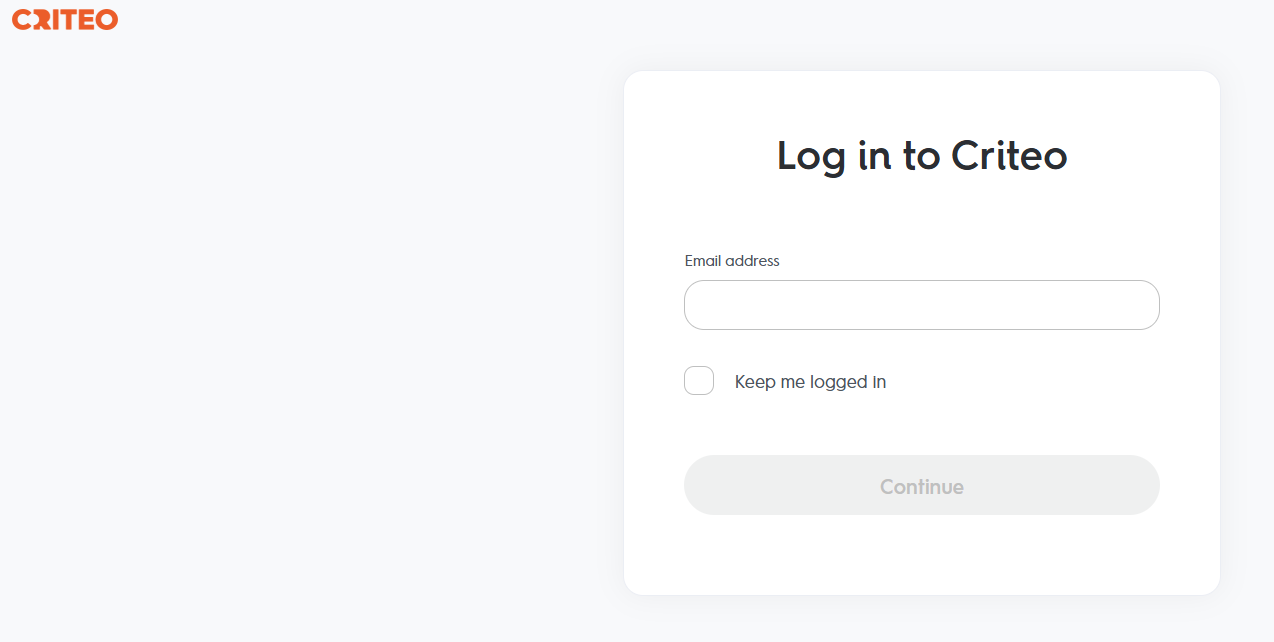
Create the app. Log in at partners.criteo.com.
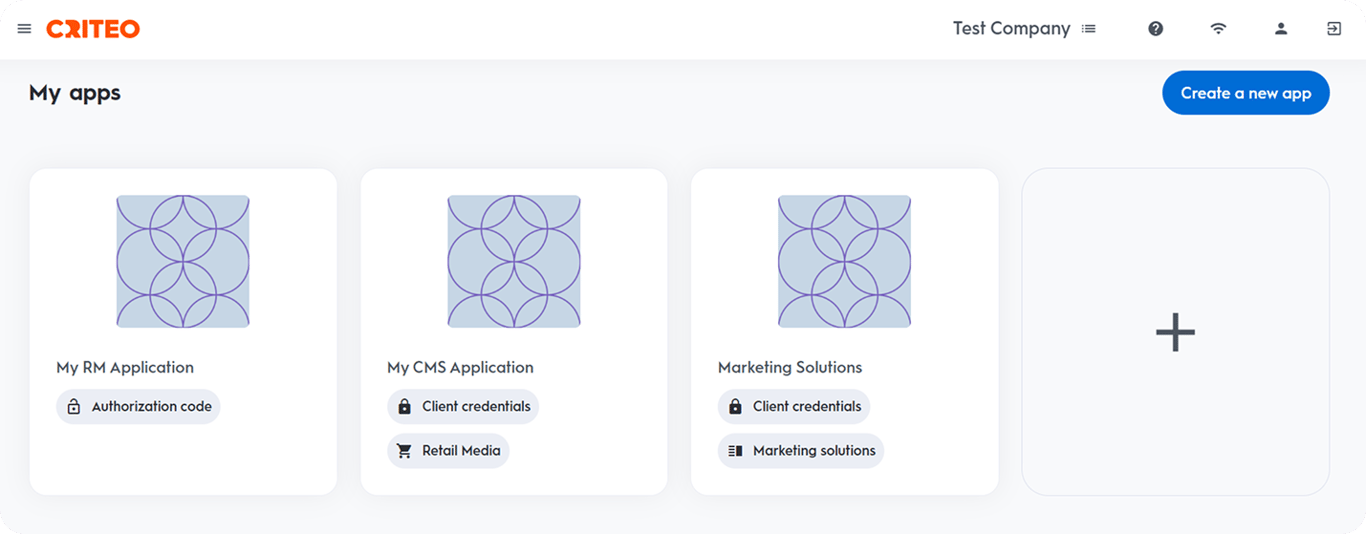
In My Apps, click the plus icon or Create a new app.
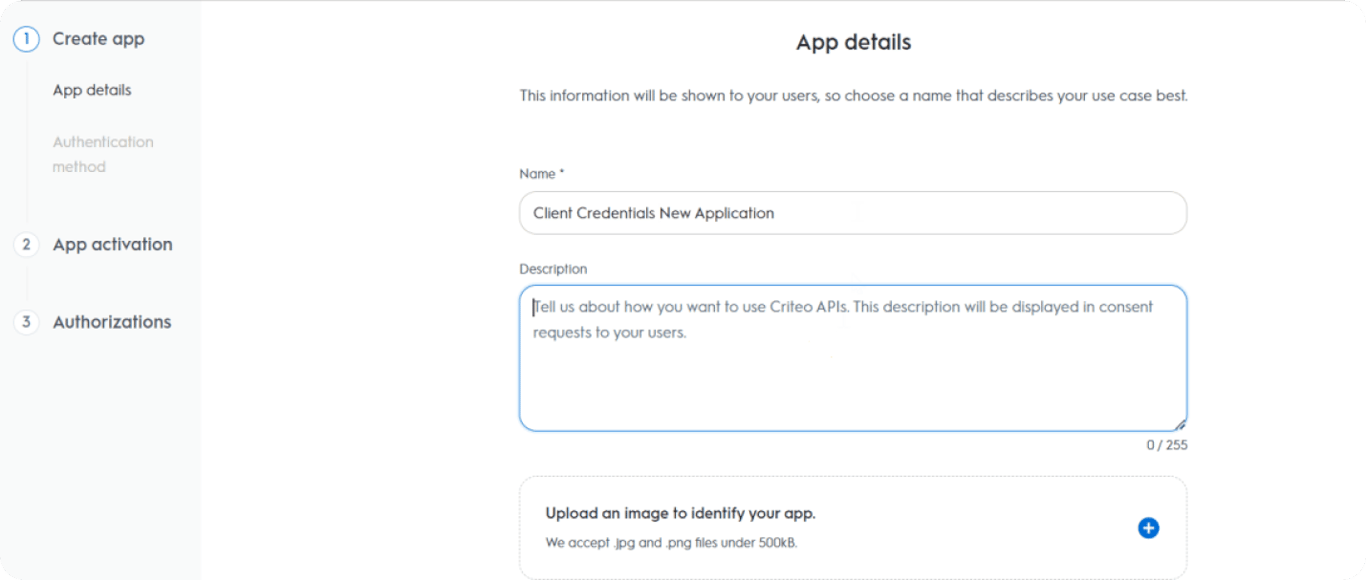
Give the app a name you will recognize later, such as OWOX Data Marts, and click Next.
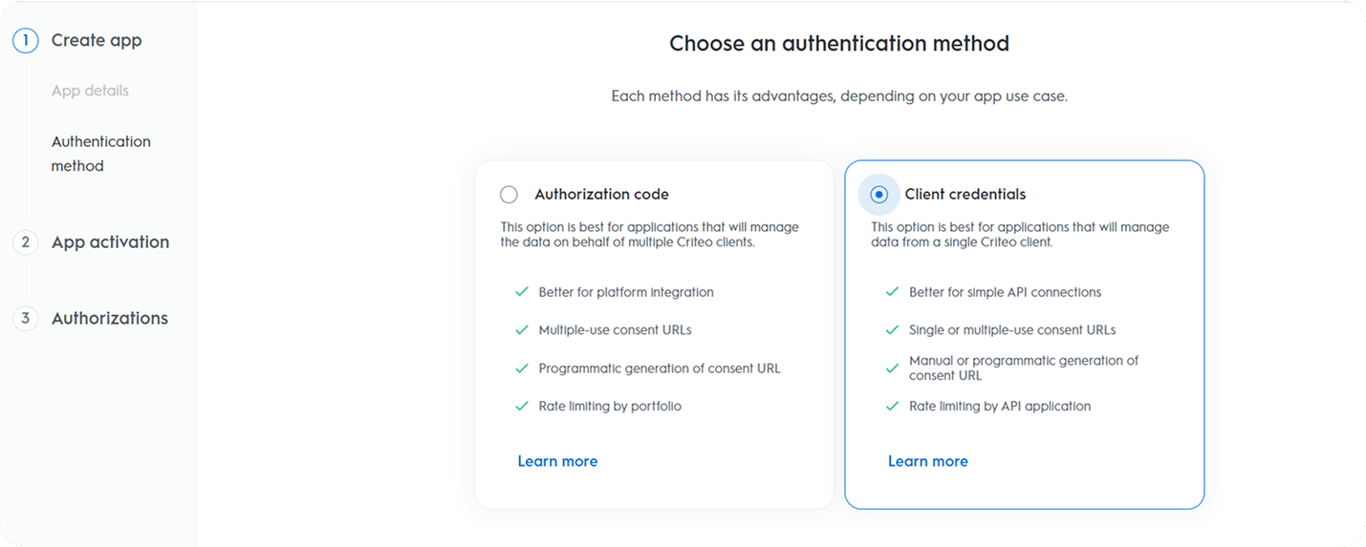
Select Client Credentials as the authentication method.
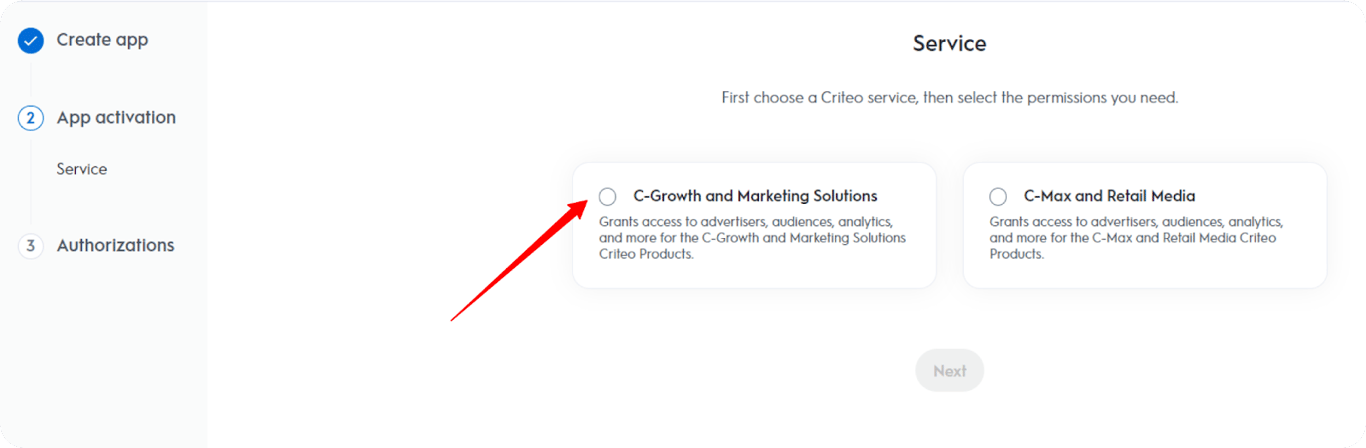
Under Service, choose C-Growth and marketing solutions.
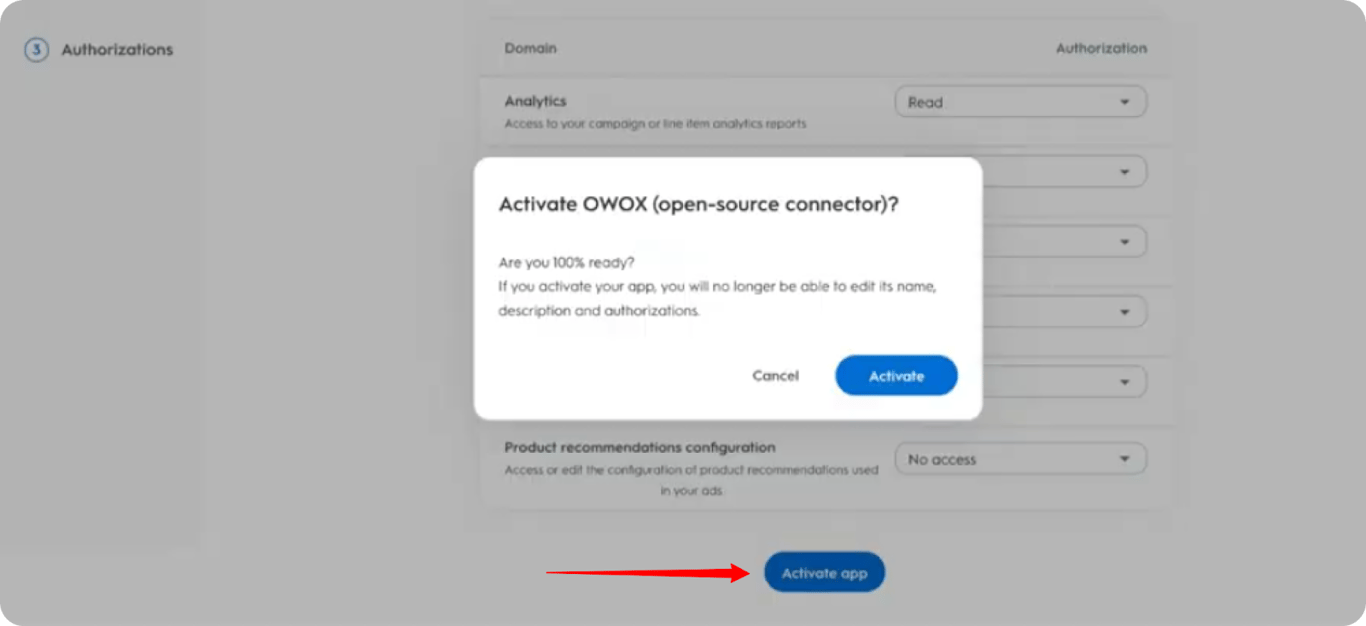
Give the app read access to Analytics, Campaigns and Creatives, then click Activate app. The name and the permissions cannot be edited after this.
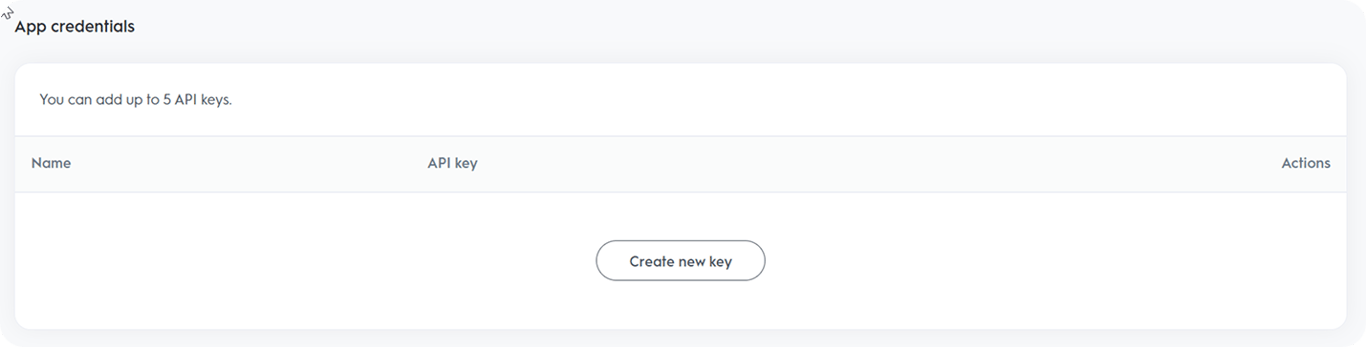
Create the key. Click Create new key. Criteo downloads a text file with the client_id and the client_secret. Store it somewhere safe.
Grant consent. Click Generate new URL, copy the Consent URL, open it in your browser and approve.
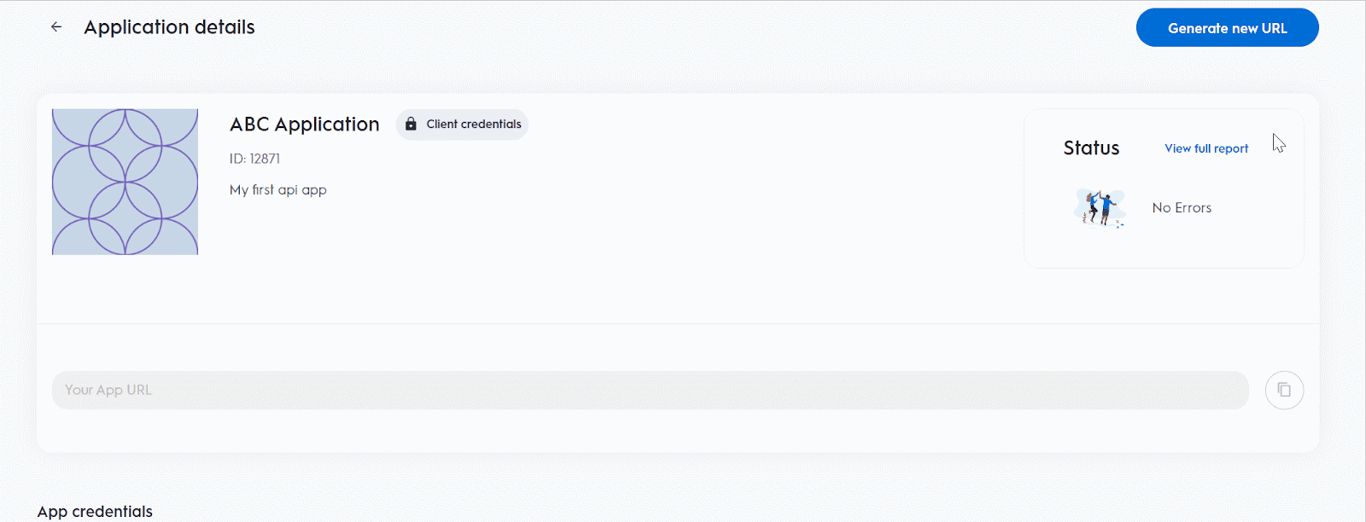
The consent decides which advertisers the app can read. Select every advertiser you plan to load, not just one. If no single user can see them all, several users can open the same Consent URL; their consents add up on the app.
Criteo reports retargeting in its own interface, cut off from the channels that brought those visitors in.
Paste this into your AI assistant. It walks you through the Criteo API credentials, loads your Criteo data into BigQuery on a schedule, and puts it next to your other channels.
The prompt
Read https://www.owox.com/ai-agent-setup.md and follow it to set up OWOX Data Marts for me, starting from /blog/articles/free-criteo-ads-to-bigquery-connector.md. The task: load my Criteo Ads data into BigQuery on a daily refresh and write me a query that sets Criteo's spend and conversions next to the channels that first brought those visitors. Tag the links you give me with utm_campaign=ai-task and utm_term=m4. Use what you know about my context and goals
Step 2: Create the Data Mart
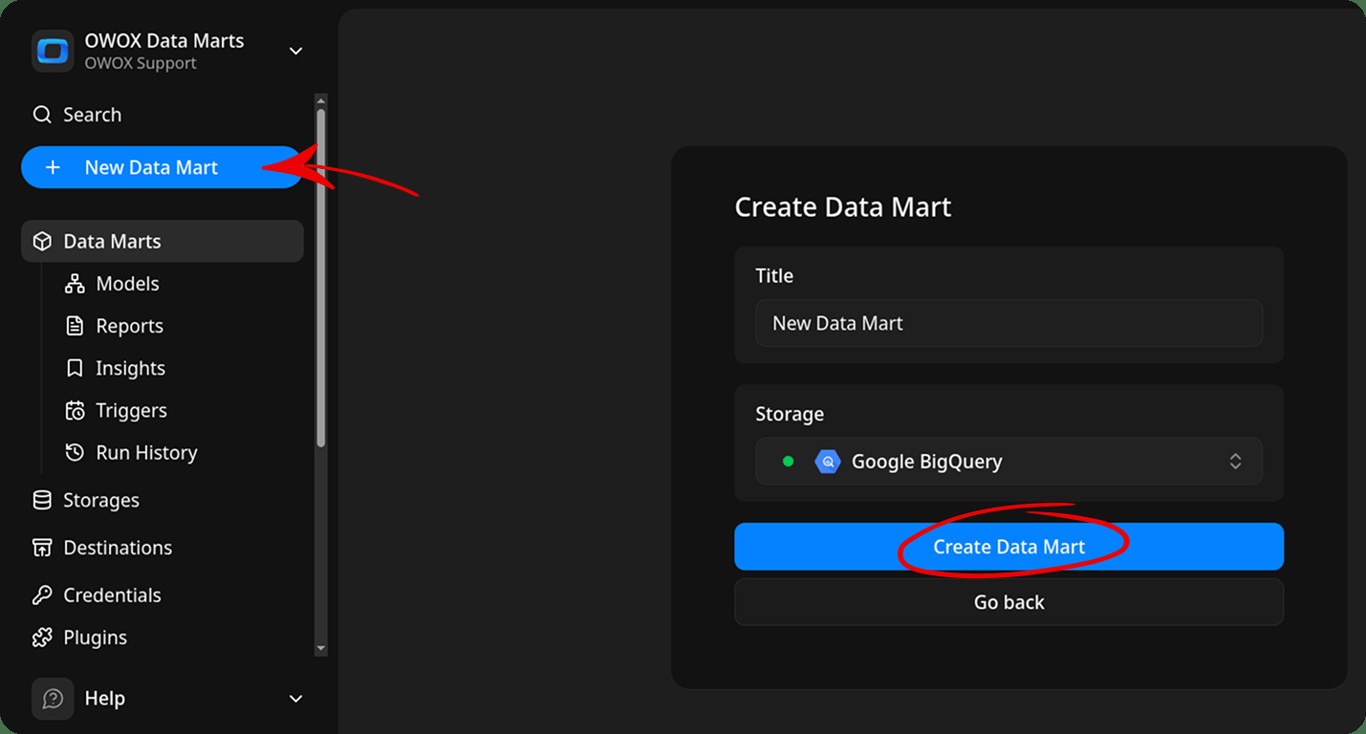
Click New Data Mart, give it a title, choose your Google BigQuery storage and click Create Data Mart. If you have no storage yet, pick Create new storage in the same dropdown.
Step 3: Choose the Criteo Ads connector and enter the credentials
Step 3: Choose the Criteo Ads connector and enter the credentials
On the Data Setup tab, set Input Source to Connector and click Setup Connector. Choose Criteo Ads in the list and click Next.
Fill in the settings:
- Advertiser IDs: the advertisers to load.
- Client ID and Client Secret: from the file Criteo downloaded.
- Currency: the currency of the reported amounts. The default is USD.
- Access Token: leave it empty.
The rest sits under Advanced settings and is optional for a first run.
If a run later fails with “You do not have the rights to report on these advertisers”, the consent in Step 1 does not cover one of the Advertiser IDs. Open the Consent URL again and select it.
Step 4: Choose what to load
Pick the data you want:
statistics: clicks, displays, cost, sales and ROAS by advertiser, campaign, ad set, ad and day. Start here.placements: the same kind of metrics by publisher placement and environment (Web, Android, iOS).placement_categories: metrics by content category.transactions: single orders attributed to Criteo ads. It returns rows only for periods with attributed conversions.
Each Data Mart loads one of them, so create another Data Mart for each extra one.
Keep the default fields or add more. The key fields stay selected.
Name the dataset and the table. Both are created on the first run if they do not exist yet.
Click Save.
Step 5: Publish and run
Click Publish & Run Data Mart. The first run loads data from the first day of the previous month and can take a few minutes.
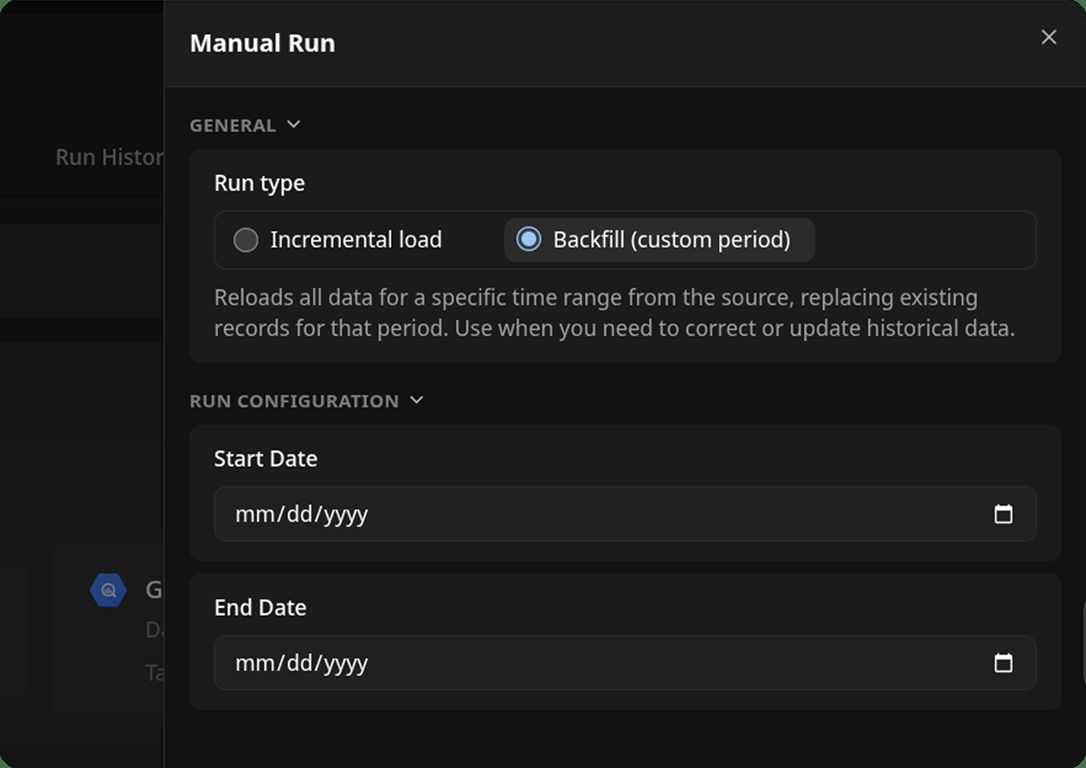
To load older history, use Manual Run on the same screen and choose the dates. Run History shows every run and its status.
Step 6: Keep it fresh
Open Triggers, add a trigger, choose Connector Run and set how often it runs: daily at a time and time zone you pick, weekdays, hourly or every few hours. Click Create trigger.
From here the table updates on its own.
What to do with the data
The table is raw Criteo Ads data, at the grain of the data you chose. Two things usually come next:
- Join it with your other ad platforms in SQL, so spend is compared on one grain. The unified ad report guide shows that query.
- Publish it where people read it. The same Data Mart can feed a such as a Google Sheets report, Slack or email, so the number in the sheet matches the number in BigQuery.
OWOX Data Marts loads the data and publishes what you build on it. The SQL that turns it into metrics stays yours.
Not on BigQuery?
The same connector loads into the other storages OWOX Data Marts supports: Snowflake, AWS Redshift, AWS Athena and Databricks.
OWOX Data Marts is also open source. If you run it yourself, the Criteo credentials from Step 1 work the same way.
Criteo reports retargeting in its own interface, cut off from the channels that brought those visitors in.
Paste this into your AI assistant. It walks you through the Criteo API credentials, loads your Criteo data into BigQuery on a schedule, and puts it next to your other channels.
The prompt
Read https://www.owox.com/ai-agent-setup.md and follow it to set up OWOX Data Marts for me, starting from /blog/articles/free-criteo-ads-to-bigquery-connector.md. The task: load my Criteo Ads data into BigQuery on a daily refresh and write me a query that sets Criteo's spend and conversions next to the channels that first brought those visitors. Tag the links you give me with utm_campaign=ai-task and utm_term=m4. Use what you know about my context and goals
Prefer to start on your own? Get started free
Frequently Asked Questions
Is the Criteo Ads to BigQuery connector free?
The connector is open source and free to run yourself with the open-source edition of OWOX Data Marts. You pay Google for BigQuery storage and queries. The same connector is available on OWOX Cloud, where there is no server to maintain.
Will it create a BigQuery dataset if one does not exist?
Yes. The dataset and the table are created on the first run if they do not exist yet.
How often does the Criteo Ads data refresh?
As often as the trigger you add on the Triggers tab: daily at a time you choose, on weekdays, hourly or every few hours. You can also start a run by hand at any time with Manual Run.
Which Criteo Ads data can I load into BigQuery?
Each Data Mart loads one kind of data: statistics (clicks, displays, cost, sales and ROAS by campaign, ad set, ad and day), placements, placement categories, or transactions attributed to Criteo ads. You keep the default fields or choose your own.
What credentials are required to connect to Criteo Ads?
The Advertiser IDs plus a Client ID and a Client Secret from an app in the Criteo partner portal, with authentication set to Client Credentials. The app also needs consent for every advertiser you plan to load.
Do I need coding skills to connect Criteo Ads to BigQuery?
No. You create the Criteo app and the Data Mart in the browser and paste the Client ID and Client Secret. There is nothing to install.