

Governed self-service analytics: why a better BI tool won't fix your bottleneck
BI adoption has sat at 25-35% since 2009. Every tool generation promised to fix it. The constraint was never the interface — it was the data underneath.

Governed self-service analytics means business users answer their own questions from data whose definitions are already settled. The governance lives in the data model – declared joins, stated grain, one definition per metric – not in permissions or training. Get that right and self-service stops being a control-versus-speed trade-off.
Every company arrives at the same fork.
A department head needs a number. It goes to the data team as a request. Three days later it comes back, and by then the meeting has happened. Multiply that by every team, every week, and you have a queue that grows faster than anyone can clear it.
So you buy a self-service BI tool. Licenses for everyone, training sessions, a launch email. Six months later, roughly a fifth of the licenses are in active use, and the people who are using it have produced four competing definitions of revenue.
Both outcomes are so common they read as inevitable. They are not. They are two failure modes of the same underlying mistake.
Two options, and why both fail
The choice is usually framed as control versus speed. Lock data behind the analyst and you get trustworthy numbers slowly. Open it up and you get fast numbers you cannot trust. Every vendor accepts this binary and then sells you a way to split the difference.
Everything through the data team
This one at least produces correct answers. The cost is that your analysts spend their week re-running variations of questions they have answered before, and the business learns not to ask.
The hidden cost is worse: questions that would have been asked simply are not. Nobody files a ticket to check a hunch. The queue does not just slow analysis down, it filters out the exploratory work where most of the value is.
A BI license for everyone
Hand every team a query tool and the queue disappears. What replaces it is harder to see and harder to fix.
BARC's assessment of self-service BI without governance is blunt: it produces "various differently prepared data sets, data inconsistencies, mistakes in analysis, falling data quality or the development of data silos" – and in many cases leads to the opposite of what it set out to achieve.
You did not remove the reconciliation work. You moved it downstream, into meetings, where it is done by people who are not analysts and who each believe their own number.
The number nobody explains
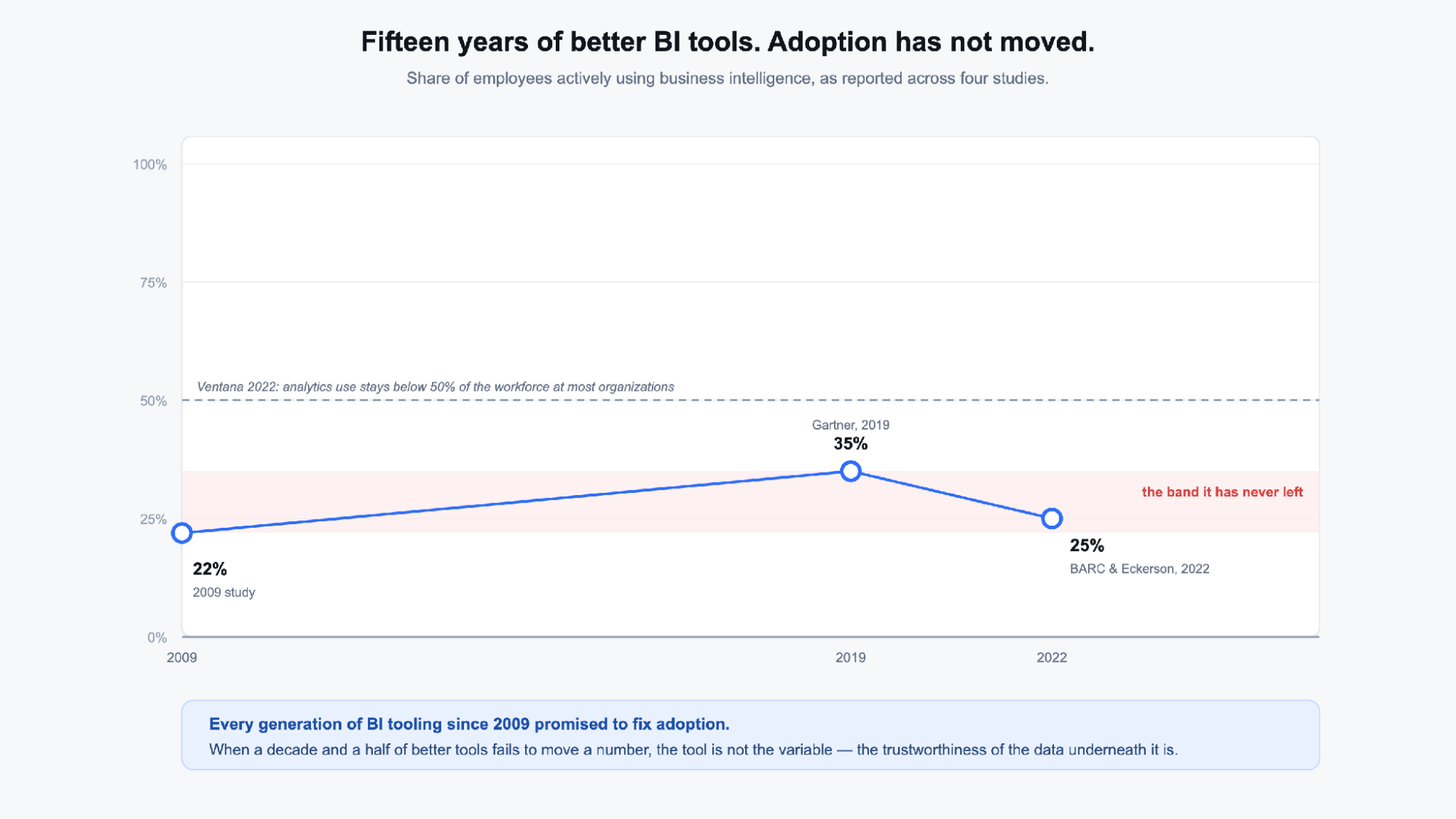
Here is the fact that should reframe the whole discussion. Business intelligence adoption has barely moved in fifteen years.
Gartner put BI adoption at 35% of employees in 2019. A BARC and Eckerson Group report put it at 25% in 2022. A 2022 Ventana Research survey found analytics use stays below 50% of the workforce at the vast majority of organizations. A study from 2009 measured 22%.
Every generation of BI tooling since 2009 has promised to fix adoption. Adoption has not moved. When a decade and a half of better tools fails to change a number, the tool is not the variable.
Governance is a schema problem, not a policy problem
Look at how the industry defines governance and you find user roles, approval workflows, certification badges, training programs. All of that is real, and none of it addresses why a business user gets a wrong number.
They get a wrong number because they joined two tables on the wrong key, or aggregated a table whose grain they misunderstood, or used a `revenue` column that includes refunds when they meant the one that does not. No permission setting prevents any of that. The user had every right to run the query. The query was just wrong.
This is why "govern it with policy" fails. Policy controls who can run a query. The failure happens in what the query means.
The dbt Labs 2025 State of Analytics Engineering survey of 459 data practitioners found poor data quality was the most frequently cited challenge, named by 56%. Not tool access. Not headcount. The trustworthiness of what is underneath.
Ship the model, not the gate
The reframe that actually resolves the binary is small and consequential: stop treating the data team as a gate, and start treating the data model as the product they ship.
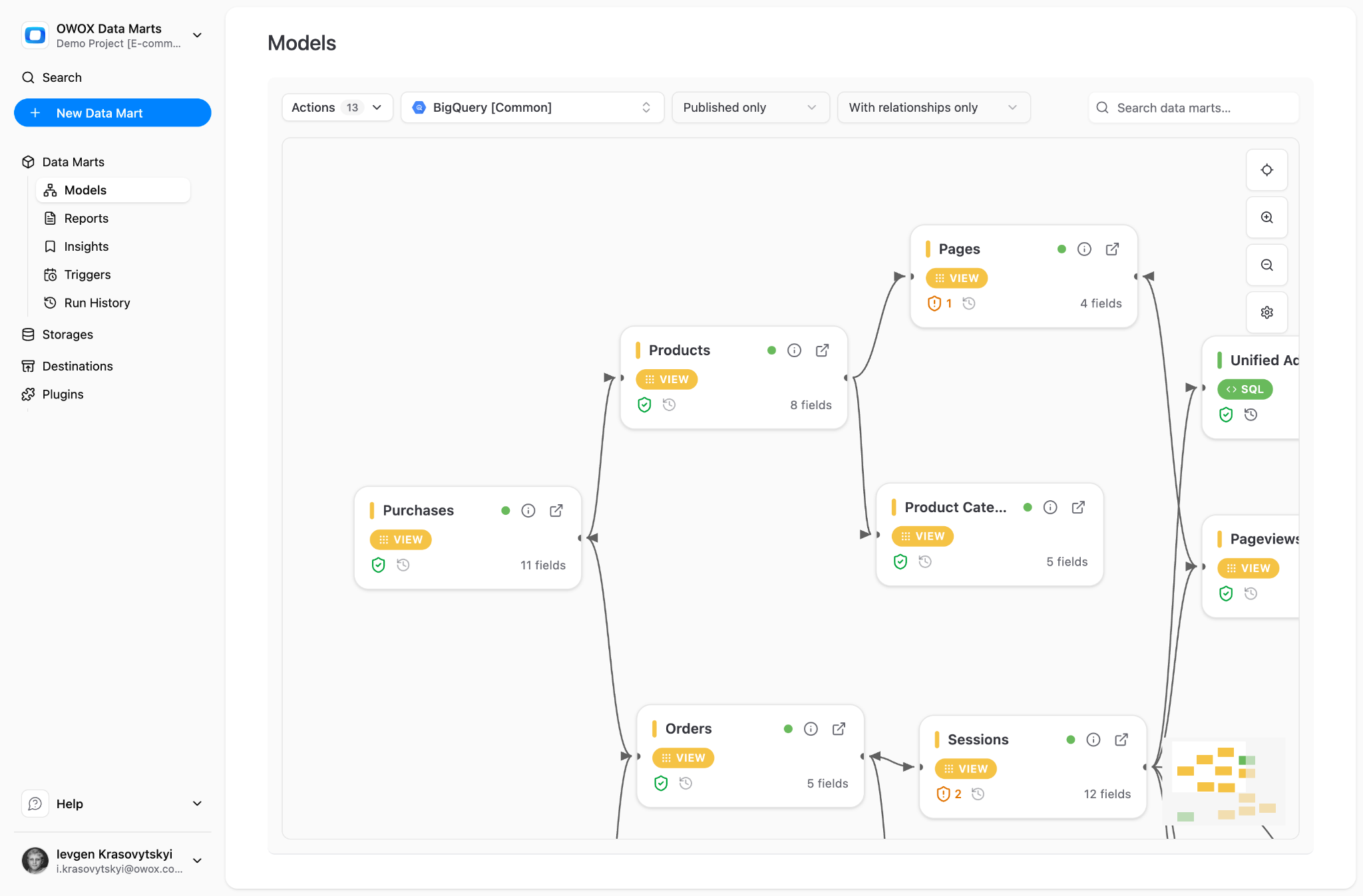
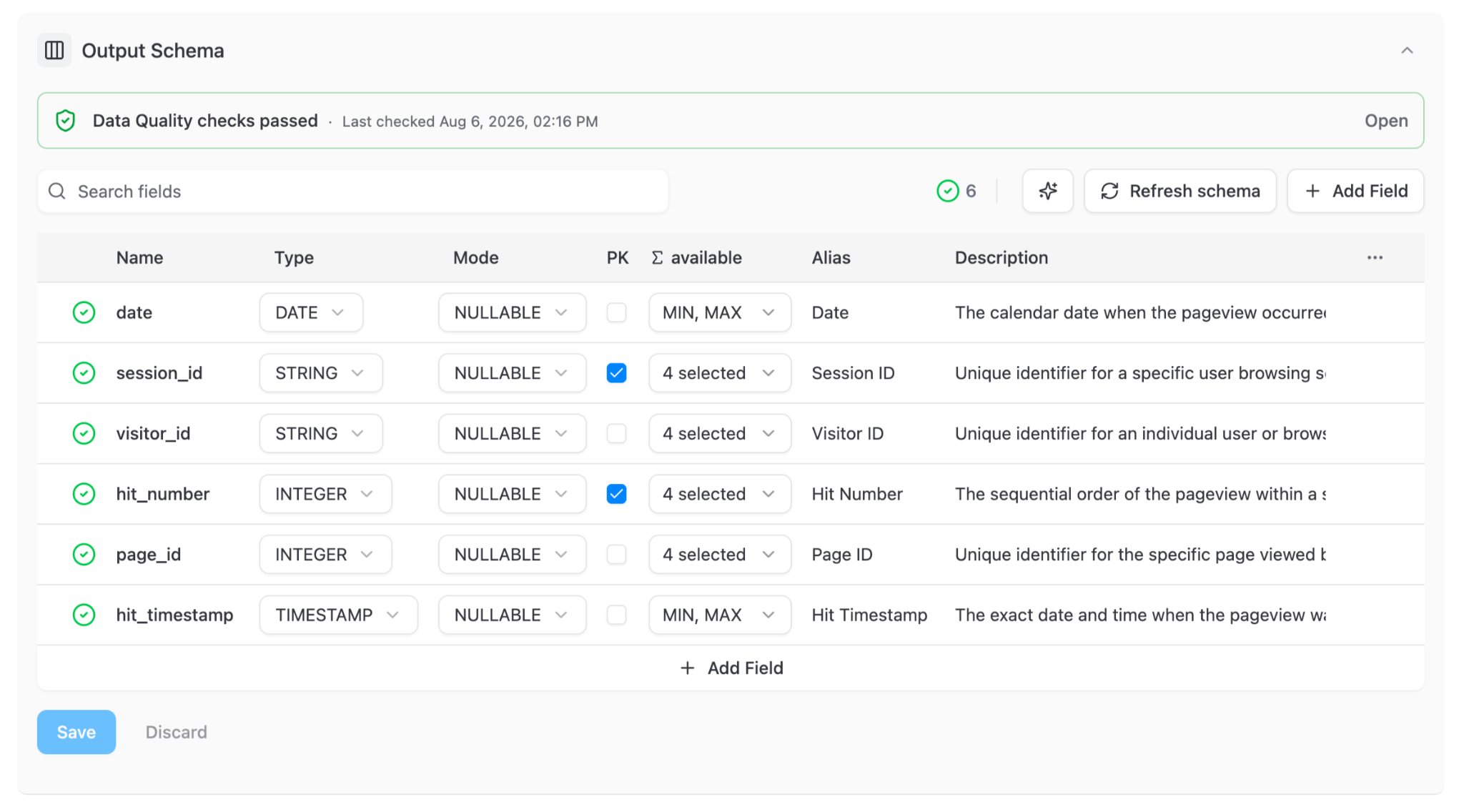
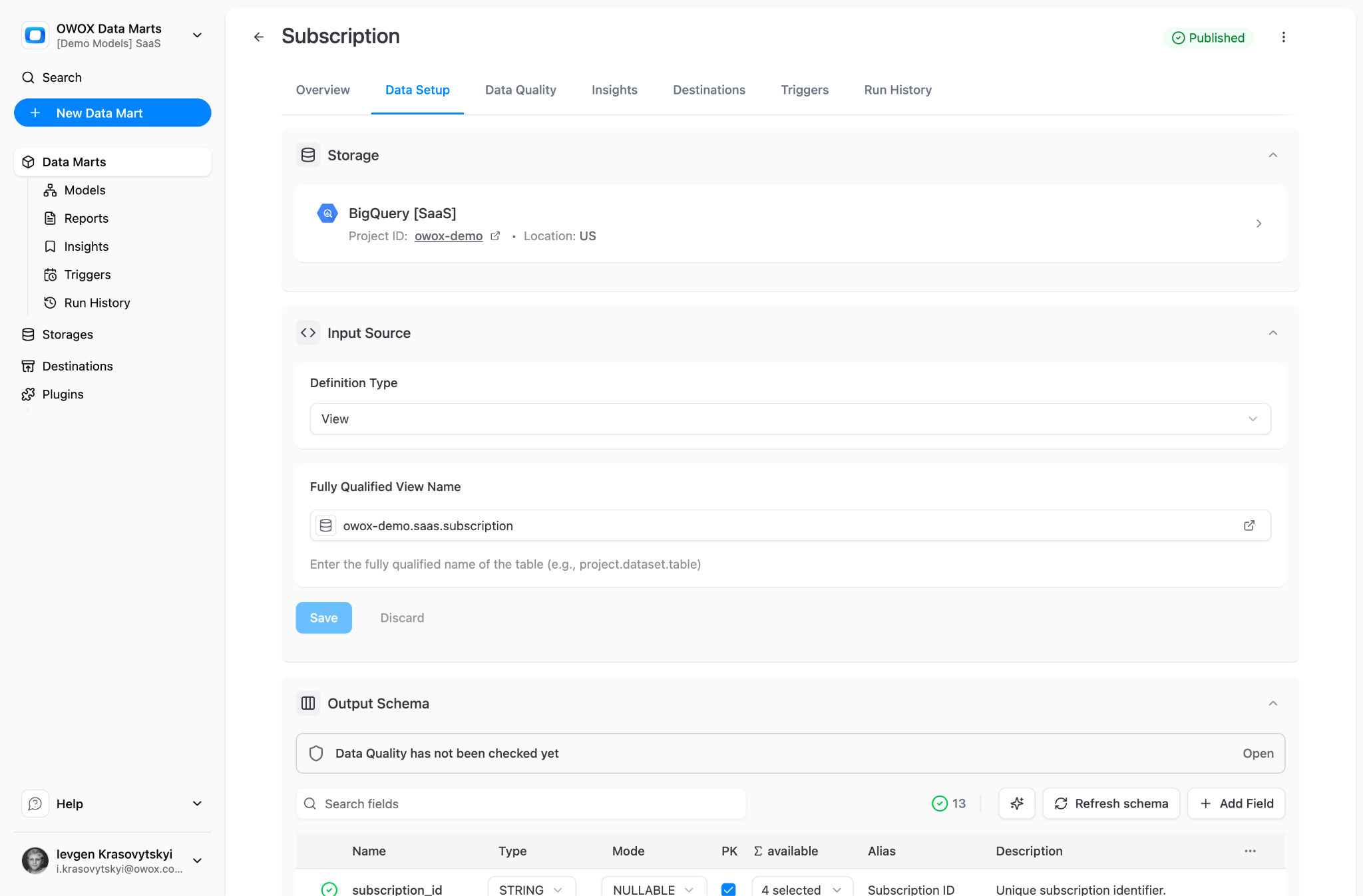
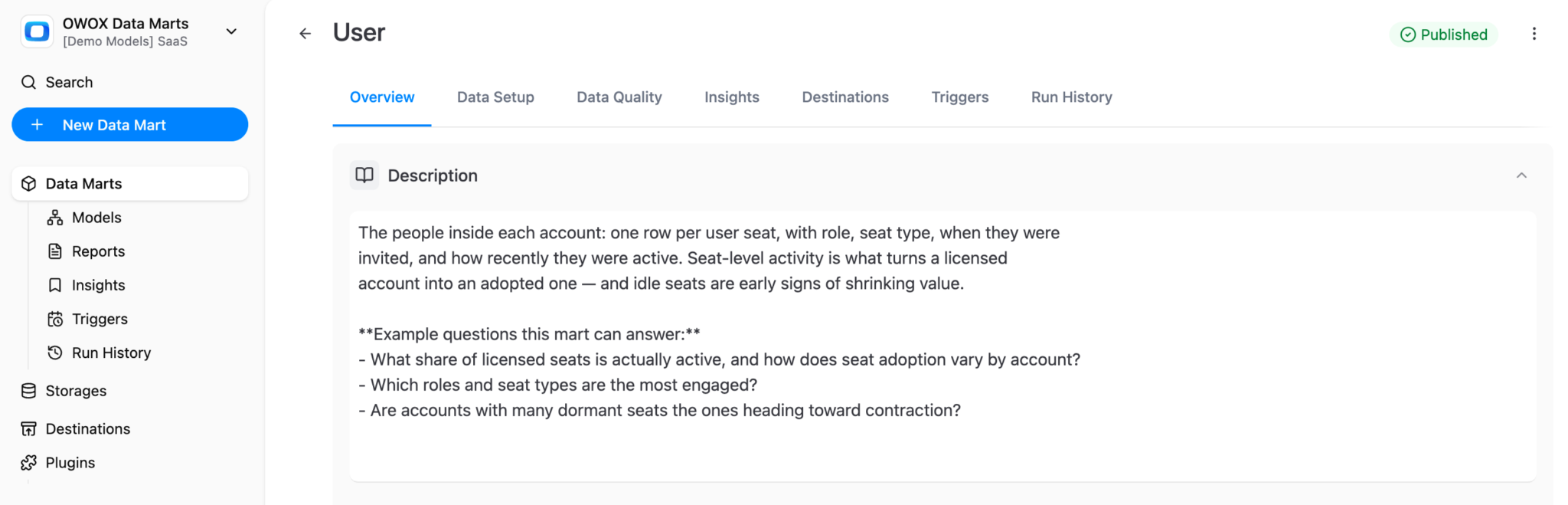
An analyst's output is not an answer to a question. It is a governed data mart with a contracted output schema – a defined set of columns, each with a stated meaning, whose numbers are correct by construction because the analyst resolved the ambiguity in advance.
The output schema is the governance
When a data mart declares that it contains one row per order, that `revenue` is net of returns, and that internal transfers are already excluded, a business user cannot get those wrong. Not because they lack permission to, but because the ambiguity was removed before they arrived.
That is governance that survives contact with a non-technical user. It does not depend on them reading documentation or attending training.
Distribution follows
Once the schema is contracted, the question changes from "who is allowed to query this?" to "where should these numbers land?" – which is a far easier question.
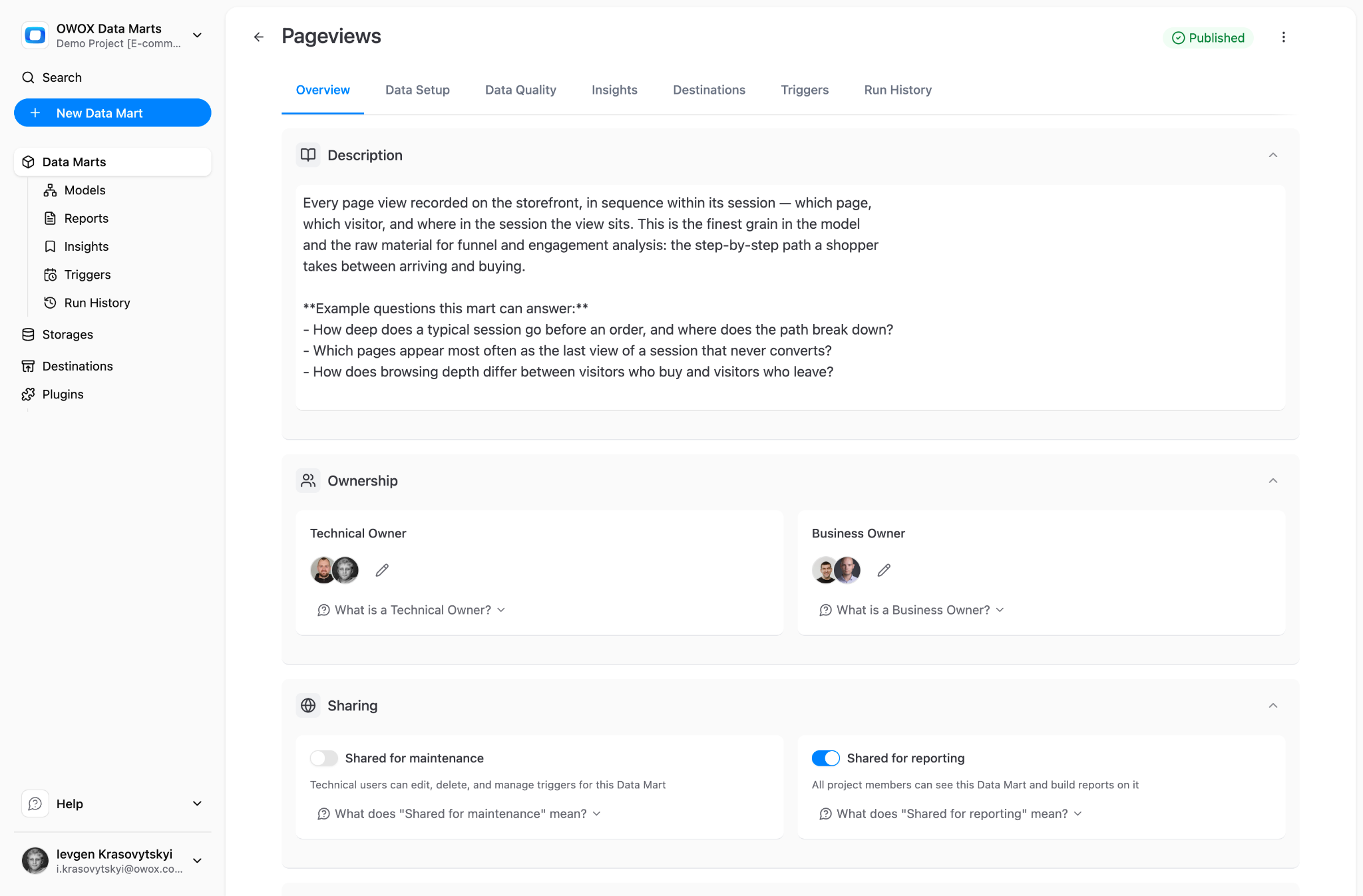
And the honest answer, for most business users, is the spreadsheet. The Alteryx 2025 survey of 1,400 data analysts found 76% still rely on manual spreadsheet work for data preparation. Fighting that is a losing strategy. Feeding governed numbers into it is not.
The three models, side by side
Note the last row. The governed model has a real failure mode – someone asks a question the model does not cover. That is a genuine limitation, and it is a far better problem than the other two, because it is visible. Nobody gets a confidently wrong number; they get no number, and a request that is worth an analyst's time.
What it looks like without a ticket
A head of subscriptions wants to know whether the customers acquired through a partner channel last quarter are retaining as well as the direct ones.
In the queue model, that is a request, a clarification thread, and a week. In the ungoverned model, they pull it themselves and use a `churned` flag that turns out to include paused accounts.
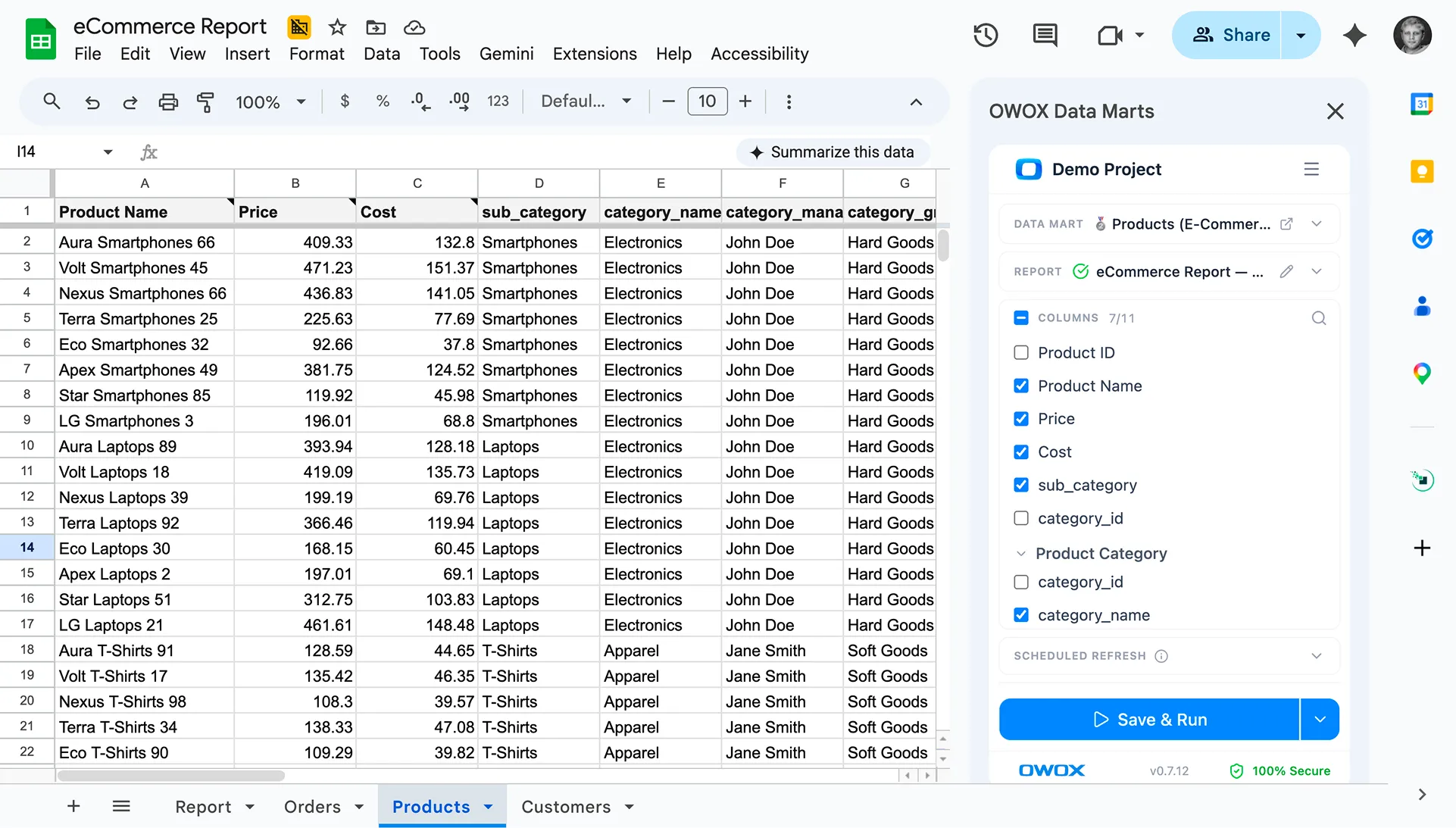
With a governed model, `subscriptions` already declares one row per subscription, `churn_date` already excludes pauses because the analyst settled that months ago, and `acquisition_channel` is already a governed field. They open the data in the tool they already use, group by channel, and have the answer before lunch. When they bring it to the exec meeting, the number matches the board deck, because both trace to the same definition.
The analyst was not involved. They also were not bypassed – their work is what made the answer correct.
What this does not solve
Three honest limits, because the alternative framing oversells.
It does not remove the analyst. Someone writes and maintains the definitions. The change is that they write each one once instead of re-answering weekly.
It does not cover every question. The model covers what it covers. Novel questions still need modeling work, and pretending otherwise is how these projects lose credibility.
It is not instant. Agreeing what a "user" means across marketing, finance, and product is an organizational negotiation, not a configuration step. That negotiation is the actual work – and it is the part no tool purchase can do for you.
What it actually costs
Most write-ups on this stop at the argument. Here is the part an exec actually needs to approve it.
Time: days to weeks, and the variable is not technical
A first governed data mart covering three metrics is a one-minute build for someone who already knows the data warehousing. That estimate is reliable and boring.
What is not reliable is the definition negotiation running alongside it.
Getting marketing, finance, and product to agree on "active customer" takes anywhere from one meeting to six weeks, depending entirely on whether someone has the authority to end the discussion. Budget the engineering time, but schedule the argument.
If a vendor tells you the whole thing is a two-quarter program, they are selling you the platform. If someone tells you it is a two-day setup, they are describing the connection step and skipping the part that matters.
People: not a new hire
You need one person who can write SQL against your warehouse, and one business owner per metric who has the authority to make a definition final. That second role is the one companies forget to assign, and it is the one that determines whether the project lands.
It is worth being blunt about this: if nobody can settle a definitional argument, no amount of engineering will produce a trustworthy number. That is an org problem wearing a data problem's clothes.
What failure looks like at month three
Three recognizable failure modes, each with a different fix:
- Nobody uses it. You modeled questions nobody was actually asking. The fix is to build the next mart from the request queue rather than from a whiteboard – the queue is a free list of validated demand.
- The definitions are still contested. You shipped before agreement, and the mart is now one more opinion. Stop building and settle the definition; the model cannot arbitrate for you.
- A parallel version appeared. Someone rebuilt the metric in a spreadsheet because the mart did not cover their cut. That is a coverage signal, not a discipline problem. Find out what they needed and add it.
The healthy signal is narrower than "adoption went up." It is that the request queue gets shorter without anyone being told to stop asking, and that the same question asked in a spreadsheet and a dashboard returns the same number.
The honest comparison
Against buying another BI tool, the trade is straightforward. A tool purchase is faster to start, has a clear price, and does not require anyone to agree on anything – which is exactly why it does not fix the problem. Modeling is slower to start, cheaper in software, and requires an organizational decision that a purchase order cannot make for you.
Where to start
Not with a platform decision. Start by picking the three metrics your leadership team most often disagrees about, getting one written definition for each, and shipping them as a governed data mart with a documented output schema.
That is a two-week project, not a two-quarter one. If it works, the signal is unmistakable: the same question asked in a spreadsheet and in a dashboard returns the same number, and the request queue gets shorter without anyone being told to stop asking.
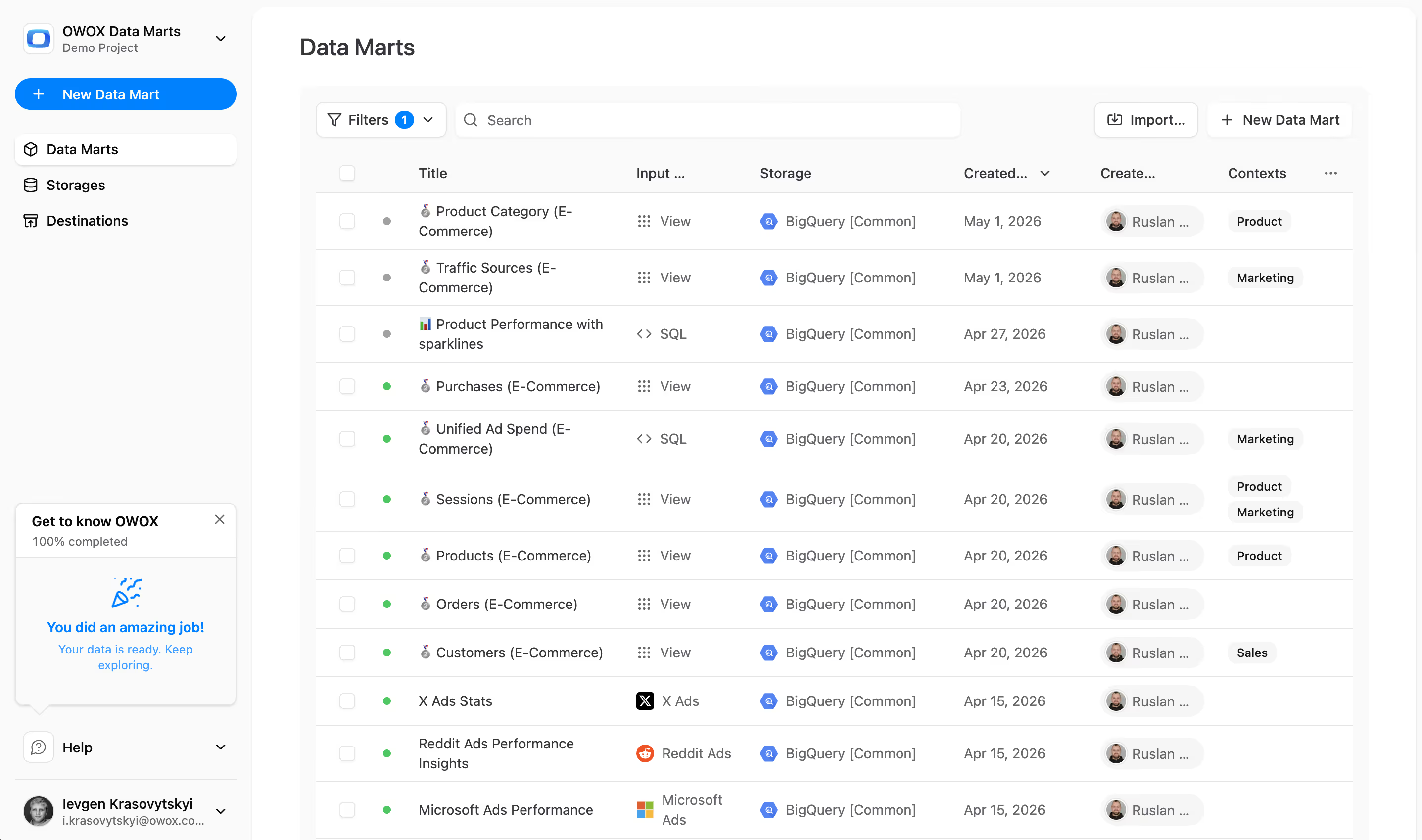
OWOX Data Marts is built for this shape of work – the model lives in your own warehouse, the analyst owns the definitions, and the governed numbers land in spreadsheets, BI tools, or an AI assistant without a separate export step.
The goal was never to give everyone a query tool. It was to make sure that when they ask, the answer is already correct.
Frequently asked questions


"AI by its nature will hallucinate. You need guardrails so you can trust your data."
"We had six or seven different channels and no single source of truth. It was almost impossible"
"We regained time. And time is the one resource that never comes back."